
Insulation Company in Morongo Valley, CA
Blown in insulation solves the two problems Morongo Valley homes battle most: wind-driven sand working into attics and temperatures that swing 40 degrees between noon and midnight. The older 1950s – 70s desert cabins and ranchettes along Highway 62 were built for a different climate, with vented attics and exposed ductwork that leak conditioned air straight into the canyon wind. Cozy Insulation Co installs blown in fiberglass and cellulose matched to each home’s construction, because a block-wall cabin needs different treatment than a newer custom build. Call (855) 382-3925 for a free estimate.
Why Morongo Valley Homes Are Different
Morongo Valley sits at the mouth of Big Morongo Canyon, roughly 2,600 to 3,000 feet up between the Little San Bernardino Mountains. That position means the town catches the full force of the Morongo Basin wind corridor, gusts that push fine desert sand through soffit vents, ridge vents, and even the smallest attic penetrations. Sand is abrasive and heavy. It settles into blown in insulation, compresses the loft, and grinds away the air pockets that do the actual insulating. We regularly open attics in Morongo Valley where loose fill has settled to half its original depth in under a decade, not from age but from sand loading.
The housing stock compounds the problem. Many homes date to the 1950s through 1970s, simple wood-frame or block construction with vented attics intended to shed heat but never designed to seal against wind-driven dust. Exposed ductwork runs through those attics, which means every gap in insulation is a gap your cooling or heating escapes through before it reaches a room. Newer custom homes are tighter, but they often have the same canyon-wind exposure at attic hatches and eaves. In both cases, the fix is the same: wind-rated baffles at the eaves, meticulous air sealing at every seam and penetration, and blown in material installed to correct depth.
The diurnal swing is the other Morongo Valley signature. Summer days climb past 100°F, then winter nights dip below freezing. Insulation that works for heat but not cold, or that was sized for Palm Springs-style heat but not canyon-wind chill, leaves rooms that never hold temperature. We size every Morongo Valley attic job for both extremes, not just the hottest month.
Our Main Morongo Valley Services
Most Morongo Valley homeowners call us about two things: an attic that needs a full insulation reset, or a home that needs the performance ceiling of spray foam. Here’s how each one works in this canyon-wind climate.
Attic Insulation in Morongo Valley
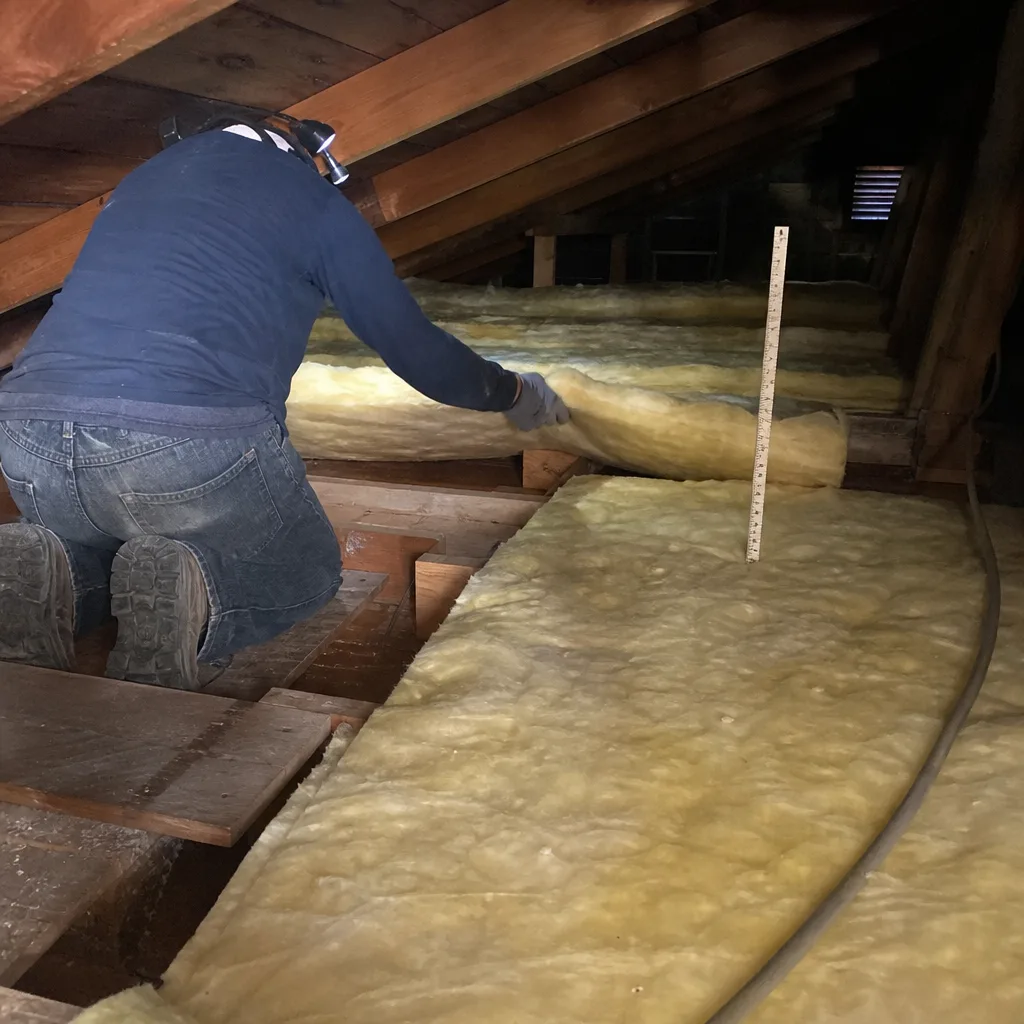
Attic work in Morongo Valley starts with understanding what’s already up there. Many older attics have a thin layer of original fiberglass batts, sand-compressed and mouse-tunneled, resting directly on ceiling joists with no air sealing and no baffles. Wind finds every soffit gap. Before adding any new insulation, the existing material has to come out or be reconditioned, penetrations get sealed, and baffles go in at every eave vent. Then we blow or lay the right material to full Morongo Valley depth. Learn more about Attic Insulation in Morongo Valley.
Spray Foam Insulation in Morongo Valley
Spray foam does something no batt or loose fill can: it seals. In a wind-scoured attic with exposed ductwork, that matters more than the R-value. Closed-cell foam air-seals every joist bay and penetration while it insulates, which stops sand intrusion at the source. We install Icynene and Demilec open- and closed-cell systems, and in Morongo Valley we typically recommend closed-cell at the roof deck for homes that want the attic to stop being a sand trap entirely. Detailed breakdown on the Spray Foam Insulation in Morongo Valley page.
What happens when you call
- 1
A real person answersNo phone trees — you reach a local pro.
- 2
You get an upfront price rangeHonest numbers before anyone is dispatched.
- 3
A background-checked tech heads outLicensed & insured, dispatched right away.
- 4
You approve before work beginsNothing starts until you say go.
Blown In Insulation in Morongo Valley
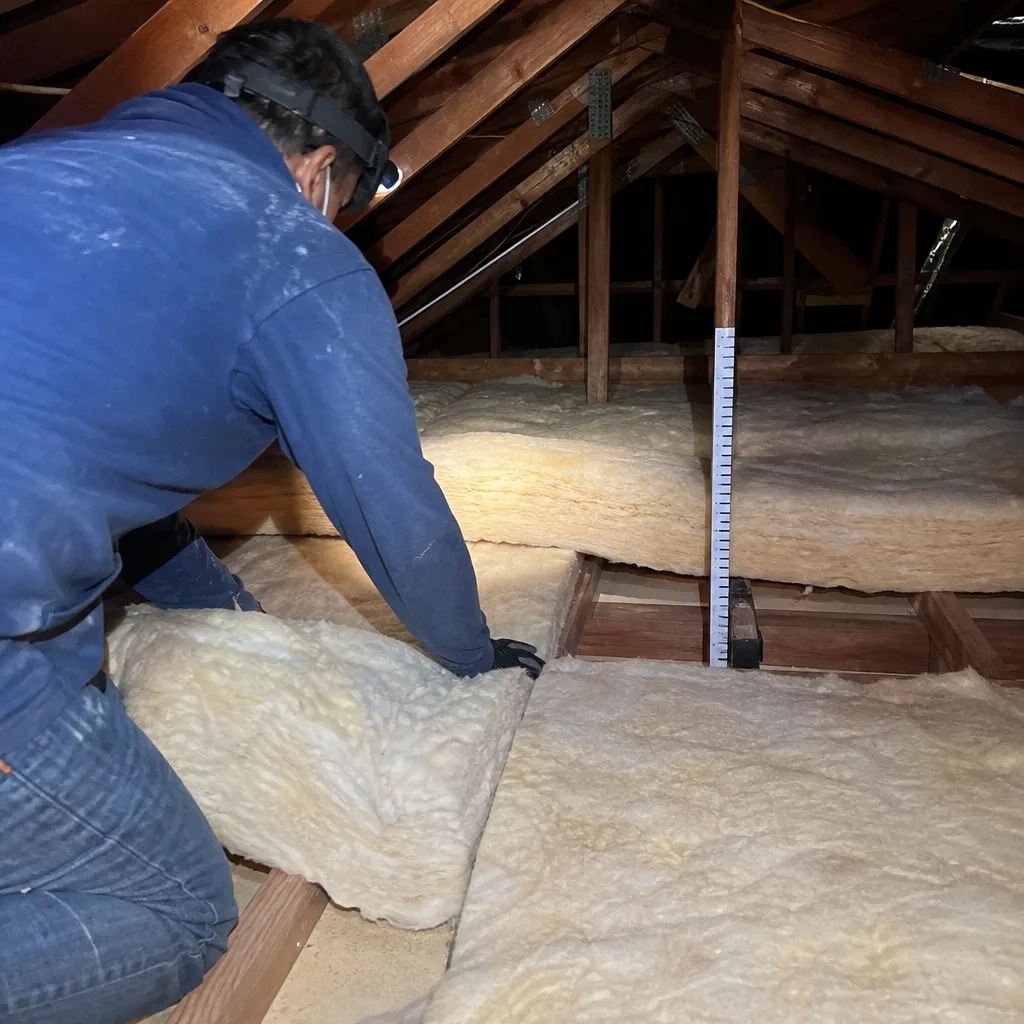
Blown in insulation is the most common fix for Morongo Valley attics. It fills irregular joist bays and around exposed ductwork far better than batts, and it lets us hit the full depth this climate needs without major demolition. Most homes here are best served by either blown in fiberglass, which holds its loft and resists moisture, or blown in cellulose from GreenFiber, which a lot of our Morongo Valley customers choose for its recycled content and fire resistance. The catch in this town is wind: loose fill only works long-term if the attic is baffled and air-sealed first, or the canyon wind will push sand through the vents and settle the material in a few seasons. That’s why every blown in job here starts with sealing. For a full explanation of the material, process, and options, see our Blown In Insulation hub page.
Cellulose Insulation
Signs you need it
Rooms are cold in winter and hot in summer, and the existing attic insulation is thin, settled, or missing entirely over large sections of ceiling.
What it costs in Morongo Valley
Blown in cellulose in Morongo Valley typically runs $1.50 to $3.50 per square foot of attic floor, depending on depth and access.
How we do it
We air-seal the attic floor, install wind-rated baffles at every eave and soffit vent, then blow GreenFiber cellulose to the full depth for Morongo Valley’s temperature range.
Blown In Attic Insulation
Signs you need it
Your energy bills climb every August and January, and rooms over the garage or at the far end of the house never match the thermostat temperature.
What it costs in Morongo Valley
Blown in attic insulation in Morongo Valley generally costs $1.50 to $3.50 per square foot, with full 1,200-square-foot attics starting around $1,800.
How we do it
We remove or recondition the old material, seal the floor penetrations, blow new fiberglass or cellulose to code-plus depth, and reset attic hatches with weatherstripping.
Loose Fill Insulation
Signs you need it
You can see the tops of ceiling joists in the attic, or the insulation is patchy and uneven with visible low spots near the eaves.
What it costs in Morongo Valley
Loose fill in Morongo Valley runs $1.50 to $3.50 per square foot, with the final number driven by current depth and how much sand has to be vacuumed out first.
How we do it
We vacuum out compacted or sand-loaded material, seal every penetration, fit baffles, and blow fresh loose fill to an even, measured depth across the full attic floor.
What Blown In Insulation Costs in Morongo Valley
| Item | Typical range in Morongo Valley |
|---|---|
| Blown in fiberglass (per sq ft) | $1.50 – $3.50 |
| Blown in cellulose (per sq ft) | $1.50 – $3.50 |
| Air sealing with insulation job | $500 – $1,500 |
What’s the difference between blown in fiberglass and cellulose?
Fiberglass holds loft longer and resists moisture, while cellulose from GreenFiber is denser, better at stopping air movement, and made from recycled paper. In Morongo Valley’s wind, both need proper baffles and air sealing to perform. Call (855) 382-3925 and we’ll tell you which fits your attic.
Is blown in insulation worth it in Morongo Valley?
Yes, if the attic is sealed first. The canyon wind makes loose fill settle faster than in calmer desert towns, so the prep work determines whether the insulation lasts a decade or three. We install wind-rated baffles on every blown in job in Morongo Valley for that exact reason.
Brands We Service in Morongo Valley
We install blown in and spray foam products from brands we trust in Morongo Valley conditions: GreenFiber cellulose for its density and fire resistance, Icynene and Demilec spray foam for air sealing and the highest thermal performance, and CertainTeed fiberglass for long-term loft retention. Most materials are stocked at our regional warehouse, so Morongo Valley jobs rarely wait more than a few days on product. Details on the full our brands page.
Pricing for Insulation Company in Morongo Valley, CA
| Service | Typical range in Morongo Valley |
|---|---|
| Blown in fiberglass (per sq ft) | $1.50 – $3.50 |
| Blown in cellulose (per sq ft) | $1.50 – $3.50 |
| Spray foam, open-cell (per sq ft) | $2.50 – $5.50 |
| Spray foam, closed-cell (per sq ft) | $3.50 – $7.50 |
| Attic air sealing | $500 – $1,500 |
| Attic insulation removal | $1.00 – $2.50 per sq ft |
What pushes Morongo Valley prices upward is sand removal and access. Attics here are often loaded with wind-blown sediment that has to be vacuumed out before new insulation goes in, and older cabins frequently have tight hatches or low pitch roofs that slow the work. Every quote is a fixed price given before we start, so the number we hand you is the number you pay.
Neighborhoods We Serve in Morongo Valley
We work across all of Morongo Valley ZIP code 92256, from the older cabins lining Highway 62 up to the newer custom homes set back against the canyon foothills. Response time in the area is typically one to three days for estimates depending on our route schedule through the Morongo Basin.
- Big Morongo Canyon area
- Senilis Avenue corridor
- Hess Boulevard and the valley floor
- Foothill ranchettes off Highway 62
- Morongo Valley Preserve-adjacent neighborhoods
Service Area – Cities Near Morongo Valley
Our crews serve Morongo Valley as part of a wider Morongo Basin and Coachella Valley route. We’re in Desert Edge, CA and Garnet, CA weekly, and we cover Desert Hot Springs, CA and Yucca Valley, CA for larger insulation projects. If you’re anywhere in the basin corridor, we’ll come take a look.
Serving Morongo Valley, CA — Our Local Coverage Area
We’re based in the Morongo Valley area and know this community well. Use the map below to see our service coverage — if you’re nearby, we can almost certainly help.
FAQs About Insulation Company in Morongo Valley
We typically schedule estimates in Morongo Valley within one to three days, depending on where our crews are working in the basin that week. Attic inspections take about an hour, and you get the fixed quote before we leave. Call (855) 382-3925 to grab the next open slot.
Most straightforward insulation work doesn’t need a permit in Morongo Valley, but if your HOA or the county requires one we’ll handle the paperwork on our end. We’ve worked in enough Morongo Valley homes to know which projects need sign-off and which don’t, and we flag it before we start.
We do both, and older cabins are where we spend a lot of time. Those 1950s – 70s homes usually need air sealing and sand removal before any new material goes in, which is work most insulation companies skip. We quote the full job, including cleanup, so the final number accounts for the real condition of the attic.
What happens when you call
- 1A real person answersNo phone trees — talk to a local insulation pro.
- 2You get an upfront price rangeHonest numbers before anyone is dispatched. No surprises.
- 3A background-checked tech heads outLicensed & insured, typically within 60-minute.
- 4You approve before work beginsNothing starts until you say go.
What Morongo Valley Customers Say
"Work is good and the house is noticeably more comfortable. There was insulation debris left in the hall closet under the attic access that I had to clean up."
— Amanda Sullivan"Spray foam in the rim joists in the basement. The cold floors above them are gone."
— Miguel Guzman"Plastic laid from the front door to the attic hatch and they vacuumed the hallway afterward."
— Jason Hoffman