
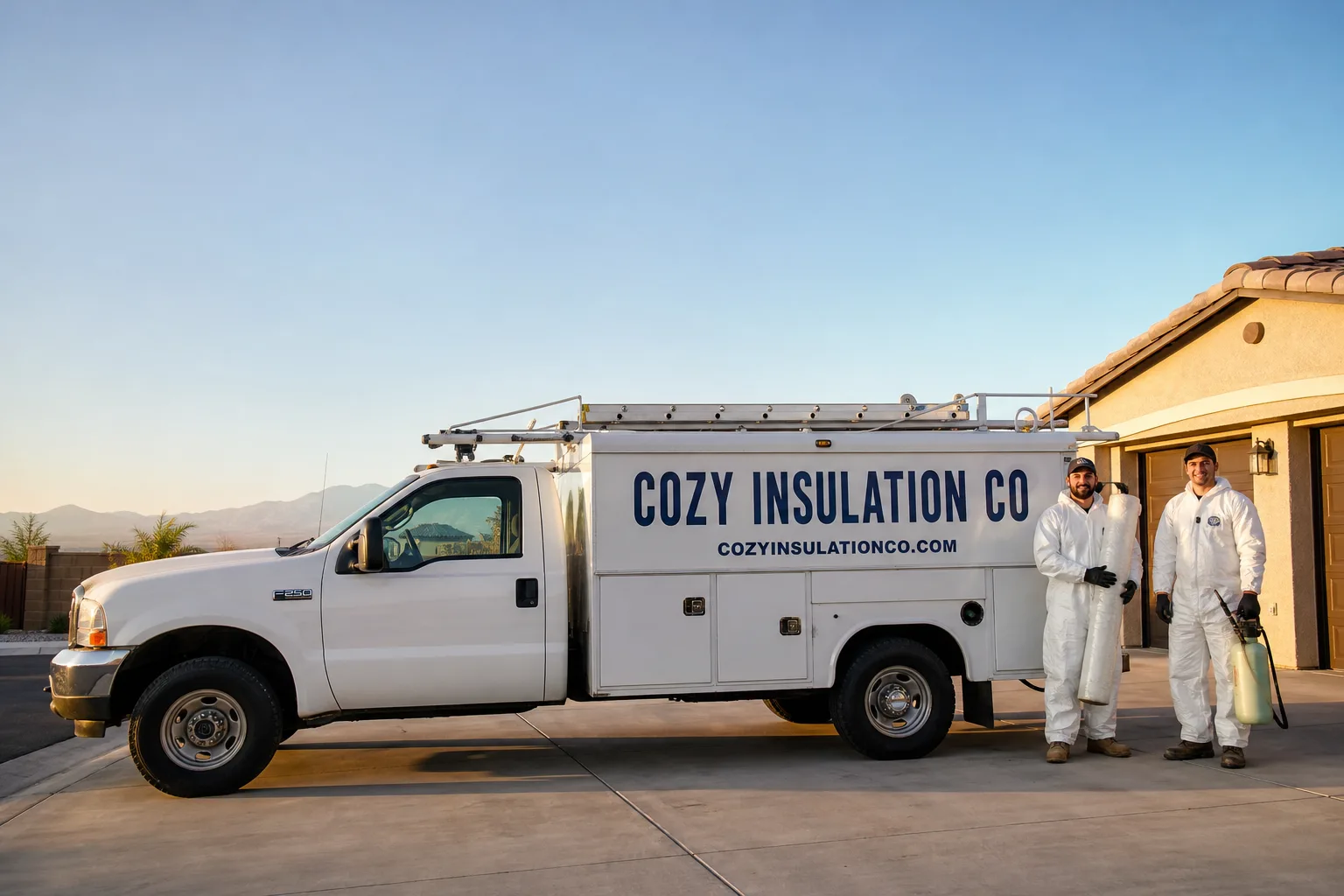
Fast, Reliable Spray Foam Insulation Across Sunland
Spray foam insulation in Sunland addresses the single biggest weakness in the area’s post-war homes: attics that become convection ovens by mid-morning. Most of the tract and ranch houses here, built between the late 1940s and the 1970s, were designed for a different climate than the one Sunland now bakes in every summer. When your ceiling hits 100°F indoors by 10 a.m. and the air conditioner runs nonstop, the problem usually isn’t your HVAC. It’s the degraded, compressed R-11 fiberglass sitting above your ceiling. Call Cozy Insulation Co at (855) 382-3925 and we’ll send a crew that knows Sunland’s specific housing stock, not a generic insulation subcontractor guessing at your attic from a ladder.
Why Cozy Insulation Co Is Sunland’s Preferred Spray Foam Insulation Company
Our reputation in Sunland comes from solving the problem other contractors walk away from: unvented, shallow, slope-ceilinged attics that cook homes on 100°F+ afternoons. We work on 1950s ranches off Foothill Boulevard, 1960s tracts near Sunland Park, and everything in between. Homeowners in 91040 and 91041 tell us the same story: a bedroom that never cools down, an upstairs hallway that feels like a sauna by noon, an energy bill that climbs every July. Our team has spent enough time in Sunland attics to know what we’ll find before we open the hatch: original batts compressed to the thickness of a towel, rodent nests above the ceiling plane, and roof decks already radiating heat. We show up with a plan for those exact conditions, and we start early because Sunland attics get dangerous fast once the Valley sun clears the Verdugos.
Mike Callahan built Cozy Insulation Co around a simple idea: match the material to the house, not to whatever’s cheapest in the warehouse. That’s why we install eight brands across fiberglass, spray foam, mineral wool, and cellulose. For Sunland’s unvented attics, that usually means closed-cell Spray Foam Insulation from Demilec or Icynene. For garage ceilings and rim joists, open-cell often makes more sense. For a homeowner who wants fire resistance, we offer Rockwool. For someone with an old attic that just needs a proper re-insulation with recycled content, we bring GreenFiber cellulose. One company. One crew. The right product for your specific home.
Garage Spray Foam Insulation in Sunland
Garage Spray Foam Insulation in Sunland is a high-impact retrofit for attached garages with living space above or beside them. Most Sunland homes from the 1950s and 60s have attached garages that share at least one wall or ceiling with the conditioned house. That garage ceiling is usually uninsulated, which means every summer afternoon it radiates heat into the bedroom above it. And in winter, it leaks cold air into the house every time the garage door opens. A typical garage ceiling spray foam job in Sunland runs $1,800 to $3,400 depending on square footage and whether we’re doing open-cell or closed-cell.
What We’re Sealing in Your Sunland Garage
On a garage ceiling, spray foam does two jobs at once. It insulates, yes. But just as importantly for Sunland, it air-seals. Older garages have gaps everywhere: where the joists meet the top plate, around the opener wiring, along the door header. Those gaps draw hot Valley air into your home every afternoon. Closed-cell foam fills and seals those penetrations in one pass.
Open-Cell for Sunland Garage Ceilings
When the garage ceiling has a ventilated attic above it, open-cell spray foam is usually the right call. It’s lower cost, expands aggressively to fill odd shapes, and performs well when it isn’t exposed to direct roof-deck heat. For most attached garages in the 91040 area, open-cell is our default recommendation unless there’s a moisture or headroom concern.
Closed Cell Spray Foam Insulation in Sunland
Closed Cell Spray Foam Insulation in Sunland is often the only material that works correctly in the unvented, low-pitch attics that dominate this area’s housing stock. Here’s the physical reality: on a hot July day, the roof deck above your ceiling reaches 150°F to 160°F by mid-morning. Open-cell foam directly against that deck will eventually off-gas and degrade. Fiberglass batts just absorb and re-radiate the heat. Closed-cell foam, at 2 inches thick, creates a thermal break that stops radiant transfer and a vapor retarder that prevents moisture from condensing inside the roof assembly. For Sunland’s shallow, unvented attics, this isn’t a premium upgrade. It’s the correct application. Expect to pay $4.50 to $7.00 per board foot installed for closed-cell in Sunland, which for a typical 1,500-sq-ft ranch ceiling translates to roughly $6,000 to $10,500 depending on roof geometry and the amount of prep work required.
Why Open-Cell Fails on Sunland Roof Decks
This is the failure mode we see most often on homes that got a low-bid spray foam job from an out-of-area crew. Open-cell foam has an R-value around 3.5 per inch and it does not act as a vapor barrier. Applied to the underside of a Sunland roof deck that bakes all day, the foam’s open structure lets moisture drive toward the wood sheathing. When attic temps spike past 140°F, that open-cell layer can start to smell, shrink, and pull away from the decking. The homeowner now has a worse problem than before.
Air Sealing First, Then Foam
Closed-cell foam can’t do its job if the ceiling below it leaks air. In Sunland’s older homes, we routinely find unsealed gaps around bathroom vent fans, recessed lights, and plumbing chases. We seal those before we foam. Then the foam gets applied to the sloped ceiling sections and knee walls where heat gain is worst.
Trusted Brands We Service in Sunland
We stock and install Sunland-appropriate products from manufacturers who engineer for exactly the conditions we deal with here. Demilec closed-cell systems are our go-to for unvented roof decks because their HFO-blown formulas hold up under sustained deck temperatures above 150°F. For open-cell applications on garage ceilings and rim joists, we use Icynene systems that expand reliably in the tight, odd-shaped cavities common to 1960s construction. And when a Sunland homeowner wants a cellulose or fiberglass option for a ventilated attic, we have Owens Corning and Johns Manville lines available. Our trucks carry the right foam and the right backup product for your job, so we’re not making a second trip across the Valley to grab materials. That keeps response times short and workdays efficient.
Common Spray Foam Insulation Problems We See in Sunland Homes
- Degraded original R-11 batts in under-vented attics. Fifty-year-old fiberglass does not fail gracefully. It compresses under its own weight, gets shredded by rodents, and loses whatever modest R-value it started with. In Sunland’s shallow attics, this means the ceiling plane is effectively uninsulated by the time the home turns 40. Before any spray foam goes in, those batts and the contamination around them need to come out.
- Open-cell foam installed directly on hot roof decks. We’ve pulled out open-cell foam from Sunland attics that was less than five years old and already crumbling, discolored, and off-gassing. A low-bid contractor sprayed it against the underside of an unvented roof deck. The foam never stood a chance. Closed-cell should have been specified from day one.
- Air leaks around legacy electrical and plumbing penetrations. 1950s and 60s tract homes were built before air sealing was a concept. Ceiling boxes, wire runs, and plumbing vents all gap open into the attic. In Sunland, that means the attic is actively pulling 110°F outside air into your ceiling cavity all afternoon. If you don’t seal those penetrations before foaming, the foam insulates the top but the leaks still short-circuit the assembly from the side.
- Shallow slope-ceilinged attics that can’t take batts. Large sections of roof on older Sunland ranches are too shallow for a human to crawl into and too sloped for fiberglass batts to sit properly. Blown-in insulation settles and does nothing for the radiant heat problem. Spray foam is the only material that fills those sloped cavities completely and adheres to the deck without sagging.
Pricing for Spray Foam Insulation in Sunland, CA
Here’s what Sunland homeowners should expect to pay, based on the jobs we’ve completed in the 91040 and 91041 ZIP codes. Closed-cell spray foam for roof decks and unvented attics runs $4.50 to $7.00 per board foot installed; a typical 1,500-sq-ft ranch home lands between $6,000 and $10,500. Garage ceilings and rim joists using open-cell foam run $1,800 to $3,400 for a standard attached two-car garage. Crawl space or rim joist-only closed-cell jobs start around $1,500. The variables are roof geometry, access difficulty, the amount of old insulation we have to remove first, and how many air leaks need sealing before we foam. Call (855) 382-3925 and we’ll give you a firm, written estimate based on your actual attic, not a square-footage guess. Estimates are always free.
We Also Serve Cities Near Sunland
Our crews run to Sunland and the surrounding communities every week, so scheduling stays tight and response times stay short. We regularly work in Shadow Hills, Tujunga, La Crescenta-Montrose, and Burbank. If you’re in any of those areas and dealing with the same 1950s attic problems we see in Sunland, the same crew and the same material options apply.
Serving Sunland, CA — Our Local Coverage Area
We’re based in the Sunland area and know this community well. Use the map below to see our service coverage — if you’re nearby, we can almost certainly help.
FAQs About Spray Foam Insulation in Sunland
Closed-cell foam wins in Sunland’s unvented attics because it creates both a thermal break and a vapor retarder. Your roof deck hits 150°F to 160°F on summer afternoons. Open-cell foam is vapor-permeable and breaks down under that sustained heat. Closed-cell stops the radiant transfer and keeps moisture from condensing inside the roof assembly. For unvented Sunland attics, closed-cell is not an upsell: it’s the only foam that survives the conditions.
No, and we won’t do it. Spray foam needs direct contact with the surface it’s insulating and air-sealing. Old R-11 batts in Sunland homes are usually compressed, rodent-soiled, and full of dust. Foaming over them leaves the contamination in place, blocks access to air leaks below, and prevents the foam from adhering. The batts come out first, the ceiling plane gets sealed, then the foam goes in. Call (855) 382-3925 and we’ll walk you through what removal involves for your specific attic.
We work from the interior when the attic cavity is too shallow to enter, which is common in Sunland’s 1950s tract homes. The crew accesses the sloped ceiling assembly through the drywall or sheathing, removes the old insulation, air-seals, and applies closed-cell foam directly to the underside of the roof deck. On the sloped sections where batts and blown-in can’t hold shape, the foam adheres and fills the entire cavity. It’s material-matched to the geometry, not forced in where it doesn’t belong.
First, figure out if the garage shares a wall or ceiling with living space. If it does, that’s where you’re losing conditioned air. On original 1960s construction, the garage ceiling is almost never insulated and the common wall is usually just open studs. Applying open-cell spray foam to the ceiling and the shared wall seals the air gaps and stops the worst of the heat transfer. It also quiets the garage door noise inside the house. A typical job runs $1,800 to $3,400.
Yes, and the winter piece matters more than people expect. Summer heat gain through the ceiling is the obvious problem: 100°F+ afternoons, a 150°F attic, and a ceiling that radiates heat into your living room. But Sunland winter mornings drop into the 30s, and that same unsealed ceiling plane leaks warm air into the attic all night. Closed-cell foam works on both sides of the equation because it insulates and air-seals in one application. You’re fixing summer comfort and winter heating loss with a single material.
Get an honest assessment of your Sunland home’s insulation and a material recommendation that fits your roof, your attic, and your budget. Call Cozy Insulation Co at (855) 382-3925 for a free estimate. Mike Callahan and our crew know these houses, these attics, and this Valley heat, and we’ll tell you what works and what doesn’t.
Written by Mike Callahan, Owner at Cozy Insulation Co, serving Sunland and the northeast San Fernando Valley with spray foam, attic, and blown-in insulation.