
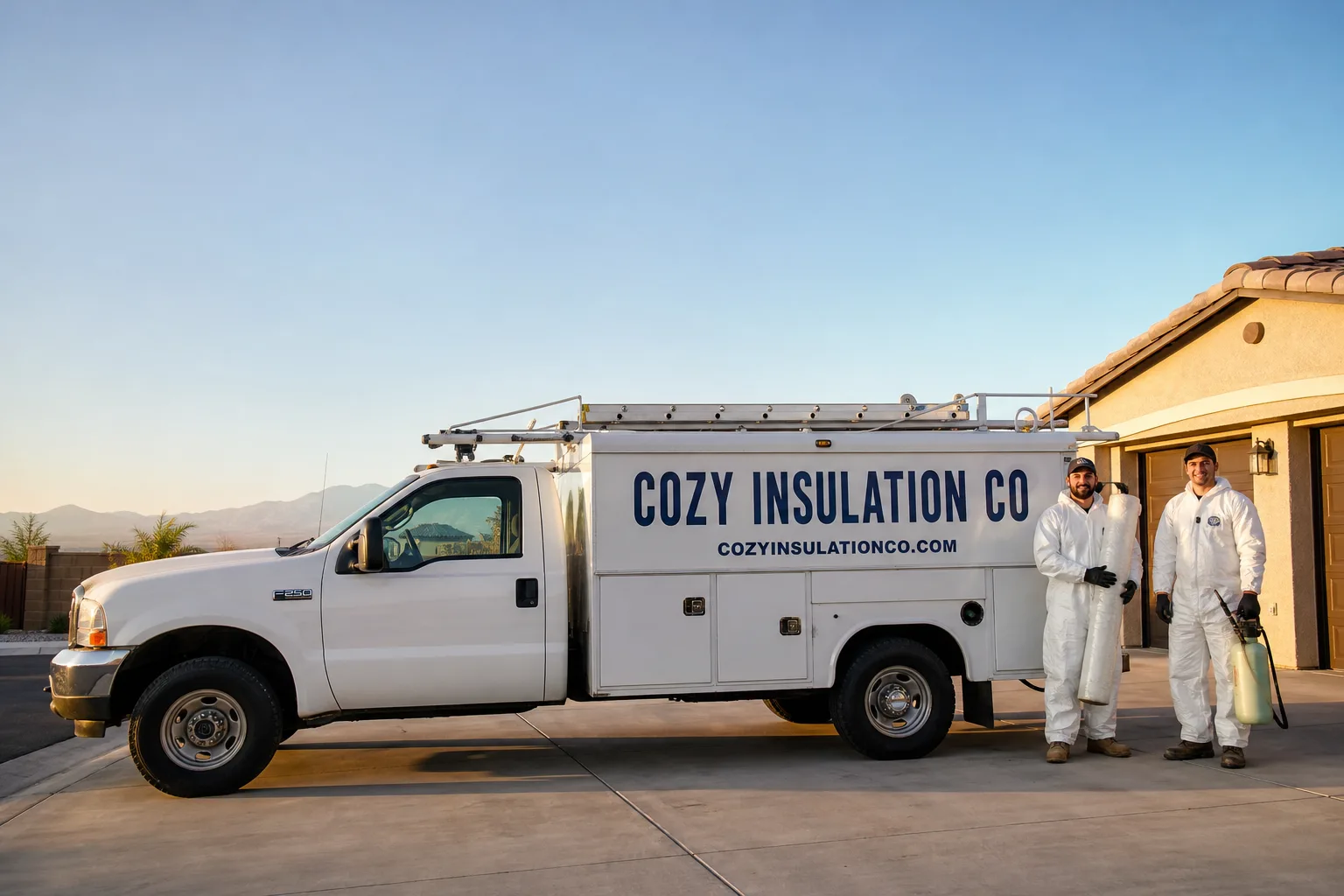
Fast, Reliable Spray Foam Insulation Across Running Springs
Spray foam insulation in Running Springs costs $3.50 to $7.50 per square foot for open-cell and $5.00 to $9.50 for closed-cell, with most whole-attic projects falling between $4,800 and $11,000. We’re typically on site within 48 hours for standard jobs and same day for emergencies like a frozen rim joist or active condensation in the roof deck. Call (855) 382-3925 and Mike Callahan will talk you through what your cabin actually needs.
Running Springs isn’t a cooling market. It’s a hard-freeze, snow-load, ice-dam market at 6,000 feet, and insulation decisions here get made differently than they do down the hill. A wrong foam choice on a roof deck in this climate doesn’t just underperform. It rots the deck. We’ve spent years cutting open attics in these mountain homes and seeing what works and what quietly fails.
Why Cozy Insulation Co Is Running Springs’s Preferred Spray Foam Insulation Company
We know the difference between insulating a 2021 build off Live Oak Drive and a 1958 A-frame near the village center. They demand completely different foam chemistry and venting strategies. Running Springs homeowners call us because we diagnose the attic as a system before we spray anything. That’s the whole game up here.
Our crews work in Running Springs weekly, so we don’t treat 92382 as a service-area edge case. When you call about a soft spot in the roof or frost on the underside of the deck, the person who answers understands what you’re describing because we’ve pulled back insulation in a dozen cabins with that exact problem this season. Mike Callahan still takes the calls himself.
We stock open-cell Icynene and closed-cell Demilec on our trucks headed up Highway 330 and 18, so we’re not waiting on a distributor when the weather window closes. Mountain work is weather-dependent, and the difference between getting a job done before the next storm cycle and waiting two weeks often comes down to who has material ready to spray.
Open Cell Spray Foam in Running Springs
Open Cell Spray Foam in Running Springs is the most common retrofit choice for mountain cabins because it’s vapor-open, which means it lets moisture pass through instead of trapping it against the roof deck. In a climate where freeze-thaw cycles pinwheel through the attic all winter, trapping moisture inside a roof assembly is exactly how decks rot. Open-cell is the safer default for roof slopes, cathedral ceilings, and any attic we can’t fully vent.
The material expands to fill irregular cavities, which matters in older Running Springs homes where framing lumber isn’t dimensional and gaps aren’t square. A 1950s cabin with warped rafters and retrofit knee walls accepts foam where batts leave channels. We install open-cell in exterior walls, rim joists, and along roof slopes once venting is addressed. A typical open-cell roof slope job in Running Springs runs $4,800 to $8,200 depending on square footage and access.
Roof slope and cathedral ceiling work
Most Running Springs cabins with cathedral ceilings were never designed for insulation. We spray open-cell directly to the roof deck between rafters after installing baffles, which keeps the deck colder and the interior warmer without creating a vapor trap.
Rim joist air sealing
Rim joists in mountain homes leak air at every band board. Open-cell seals those gaps and stops frost from forming inside exposed floor edges, which we see constantly in homes built on pier foundations off Rim of the World Highway.
Spray Foam Insulation Contractors in Running Springs
Spray Foam Insulation Contractors in Running Springs need to understand venting, snow, and old wiring before they ever pull a trigger on a spray gun. Any contractor can make foam stick. Very few in this area know how to keep it from causing condensation damage. That distinction is the reason we get called to fix other installs in these mountains.
Our Spray Foam Insulation team handles open-cell and closed-cell applications, vent baffle installation, vapor barrier correction, and foam removal on bad prior installs. We work across Running Springs including the neighborhoods along Hilltop Blvd, the streets around Charles Hoffman Elementary, and the pockets off Highway 18 above Snow Valley. Since we’re running full crews up here regularly, we can absorb a Running Springs job into an existing route and turn it around fast.
A full spray foam retrofit in a typical Running Springs cabin runs $6,500 to $12,000 when it includes attic, rim joist, and crawl space or band board work. The biggest wildcard is what we find under the old insulation. Blocked eave vents or foam applied to an unvented deck can double the labor before we even start spraying.
Existing foam removal and correction
Closed-cell foam sprayed directly to the underside of a roof deck with no air gap traps moisture in the deck sheathing. In Running Springs, that moisture freezes, thaws, and repeats until the plywood delaminates. We remove failed foam, correct the venting, and re-apply the right product.
Knob-and-tube wiring assessments
Older cabins near the village center still carry knob-and-tube wiring. Spray foam encasing live knob-and-tube overheats the conductors. We won’t spray over it. We’ll flag it, coordinate the electrical correction, and foam after it’s safe.
Trusted Brands We Service in Running Springs
We install from a short list of materials we know hold up in high-elevation freeze-thaw conditions. That means Icynene open-cell for roof slopes and walls, Demilec closed-cell for foundation band boards and any area needing vapor control, and GreenFiber blown-in cellulose when a Running Springs customer wants a recycled-content attic floor option. We don’t push one brand, and we will not spray a product into a mountain roof deck that hasn’t earned it. Stock on the mountain matters, so our Running Springs-bound trucks carry enough Icynene and Demilec to complete most jobs without a supply run down to the valley.
Common Spray Foam Insulation Problems We See in Running Springs Homes
- Stuffed eave vents: Prior owners pack fiberglass or foam scraps into soffit vents to stop snow from blowing into the attic. This kills airflow, and when we spray over a blocked vent, the attic becomes a condensation chamber. We clear these vents on nearly half the pre-1990 cabins we open in Running Springs.
- Closed-cell on unvented decks: Closed-cell applied directly to the underside of a roof deck creates a vapor barrier on the cold side. In Running Springs’s freeze-thaw cycle, that trapped moisture rots the deck from the inside. This is a repair we see regularly, and it requires foam removal before anything else.
- Knob-and-tube wiring inside wall cavities: Older homes around the 92382 zip code still have active knob-and-tube. Spray foam encases those conductors and traps heat. It’s a fire risk and a code failure. We inspect every cavity before spraying.
- Ice damming at the roof edge: Heat escaping through a poorly insulated ceiling melts snow at the ridge, water runs down, and refreezes at the cold eave line. The fix starts in the attic, not on the roof. Proper air sealing and insulation at the roofline stops the melt-freeze cycle at the source.
Pricing for Spray Foam Insulation in Running Springs, CA
Here’s what Running Springs homeowners can expect. Open-cell spray foam runs $3.50 to $7.50 per square foot installed, and closed-cell runs $5.00 to $9.50. A typical rim joist job runs $1,200 to $2,800. A full attic retrofit in a 1,200 to 1,800 square foot cabin usually lands between $6,500 and $11,000. Factors that move the price include roof pitch, access through small attic hatches, the amount of old insulation that needs removal, whether vent baffles must be installed, and whether knob-and-tube wiring is present. Our quotes are fixed before we start, and we do a walkthrough first. Estimates are free. Call (855) 382-3925 and we’ll give you real numbers for your cabin, not a sales pitch.
We Also Serve Cities Near Running Springs
We handle spray foam projects in Running Springs and the surrounding San Bernardino mountain communities, including Lake Arrowhead, Highland, Mentone, and Crestline. If you’re anywhere along the 330 or 18 corridor, our crews are already working your route, which means faster scheduling and no trip charges for most jobs.
Serving Running Springs, CA — Our Local Coverage Area
We’re based in the Running Springs area and know this community well. Use the map below to see our service coverage — if you’re nearby, we can almost certainly help.
FAQs About Spray Foam Insulation in Running Springs
Yes, but only if applied correctly and paired with proper eave venting. Ice dams form when attic heat melts snow at the roof ridge, water runs to the cold eave, and refreezes. Sealing the attic floor or insulating the roofline stops heat from reaching the snow in the first place. But if eave vents are blocked, foam actually worsens the problem by trapping warm, moist air. We clear vents before spraying. Call (855) 382-3925 for a roofline assessment.
No, not directly over live knob-and-tube. Foam encasing those conductors prevents heat dissipation and creates a fire hazard, plus it fails code. The wiring must be decommissioned or replaced first. We flag it during inspection and coordinate with an electrician, then foam once the cavities are safe. Call us for an inspection in 92382 before you buy foam.
Open-cell is vapor-open, meaning it allows moisture to pass through, which makes it safer for roof slopes and cathedral ceilings in a freezing climate. Closed-cell is a vapor barrier. In Running Springs, closed-cell works well for rim joists and foundation band boards but should rarely go directly against a roof deck unless a specific engineered assembly calls for it. We use open-cell Icynene on most roof slopes here.
You install baffles at the eave that hold back wind-driven snow while keeping an air channel open from the soffit to the ridge. In Running Springs, this is standard practice before spraying any roof slope. Blocking the vents is what rots decks. Baffles solve the snow problem without creating the moisture problem. Call (855) 382-3925 to schedule a vent check.
For most mountain cabins, yes. Open-cell foam seals the air leaks that make rooms 10 degrees colder than the rest of the house and cuts the freeze-thaw damage that hits unoccupied cabins hard in winter. It also reduces the roar of Highway 18 traffic. But the venting correction has to happen first, or the foam causes more damage than it prevents. We’ll walk you through the full picture before any material is ordered.
Written by Mike Callahan, Owner at Cozy Insulation Co, serving Running Springs and the San Bernardino mountain communities.