
Fast, Reliable Attic Insulation Across Bellflower
Attic insulation in Bellflower typically runs $1,800 – $4,200 for a full retrofit on a postwar tract home, and most jobs are done in a single day. If you’re in 90706 or 90707 and your upstairs rooms cook by 3 p.m. every summer, the problem usually isn’t your AC. It’s what’s happening – or not happening – above your ceiling. Our crews know these narrow-lot bungalows and mid-century stucco homes because we work in them constantly. Call (855) 382-3925 for a free estimate, and we’ll tell you what’s actually going on up there before you spend a dime.
Why Cozy Insulation Co Is Bellflower’s Preferred Attic Insulation Company
We didn’t start as a general contractor who happens to do insulation. Cozy Insulation Co is built around three methods – attic insulation, spray foam, and blown-in – and we pull from eight manufacturers so we’re never forcing one material into a house it doesn’t fit. That matters in Bellflower, where a 1952 stucco bungalow off Bellflower Boulevard needs a different approach than a 1963 tract home near the 91. Our crew lead Mike Callahan has worked these attics long enough to know what the original builders left behind, usually not much, and what’s physically possible given the tight scuttles and shallow roof pitches common to the area. Bellflower homeowners call us because we show up when we say we will and we explain what we’re doing in plain terms. That’s the whole sales pitch.
Attic Cleaning Services in Bellflower
Attic Cleaning Services in Bellflower often mean pulling out decades of dust, rodent debris, and broken-down insulation that’s been sitting in a 90706 attic since before the house had air conditioning. Bellflower’s dry, dusty summers push fine grit through every crack in the ceiling, and the attic becomes a collecting basin for it. You need this service before any new insulation goes in if you can see dark staining on the underside of your roof deck, if you smell mustiness when the attic hatch opens, or if the existing insulation looks matted and compressed. A typical attic cleaning in Bellflower runs $600 – $1,300 depending on square footage and how much has to be bagged and hauled out.
What Cleaning Actually Involves
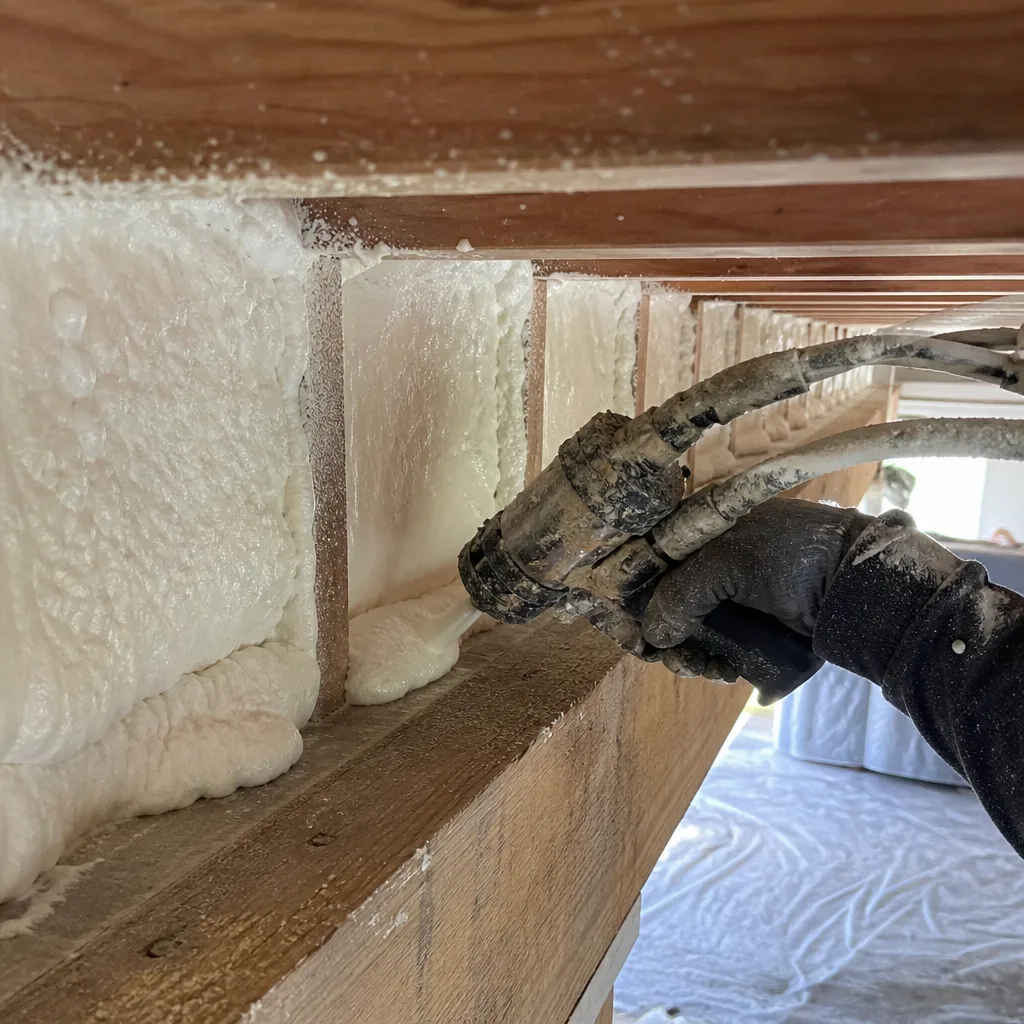
We remove the old insulation, vacuum the deck and framing, and inspect for the venting and air-sealing problems that caused the mess in the first place. In Bellflower’s tight attics, this almost always turns up something: a blocked soffit vent, a gap around a plumbing stack, a bathroom fan venting straight into the insulation. We fix those before anything new goes in.
When Cleaning Alone Isn’t Enough
If the decking feels soft or you can see black staining on wood, you’re past cleaning and into mold territory. We’ll tell you honestly which one you need. Plenty of Bellflower attics we see are actually both: years of trapped heat and moisture have done more than get things dirty.
What happens when you call
- 1
A real person answersNo phone trees — you reach a local pro.
- 2
You get an upfront price rangeHonest numbers before anyone is dispatched.
- 3
A background-checked tech heads outLicensed & insured, dispatched right away.
- 4
You approve before work beginsNothing starts until you say go.
Attic Mold Removal in Bellflower
Attic Mold Removal in Bellflower is a job we take seriously because the conditions that create it are so common here. Bellflower’s inland summer heat turns a poorly vented attic into a convection oven, and the moisture that gets trapped up there – from bathroom fans, cooking steam, even the humidity that builds overnight – feeds mold on the roof deck and framing. You need mold removal if you see black or green staining on attic wood, if the attic smells earthy even when dry, or if anyone in the house has allergy symptoms that get worse when the AC runs. Mold removal in a Bellflower attic typically runs $1,000 – $2,400, and the range depends on how much surface area is affected and whether the roof deck has been compromised.
Why Bellflower Homes Are Prone to It
The answer is venting, again. Postwar tract homes in 90706 and 90707 were built with minimal roof and soffit venting, and decades of debris and DIY projects have often blocked what little existed. A 1950s attic with two 8-inch soffit vents cannot move the heat and moisture a Bellflower summer produces. Mold is the almost inevitable result. We clean it, treat the wood, and fix the venting so it doesn’t come right back.
Mold Removal Before Insulation Replacement
This is not a step you can skip. If you blow new insulation over moldy framing, you’re burying a problem that will keep growing in the warm, dark, insulated space you just created. In Bellflower, where half the attics we enter have some degree of this issue, we’d rather spend an extra hour showing you the problem than sell you an insulation job that fails in three years. Mike Callahan’s rule is simple: never insulate over a problem you can fix now.
Trusted Brands We Service in Bellflower
We install products from Owens Corning, Johns Manville, Demilec, and GreenFiber, among others, and we stock the materials that Bellflower’s housing stock actually demands. That means batts in the right widths for tight 16-inch-on-center framing, Icynene and Demilec systems for homeowners who want the full air-seal approach, and GreenFiber cellulose for the deep blow-in retrofits that make up most of what we do in this city. Because we’re not tied to one manufacturer, we can be straight with you about what your attic needs – and what it doesn’t. Fast turnaround matters here, and we keep Bellflower jobs moving without waiting on special orders from out of state.
Common Attic Insulation Problems We See in Bellflower Homes
- Builder-grade batts compressed flat against the deck. In the tight attics off the 90706 grid, original fiberglass batts often measure an inch or less where they should be six, giving nearly zero effective R-value by the time a Bellflower summer hits.
- Undersized or debris-blocked vents. Narrow-lot tract homes were built with minimal roof and soffit venting, and what’s there is frequently clogged with dust, old nests, or decades of neglect. Trapped radiant heat is the result.
- Unsealed top plates and wire penetrations. Hot attic air and fine grit leak down into the living space through gaps at the top plates, around recessed lights, and at plumbing stacks. New insulation alone won’t stop this – air-sealing has to come first.
- Storm-damaged vents and flashing. When heavy winter rains hit the LA Basin, exposed roof vents and cracked stucco can let moisture into the attic. We find sopped fiberglass and darkened decking with disheartening regularity in Bellflower after a wet season.
Pricing for Attic Insulation in Bellflower, CA
If you’re gathering quotes in Bellflower, here are honest ranges. Attic batt insulation runs $1,800 – $3,600 depending on square footage. Blown-in cellulose or fiberglass typically falls between $2,200 – $4,200 for a full attic. An attic insulation top-up, where we add depth to existing but thin insulation, runs $1,200 – $2,400. Full replacement with air-sealing and venting work is $3,500 – $6,000 when done correctly. A spray foam retrofit in a Bellflower attic, including the underside of the roof deck, usually starts around $4,500 and can go to $8,000+ for larger homes. Every estimate is free, and we give you a written number before any work starts. Call (855) 382-3925 and we’ll price your specific attic, not a square-footage guess.
We Also Serve Cities Near Bellflower
If you’re outside Bellflower proper, we cover a wide stretch of southeast LA County. Our crews regularly work in Bellflower‘s neighboring communities including Paramount, Norwalk, Artesia, and Cerritos. Same crew, same standards, same free estimates. Call us and we’ll let you know when we can get to your street.
Serving Bellflower, CA — Our Local Coverage Area
We’re based in the Bellflower area and know this community well. Use the map below to see our service coverage — if you’re nearby, we can almost certainly help.
FAQs About Attic Insulation in Bellflower
The most common cause in Bellflower is that your attic’s venting has failed and the insulation itself has physically degraded. The original fiberglass batts in 1940s – 60s tract homes compress under their own weight, especially in tight attics where they were never installed at full loft to begin with. Once a batt is baked flat against the deck, it has almost no R-value left. Add in blocked soffit vents trapping 130°F+ air under the roof, and your insulation is fighting a losing battle. The fix is removing the dead material, air-sealing, re-venting, and installing new insulation with enough depth to actually perform. Contact us for an inspection before another Bellflower summer proves the point again.
Yes, and this is one of the most common jobs we do in Bellflower. For closed wall cavities, we drill small access holes through the stucco exterior or interior plaster, then blow in dense-pack cellulose from GreenFiber through a hose. The holes get patched and painted over. The whole process usually takes a day or two, and it doesn’t require removing drywall or tearing out anything. A typical wall retrofit in Bellflower runs $2,000 – $5,000 depending on how many exterior walls are involved. Call us for a walkthrough – we’ll tell you what’s actually inside your walls before we quote it.
If you can see dark staining on the roof deck, smell mustiness, or find rodent droppings in the existing insulation, the answer is yes – you need at least cleaning, and probably mold remediation, before new insulation goes in. Adding insulation over contaminated material seals the problem into a warm, dark space where it gets worse. In Bellflower’s heat, a moldy attic with fresh insulation on top is a slow-motion failure. We’ll tell you honestly during the inspection. Expect to budget $600 – $2,400 for cleaning and mold work before insulation. Call us and we’ll assess what your attic actually needs, not what’s convenient to sell.
We work in them constantly. Many Bellflower bungalows have scuttle holes barely wide enough for a person, and some have attic access only through a closet ceiling. Our crew brings narrow-bore blowing hoses and works in sections. For tight attics where spray foam makes sense, we shoot from outside at the roof line when that’s the better route. We’ve insulated hundreds of these 90706 homes without damaging ceilings or jamming equipment into spaces that can’t take it. Your house isn’t the first tight attic we’ve done this month – not even close.
Yes, and the difference in Bellflower is often dramatic because our air conditioners fight genuinely hot inland summers while the sun cooks the roof. A properly air-sealed and insulated attic usually drops top-floor temperatures 5 – 10°F, which means the AC cycles off more often. The bigger question is whether your venting gets fixed at the same time – without it, even the best insulation can’t do its job. That’s the step most insulation quotes skip, and it’s the step that determines whether you’re replacing your insulation again in five years or not. Call (855) 382-3925 for a free inspection and we’ll show you exactly what’s going on up there.
Air-Sealing and Venting Before Any New R-Value in Bellflower
Here’s the thing about Bellflower’s housing stock that changes how we work, and it’s specific to this city: the narrow-lot postwar tracts along the 90706 grid were built to a standard that’s now 70 years old. Roof and soffit vents were undersized from the start, and many have since been blocked by paint, debris, or bad additions. The original insulation, where it exists at all, was installed thin and has since baked down against the deck. When we go into one of these attics, we routinely pull out fiberglass that measures less than an inch thick. It’s doing nothing. But the deeper problem is above it: if the attic can’t breathe, new insulation just sits in a heat box and fails.
This is why we air-seal and re-vent before we add any new R-value. In Bellflower, that sequence is not optional. On a 1950s stucco bungalow off Bellflower Boulevard in 90706, our crew pulled a soaked, matted batt blanket off a tight scuttle and found two blocked soffit vents and a ridge vent choked with debris. The original builder-grade insulation had baked flat against the deck. We air-sealed the top plates and penetrations, cleared and added venting, then blew in GreenFiber to a full depth so the attic could finally reject the inland summer heat. The homeowner called back after the first 95°F week to say the back bedrooms stopped cooking by mid-afternoon.
That’s what venting-first work looks like, and it’s why we don’t just quote square footage and start blowing. If you’re in Bellflower and you want an attic that actually performs, call (855) 382-3925. We’ll come out, open the hatch, and show you what we see. The estimate is free, and the explanation won’t cost you anything either.
Written by Mike Callahan, Owner at Cozy Insulation Co, serving Bellflower and southeast LA County attics with straight answers and the right insulation for the house you actually live in.