
Insulation Company in La Habra, CA
Blown in insulation solves the exact problem La Habra’s older ranch homes were built with: thin, settled attic batts that let June-through-September heat pour into ceiling-hot rooms. Most homes here sit in the Puente Hills’ east-side heat pocket, where summer afternoons run several degrees warmer than Fullerton or coastal Orange County, while winter nights still drop enough to expose every gap in the attic floor. We match each La Habra house to the right material – loose-fill cellulose, blown fiberglass, or a hybrid with spray foam – because a 1950s stucco ranch off Lambert needs a different approach than a 1980s hillside custom on the east side. If your upstairs runs hot at 4 p.m. and cold by 6 a.m., call us at (855) 382-3925 for a free estimate.
Why La Habra Homes Are Different
La Habra’s core neighborhoods are dominated by post-WWII through 1960s-70s single-story tract ranches. The classic 1950s La Habra stucco ranch – low-pitch roof, open-eave soffit venting, original or thin R-11 attic batts – makes up a huge share of the housing stock off Lambert Road, La Habra Boulevard, and the flat grid west of Harbor. Those open eaves are the quiet culprit: they let attic air move, but they also let decades of dust and heat cycles compress whatever batt insulation was installed sixty or seventy years ago. By now, most of those attics are effectively R-3 to R-6, even if the original label said R-11.
On the hillier West Hills and Portola-area lots, the houses are newer but the attics are trickier – higher pitches, stepped ceilings, short kneewalls, and irregular cavities that batts never fit cleanly. And the climate pushes heat first, cold second. Santa Ana winds dry out attic air and superheat the roof deck from September through November, while summer heat gain is the real enemy. That means La Habra insulation work prioritizes attic heat rejection, duct encapsulation, and air sealing over heavy cold-climate batts. What works in Big Bear does not apply here.
Our Main La Habra Services
Most La Habra homeowners call us about two things: an attic that’s letting heat pour into the house, or a room or addition where fiberglass batts alone won’t cut it. Here’s how each one works in this city.
Attic Insulation in La Habra
In La Habra’s ranch-heavy neighborhoods, attic insulation usually means removing compacted, mouse-tunneled, or water-stained batts and replacing them with a deeper, properly air-sealed system. The low-pitch roofs and open-eave soffits on the 1950s and 1960s homes make coverage straightforward but access tight – and the real win comes from air sealing the top plates, can lights, and chase penetrations before any new material goes down. On east-side hillside homes with stepped attics, we work around kneewalls and short cavities that standard batts were never designed for. See Attic Insulation in La Habra for the full breakdown including costs and methods.
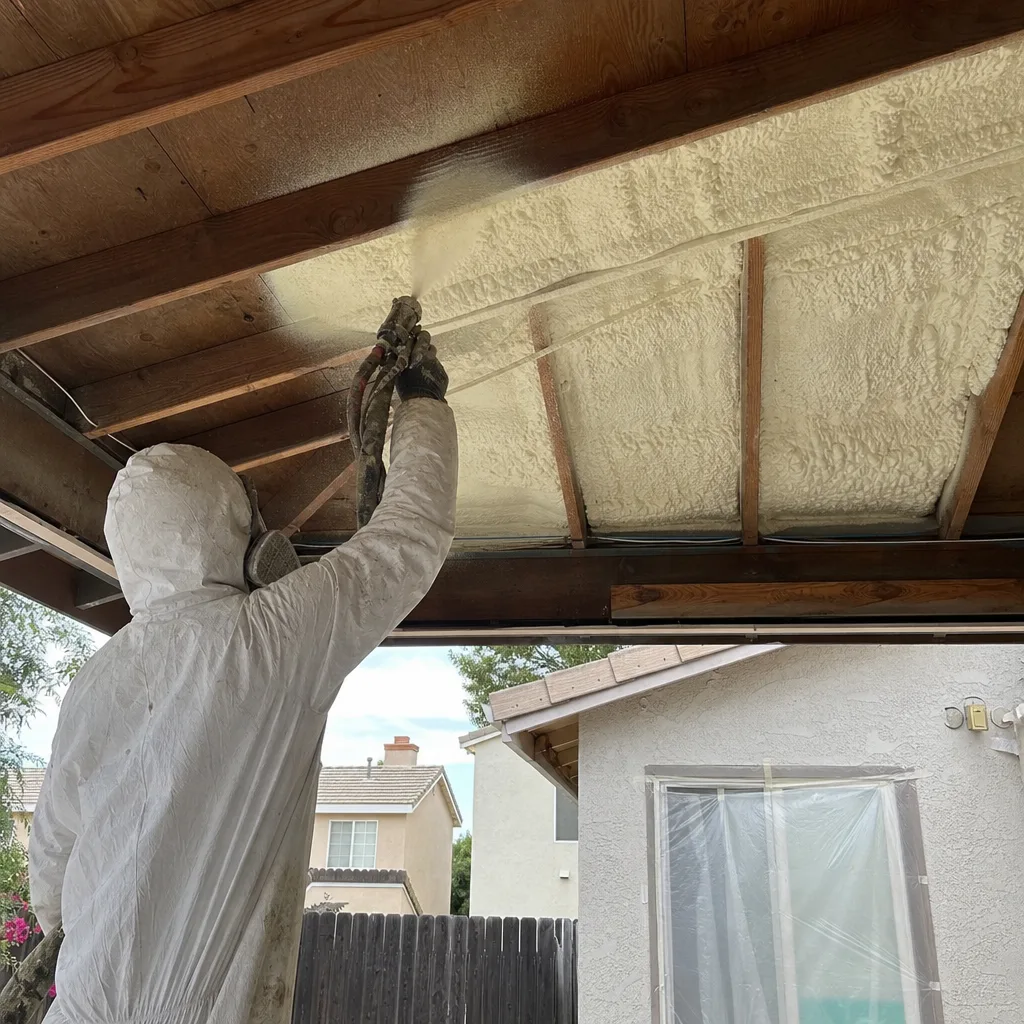
Spray Foam Insulation in La Habra
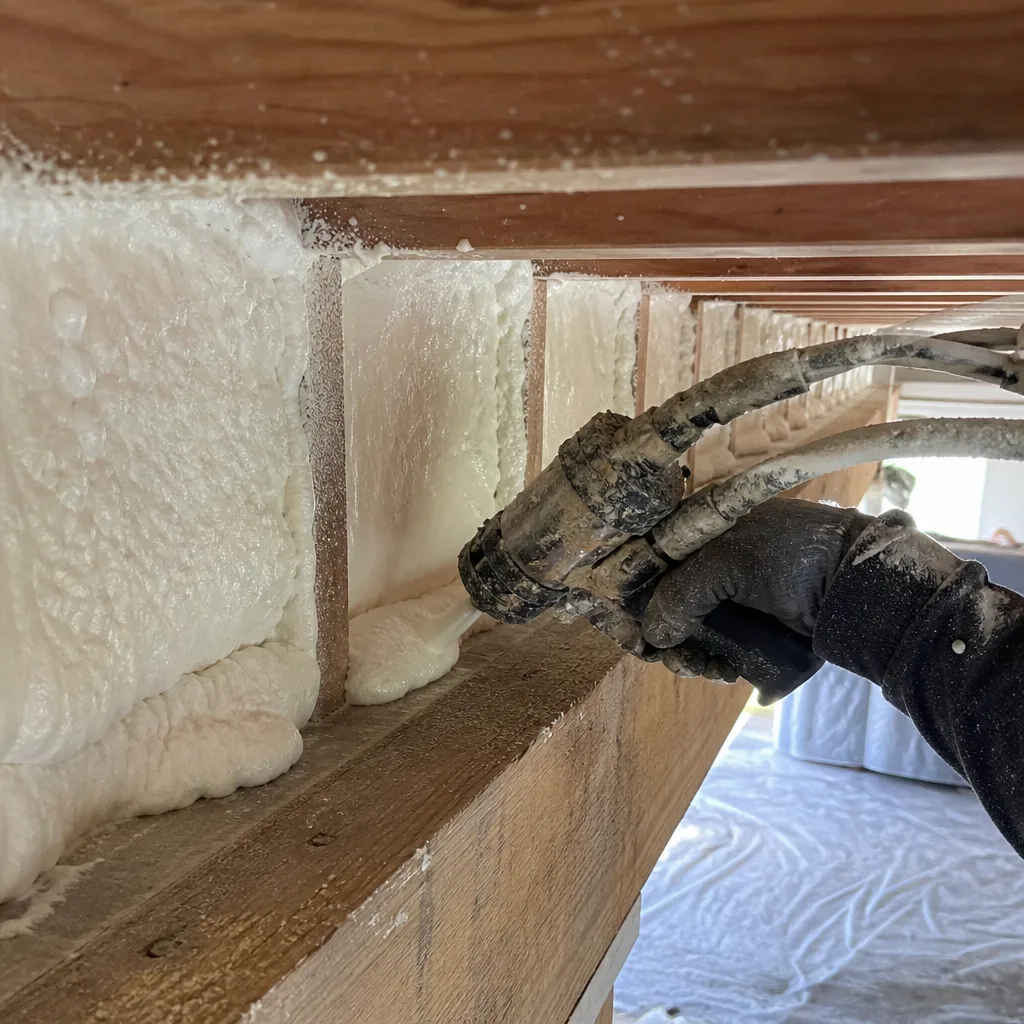
When a La Habra homeowner wants the highest performance in a tight attic, cathedral ceiling, or cantilevered bonus room, spray foam is the answer. Closed-cell foam from Demilec or Icynene air seals and insulates in one pass – a big deal in the older ranches where recessed can lights and open soffits leak conditioned air year-round. It’s also the best choice for the east-side hill homes where stepped ceilings make batt coverage inconsistent. On a 1950s stucco ranch, spray foam under the roof deck can turn an unconditioned attic into usable storage space. Read the full local guide at Spray Foam Insulation in La Habra.
What happens when you call
- 1
A real person answersNo phone trees — you reach a local pro.
- 2
You get an upfront price rangeHonest numbers before anyone is dispatched.
- 3
A background-checked tech heads outLicensed & insured, dispatched right away.
- 4
You approve before work beginsNothing starts until you say go.
Blown In Insulation in La Habra
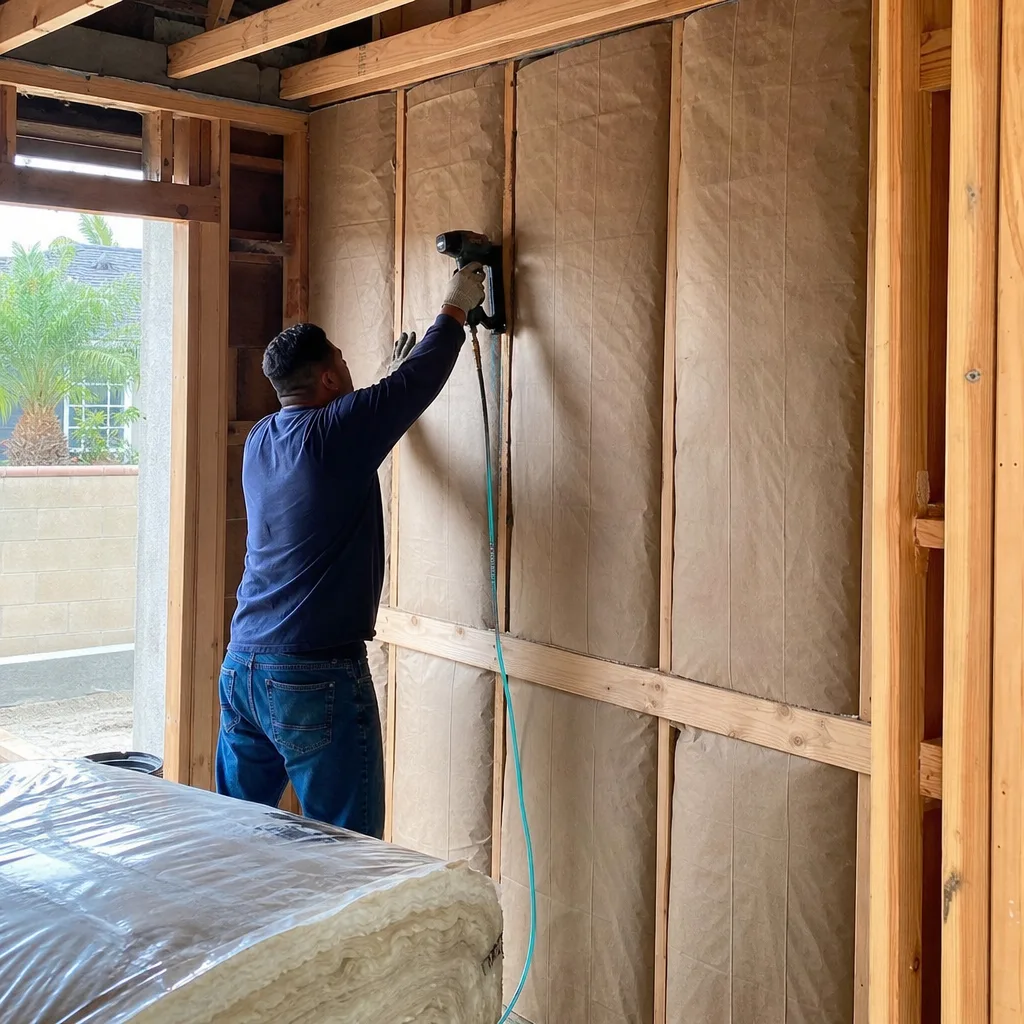
Blown in insulation is the most practical retrofit for La Habra’s older ranch homes because loose-fill material flows around the odd framing, low-slope transitions, and original open-eave soffit conditions that make batt installation hit-or-miss. In a 1960s attic off La Habra Boulevard with thin R-11 batts that have compacted to nearly nothing, blown-in cellulose from GreenFiber or blown fiberglass fills the entire floor cavity to a consistent depth – no gaps, no seams. That matters here because the heat pocket effect means attic temperatures routinely exceed 140°F in summer, and any thin spot becomes a heat leak you can feel in the ceiling below. We also use blown-in material to top up existing batts where full removal isn’t needed, a common and cost-effective fix for La Habra attics that are mostly fine but too shallow. You can learn more about the material options on our Blown In Insulation page.
Cellulose Insulation
Signs you need it
Your La Habra attic has old, dusty, compressed batts that don’t reach the top of the joists and you want a denser, recycled-content material that resists the drying effect of Santa Ana winds.
What it costs in La Habra
Blown-in cellulose in a La Habra attic typically runs $1.50 to $3.00 per square foot of attic floor area, or roughly $1,000 to $2,200 for a standard 1,200-square-foot ranch attic, depending on depth and access.
How we do it
We air seal every penetration first, then blow GreenFiber cellulose to the target depth across the entire attic floor, checking coverage with a depth gauge as we go.
Blown In Attic Insulation
Signs you need it
Rooms under your La Habra attic stay hot through the evening in summer, dust settles on everything, and you can see the attic floor joists through thin, patchy old batts.
What it costs in La Habra
A blown attic insulation job in La Habra averages $1,800 to $3,800 for the typical 1,000- to 1,500-square-foot ranch attic, with smaller hillside homes on the low end and stepped-attic custom homes on the high end.
How we do it
We remove or level the existing material as needed, air seal the attic floor, and blow new insulation to a uniform depth that meets the home’s heat-rejection needs.
Loose Fill Insulation
Signs you need it
Your La Habra home has an irregular attic cavity – stepped ceilings, kneewalls, low-slope transitions – where fiberglass batts leave gaps you can see and feel.
What it costs in La Habra
Loose-fill insulation in La Habra costs $1.00 to $2.50 per square foot for material and installation, so a 1,200-square-foot attic generally lands between $1,200 and $3,000.
How we do it
We use a calibrated blowing machine to distribute loose-fill material into every corner, cavity, and over every irregular surface until coverage is consistent throughout.
What Blown In Insulation Costs in La Habra
| Item | Typical range in La Habra |
|---|---|
| Blown-in cellulose (attic floor) | $1,500 – $3,000 |
| Loose fill / blown fiberglass | $1,200 – $2,800 |
| Blown attic insulation (full 1,200 sq ft ranch) | $1,800 – $3,800 |
These ranges reflect the La Habra housing stock we see most: low-pitch ranch attics with open eaves that are fast to access, plus a share of stepped east-side attics that take more labor. The final number depends on square footage, current material condition, target depth, and how much air sealing the attic needs.
Is blown in insulation worth it for an older La Habra ranch?
Yes, because most 1950s-1970s La Habra ranches still have original R-11 batts that have compacted to a fraction of their labeled performance, and blown-in material fills the gaps batts leave around framing and odd cavities. The heat pocket summer gain makes even a modest upgrade noticeable in room comfort. Call (855) 382-3925 for an exact figure.
Can you blow insulation over existing batts in La Habra?
In many La Habra attics, yes – if the existing batts are dry, uncontaminated, and relatively level, we top them up with blown fiberglass or cellulose to reach the recommended depth for this climate zone. Full removal is only needed when old material is compacted, pest-damaged, or water-stained. Estimates are free.
Brands We Service in La Habra
We install blown-in systems from GreenFiber and Owens Corning, spray foam from Demilec, and fiberglass batts from Johns Manville when the job calls for them. That means La Habra homeowners get the material that fits their attic, not whatever’s on the truck. Parts and material are sourced locally where possible, so turnaround on standard La Habra jobs stays tight. See our brands for the full lineup.
Pricing for Insulation Company in La Habra, CA
| Service | Typical range in La Habra |
|---|---|
| Attic air sealing (before insulation) | $400 – $1,200 |
| Attic insulation removal | $600 – $1,800 |
| Blown-in cellulose attic insulation | $1,500 – $3,000 |
| Blown-in fiberglass attic insulation | $1,200 – $2,800 |
| Loose fill insulation | $1,200 – $3,000 |
| Spray foam (open-cell, attic roof deck) | $2.00 – $4.50 per sq ft |
| Spray foam (closed-cell, attic or rim joist) | $3.00 – $7.00 per sq ft |
| Full 1,200 sq ft ranch attic overhaul | $2,500 – $5,500 |
What pushes a La Habra price up: an east-side hillside attic with stepped ceilings and short kneewalls that slow coverage, old material that needs full removal, or heavy air sealing around decades of can lights and open eaves. Every job gets a fixed, upfront quote before we start – no surprise line items, no bait pricing.
Neighborhoods We Serve in La Habra
We work across the whole city, from the flat ranch tracts off Lambert and La Habra Boulevard to the hillier lots near Portola and the West Hills. Our crews know the difference between a 1955 stucco ranch attic and a 1990s east-side custom step attic, because they’ve worked in both dozens of times.
- Old Town / La Habra Boulevard corridor
- Lambert Road ranch tracts
- West Hills / Portola area
- East La Habra hillside homes
- Harbor Boulevard corridor
Most La Habra neighborhoods get a next-day or same-week scheduling slot, and we keep response times tight during the June-through-September stretch when attic heat complaints spike.
Service Area – Cities Near La Habra
Cozy Insulation Co also serves the neighboring communities around La Habra, including La Habra Heights, CA where hillside attics are the norm, East La Mirada, CA just across the county line, Fullerton, CA to the east, and La Mirada, CA to the west. If you’re close to the border, call us and we’ll confirm coverage.
Serving La Habra, CA — Our Local Coverage Area
We’re based in the La Habra area and know this community well. Use the map below to see our service coverage — if you’re nearby, we can almost certainly help.
FAQs About Insulation Company in La Habra
During the June-through-September peak, we reserve same-week slots for La Habra homeowners with rooms that are actively overheating or duct condensation problems. Emergency and urgent attic jobs inside 90631, 90632, and 90633 generally get a crew out within one to three business days. Call (855) 382-3925 and we’ll give you a real arrival window, not a vague promise.
Most standard blown-in, batt, and spray foam retrofit jobs in La Habra do not require a city permit because they’re classified as maintenance or minor interior improvement. If your project involves structural changes, HVAC duct relocation, or major air sealing that affects the building envelope, we’ll flag it during the estimate and handle the paperwork. We’ll tell you honestly what’s needed before any work starts.
Yes, and the two require different approaches. The flat ranch tracts off Lambert and La Habra Boulevard have low-pitch attics with open eaves that are quick to access but usually need heavy air sealing first. The hillside and Portola-area homes have stepped attics, kneewalls, and irregular cavities where blown-in material and spray foam perform better than batts. One crew handles both.
What happens when you call
- 1A real person answersNo phone trees — talk to a local insulation pro.
- 2You get an upfront price rangeHonest numbers before anyone is dispatched. No surprises.
- 3A background-checked tech heads outLicensed & insured, typically within 60-minute.
- 4You approve before work beginsNothing starts until you say go.
What La Habra Customers Say
"Plastic laid from the front door to the attic hatch and they vacuumed the hallway afterward."
— Jason Hoffman"Attic was at maybe R-11 from the 1970s and blown in over the top would have just buried the problem. They removed the old material, air sealed the top plates and penetrations first, then blew in to R-49. The upstairs is a completely different house in August."
— Colleen Vaughn"Work is good and the house is noticeably more comfortable. There was insulation debris left in the hall closet under the attic access that I had to clean up."
— Amanda Sullivan