
Fast, Reliable Attic Insulation Across La Habra
Attic insulation in La Habra isn’t a one-size job. If your ceilings feel warm by mid-afternoon, your upstairs bedrooms never match the thermostat, or your AC runs non-stop from June through September, the problem is likely sitting right above your head. We work across all three La Habra zip codes, 90631, 90632, and 90633, and we know these homes well: the 1950s ranches off Lambert, the hillside lots near West Hills, the newer infill on the east side. Each one needs something different. Call (855) 382-3925 and we’ll tell you exactly what yours needs.
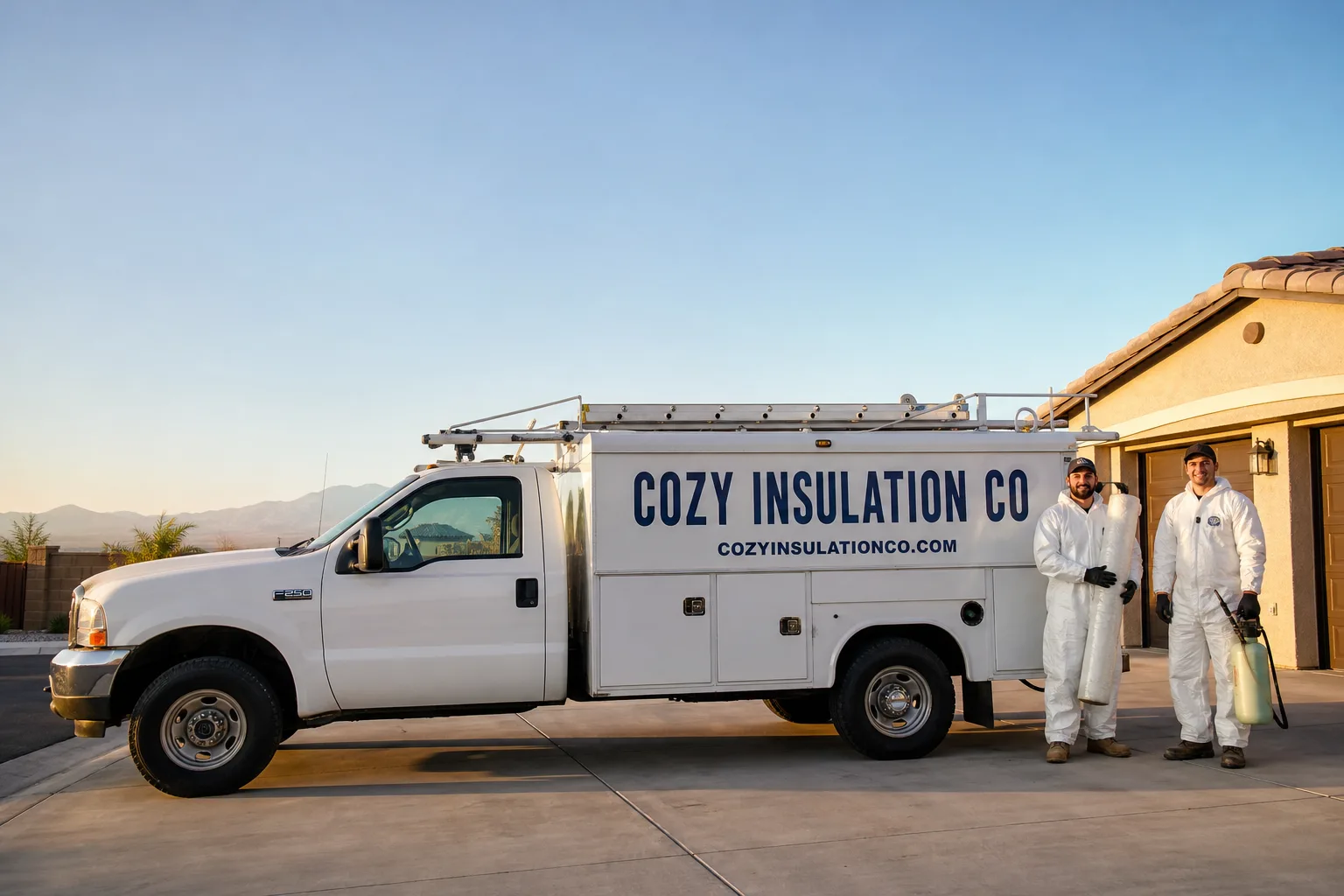
We’re Cozy Insulation Co, and we’ve built our whole approach around matching the right material to the right house. Not the easiest install. Not the cheapest batt we can blow in fast. The right one.
Why Cozy Insulation Co Is La Habra’s Preferred Attic Insulation Company
La Habra sits in a heat pocket. We say that constantly because it drives every recommendation we make here. Summer afternoons run hotter than coastal Orange County and often hotter than Fullerton just a few miles south. That heat loads your attic first, then your ceilings, then your AC bill. We approach every La Habra job as a heat-rejection problem before anything else, because that’s what these houses actually need.
Our crews know the housing stock. The post-WWII ranches with low-pitch roofs and original R-11 batts. The hillside customs with stepped attics where a lazy install leaves gaps. The open-eave soffits that were fine in 1955 and now let Santa Ana heat pour in once the roof deck is unprotected. We don’t show up and guess. We inspect, we measure, and we name the material we’d put in our own home.
Mike Callahan, who runs our operation, insists on that. Every estimate is free, and every recommendation comes with a reason tied to your specific roof, your specific attic, and how La Habra’s heat behaves on your specific block. Call (855) 382-3925 to set one up.
Radiant Barrier in La Habra
Radiant Barrier work in La Habra is, in our experience, the single most undersold insulation upgrade for these low-slope ranch roofs. The original 1950s and 1960s homes off Lambert, La Habra Blvd, and the west-side hills were framed for open-eave soffit venting with nothing between the roof deck and the living space except a thin layer of settled fiberglass. That setup lets roof-deck heat radiate straight down into the attic air, and from there into your ceilings. A radiant barrier stapled to the underside of the roof deck reflects that heat before it ever reaches the insulation plane. On a 100-degree La Habra afternoon, that’s the difference between an attic at 140 degrees and one at 110.
We install radiant barrier as a complement to insulation, not a replacement for it. The two do different jobs. Insulation slows conductive heat transfer. Radiant barrier blocks radiant heat gain. In a low-slope, open-eave La Habra attic, you often need both, because the roof deck bakes hard in summer and the thin original batts were never designed for that load. The cost ranges from $1,200 to $3,800 depending on attic square footage, roof pitch, and whether we’re also air-sealing top plates and can lights at the same time. The work goes fast: most single-story ranches finish in a day.
Low-Slope Ranch Roofs
The challenge with a low-pitch roof off Lambert or La Habra Blvd isn’t the barrier itself. It’s access. The fall from ridge to eave is short, which means tight working clearance near the soffits. We send smaller-framed techs for those sections, and we mask and drape the entry to keep fiberglass dust out of your hallway. The result is full, flat coverage with no sagging, no stapled-through wiring, and no gaps where the heat sneaks past.
Hillside And Stepped Attics
The hillside homes on the West Hills and Portola side have a different geometry. Stepped attics create vertical transitions where heat stratifies: the upper bay bakes while the lower bay stays cooler, and a single flat-batt install can leave the upper bay untouched. We cut the barrier to follow each step, and we verify coverage with thermal imaging before we pack up. Those homes typically run toward the higher end of the pricing range because the labor is slower and the cuts are more intricate.
Attic Cleaning Services in La Habra
Attic Cleaning Services in La Habra matter more here than in most towns, because these older ranches accumulate decades of rodent droppings, blown-in dust, and broken-down fiberglass before anyone looks up. If your attic smells, if you’ve had a roof leak, or if you’re planning to add insulation, cleaning comes first. You do not want new insulation trapping old contamination against your ceiling. Blowing cellulose over rat droppings doesn’t fix anything; it just seals it in.
We remove old, soiled insulation with commercial vacuums, sanitize the deck and framing, and haul everything away. Then we air-seal, and only then do we install the new material. A typical single-story La Habra ranch with a low-slope attic runs $900 to $2,200 for full removal and cleanout, depending on access, how much material is up there, and whether we’re dealing with rodent activity. Add ventilation prep like baffle installation at the eaves and the range adjusts to $1,100 to $2,600. It’s the least glamorous part of the job, and the part that determines whether the new insulation actually performs.
Pre-Insulation Cleanouts
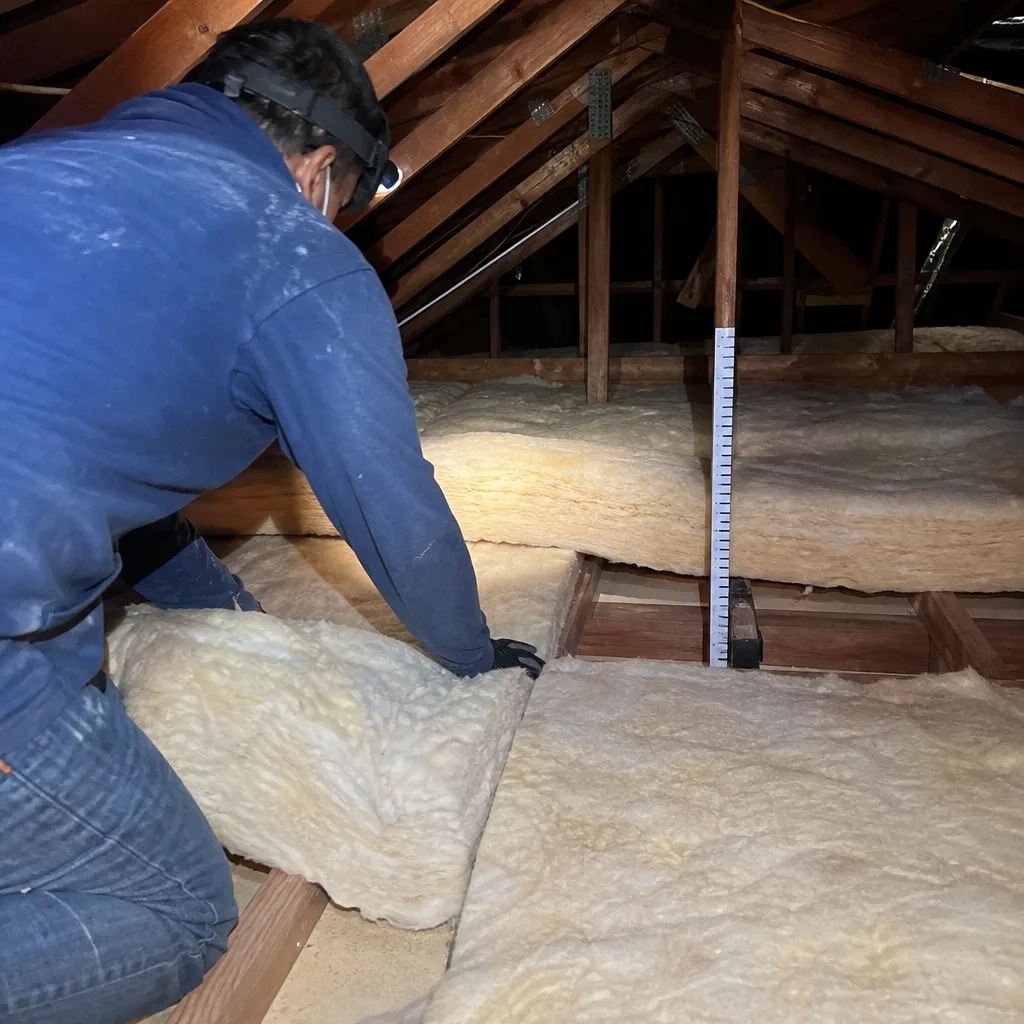
If you’re adding a top-up or going for a full replacement, cleaning the existing layer first pays for itself in air quality and coverage. Old, matted fiberglass can’t hold its rated R-value, and any moisture trapped beneath it becomes a mold and duct-sweat problem in La Habra’s summer heat. We’ve pulled batts out of Lambert-area attics that had compacted to the thickness of a bath mat. The homeowners noticed the difference the first week.
Rat And Mouse Remediation
We find evidence of rodent activity in a significant share of La Habra attics we clean, especially in the older tract homes where gable vents and open eaves leave easy entry. We remove the soiled material, sanitize, and seal entry points where we can reach them. We’re not pest control, but we know the signs and we’ll tell you plainly if you need a separate extermination pass before we install. We won’t seal insulation over an active infestation.
What happens when you call
- 1
A real person answersNo phone trees — you reach a local pro.
- 2
You get an upfront price rangeHonest numbers before anyone is dispatched.
- 3
A background-checked tech heads outLicensed & insured, dispatched right away.
- 4
You approve before work beginsNothing starts until you say go.
Trusted Brands We Service in La Habra
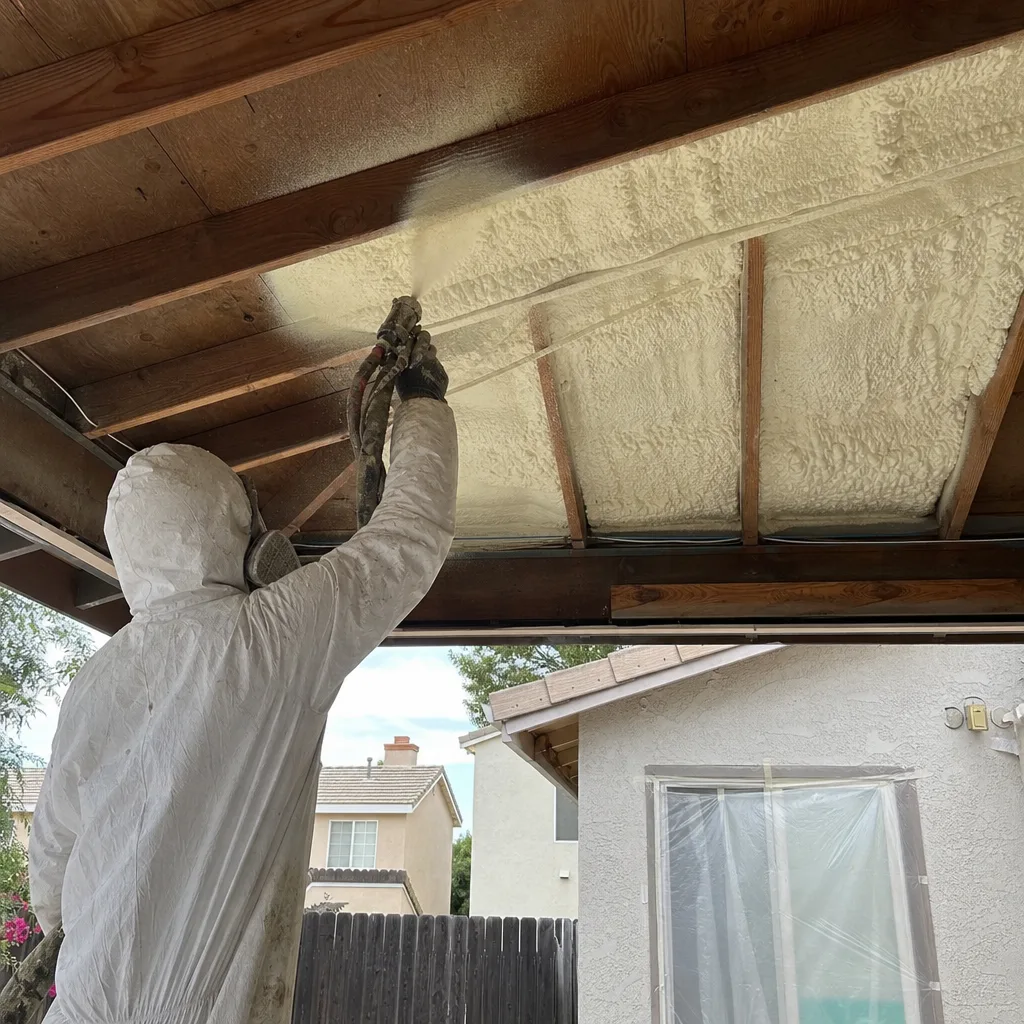
We install products from Owens Corning, Johns Manville, GreenFiber, and Demilec, among others. That matters in La Habra because different homes need different materials. Your 1950s ranch wants a blown-in cellulose like GreenFiber that fills low-slope cavities without gaps. A newer hillside custom with cathedral ceilings might call for Demilec closed-cell spray foam. We stock common product for the La Habra area and can usually start within the week. When a manufacturer backs their product and we back our install, you get coverage that outlasts the roof it sits under.
Common Attic Insulation Problems We See in La Habra Homes
- Ceiling-hot west rooms in summer: The classic 1950s La Habra ranch off Lambert or La Habra Blvd faces its bedrooms west, and the low-slope attic above them bakes all afternoon. Original R-11 batts were never enough for this heat pocket, and once they’ve settled, the ceiling surface can run 10 to 15 degrees above the thermostat setting.
- Duct condensation from June through September: Open-eave soffit venting lets dry Santa Ana heat into the attic, where it meets cooler AC duct surfaces and sweats. That moisture wets the drywall, attracts dust, and eventually shows as ceiling stains. We see it constantly in these older tract homes.
- Settled or compressed original batts: Fiberglass batts installed in the 1950s and 1960s have been losing loft for decades. What started as R-11 is often performing like R-4 or worse, and in low-slope attics with limited depth, there’s no hiding that loss. The rooms below feel it.
- Gaps in stepped and hillside attics: On the West Hills and Portola side, single-pitch installs leave upper attic bays uncovered and top plates unsealed. La Habra’s heat finds those gaps immediately. A stepped attic has to be insulated step by step, not with one flat pass.
Pricing for Attic Insulation in La Habra, CA
Attic insulation in La Habra typically runs $1,400 to $4,200 for the insulation work itself, depending on attic size, material, and whether we’re topping up or starting fresh. Blown-in cellulose for a standard 1,200-square-foot ranch usually lands between $1,800 and $2,900. A full removal-and-replacement of old batts runs $2,500 to $5,200. Radiant barrier adds $1,200 to $3,800. Attic cleaning alone is $900 to $2,200. Stepped or hillside attics run toward the higher end because the labor is slower. Call (855) 382-3925 for a firm quote. Estimates are free, and we’ll give you a number before we leave your driveway.
We Also Serve Cities Near La Habra
Our crews work across north Orange County and the neighboring communities. In addition to La Habra, we regularly serve La Habra Heights, East La Mirada, Fullerton, and La Mirada. If you’re just over the line in any of those areas, the same team handles your job, and you’ll get the same honest assessment. Our Attic Insulation specialists know the tract housing, the heat patterns, and the roof styles across this whole corridor.
Serving La Habra, CA — Our Local Coverage Area
We’re based in the La Habra area and know this community well. Use the map below to see our service coverage — if you’re nearby, we can almost certainly help.
FAQs About Attic Insulation in La Habra
La Habra sits further inland and higher into the Puente Hills heat pocket than most of Fullerton, so your attic runs hotter on the same afternoon. You also have more of those 1950s low-slope ranches with original R-11 batts and open eaves. Fullerton’s housing mix and slightly lower summer loads mean the same insulation deficiency shows up less. Your house isn’t imagining the heat. Call (855) 382-3925 and we’ll measure what’s actually happening up there.
It’s usually both, and they feed each other. The thin, settled batts let roof-deck heat through to the ceiling plane, and the flex ducts in that hot attic air sweat and dump moisture onto the drywall. We find this exact pattern on La Habra Blvd and Lambert-area ranches every summer. Air-sealing the top plates, topping up the insulation, wrapping the ducts, and adding radiant barrier usually solves it. The ducts are the symptom; the uninsulated roof deck is the cause.
It makes more sense on a low-pitch roof than anywhere else, because the roof deck sits closer to the ceiling plane and radiates heat directly down. The low-slope ranches off Lambert and La Habra Blvd are the prime candidates. Stepped hillside attics benefit too, but their issue is more about coverage gaps than radiant gain. We install barrier on both, sized to the actual roof geometry.
We treat each attic bay as its own room. A stepped attic gets separate access, separate measurement, and separate coverage on every transition, so the upper bay doesn’t get skipped. We top-seal the plates at each level and verify with thermal imaging before finishing. The labor is slower and the price runs higher, but a single flat-batt install simply doesn’t work on those attics.
Yes, in most cases. The original batts in these 1950s and 1960s ranches are often soiled, settled, or rodent-damaged, and blowing new insulation over them traps the problem. We recommend a cleanout first unless the existing layer is dry, clean, and in decent shape. It adds cost, but it’s the difference between an attic that performs and one that smells. Call (855) 382-3925 and we’ll tell you straight whether yours needs it.
We were called to a 1950s stucco ranch off Lambert where the west-facing bedrooms were hitting uncomfortable ceiling temps by mid-afternoon and the flex duct in the low-slope attic was sweating onto the drywall. Our techs air-sealed the top plates and can lights, brought the R-11 batts up with blown GreenFiber, and wrapped the ducts, then recommended a radiant barrier to knock down the Santa Ana heat gain at the roof deck. That house now holds a steady temperature room to room, and the ceiling stains stopped. That’s the job, done right, for La Habra’s specific heat problem.
Call (855) 382-3925 for a free estimate. We’ll walk your attic, show you what’s there, and tell you exactly what it needs. No pressure, no pitch deck, just an honest read from people who know these homes.
Written by Mike Callahan, Owner at Cozy Insulation Co, serving La Habra and north Orange County.