
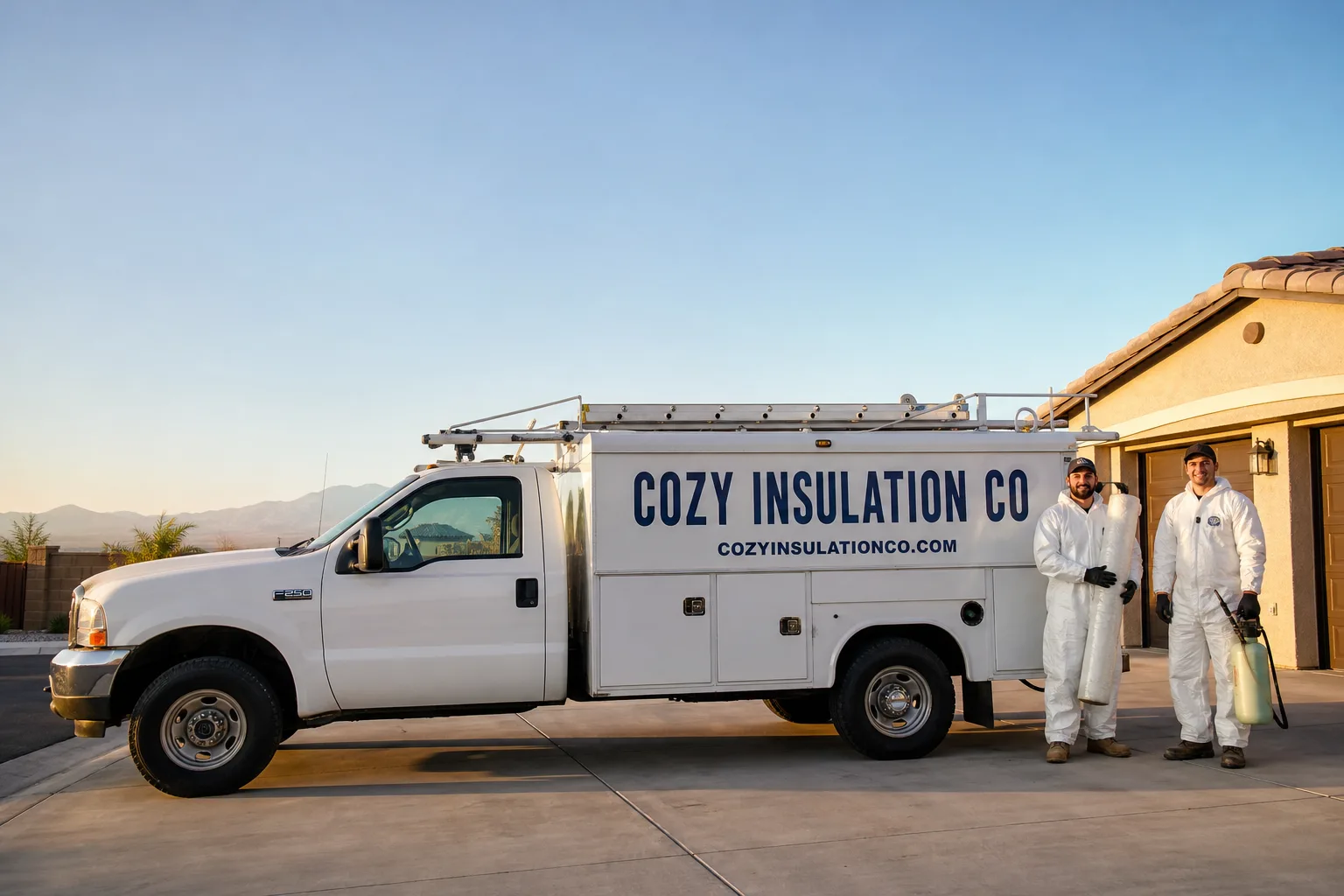
Fast, Reliable Spray Foam Insulation Across Sierra Madre
Spray foam insulation in Sierra Madre typically costs $2.50 to $6.50 per board foot installed, with most whole-attic open-cell projects landing between $4,200 and $9,800 depending on roof geometry and how much old material needs pulling first. We reach most Sierra Madre neighborhoods the same day for estimates and can usually start within a week. Call (855) 382-3925 and Mike Callahan will walk you through what your house actually needs, not what’s easiest to upsell.
Sierra Madre is not a flatland suburb. The canyons off Baldwin and the streets climbing toward Bailey Canyon Wilderness Park sit directly under the San Gabriels, which means your attic weather is different from what they get in Arcadia or Pasadena. Wind moves differently here. Dust and embers don’t settle, they blow sideways. That changes where insulation belongs and how it needs to be detailed. We know these houses because we’ve been in and out of them through enough Santa Ana seasons to recognize the failure pattern before the hatch ladder is even up.
Why Cozy Insulation Co Is Sierra Madre’s Preferred Spray Foam Insulation Company
Sierra Madre homeowners keep calling us back because we treat spray foam as an air-sealing and ember-barrier system first, with insulation as a close second. That ordering matters up here. A foam job that ignores wind-driven infiltration through eave gaps and sill plates is just an expensive way to keep the same drafty house. Our crews are trained to spot the drift-and-ember pattern in north-side foothill attics that most contractors from down-basin never see because they don’t work the canyon wind zone week after week.
Because we install both Spray Foam Insulation systems from Icynene and Demilec alongside blown-in and batt options from Owens Corning and others, we can tell you honestly when spray foam is the right tool and when a hybrid approach saves meaningful money. Nobody here works on commission to push one product line. That’s not a slogan. It’s how Mike runs the company, and it’s how every Sierra Madre estimate gets written.
Response time to Sierra Madre runs same-day to next-day for estimates in most cases. For emergencies where an attic has been exposed after storm or wildlife damage, we prioritize calls from the canyon neighborhoods because we know what an open eave does in the next wind event.
Open Cell Spray Foam in Sierra Madre
Open Cell Spray Foam in Sierra Madre is the workhorse option for older bungalow and ranch house attics where the roof deck itself becomes the air boundary. This foam expands into a soft, breathable barrier that fills the rafter bays and stops conditioned air from leaking through the roof. In a 1920s craftsman off East Montecito with a steep gable roof and no soffit venting, open cell against the roofline keeps the upstairs from turning into a convection oven by mid-July while leaving wood framing able to dry if moisture ever gets in.
Expect open cell in a typical Sierra Madre attic to run $2.50 to $4.75 per board foot, meaning a 1,200-square-foot attic with 2×6 rafters often lands between $4,800 and $7,200 including prep. Houses with existing blown fiberglass that has to be vacuumed out first or roofs with multiple intersecting gables push toward the upper end.
Air Sealing Before Foam Matters More Here
In Sierra Madre, open cell foam applied without air-sealing the top plates and eave gaps is a half-done job. Wind-driven dust and ember grit from the canyon pushes through those openings regardless of what’s in the rafter bays. We seal those paths before spraying, then foam over them. That sequence is what makes the difference between a house that finally stops dusting up and one that just has new insulation behind the same leaks.
When Open Cell Is the Right Call
Open cell suits Sierra Madre homes where the priority is cooling-season comfort and you want a quieter upstairs. It’s also the better fit when roof sheathing is older and you want the wall assembly to breathe rather than trapping moisture behind a closed-cell vapor barrier. If you have a detached garage that doubles as a workshop up toward Carter Avenue, open cell on the ceiling makes August afternoons bearable without turning the space into a sealed vault.
Spray Foam Insulation Contractors in Sierra Madre
Spray Foam Insulation Contractors in Sierra Madre are not all the same, and the difference shows up in how they handle the wind-scoured, ember-laden attic conditions that define this town’s north-side neighborhoods. We bring our own crew, never sub the foam work to a third party, and install Icynene and Demilec systems that are backed by their respective manufacturer warranties. When you hire us, you get our people on your ladder, our prep standards on your eaves, and our name on the finished job.
For a full spray foam retrofit on a typical Sierra Madre ranch, plan budgets this way: open cell attic encapsulation runs $4,200 to $9,800, closed cell rim joist and sill work on a raised foundation adds $1,800 to $4,200, and garage ceiling foam usually lands between $1,200 and $2,800 depending on square footage. These are real ranges we quote from, not placeholder numbers. Your house’s access, roof pitch, and existing insulation condition move the needle within them.
Raised Foundation Rim Joist Work
Most Sierra Madre homes sit on raised foundations, which means the rim joist where floor framing meets the foundation is a wide-open infiltration path. Wind pushing against a hillside house pressurizes the crawlspace and forces air up through wall cavities. Closed cell foam at the rim joist stops that path and also blocks rodent entry and dust. We see this detail skipped constantly on cheap quotes.
Gable End and Eave Penetration Sealing
On the north side near the foothills, gable vents and eave gaps catch the full force of Santa Ana gusts. Closed cell foam around these penetrations, paired with open cell on the roofline, creates an assembly that holds up through the worst wind events we get in this stretch of Los Angeles County. It’s specific work for a specific problem.
Trusted Brands We Service in Sierra Madre
We install spray foam systems from Icynene and Demilec in Sierra Madre because both have long track records in fire-prone wildland-urban interface zones and both hold up under the thermal cycling our attics see in August. For homes where a hybrid approach makes more sense, we also carry Owens Corning batt products and GreenFiber cellulose for re-leveling over foam or re-topping wind-scoured loose fill. We keep common foam and sealant stock in our trucks for Sierra Madre jobs, which means fewer back-to-the-yard delays when your attic has an unexpected condition halfway through prep.
Common Spray Foam Insulation Problems We See in Sierra Madre Homes
- Wind-scoured loose fill creating bare spots. In north-side foothill attics, original blown insulation gets pushed into drifts against the far gable during Santa Ana events. The hatch looks full, but half the attic floor is bare, and the house cooks from above.
- Ember and dust caked into eave bands. Fine canyon grit works its way under rafters and packs along the north eave line. We find it in nearly every pre-1950 Sierra Madre attic we open, and it’s a sign the air barrier has been failing for decades.
- Unsealed sill and top plates on raised foundations. 1920s and 1930s bungalows have wall cavities that act like chimneys in wind events. Foam in the rafters without sealing the bottom of the wall cavity still lets the house leak through the floor and walls.
- Closed cell applied over settled, dusty original insulation. If old loose fill isn’t removed or properly prepped first, closed cell can’t adhere correctly and creates moisture-trapping pockets in these wood-frame assemblies. We see it often enough to flag it on every bid.
Pricing for Spray Foam Insulation in Sierra Madre, CA
Spray foam pricing in Sierra Madre runs higher than flatland San Gabriel Valley towns because our houses are older, access is tighter, and roofs are more complex. Here’s what we actually quote in the field: open cell attic encapsulation for a 1,000 to 1,500 square foot ranch house starts around $4,200 and runs to $6,800 for straightforward roofs. With cathedral ceilings, dormers, or significant old-insulation removal, $7,500 to $9,800 is realistic. Closed cell rim joist sealing on a raised foundation bungalow runs $1,800 to $4,200 depending on linear footage and access height. Garage ceiling foam lands between $1,200 and $2,800. Call (855) 382-3925 and Mike will give you an exact quote after walking the house. Estimates are free, and we’d rather spend an hour showing you exactly where your wind problem lives than email a number you can’t trust.
We Also Serve Cities Near Sierra Madre
We run crews to Sierra Madre weekly and cover Arcadia, East Pasadena, Mayflower Village, and Monrovia on the same rotation. If you’re in a neighboring city and have a drafty attic or a garage that won’t hold temperature, call (855) 382-3925 and we’ll get you on the schedule with the same crew that handles the canyon houses.
Serving Sierra Madre, CA — Our Local Coverage Area
We’re based in the Sierra Madre area and know this community well. Use the map below to see our service coverage — if you’re nearby, we can almost certainly help.
FAQs About Spray Foam Insulation in Sierra Madre
Yes, because the foam itself becomes the air barrier at the roofline and at sealed penetrations. Open cell foam fills the rafter bays so wind-driven air can’t tunnel through your attic the way it does now, and closed cell at the eave and gable gaps blocks the direct dust and ember paths. In Sierra Madre specifically, the win comes from sealing the north-side eave band and top plates before spraying. Call (855) 382-3925 for a look at where wind is actually getting into your attic.
Generally yes. Old blown insulation that has settled, been wind-scoured into drifts, or is full of dust and ember grit should be vacuumed out before foam is applied to the roofline or the attic floor. Closed cell foam directly over loose fill creates adhesion problems and can trap moisture against the old material. We’ll let you know what can stay and what has to come out after seeing the attic.
Most older Sierra Madre ranch houses are best served by open cell foam at the roofline with closed cell reserved for rim joists, sill plates, and gable penetrations. That combination handles both the cooling-season heat and the wind-driven infiltration specific to these foothill canyons. The answer changes if you have a flat or low-slope roof, so a walkthrough matters. Call (855) 382-3925 and we’ll give you a straight recommendation.
Yes. Raised foundations mean the rim joist at the top of the crawlspace wall is a major air leak, and the sill plate where the house meets the foundation is the same. In Sierra Madre, canyon wind pressurizes the crawlspace and drives air up through wall cavities, so rim joist sealing with closed cell foam is often just as important as the attic work. Skip it and you’ll keep feeling drafts.
It helps significantly as part of a broader sealing strategy. Closed cell foam at gable ends, eave gaps, and rim joists closes off the same openings that embers and smoke use to enter during wind events near the wildland interface. No insulation product makes a house fireproof, but foam detailed with air sealing in mind meaningfully reduces the pathways smoke and ember grit use to get inside. Call (855) 382-3925 for an assessment of where your house is vulnerable.
Written by Mike Callahan, Owner at Cozy Insulation Co, serving Sierra Madre and the San Gabriel foothills.