
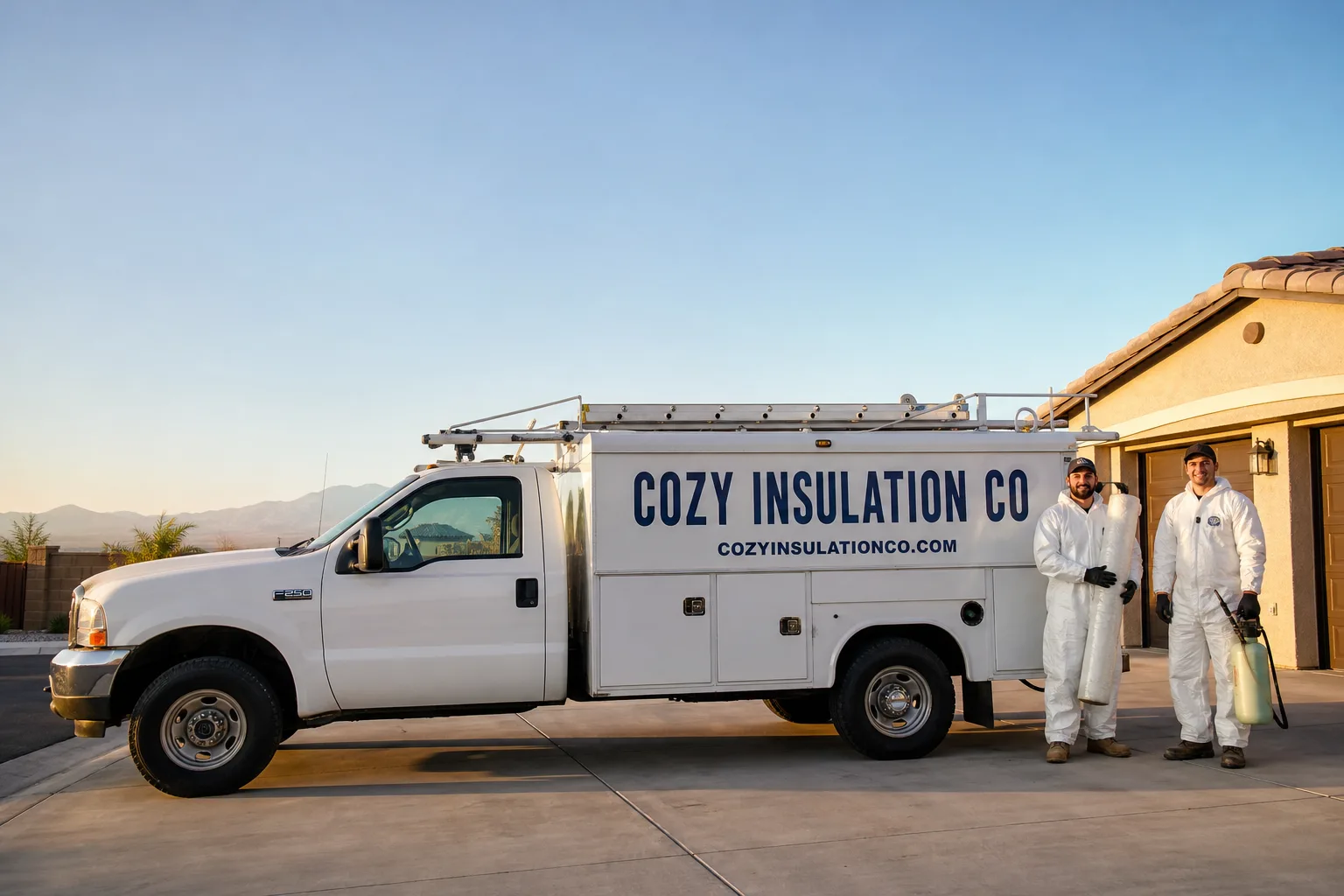
Fast, Reliable Spray Foam Insulation Across San Marino
Spray foam insulation in San Marino typically costs $2.40 to $5.10 per board foot installed, with most whole-attic projects landing between $4,800 and $11,500 depending on roof complexity and foam depth. We get crews to San Marino within 24 to 48 hours for estimates, and same-week installs are common outside peak demand. If your upstairs bedrooms bake in July while the downstairs stays cold, that’s an attic thermal problem, not an HVAC failure, and it’s something we fix regularly in the 91108 and 91118 zip codes. Call (855) 382-3925 for a free estimate.
Why Cozy Insulation Co Is San Marino’s Preferred Spray Foam Insulation Company
San Marino homes are not Alhambra homes. The estate-style lots, mature oak canopy, and 1920s-to-1960s construction create a completely different set of attic conditions than the tract housing you’ll find just south of Huntington Drive. Mike Callahan built Cozy Insulation Co around matching the right material to the right house, and in San Marino that almost always means a custom spray foam scope rather than a blanket fiberglass job. We work with Icynene and Demilec systems because they let us be precise about depth, coverage, and air-sealing in ways that commodity products simply can’t match.
Our crews know the streets here. The long driveways off Orlando Road, the Spanish Colonials in Oak Knoll, the mid-century ranches up toward Lacy Park. We know which houses have finished attics, which have original plaster walls, and which have roof decks that need selective rather than uniform foam application. That local familiarity means fewer surprises on install day and better decisions about where the foam goes, how thick it runs, and what gets air-sealed first.
Spray Foam Insulation Contractors in San Marino
Spray foam insulation contractors in San Marino handle the messiest, most technically demanding insulation work: applying open-cell or closed-cell foam directly to roof decks, attic floors, rim joists, and wall cavities. In San Marino, a contractor’s job usually starts with figuring out what’s actually happening inside an older attic, because the original fiberglass or rock wool from the 1950s is often compressed, damp, or missing entirely at the eaves. Typical whole-attic spray foam runs $5,200 to $10,800 here, with wall cavity injection adding $3,000 to $7,500 depending on access.
Open-Cell Roof Deck Application
Open-cell foam is the workhorse for San Marino attics with complex rooflines. It expands into the irregular framing of steep Spanish Colonial and Tudor roofs, air-seals the gaps that original construction never addressed, and lets moisture pass through rather than trapping it against old sheathing. That last point matters a great deal on homes where roof assemblies were never built with modern vapor profiles.
Closed-Cell for Rim Joists and Garage Ceilings
Closed-cell foam runs denser and acts as its own vapor barrier, which makes it the right call for rim joists, garage ceilings, and any surface exposed to garage fumes or crawlspace moisture. In San Marino’s older homes, rim joists are frequently uninsulated and leak air directly into the house. Sealing them with closed-cell foam is a targeted fix that often delivers outsized comfort gains in the rooms above.
Spray Foam Attic Insulation in San Marino
Spray foam attic insulation in San Marino means something different than it does in East Pasadena or San Gabriel, because the canopy changes everything. Large sections of roof across 91108 are shaded by mature oaks and Mediterranean specimens, which keeps north-facing roof decks cool and damp while south-facing planes bake in direct sun. A uniform foam application across both orientations creates condensation risk on the cool side and still leaves the hot side under-insulated. Typical attic-only spray foam in San Marino runs $4,800 to $11,500, with finished-attic projects at the upper end.
Per-Orientation Roof Deck Insulation
On a shaded San Marino roof, we specify foam by plane, not by square footage. A north-facing deck under heavy leaf litter often needs thinner open-cell foam plus air-sealing at the transition points, while the exposed south deck needs full-depth closed-cell to cut radiant heat gain. This is not the way most insulation companies bid attics, but it’s the way attics actually behave under a mature canopy.
Finished Attics and Steep Rooflines
Homes in Oak Knoll and along St. Albans Road frequently have finished or semi-finished attics with knee walls, dormers, and steep pitches that make uniform coverage nearly impossible. In those spaces, we insulate the roofline rather than the attic floor, which keeps the finished space conditioned and prevents the classic hot-eaves, cold-center pattern. The foam needs to be thick enough at the eaves and ridge to stop thermal bridging, and that takes a crew that understands how complex framing actually performs.
Trusted Brands We Service in San Marino
We install Spray Foam Insulation systems from Icynene and Demilec, and we stock the application materials and sealants our crews need for San Marino jobs so we’re not waiting on supply runs mid-project. For homeowners weighing alternatives, we also work with Owens Corning fiberglass and GreenFiber cellulose, which means a whole-home insulation plan can use spray foam where it earns its cost and more conventional materials where it doesn’t. Eight trusted brands, one company, and a recommendation based on your attic’s actual conditions rather than a sales pitch. Mike Callahan’s crew is trained on all of them, and nobody gets pushed toward a product that doesn’t fit.
Common Spray Foam Insulation Problems We See in San Marino Homes
- Uniform foam over uneven shade: The most common failure we encounter is a prior contractor who applied the same foam depth across every roof plane. Under San Marino’s oak canopy, the north side stays cool and traps condensation, while the south side still transmits afternoon heat. The fix is selective re-application by orientation, and it usually requires removing part of the original foam.
- Foam over original plaster walls without vapor-barrier treatment: Homes built in the 1920s and 1930s often have plaster and lath walls with no vapor barrier. Injecting closed-cell foam into those cavities can trap moisture against the plaster, leading to staining and deterioration. A competent crew tests the wall assembly and may recommend open-cell or a different air-sealing approach entirely.
- Inadequate thickness at eaves and ridges in finished attics: Complex rooflines create pinch points at the eaves and ridge where foam thickness drops off. Those thin spots act as thermal bridges and defeat much of the spray foam’s R-value. Finished attics in San Marino’s custom homes almost always need more attention at the transitions than a standard attic would.
- Leaf litter and debris masking roof condition: Heavy debris from the mature canopy hides cracked tiles, damaged flashing, and sheathing issues that should be addressed before foam is applied. We inspect the roof assembly first, because foaming over a slow leak in a shaded San Marino roof turns a small repair into a large one.
Pricing for Spray Foam Insulation in San Marino, CA
A typical open-cell attic roof deck application in San Marino runs $4,800 to $8,900, while closed-cell runs $6,500 to $11,500 due to material cost and depth requirements. Wall cavity retrofit work adds $3,000 to $7,500 depending on whether we’re working from the exterior or through interior plaster. Rim joist sealing in a crawlspace or basement typically runs $900 to $2,800. The factors that move the number: finished attics, steep roof complexity, whether existing insulation must be removed, and how much air-sealing the original structure needs. We give free estimates with specific numbers, not ranges, after we see your attic. Call (855) 382-3925 to schedule a walkthrough.
We Also Serve Cities Near San Marino
While this page focuses on San Marino, our crews regularly work in San Gabriel, East San Gabriel, Alhambra, and East Pasadena. Each area has its own housing stock and attic conditions, and we adapt our approach accordingly. If you’re just outside the 91108 or 91118 boundary, call to confirm coverage, because our service area extends well beyond the city line.
Serving San Marino, CA — Our Local Coverage Area
We’re based in the San Marino area and know this community well. Use the map below to see our service coverage — if you’re nearby, we can almost certainly help.
FAQs About Spray Foam Insulation in San Marino
San Marino spray foam costs more because the houses are larger, the rooflines are steeper and more complex, and many projects involve finished attics or original construction that needs extra air-sealing before foam goes in. Alhambra and San Gabriel have more tract-era homes with straightforward attics and accessible framing, which means faster installs and lower labor hours. In San Marino, we’re often working around architectural detailing, removing degraded original insulation, and specifying per-orientation coverage. Call (855) 382-3925 for a specific quote on your house, and the estimate will show exactly where the money goes.
Yes, but only if the foam is specified per roof orientation rather than applied as a uniform blanket. A north-facing deck under heavy shade needs thinner foam plus air-sealing at the transitions, while the exposed south deck needs full-depth coverage to block radiant heat. Applying the same depth everywhere causes condensation on the cool side and leaves the hot side under-insulated. Our crews assess each roof plane separately before spraying.
It depends on the wall assembly and whether a vapor barrier exists. Original plaster and lath walls in 1920s San Marino homes often have no vapor retarder, and closed-cell foam can trap moisture against the plaster, leading to staining and deterioration. Open-cell foam is frequently the safer retrofit choice, and in some cases we recommend air-sealing plus dense-pack cellulose instead. We inspect the wall cavities before recommending anything.
Leaf litter and debris from San Marino’s oaks and Mediterranean trees shade the roof unevenly, which means some planes stay cool and damp while others bake. Heavy litter also hides cracked tiles, damaged flashing, and sheathing problems that should be addressed before foam is applied. Our crews inspect the roof assembly first, because foaming over a hidden leak in a shaded San Marino roof turns a small repair into an expensive one. The canopy also means we often clean roof surfaces and gutters before spraying to keep debris out of the foam.
Yes, and this is some of the most demanding work we do in San Marino. Finished attics with knee walls, dormers, and steep pitches require insulating the roofline rather than the attic floor, and the foam must be thick enough at the eaves and ridge to prevent thermal bridging. We spray the roof deck directly, air-seal around the dormer framing, and ensure the finished space holds temperature through the summer. Call (855) 382-3925 for a free attic assessment, and we’ll walk you through what your specific roofline needs.
If you’re tired of bedrooms that won’t hold temperature and energy bills that climb every summer, call Cozy Insulation Co at (855) 382-3925. We’ll measure your attic, look at the canopy around your house, and give you a straight answer about what spray foam can and can’t do in San Marino. Free estimates, no pressure, and a recommendation based on your roof, not our inventory.
Written by Mike Callahan, Owner at Cozy Insulation Co, serving San Marino and the San Gabriel Valley with multi-method insulation expertise.