
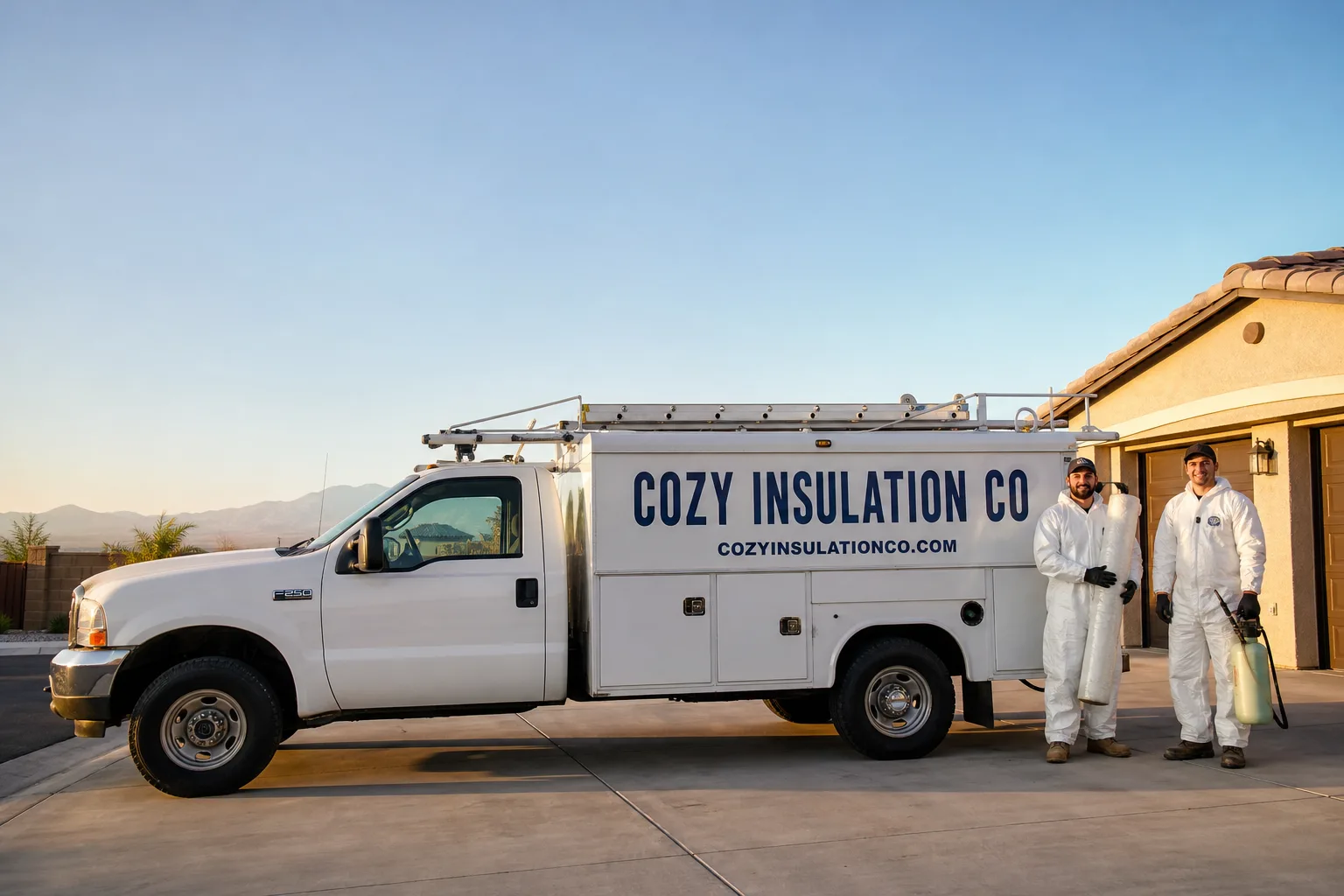
Fast, Reliable Spray Foam Insulation Across San Antonio Heights
Spray foam insulation in San Antonio Heights runs $1.80 to $4.20 per board foot for open cell and $2.40 to $6.50 per board foot for closed cell, with most full-attic projects landing between $4,800 and $14,000 depending on square footage, access, and whether ember-resistant detailing is needed. We’re familiar with the sloped lots, tight crawlspaces, and mid-century attics common up here above the valley floor. Our crews reach most San Antonio Heights homes within 45 to 90 minutes from our Corona base, and Mike Callahan personally reviews every foothill job before we quote it. Call (855) 382-3925 for a free estimate, and we’ll walk the attic with you before recommending anything.
Why Cozy Insulation Co Is San Antonio Heights’s Preferred Spray Foam Insulation Company
We keep hearing the same story from homeowners along 23rd Street and up toward the ridge: rooms that won’t hold heat at night, attics that bake all afternoon, and energy bills that climb every August. San Antonio Heights sits at 2,000-plus feet, which means your attic works harder than a tract home down in Upland. Our Spray Foam Insulation team has spent enough time in these foothill attics to know where the air leaks hide: open gable vents, unsealed top plates, rim joists with gaps you could fit a hand through.
We match the material to your home rather than pushing whatever is easiest to install. For a mid-century custom home on a sloped lot, that often means closed cell spray foam from Demilec or Icynene along the rim joists and roofline. For someone more focused on sound dampening and up-front cost, an open cell system might make more sense. We carry both, plus fiberglass from Owens Corning and Johns Manville and blown-in GreenFiber cellulose when that fits the house better. Eight brands across our full-service lineup means you get a straight answer about tradeoffs, not a sales pitch.
Mike Callahan started Cozy Insulation Co to do one thing well: make homes comfortable without overcomplicating the decision. That means showing you exactly where your attic is losing conditioned air, explaining what each material does in a foothill climate, and giving you a written quote with no pressure. Response time to San Antonio Heights is typically same-week for estimates and under two weeks for installation, faster if you call during a shoulder season. Homeowners near the Mountain Avenue corridor have told us the walkthrough alone was more thorough than the entire quote process with other companies.
Closed Cell Spray Foam Insulation in San Antonio Heights
Closed Cell Spray Foam Insulation is the material we recommend most often for San Antonio Heights attics because it does two things at once: it seals air movement and adds structural rigidity to roofs on older hillside homes. In this foothill environment, where attic temperatures can swing 50 degrees between a summer afternoon and a winter night, closed cell foam creates an air and vapor barrier that open cell or fiberglass cannot match. A typical closed cell roofline application in San Antonio Heights runs $2.40 to $6.50 per board foot, and most 1,800 to 2,600 square foot homes land between $7,000 and $13,500 for a full attic encapsulation.
Air Sealing Rim Joists and Top Plates
On homes near the San Gabriel Mountain base, the rim joist and top plate seams are where we find the worst air bypass. We use Demilec closed cell foam at 2 inches minimum along these junctions to stop the stack effect that pulls hot attic air down into living spaces in summer. This is the highest-leverage fix for back bedrooms that never match the thermostat setting.
Roof Deck Application for Fire-Conscious Attics
Because San Antonio Heights sits in a wildland-urban interface zone, we often pair closed cell foam with ember-resistant flashing around gable vents and penetrations. Closed cell adds compressive strength and an air barrier, but if the vent gaps stay open, embers and hot air still find a path in. We address both in the same visit.
Open Cell Spray Foam in San Antonio Heights
Open Cell Spray Foam is the lighter, lower-cost option that works well for San Antonio Heights homes where the priority is sound control and attic air sealing without the full structural upgrade of closed cell. It expands to fill irregular cavities, which suits the odd angles and short kneewalls common in mid-century custom homes on sloped lots. Expect to pay $1.80 to $4.20 per board foot, with most attic installations running $4,800 to $8,500 depending on depth and access.
Interior Attic Floors and Kneewalls
Open cell foam sprayed directly onto the attic floor or against kneewalls stops air movement through the drywall ceiling and quiets noise transfer between floors. We use Icynene open cell systems for many of these jobs because the foam cures quickly even in the tighter clearances common on 1960s and 1970s San Antonio Heights homes.
Where Open Cell Fits the Budget
If your attic already has some fiberglass batts but still leaks air, open cell sprayed over the top plate and around penetrations gives you meaningful improvement without the full closed cell price tag. We’ll tell you honestly whether the extra cost of closed cell is worth it for your home’s orientation and exposure along the ridge.
Trusted Brands We Service in San Antonio Heights
We install and service spray foam systems from Demilec and Icynene, two of the most performance-tested brands in professional spray foam. For homeowners who want a fiberglass alternative in attached garages or between floors, we also carry Owens Corning and Johns Manville products, and GreenFiber cellulose for blown-in applications. Because San Antonio Heights is a short haul from our Corona warehouse, we can bring replacement foam, sealants, and flashing materials same-day if a follow-up pass is needed. You won’t wait on a parts shipment from out of state.
Common Spray Foam Insulation Problems We See in San Antonio Heights Homes
- Open gable and soffit vents left unsealed. These foothill attics rely on venting that made sense when the home was built, but now it lets hot summer air and cold night air bypass the foam entirely. Sealing them properly is part of our standard walkthrough before any spray foam goes in.
- Foam applied without ember-resistant detailing. In a wildland-urban interface zone, vent gaps and unsealed penetrations are ember entry points. Spray foam alone does not stop that, and most valley-floor contractors don’t think about it because they never have to.
- Off-gassing or incomplete cure on tight sloped-lot attics. Spraying foam too thick in one pass, or spraying in an attic with limited ventilation and tight clearances, leads to a foam that hasn’t cured and an odor that lingers for weeks. We spray in lifts and control the temperature window.
- Original fiberglass compressed under storage or foot traffic. Many San Antonio Heights homeowners use attic space for storage on sloped lots where garage space is limited. Compressed fiberglass loses its insulating value, and the answer is often a spray foam floor application instead.
Pricing for Spray Foam Insulation in San Antonio Heights, CA
Expect to pay $1.80 to $4.20 per board foot for open cell and $2.40 to $6.50 for closed cell in San Antonio Heights. A standard attic floor application on a 1,500 to 2,200 square foot home runs $4,800 to $9,000. A roofline encapsulation with Demilec closed cell typically lands between $8,000 and $14,000 because of the material depth and the ember-resistant flashing work the foothill exposure calls for. Rim joist sealing alone, which many mid-century homes need, runs $1,200 to $3,200. The final number depends on attic size, slope, access clearances, and how much air sealing is required around vents and penetrations. Estimates are free, and we give you itemized numbers before any work begins. Call (855) 382-3925 for yours.
We Also Serve Cities Near San Antonio Heights
Our San Antonio Heights team regularly works in Spray Foam Insulation in San Antonio Heights and the surrounding foothill and valley communities, including Upland, Claremont, Rancho Cucamonga, and Montclair. If you’re in one of those cities and need spray foam insulation, the same crew and the same eight-brand material lineup are available.
Serving San Antonio Heights, CA — Our Local Coverage Area
We’re based in the San Antonio Heights area and know this community well. Use the map below to see our service coverage — if you’re nearby, we can almost certainly help.
FAQs About Spray Foam Insulation in San Antonio Heights
Yes, and in most cases it is the best material choice because mid-century hillside homes have irregular framing, open vents, and air leaks that fiberglass batts simply cannot seal. Closed cell foam along the roofline also helps hold heat during the cold foothill nights and blocks the intense summer heat gain these attics experience above the valley floor. Call (855) 382-3925 and we’ll confirm whether your specific attic is a good candidate.
Yes, we spray tight attic spaces in San Antonio Heights regularly. On sloped lots, the access hatch is often narrow and headroom is limited, which requires a smaller spray rig, controlled pass thickness, and sometimes a partial application from the exterior. We’ll assess your attic before quoting and tell you what is realistic, not what is convenient.
The wildland-urban interface exposure means spray foam in San Antonio Heights should be paired with ember-resistant detailing around vent gaps, soffits, and any penetrations in the attic envelope. Even a closed cell foam application won’t stop embers from entering through a wide-open gable vent. We include that detailing in our quotes for homes along the mountain-facing edges and will explain the fire rating differences between open and closed cell products.
Closed cell is usually the stronger choice for San Antonio Heights attics because it adds an air and vapor barrier, reinforces the roof deck, and handles the wide temperature swings between summer days and winter nights better than open cell. Open cell makes sense when budget is the top concern or when sound control between rooms is the main goal. We’ll give you a straight recommendation based on your home’s orientation and exposure.
Yes. The air sealing alone stops conditioned air from escaping year-round, and closed cell foam adds a thermal barrier that slows heat movement in both directions. Homeowners along the ridge have told us their back bedrooms finally hold heat on cold January nights and the attic no longer cooks in August. Call (855) 382-3925 for an exact quote, and we’ll show you where your home is losing the most.
Written by Mike Callahan, Owner at Cozy Insulation Co, serving San Antonio Heights and the surrounding foothill communities.