
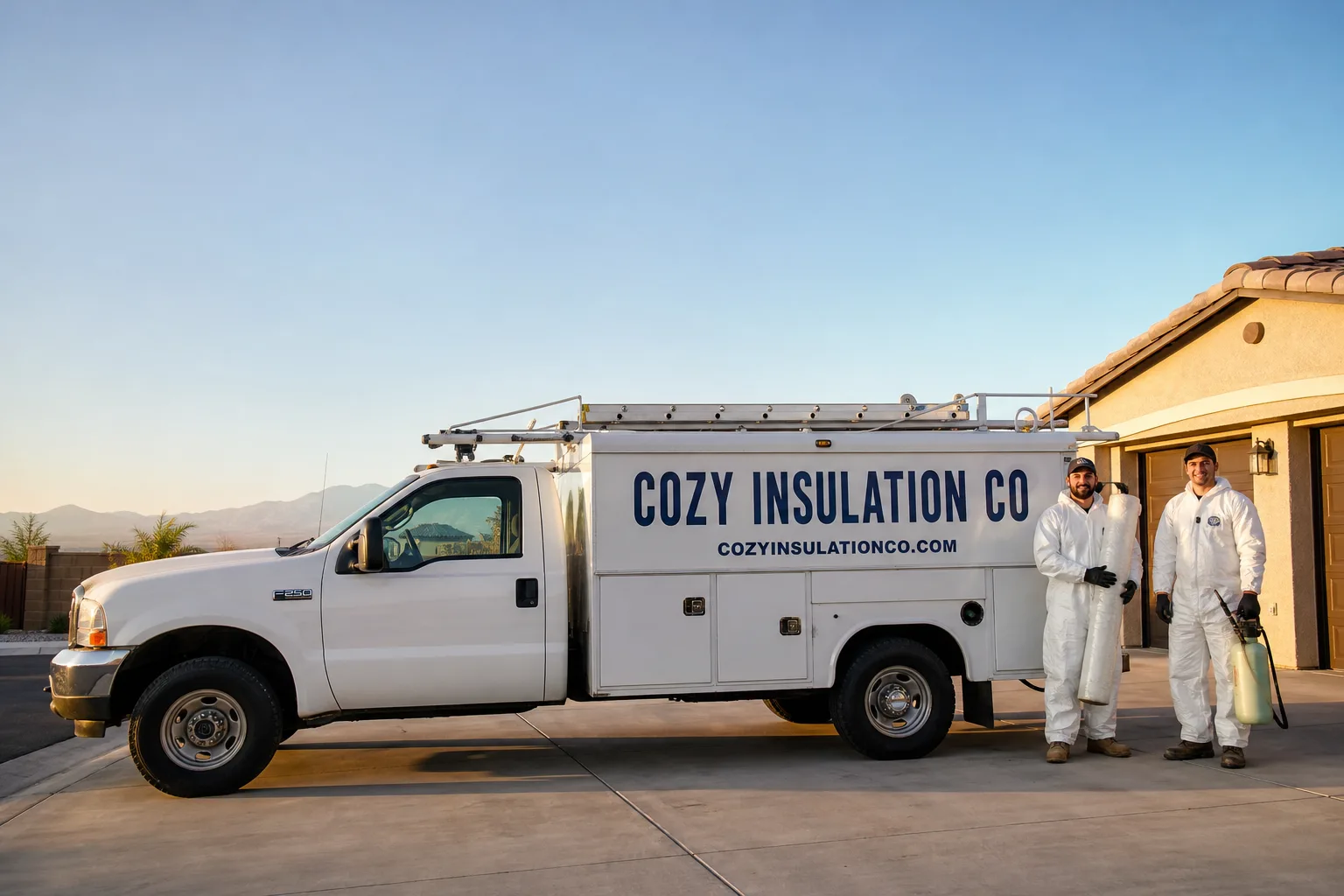
Fast, Reliable Spray Foam Insulation Across Lakewood
Spray foam insulation in Lakewood runs anywhere from $2,900 to $7,400 for a typical attic air-seal and insulation job, with closed-cell wall injection on a 1950s ranch usually landing between $4,800 and $9,600 depending on cavity depth and access. We get to Lakewood homes within 24 to 48 hours for estimates, and most spray foam jobs here finish in a single day. You’re dealing with mid-century tract construction where the walls were framed with the same stud spacing block after block. That repetition is actually the advantage: once we map one home’s cavities, we know the next three on the street. Call (855) 382-3925 and we’ll walk your attic with you, measure what’s in the walls, and tell you straight what needs foam and what doesn’t.
Why Cozy Insulation Co Is Lakewood’s Preferred Spray Foam Insulation Company
We’ve worked in enough Lakewood tract homes to recognize the blueprint before we step through the door. The Mayfair tract, the Carson Park neighborhood, the strips along Del Amo and South Street: same low-pitch roof, same shallow attic, same stucco over frame construction from 1949 to 1955. When a homeowner on one block calls us about rooms that won’t hold temperature, we typically find the same thing in the house two doors down. That repeated field experience means our Spray Foam Insulation team shows up already knowing what the wall cavities look like before we open the first inspection hole.
Mike Callahan, our owner, started Cozy Insulation Co to fix a specific frustration: homeowners getting pushed into whatever insulation was cheapest to install rather than what actually matched their house. In Lakewood, that frustration shows up as 90-degree west bedrooms, attics that radiate heat into the living room by 2 p.m., and energy bills that climb every summer while the AC runs nonstop. We measure the home, check the attic depth, identify the cavity width, and then match the foam type to the problem. Not the other way around.
Reviews from Lakewood customers consistently point to the same things: crews that show up on time, attics left cleaner than they found them, and temperatures in the west rooms that finally stay put. We carry Icynene and Demilec spray foam systems because both are performance-tested brands that hold up in Lakewood’s hot, dry, salt-tinged coastal air. You won’t get a generic pitch from us. You’ll get a read on your specific home, on your specific block.
Closed Cell Spray Foam Insulation in Lakewood
Closed Cell Spray Foam Insulation in Lakewood is our most commonly recommended material for wall cavities and shallow attic decks because the homes here rarely have enough attic depth for thick open-cell layers. Closed-cell foam cures dense at roughly 2 inches, acts as a vapor barrier, and adds structural strength to 1950s framing that has settled over seven decades. A typical closed-cell wall injection in a Lakewood ranch runs $6,000 to $9,600. Attic deck flash coats start around $3,100 for a standard 1,100-square-foot single-story home.
For Lakewood’s low-pitch attics, the key is restraint. Closed-cell delivers the most R-value per inch, which matters when the attic floor sits barely 18 inches above the ceiling in some of these older tracts. We install a thin flash coat on the roofline and air-seal the top plates rather than piling material where airflow and eave vents need room. That distinction, controlling application depth, is what separates a foam job that performs ten years later from one that traps moisture and degrades.
Wall Cavity Injection for Mid-Century Ranches
Lakewood homes built between 1949 and 1955 often have completely empty wall cavities. No batts, no cellulose, nothing but studs and air. Closed-cell injected through small drilled ports fills those cavities completely, then cures rigid and stops the stack effect that pulls hot attic air through the walls all summer. We do this from the exterior through the stucco when possible, which avoids disturbing interior plaster and keeps the job to one day.
Attic Deck Flash Coats
A 1-inch flash coat of closed-cell foam on the underside of the roof deck seals the gap between the attic and the outside air. In Lakewood’s long hot summers, that’s where the heat enters first. Homeowners notice the difference within a day: the attic doesn’t radiate through the ceiling, and the AC stops cycling as hard in the late afternoon.
Open Cell Spray Foam in Lakewood
Open Cell Spray Foam in Lakewood works best in attics with enough depth for a full 8 to 10 inches of material, typically in the few two-story and later-built homes scattered through the 90712 and 90713 zip codes. Open-cell cures soft and spongy, expands to fill irregular framing gaps, and costs less per board foot than closed-cell. A typical attic application runs $2,900 to $5,800. It isn’t a vapor barrier, which matters less in Lakewood’s dry climate and actually helps in attics where the roof deck needs to breathe.
The main question we answer for Lakewood homeowners is whether open-cell’s breathability creates moisture problems. In our climate, with virtually no frost and low humidity most of the year, open-cell performs reliably when installed with proper eave vent clearance. We check the venting before recommending it. If your attic has blocked eave vents or very low clearance, closed-cell flash coating is the better route.
Air Sealing and Draft Reduction
Open-cell foam’s expansion fills the small gaps that fiberglass batts leave behind: around top plates, recessed lights, plumbing penetrations, and wiring chases. In Lakewood tract homes where those gaps have been leaking for 70 years, this one step often does more for comfort than the insulation itself. Rooms hold temperature longer, and the furnace stops running in short bursts through the winter.
Sound Dampening Between Rooms
Because Lakewood homes sit close together on 5,000-square-foot lots, noise between neighboring ranches and between rooms is a common complaint. Open-cell’s air-sealing properties also reduce sound transmission through shared walls and ceilings. It’s a secondary benefit, but one homeowners mention often after the job is done.
Trusted Brands We Service in Lakewood
We install Icynene and Demilec spray foam systems, and we stock the parts and materials for both in our service vehicles when we dispatch to Lakewood. Demilec is a workhorse closed-cell system that holds up to the punishing west-wall heat of July and August. Icynene open-cell expands reliably in the tight framing of 1950s construction. We also carry CertainTeed and GreenFiber products for homes where a hybrid approach, foam air-sealing with blown-in insulation, makes more sense than full foam. Having eight brands on our truck means we match the product to the house, not the other way around. Fast turnaround on Lakewood jobs comes from that: the material is already with us when we pull up.
Common Spray Foam Insulation Problems We See in Lakewood Homes
- Foam shrinkage and disbonding in stucco walls. Lakewood’s cracked 1950s stucco admits salt-laced coastal air, which can cause older foam installations to pull away from the sheathing. We inspect for this before recommending a wall injection, and we repair or replace disbonded sections before adding new material.
- Over-applied foam blocking eave vents. Low-pitch attics in the original tracts don’t have much room, and a contractor who doesn’t know Lakewood construction can over-apply and choke the eave vents. Trapped moisture then degrades both the foam and the roof deck. We measure depth before spraying, every time.
- Lingering off-gassing odor from improperly ratio’d two-part foam. In Lakewood’s mild winters, windows stay shut and air exchange is low, so a bad mix in a closed cavity stinks for weeks. We use calibrated proportioning equipment and hold the ratio tight, then ventilate the home before we leave.
- Thin, settled mineral wool in attics. The original insulation in most Lakewood ranches is a settled layer of mineral wool or early batts, often less than R-8 effective. It does almost nothing in summer. Before we add foam, we assess whether the old material needs removal or can stay in place under the new application.
Pricing for Spray Foam Insulation in Lakewood, CA
Here’s what Lakewood homeowners can expect to pay, based on our work in the area. Open-cell attic insulation runs $2,900 to $5,800 for a standard single-story ranch. Closed-cell wall cavity injection runs $4,800 to $9,600 depending on cavity depth and access. A closed-cell attic deck flash coat starts around $3,100. Rim joist sealing, where applicable, runs $1,400 to $2,600. Garage ceiling spray foam runs $1,200 to $2,400 for a typical two-car garage. The square footage, cavity depth, and whether old insulation needs removal are the main variables. Estimates are free, and we give you a fixed number before any work starts. Call (855) 382-3925 for an exact quote on your home.
We Also Serve Cities Near Lakewood
Our crews cover Lakewood and the surrounding communities, including Signal Hill, Bellflower, Long Beach, and Paramount. If you live in one of those cities, call (855) 382-3925 and we’ll schedule a visit. For more about Spray Foam Insulation in Lakewood, read on.
Serving Lakewood, CA — Our Local Coverage Area
We’re based in the Lakewood area and know this community well. Use the map below to see our service coverage — if you’re nearby, we can almost certainly help.
FAQs About Spray Foam Insulation in Lakewood
Yes. We inject closed-cell foam through small drilled ports from the exterior, then patch and match the stucco. The process takes one day and leaves no interior mess. Most Lakewood ranches have empty cavities that take the foam well. Call (855) 382-3925 and we’ll check yours.
Closed cell. Lakewood’s low-pitch attics rarely have enough depth for a full open-cell application, and closed-cell delivers more R-value per inch while acting as a vapor barrier. A thin closed-cell flash coat on the attic deck is the typical answer for these homes.
Not when installed correctly. Lakewood’s climate is dry most of the year, and the few humid weeks don’t create the moisture-driving conditions you see in colder climates. The risk comes from over-application that blocks eave vents. We measure depth before spraying and leave ventilation paths open, which prevents trapped moisture.
Salt-laden coastal air can accelerate corrosion of the metal fasteners and framing and can contribute to foam disbonding where stucco has cracked and admitted moisture. We check for existing stucco damage before injecting, and we use closed-cell foam that cures rigid and adheres strongly to the sheathing, which resists the salt-air degradation you see with older, improperly installed foam. A call to (855) 382-3925 gets you a wall cavity inspection.
Usually not. We can air-seal the top plates and spray closed-cell over or alongside the old material in most cases. If the old insulation is wet, moldy, or contaminated, we’ll recommend removal. We check during the estimate and tell you exactly what’s needed before you commit.
Call (855) 382-3925 for a free Lakewood spray foam insulation estimate. We measure your attic, check your wall cavities, and tell you what your home actually needs. No pressure, no generic upsell, just a straight read on your house.
Written by Mike Callahan, Owner at Cozy Insulation Co, serving Lakewood since 2018.