
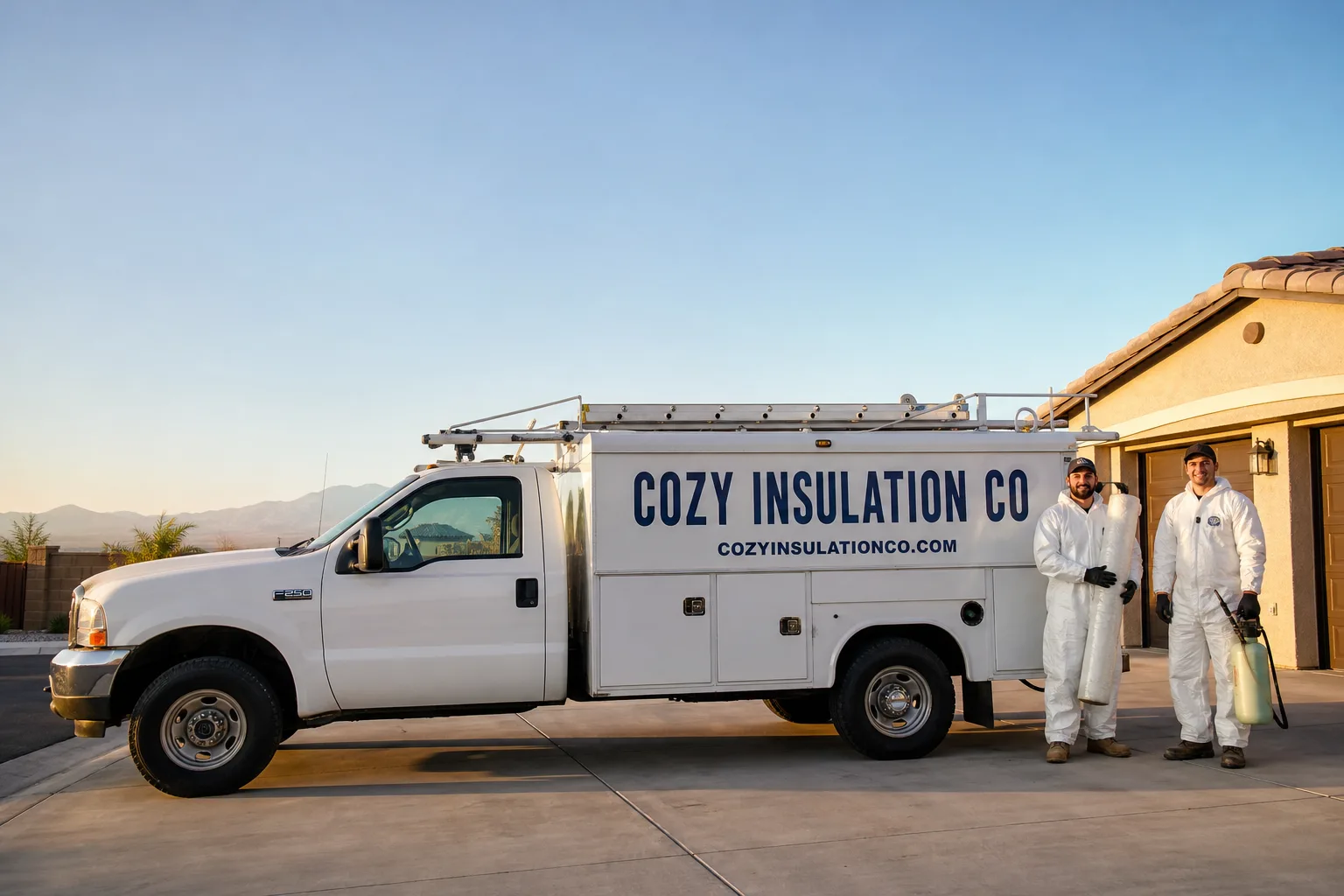
Fast, Reliable Spray Foam Insulation Across Home Gardens
Spray foam insulation in Home Gardens usually runs between $2,800 and $7,500 for a typical attic retrofit, depending on whether you need open-cell or closed-cell foam, and most jobs are completed in one to two days. If your 1950s-70s tract home still has the original R-11 or settled loose-fill in the attic, you’re losing conditioned air every afternoon when attic temperatures climb past 140°F. We work throughout the 92879 ZIP weekly and know exactly what these older attics need first: air sealing, old-material removal where necessary, and a foam system that matches your home’s framing. Call (855) 382-3925 and we’ll walk the attic with you, no pressure.
Key Takeaways
- Spray foam attic retrofits in Home Gardens typically fall between $2,800 and $7,500.
- Most 92879 homes need a first-time Title 24 code retrofit, not a simple material swap.
- Closed-cell foam is the right call for unvented Home Gardens attics; open-cell needs a moisture plan.
- Riverside County, not the City of Corona, governs permits for much of unincorporated Home Gardens.
- We install Icynene and Demilec foam systems, and we air-seal before we spray.
Why Cozy Insulation Co Is Home Gardens’s Preferred Spray Foam Insulation Company
The biggest difference we see between Home Gardens and neighboring Corona is the age and condition of the original attic assemblies. Most of these homes were built before Title 24 energy standards existed, which means we’re often the first crew to actually bring the attic up to code. Homeowners in Home Gardens call us because we understand that distinction: this is not a like-for-like replacement job, it’s a building-envelope upgrade on a 60-year-old house.
Mike Callahan, our owner, has spent years focused on this exact housing profile: single-story stucco tract homes off Magnolia Avenue, Harrell Street, and the semi-rural lots further east where owner-built houses sit on larger parcels. Our crews know the framing quirks, the original 2×4 ceilings, and the way the afternoon heat loads the back bedrooms hardest. When a Home Gardens customer calls, we can usually get a crew out within a few days, and we quote the job based on what is actually in the attic, not a square-footage guess.
We’re authorized to install spray foam from Icynene and Demilec, two of the most performance-tested brands in the professional foam industry. That matters here because older Home Gardens homes benefit from foam chemistry that has been through rigorous independent testing, especially in hot-dry attic conditions. We don’t stock every material for every old house, but for the common 92879 attic profiles we keep the foam systems, sealants, and venting components on hand to keep turnaround fast.
Garage Spray Foam Insulation in Home Gardens
Garage spray foam insulation in Home Gardens usually addresses two problems at once: a garage that bakes all afternoon and a bedroom directly above it that never cools down. Many 1960s-70s Home Gardens homes have attached garages with uninsulated ceiling cavities under living space. The garage ceiling becomes a heat sink by 3 p.m., and that heat radiates upward into the house on Magnolia Avenue and throughout the 92879 ZIP. Foam on the garage ceiling interrupts that transfer.
A typical garage ceiling spray foam job in Home Gardens runs $900 to $2,200 for a single or double bay, depending on whether we’re spraying open-cell foam and drywalling over it or addressing the rim joists where the garage framing meets the house. We also see plenty of Home Gardens garages with exposed rafter bays that have never been insulated at all. Closed-cell foam works well there because it adds structural rigidity to aging rafter spans and blocks the air movement that open-cell can’t stop in unsealed cavities.
When Home Gardens Homeowners Should Consider Garage Foam
If the room above the garage runs 6 to 8 degrees warmer than the rest of the house in August, the garage ceiling is usually the culprit. Foam in that cavity is the highest-impact fix short of replacing windows. It also quiets the garage, which matters on lots where a home gym or workshop shares the frame.
A Note on Rim Joists
Rim joist spray foam in Home Gardens is frequently the missing piece on older slab-on-grade tract homes. The rim joist is where the floor framing meets the foundation wall, and in 92879 houses it’s rarely sealed. We typically use closed-cell foam here, even when the rest of the project uses open-cell, because the rim needs moisture resistance and rigidity.
Closed Cell Spray Foam Insulation in Home Gardens
Closed cell spray foam insulation in Home Gardens is the product we recommend most often for unvented attic retrofits on homes built in the 1950s through 1970s. Closed-cell foam gives you roughly R-6.5 per inch, acts as an air barrier, and adds strength to aging 2×4 rafters and ceiling joists, which matters when the original framing has been drying in Riverside County heat for six decades. It also resists water, which is important in an attic that may have unsealed top plates or old roof penetrations around the 92879 ZIP.
Pricing for closed-cell foam in a Home Gardens attic typically lands between $4,500 and $7,500 depending on depth and square footage. It costs more per board foot than open-cell, but in our view it’s the honest recommendation for most Home Gardens homes because the attic dew point swings overnight during summer, and closed-cell does not trap moisture the way an open-cell job without a vapor plan can. We install closed-cell from Demilec and Icynene, and we never spray it without air-sealing the top plates, wiring penetrations, and recessed fixtures first.
Closed-Cell on Original 2×4 Ceilings
Home Gardens has thousands of homes with original 2×4 ceiling joists that were never intended to carry much insulation weight. Closed-cell foam is lightweight and bonds to the framing, so it works well on those older spans. It also brings the assembly closer to current Title 24 performance without requiring structural changes.
Spray Foam Roof Decks
Spray foam roof deck application moves the thermal boundary from the attic floor to the roofline itself. For Home Gardens homes with ductwork running through a vented attic, this is often the highest-comfort upgrade available. The ducts stop baking in 140°F attic air, which means the HVAC system doesn’t have to work as hard to deliver cool air to the back bedrooms.
Trusted Brands We Service in Home Gardens
We install spray foam systems from Icynene and Demilec, and we also work with Owens Corning products for hybrid jobs where foam and batt or blown-in insulation need to work together across one Home Gardens attic. That’s the benefit of having eight vetted brands across fiberglass, spray foam, mineral wool, and cellulose: we’re not forcing a single product onto houses that need a mixed approach. For Home Gardens customers, we keep the foam systems and sealing materials on our trucks for common 92879 retrofit profiles, which means fewer return trips and faster project turnaround.
Common Spray Foam Insulation Problems We See in Home Gardens Homes
- Foam over settled loose-fill: In 1950s-70s attics across Home Gardens, we regularly find original loose-fill that has settled to half its rated depth. Spraying foam directly over that old material traps moisture and creates an uneven thermal barrier. The old material has to come out or be verified first.
- Air-sealing skipped: Foam sprayed onto aging 2×4 rafters without sealing top plates, wiring penetrations, and recessed fixtures still lets hot attic air infiltrate into the living space. Home Gardens homes from the 92879 ZIP are full of unsealed top plates that no one ever touched.
- Open-cell in unvented attics without a moisture plan: Open-cell foam specified as the only strategy in an unvented Home Gardens attic can struggle because hot-dry summer cycles create overnight dew point swings. Without an air barrier or ventilation plan, moisture finds its way into the assembly.
- Foam on original 2×4 walls: Many owner-built and early tract homes in Home Gardens have 2×4 exterior walls with no cavity insulation. Spray foam in walls is possible, but for most 92879 homes the attic and rim joists deliver more comfort per dollar than opening up every wall.
Pricing for Spray Foam Insulation in Home Gardens, CA
Here are honest ranges for Home Gardens market work. An open-cell attic retrofit on a 1,200-1,800 square foot tract home typically runs $2,800 to $4,500. Closed-cell foam on the attic deck runs $4,500 to $7,500. Garage ceiling foam runs $900 to $2,200. Rim joist spray foam on a standard Home Gardens slab home runs $800 to $1,800. What moves the number: attic square footage, whether old loose-fill has to be removed, access through a tight attic hatch, and whether Riverside County requires a plan review for the permit. Estimates are free, and we walk the attic before we quote anything, so you’ll see exactly what we see. Call (855) 382-3925 for a number on your specific house.
We Also Serve Cities Near Home Gardens
Our crews work across the Home Gardens area and into neighboring communities every week. We serve homeowners in Corona, Eastvale, Norco, and El Cerrito Corona with the same spray foam expertise we bring to the 92879 ZIP. If you’re just over the line in one of these cities, the permit path may differ, but our approach to Spray Foam Insulation doesn’t change, and neither does our response time. Learn more about what we do across the broader service area on our Home Gardens page.
Serving Home Gardens, CA — Our Local Coverage Area
We’re based in the Home Gardens area and know this community well. Use the map below to see our service coverage — if you’re nearby, we can almost certainly help.
FAQs About Spray Foam Insulation in Home Gardens
For most properties in the unincorporated 92879 ZIP, Riverside County is the permitting authority, not the City of Corona, because Home Gardens sits outside Corona’s incorporated city limits. Since Home Gardens never had its own municipal building department, older homes here were often built with little to no insulation inspection at all, so a spray foam attic retrofit is usually the first time the attic has ever been brought toward Title 24 standards. We handle the permit path on every job and know which jurisdiction applies to your specific address. Call (855) 382-3925 and we’ll verify your parcel while you’re on the phone.
No, spraying foam over settled or original loose-fill in a 1960s Home Gardens attic is not something we recommend, because the old material creates an uneven surface and can trap moisture under the foam. The correct sequence is to remove or verify the old material, air-seal the top plates and penetrations, and then spray the foam onto clean framing. On a 1962 single-story stucco tract home off Magnolia Avenue, our crew found original loose-fill settled to about half its rated depth over an unsealed 2×4 ceiling: we removed the settled material, air-sealed, and applied closed-cell foam to the attic deck and knee walls, then verified the assembly met Riverside County’s Title 24 requirements. The homeowner reported the back bedrooms finally holding temperature through August afternoons.
Closed-cell spray foam is the better fit for most unvented Home Gardens attics because it provides an air barrier, adds rigidity to aging 2×4 framing, and resists the moisture swings that come with hot-dry county summers and overnight dew point changes. Open-cell foam can work in a vented attic or with a dedicated moisture-management plan, but specified alone in an unvented 92879 attic it can hold moisture. We install Icynene and Demilec closed-cell systems, and we’ll tell you honestly which chemistry fits your attic.
Yes, spray foam on a Home Gardens garage ceiling typically cuts heat transfer into the rooms above by stopping the garage from turning into a hot box by mid-afternoon. If there is a bedroom above the garage, that’s usually where the difference is felt first. Closed-cell foam also helps on the rim joists where the garage framing ties into the house. Call (855) 382-3925 for a free estimate on your garage specifically.
For most Home Gardens homes with original 2×4 walls, the attic, rim joists, and garage ceiling are the highest-return spray foam projects, not the walls themselves. Opening up 60-year-old stucco or wood-panel walls to foam the cavities costs more per comfort gained than sealing the thermal boundary at the roofline and floor framing. If you are already down to studs during a remodel, we will absolutely foam those 2×4 cavities then, but we do not recommend demolition just to insulate walls. Call (855) 382-3925 and we’ll tell you where the money is best spent on your specific house.
Free Estimates for Spray Foam Insulation in Home Gardens
If your Home Gardens home still runs hot in the back bedrooms every August, or the attic has never been touched since it was built, we’ll come out and show you exactly what’s going on up there. Mike Callahan and our crew know these 92879 attics, the original framing, and the Riverside County permit path. Call (855) 382-3925 for a free estimate and our honest recommendation on the right foam system for your house.
Written by Mike Callahan, Owner at Cozy Insulation Co, serving Home Gardens and the surrounding Riverside County area.