
Owens Corning Attic Insulation in Corona: A Homeowner’s Guide
Owens Corning attic insulation in Corona CA typically costs between $1.50 and $3.50 per square foot installed, depending on whether you choose EcoTouch batts, ProPink blown-in, or AttiCat loose-fill. Most Corona homes built before 2005 have R-19 or R-30 in the attic, which falls short of the DOE’s recommended R-38 to R-49 for our climate zone. Upgrading to R-38 with the right Owens Corning product can cut attic-related heat gain by roughly 30 to 40 percent during July and August, when Corona routinely pushes past 95°F.
Here’s the thing most homeowners miss: Owens Corning sells products rated for Minnesota winters and Arizona summers, and the version sitting on the shelf at the local big-box store might not be the one your Corona attic actually needs. If you’d rather skip the homework and have someone match the right product to your house, call Cozy Insulation Co at (855) 382-3925 for a free estimate.
Key Takeaways
- Corona is in DOE Climate Zone 3C, which means attic insulation targets R-38 to R-49, not the R-19 many homes currently have.
- Owens Corning’s AttiCat blown-in system typically outperforms their batt products in Corona attics due to better coverage around irregular framing.
- Above 130°F attic temperatures in summer, Owens Corning fiberglass holds its R-value while some cellulose products settle and lose effectiveness.
- Radiant barriers and Owens Corning insulation work together, not against each other, in newer Corona builds.
- Sometimes Owens Corning is not the best call, and a multi-brand installer will tell you that honestly.
Which Owens Corning Products Actually Fit a Corona Attic?
Owens Corning sells three main attic insulation lines: EcoTouch batts, ProPink blown-in fiberglass, and AttiCat expanding loose-fill. They are not interchangeable for Corona’s hot-dry inland climate, and the wrong choice costs you comfort all year.
EcoTouch batts are pre-cut fiberglass blankets, typically R-30 or R-38. They work fine in open, unobstructed attics with standard joist spacing, but Corona homes often have can lights, bathroom fans, and truss webs that leave gaps around the edges of batts. Those gaps let heat pour in. In our experience, a batt install with even five percent uncovered area loses a disproportionate share of its effective R-value, because heat finds the path of least resistance.
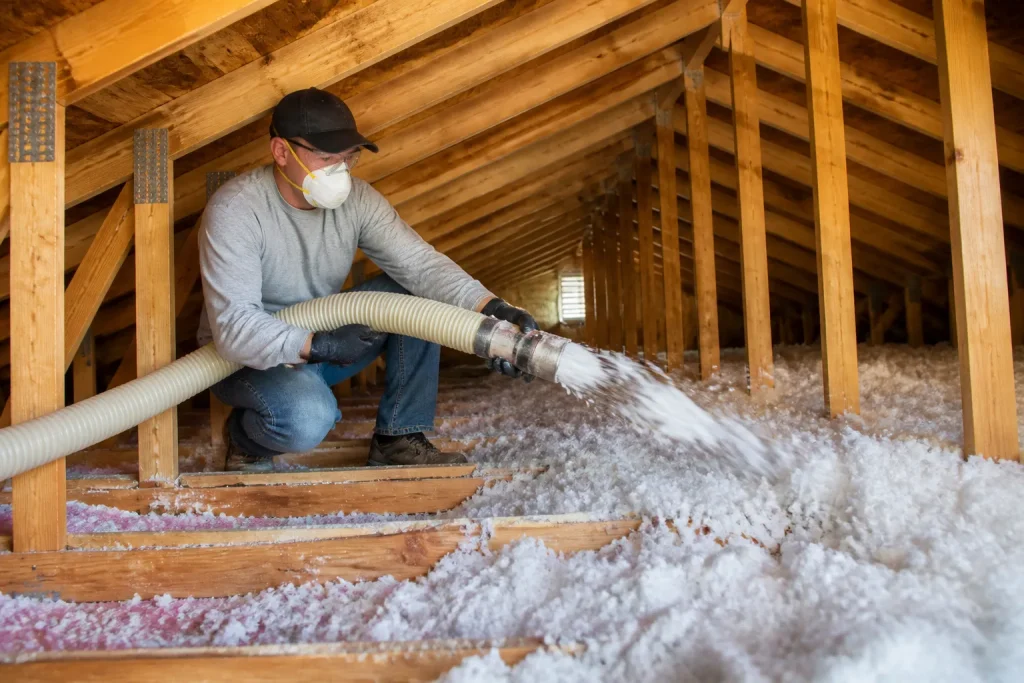
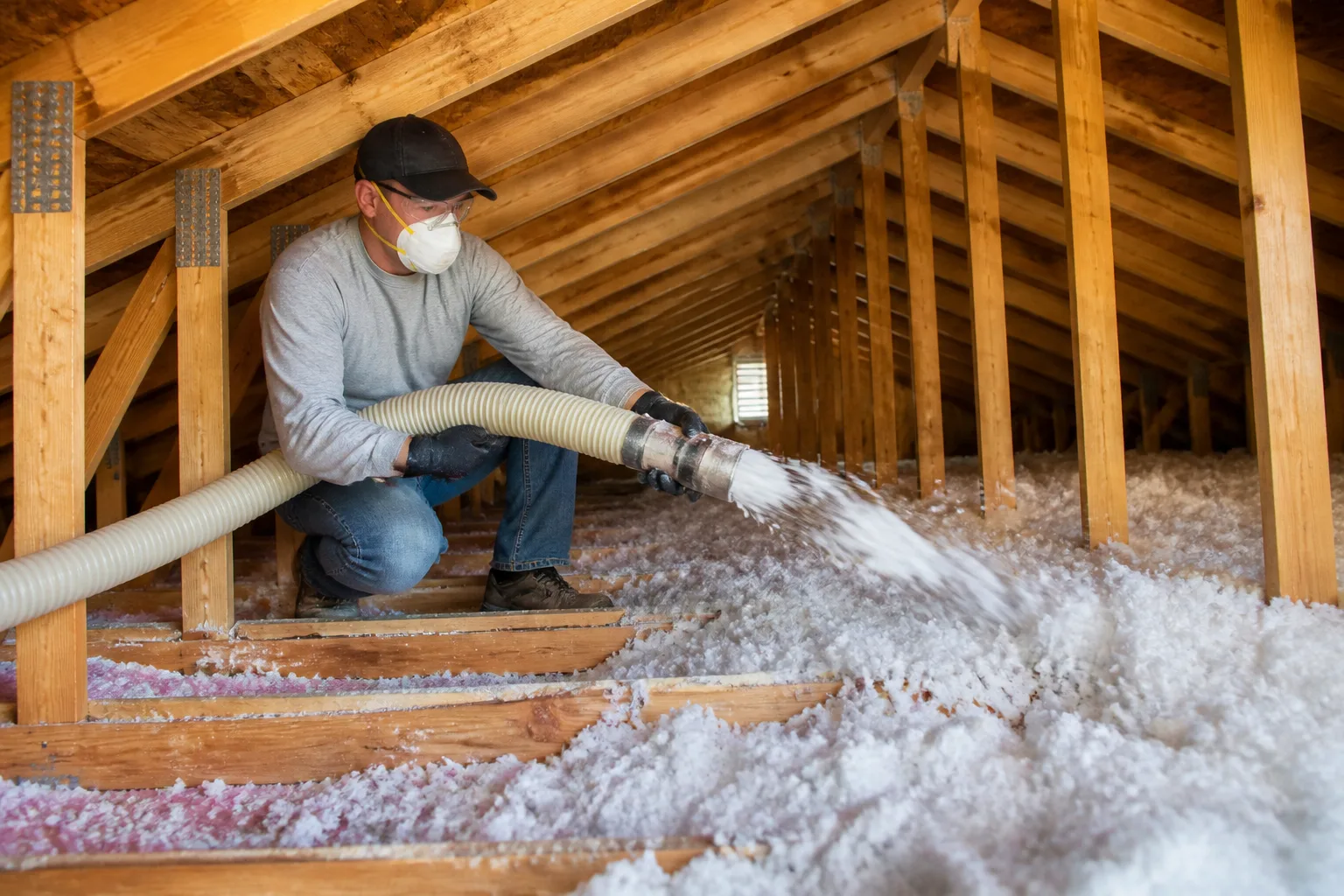
ProPink blown-in is loose-fill fiberglass blown to a target depth. It fills around framing and penetrations far better than batts. For most Corona attics, ProPink at R-38 is the workhorse option: it covers irregular spaces, resists moisture, and does not settle the way cellulose can over a decade.
AttiCat is Owens Corning’s expanding loose-fill system designed specifically for DIY-friendly blower machines. The fiberglass is conditioned to resist clumping in the hose, which matters if you are blowing in 100-degree garage heat. For a professional install, it performs similarly to ProPink but with better coverage consistency in tight soffit areas.
In Corona specifically, where attic temperatures in July often exceed 140°F, fiberglass holds its rated R-value without the settling concerns of cellulose. That temperature stability is why we often recommend Owens Corning fiberglass over recycled-paper products for inland Southern California homes with unvented or minimally vented attics.
What R-38 vs. R-49 Actually Means on Your Corona Energy Bill
R-value measures resistance to heat flow. Higher is better, but the relationship is not linear, and the jump from R-38 to R-49 delivers smaller returns than the jump from R-19 to R-38. Here is how that math works out in a typical Corona home.
Most Corona houses built between 1980 and 2005 have R-19 attic insulation, which loses about 5.9 percent of ceiling heat transfer per hour in peak summer. Upgrading to R-38 cuts that loss to roughly 2.9 percent. Going to R-49 cuts it further to about 2.2 percent. In dollar terms, an R-19 to R-38 upgrade on a 1,800-square-foot Corona home with central air often trims $180 to $280 off annual cooling costs, depending on your thermostat habits and utility rate plan with Southern California Edison.
The R-38 to R-49 upgrade, by contrast, might save $40 to $70 per year. That is not nothing, but it means a longer payback period. For most Corona homeowners, R-38 is the financial sweet spot. For homes with vaulted ceilings, west-facing second stories, or homeowners planning to stay 15-plus years, R-49 makes sense.
One more note: the California Building Code now requires R-38 minimum for new construction and major remodels in our climate zone. If you are buying or selling a Corona home, an R-19 attic is a code-compliance and resale issue, not just a comfort issue.
How Owens Corning Fiberglass Interacts With Radiant Barriers and Cool Roofs
Newer Corona homes, particularly in subdivisions like South Corona and the Terramor community, often have radiant barrier plywood in the roof deck or a cool-roof shingle system. Homeowners sometimes assume those features replace insulation. They do not.
A radiant barrier reflects radiant heat, which reduces the amount of heat that reaches the attic insulation below it. But it only works on the radiant component of heat transfer. On a 100°F Corona afternoon, your roof deck might reach 160°F, and that heat transfers downward through convection and conduction even with a radiant barrier. Insulation is what blocks that second path.
Owens Corning fiberglass works well under radiant barriers because it does not compress over time and it does not absorb the small amount of moisture that can condense on the underside of a cool roof during winter mornings. Cellulose, by contrast, can absorb that moisture and lose loft, which reduces its effective R-value. If your Corona home has a radiant barrier, pairing it with R-38 ProPink or AttiCat gives you two heat-blocking systems working in sequence, and that is when we see the most stable indoor temperatures room to room.
One caveat: if your attic uses spray foam on the roofline instead of floor insulation, the fiberglass conversation changes entirely, because you are conditioning the attic space itself. That is a different system, and it is where products from Icynene or Demilec enter the picture. We have installed both in Corona attics where homeowners wanted usable storage space or had HVAC equipment in the attic that was cooking in 140°F air.
Where Owens Corning Is the Right Call, and Where It Is Not
This is the honest part. Owens Corning makes excellent fiberglass products, and for most Corona attics, their blown-in fiberglass is the right material at the right price. But fiberglass is not always the best tool, and a contractor who only sells Owens Corning will tell you it is every time. We stock it alongside seven other brands for a reason.
Use Owens Corning fiberglass when: your attic has standard framing and you want a proven, code-compliant R-38 at a mid-range price; your attic is vented and dry; you have existing fiberglass that just needs topping off to reach target depth; or you want a material that holds its R-value in extreme attic heat.
Consider another material when: your attic has HVAC ductwork running through it and you want to cut duct losses dramatically, in which case closed-cell spray foam like Demilec outperforms by sealing air movement; you want maximum air-sealing, not just conductive resistance, where Icynene open-cell foam is better; you have a historic home in Corona’s older neighborhoods near the Grand Boulevard circle where cellulose from GreenFiber fills odd wall cavities better; or you want a fire-rated upgrade between garage and living space, where Rockwool mineral wool is the stronger performer.
We pulled a batt job out of a garage over in Corona’s Chase Ranch neighborhood last month where the homeowner had bought EcoTouch R-30 from a big-box store and installed it himself. The batts were compressed under the roof deck because the joist bays were not standard 24-inch spacing, and compressed fiberglass loses R-value fast. He had spent a weekend in a 130°F attic and ended up with about R-19 of real performance. That is the exact situation where a multi-brand installer saves you from the wrong product for the wrong cavity.
If you are in Corona and want someone to match the material to your attic rather than sell you whatever is on the truck, Cozy Insulation Co home offers exactly that. We install Owens Corning, Johns Manville, Knauf, CertainTeed, Rockwool, Icynene, Demilec, and GreenFiber, so the recommendation you get is based on your attic, not our inventory.
Installation Quality Matters More Than the Brand on the Bag
Here is something Owens Corning will not tell you: their products only hit rated performance when installed correctly, and most attic insulation failures in Corona have nothing to do with manufacturing defects. The three most common mistakes we correct are under-blowing to save material cost, blocking soffit vents with insulation, and leaving attic hatches uninsulated.
Under-blowing happens when a contractor quotes R-38 but blows 10 inches of material that fluffs to only R-28 after settling. Owens Corning publishes depth charts for every product, and a proper install checks depth across the entire attic, not just at the access point. In Corona, where summer heat loads are brutal, missing your target by even 20 percent noticeably changes upstairs bedroom temperatures.
Soffit vent blockage is a classic in Corona homes with older eave construction. Blown-in insulation drifts into the soffit bays and chokes the airflow that keeps the roof deck from baking. That trapped heat radiates down through the insulation, and suddenly your R-38 is acting like R-25. Proper baffles solve this, but plenty of installers skip them because it adds a step and the homeowner never looks.
Uninsulated attic hatches are a small area with outsized impact. A 2-by-3-foot access panel in a Corona hallway ceiling with no insulation can leak as much heat as a window left open a crack all summer. We weatherstrip and insulate every hatch on an attic install, and it costs almost nothing to do.
When to call a pro: if you cannot safely walk your attic joists, if you have vermiculite or suspect asbestos in pre-1990 insulation, or if you have recessed can lights that are not IC-rated against insulation contact, this is the point to stop the DIY plan. Blown-in fiberglass around non-IC-rated cans is a fire hazard, and old vermiculite requires testing before disturbance. Call (855) 382-3925 and we will take a look.
Related services in Corona: we handle Attic Insulation in Trabuco Canyon, Spray Foam Insulation in Trabuco Canyon, and Blown In Insulation in Trabuco Canyon for homeowners throughout the Inland Empire foothills.
The Bottom Line
Owens Corning makes the most widely distributed fiberglass insulation in the country, and in Corona’s hot-dry climate, their blown-in products are a strong match for most attics. Reach for AttiCat or ProPink at R-38 before you pay extra for R-49, make sure soffit vents stay clear, and understand that the brand name only delivers when the install quality is there.
If you are in Corona and want a straight answer about which Owens Corning product fits your attic, or whether another material would do the job better, Cozy Insulation Co offers free estimates. Call (855) 382-3925 and we will come out, look at what is under your roof deck, and tell you exactly what we would do if it were our house.
Frequently Asked Questions
Installed Owens Corning attic insulation in Corona typically runs $1.50 to $3.50 per square foot, with R-38 blown-in fiberglass on a 1,500-square-foot attic usually landing between $2,200 and $4,500 total. Batt installs run slightly less, and R-49 adds 20 to 30 percent. Call (855) 382-3925 for an exact quote, estimates are free.
For most Corona attics, yes, because Owens Corning fiberglass holds its R-value better in the 130°F-plus attic heat we see from June through September, and it does not settle or absorb moisture the way cellulose can. Cellulose has advantages in wall cavities and sound control, which is why we stock GreenFiber alongside Owens Corning.
Current California Building Code requires R-38 minimum for new construction and major attic remodels in Corona, and the DOE recommends R-38 to R-49 for our climate zone. Homes built before 2005 often have R-19 to R-30, which is under-insulated for inland Southern California and costs real money every summer.
You can rent a blower and install AttiCat yourself if your attic is safe to walk and has no wiring hazards, but R-38 needs roughly 15 inches of material, and getting uniform depth around a Corona attic with trusses and can lights is harder than the big-box store demo suggests. We regularly fix DIY installs that came in 50 percent under target depth. Call (855) 382-3925 and we will quote the job properly.
Written by the team at Cozy Insulation Co, serving Corona since 2011.
Need Insulation Help?
Call Cozy Insulation Co — licensed & insured, here with fast after-hours help in Corona.
(855) 382-3925