
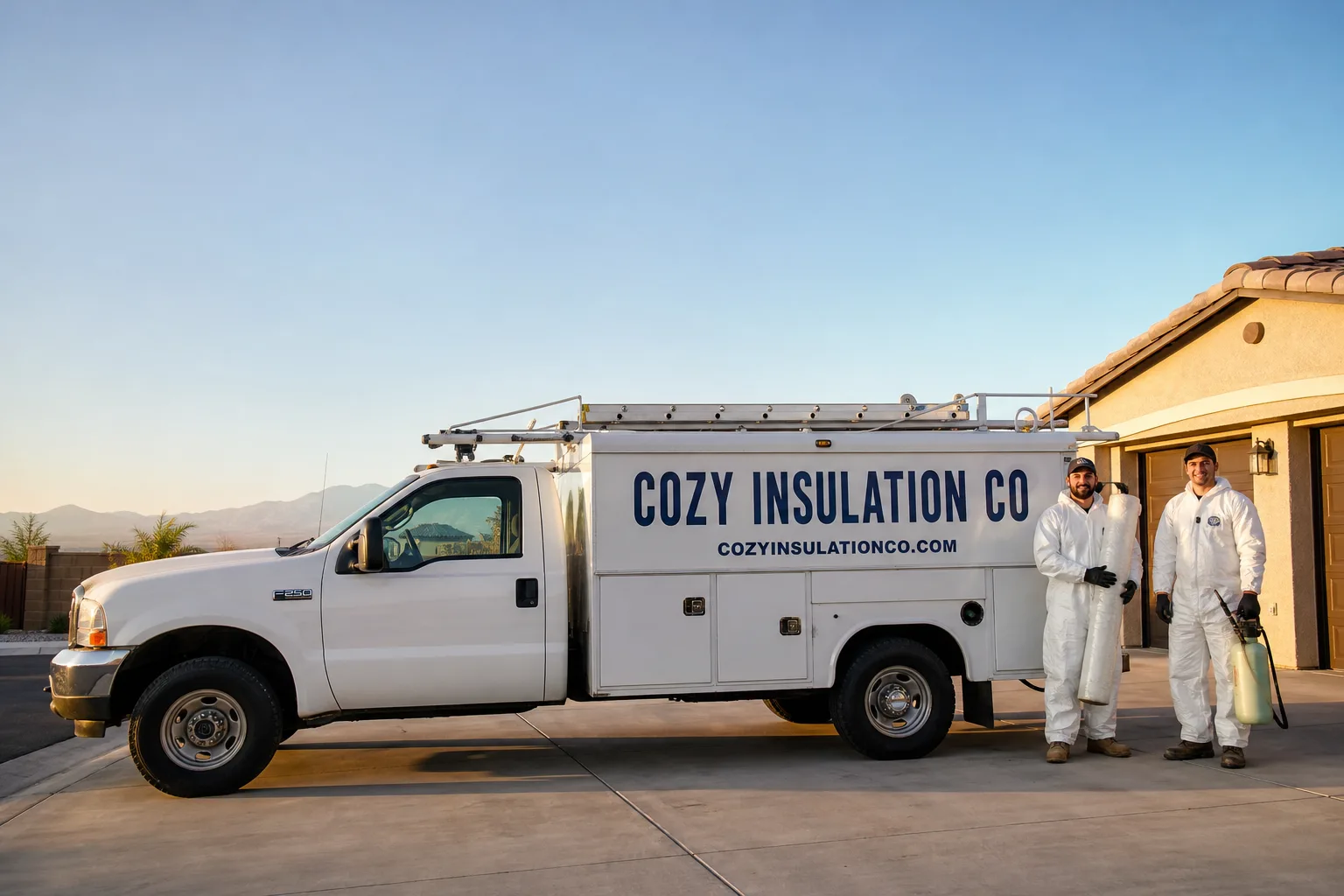
Fast, Reliable Attic Insulation Across Spring Valley Lake
Attic insulation in Spring Valley Lake costs anywhere from $1,800 to $6,500 for a typical single-family home, with most full attic upgrades landing between $2,200 and $3,800. That range covers everything from simple batt top-ups to complete removal of failed 1980s fiberglass and a fresh blow-in. We get calls from Spring Valley Lake homeowners every week, usually in July and August when the upstairs won’t cool below 82 and the AC hasn’t shut off in three days. Cozy Insulation Co serves the entire 92395 zip code, including every street in the Spring Valley Lake community, and we’re normally on-site within two to five business days. Call (855) 382-3925 for a free estimate, and we’ll walk your attic with you.
Why Cozy Insulation Co Is Spring Valley Lake’s Preferred Attic Insulation Company
We know Spring Valley Lake attics. Our crews have worked in dozens of homes here, and we understand what a house built in 1982 near the water acts like in August and in January. Mike Callahan has spent years matching the right insulation to the specific conditions of this community – which matters more here than in nearby Victorville or Apple Valley, because the lake microclimate changes everything. The lake-side condensation issue in Spring Valley Lake is something a contractor from outside the area might never diagnose. Our team catches it because we’ve seen it over and over.
We arrive in fully stocked trucks, so we aren’t wasting half the day driving back to the supply house. We’re outfitted to install fiberglass, spray foam, mineral wool, and cellulose – the full portfolio, which means we recommend what the house actually needs. Homeowners in Spring Valley Lake tend to appreciate that we don’t push one product. We talk through the options, from Owens Corning batts to Demilec closed-cell spray foam and GreenFiber cellulose, and we let the home’s age and location drive the decision.
Having one company handle Attic Insulation, spray foam, and blown-in work is unusual. Most contractors pick one material and pitch it to every house. We don’t. What we do is walk your attic, check the ventilation, check for lake-side moisture, and give you a straight answer.
Radiant Barrier in Spring Valley Lake
A radiant barrier in Spring Valley Lake is one of the most cost-effective additions we install, especially on homes built between the late 1970s and 1990s that never had one from the start. In this part of the Mojave, where summer attic temperatures can climb past 150°F, a radiant barrier stapled to the underside of the roof deck reflects a significant share of that heat before it ever reaches your insulation. For a typical 1,800-square-foot Spring Valley Lake home, radiant barrier installation runs $0.90 to $1.50 per square foot of attic floor area, so most jobs land in the $1,600 to $2,700 range.
The payoff here isn’t just comfort. It’s that your AC stops fighting heat that never should have entered the attic in the first place. Homes near the water have another reason to add a radiant barrier: by lowering the attic temperature, you reduce the thermal drive that contributes to condensation on lake-facing roof sheathing. It’s a heat solution and a moisture solution in one.
Radiant Barrier for Older Stucco Homes
Most Spring Valley Lake homes are single-family stucco built from the 1970s through the early 1990s. Builders in that era rarely included radiant barriers, and the original R-11 or R-13 attic insulation in those homes has been losing effectiveness for decades. Adding a radiant barrier to one of these houses is often more impactful per dollar than adding more insulation alone, because it stops the heat before it loads the insulation. We’ve done this on dozens of homes on Lakeview Drive, Meadowlark Lane, and the streets right off Spring Valley Parkway.
Radant Barrier and Attic Ventilation
A radiant barrier works best when your attic can actually move air. In Spring Valley Lake, decades of wind-driven dust from the dry lakebed and surrounding desert clogs soffit vents and ridge vents. We check ventilation as part of every radiant barrier install. If your intake vents are choked with dust, the barrier can’t do its job properly. On many of these homes we add attic baffles or open up clogged soffits during the same visit, so the radiant barrier and the ventilation work together.
Attic Cleaning Services in Spring Valley Lake
Attic cleaning services in Spring Valley Lake are different from attic cleaning anywhere else in the high desert. Here, years of Mojave wind blow fine dust through any gap, and homes near the lake add a layer of moisture that turns that dust into caked-on grime. Old insulation in these attics is often packed with dust, rodent droppings, and in homes near the water, evidence of past condensation. A full attic cleaning plus old-insulation removal for a standard Spring Valley Lake home runs $1,100 to $2,400 depending on attic size and how much material has to come out. That includes vacuuming, sanitizing, and preparing the space for fresh insulation.
We recommend cleaning before any top-up or replacement in this community. Blowing new insulation over decades of dust, mouse nests, and compressed batts just buries the problem. It doesn’t fix air leaks, it doesn’t fix the smell, and it doesn’t address the moisture history that’s so common in lake-side homes. Cleaning first gives you a clean slate, and it lets us see what’s really happening up there.
Cleaning After Rodents and Pests
Desert pack rats find their way into Spring Valley Lake attics through vent openings and roof gaps. When we clean an attic that’s had rodent activity, we remove the contaminated insulation, sanitize the deck, and often install new baffles or screening to keep them out. Homeowners on the northern side of the lake near Spring Valley Lake Country Club mention this problem more than most, because those older homes have more entry points. A clean attic isn’t just about insulation performance. It’s about air quality in the rooms below.
Cleaning Before a Blown-In Upgrade
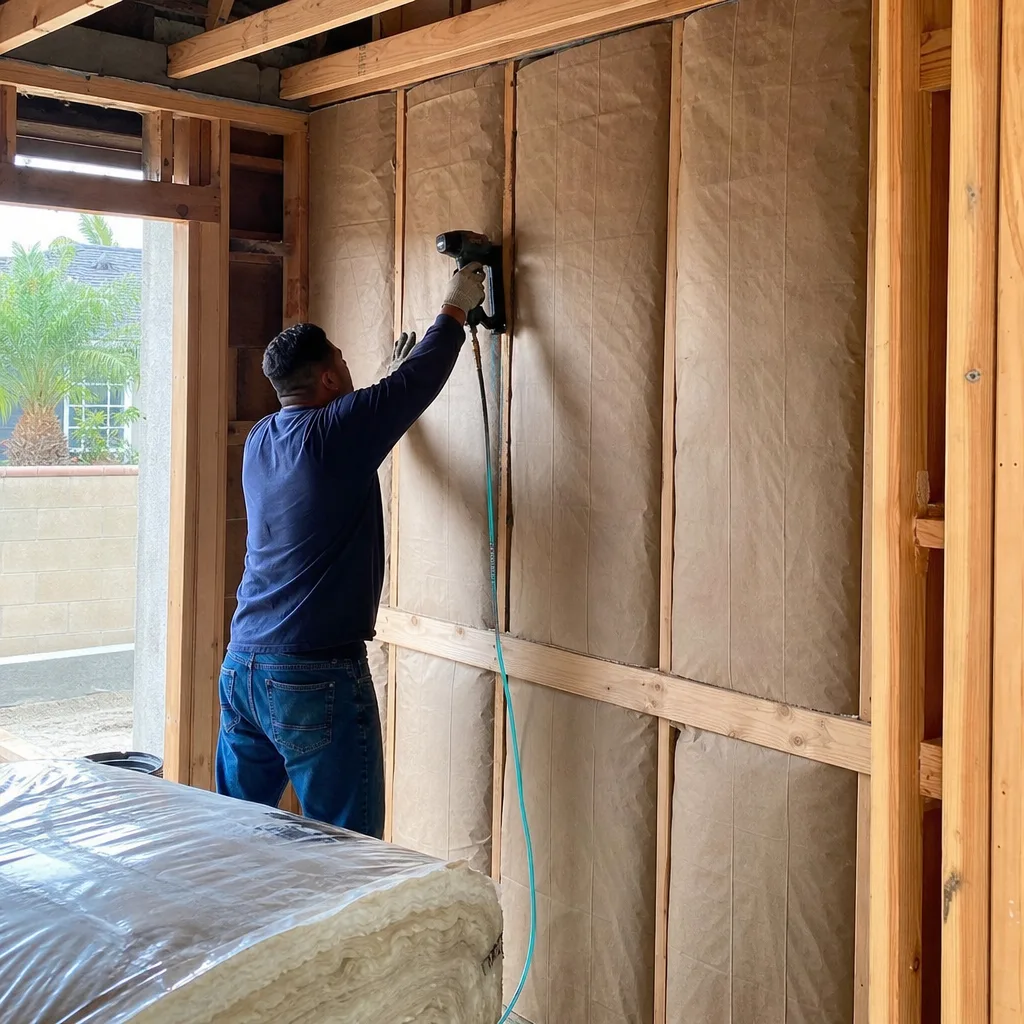
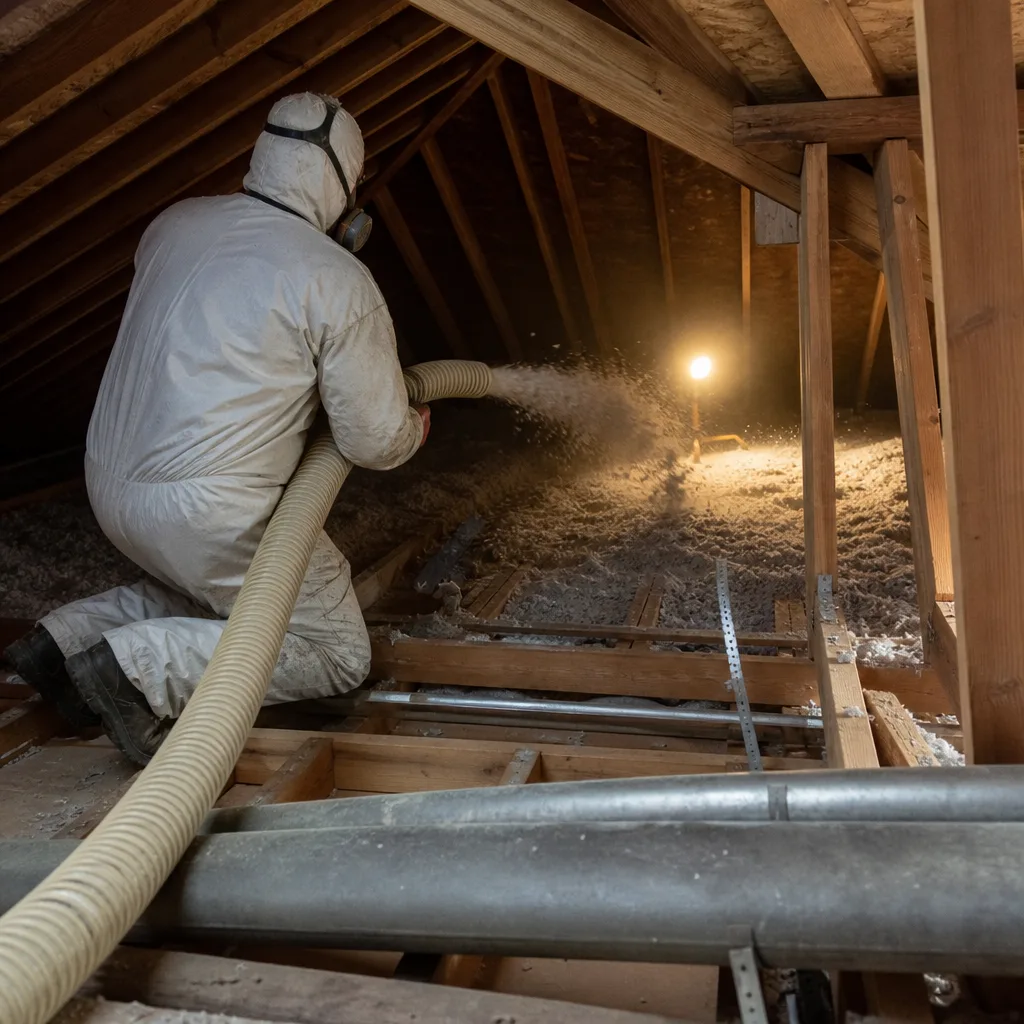
When you’re moving from old batts to a full blown-in upgrade with GreenFiber cellulose or Johns Manville fiberglass, cleaning isn’t optional if the attic has moisture history. On lake-side homes we sometimes find damp, degraded sheathing that needs attention before new insulation goes in. Cleaning lets us spot that. We’ve seen attics where the batts looked fine from the hatch but were hiding mold growth on the underside of the roof deck near the water side. You can’t see that until the old material is out, and you can’t fix it by covering it up.
What happens when you call
- 1
A real person answersNo phone trees — you reach a local pro.
- 2
You get an upfront price rangeHonest numbers before anyone is dispatched.
- 3
A background-checked tech heads outLicensed & insured, dispatched right away.
- 4
You approve before work beginsNothing starts until you say go.
Trusted Brands We Service in Spring Valley Lake
We’re authorized to install products from eight manufacturers, and in Spring Valley Lake we stock parts and materials specifically for the homes we work on most. That includes Owens Corning fiberglass batts for straightforward attic retrofits, Demilec closed-cell spray foam for homes where air-sealing and moisture control matter most, and GreenFiber cellulose for homeowners who want a recycled-content blown-in option. Johns Manville products round out the batting choices for standard replacements. Because we carry material from this range of brands, we can build the right system for a 1970s lake-side stucco house instead of forcing a single product line onto every job.
Common Attic Insulation Problems We See in Spring Valley Lake Homes
- Collapsed original fiberglass batts. Homes built from the 1970s through the 1990s typically got R-11 or R-13 batts, and after 30 to 50 years of 100°F summers and 20s°F winters, those batts have compressed and lost much of their R-value. You may have insulation in the attic, but it’s not doing much.
- Lake-side condensation and damp sheathing. The man-made lake creates a local humidity pocket in an otherwise dry desert. Homes within a few hundred yards of the water can show condensation on roof sheathing and damp insulation, which leads to mold and reduced performance. Standard desert insulation jobs miss this entirely.
- Clogged soffit and ridge vents from wind-driven dust. Mojave wind pushes fine dust into every gap. After a decade or two, intake vents are choked and the attic can’t breathe. Heat builds up in summer, and any moisture that does get in has nowhere to go. This is a primary cause of premature shingle wear here too.
- No radiant barrier anywhere in the home. Radiant barriers weren’t standard when Spring Valley Lake was built out. Without one, attic temperatures in July and August far exceed outdoor temperatures, and your insulation is getting pounded by heat it shouldn’t have to handle.
Pricing for Attic Insulation in Spring Valley Lake, CA
Here’s what we charge in the 92395 zip code. Attic insulation top-up over existing material typically runs $1.20 to $2.20 per square foot, so an 1,800-square-foot attic lands around $2,100 to $3,900. A full removal and replacement, including cleaning, runs $2,800 to $6,500 depending on attic size, access, and whether vapor retarders or ventilation upgrades are needed. Radiant barrier installation runs $0.90 to $1.50 per square foot. Attic cleaning alone runs $1,100 to $2,400. Lake-side homes with condensation issues sometimes need extra work: added vapor retarder on the water-facing slope, additional intake ventilation, or more thorough air-sealing. We’ll give you a line-item price before any work begins, and estimates in Spring Valley Lake are free. Call (855) 382-3925 to schedule one.
We Also Serve Cities Near Spring Valley Lake
Our crews work throughout the Victor Valley. In addition to Spring Valley Lake, we serve Mountain View Acres, Victorville, Apple Valley, and Hesperia. If you’re in a neighboring community and dealing with the same Mojave heat, old housing stock, or lake-adjacent moisture issues, we’re already working nearby and can usually add you to the schedule within a few days.
Serving Spring Valley Lake, CA — Our Local Coverage Area
We’re based in the Spring Valley Lake area and know this community well. Use the map below to see our service coverage — if you’re nearby, we can almost certainly help.
FAQs About Attic Insulation in Spring Valley Lake
Yes, in ways that matter a lot. Homes within a few hundred yards of the water see higher local humidity than the surrounding desert, which means condensation can form on roof sheathing and inside insulation on the lake-facing side. That means many lake-side homes need a vapor retarder on the water-facing slope and improved attic ventilation, not just more insulation. Call (855) 382-3925 and we’ll check whether your home has moisture history before recommending anything.
If the original batts are still present, they’re likely compressed, dusty, and well below their original R-value. In most Spring Valley Lake homes from that era, we recommend full removal and replacement rather than topping off. You get a clean attic, we can check for moisture damage during the process, and the new insulation performs at its rated level. Topping off over failing batts leaves the old problems in place. We’ll give you both options with honest pricing when we inspect your attic.
The lake itself is the cause. Spring Valley Lake is a man-made body of water in an otherwise arid region, and it creates a persistent microclimate of elevated humidity near the shore. When warm, moist air from inside the home rises into a cold attic on a winter night, it can condense on the underside of the roof deck. That’s why lake-side homes sometimes need a vapor retarder and extra ventilation, even though nearby Victorville and Hesperia homes rarely do.
Yes, especially on homes built before the mid-1990s that never had one. Summer attic temperatures here regularly exceed 140°F, and a radiant barrier reflects much of that heat before it reaches the insulation. For older Spring Valley Lake homes with original R-11 or R-13 batts, adding a radiant barrier is often the single most effective upgrade. Most jobs run $1,600 to $2,700, and the comfort difference in upstairs rooms is noticeable the first summer. Call for a free estimate: (855) 382-3925.
We install products from eight nationally recognized manufacturers: Owens Corning, Johns Manville, Knauf, Rockwool, CertainTeed, Icynene, Demilec, and GreenFiber. That includes fiberglass batts, open- and closed-cell spray foam, mineral wool, and blown-in cellulose. We match the material to your home’s construction and location, rather than selling whatever’s easiest on our end. For lake-side homes with moisture concerns, Demilec closed-cell spray foam is often the strongest option. For standard retrofits, Owens Corning and Johns Manville batt products are excellent. For eco-conscious homeowners, GreenFiber cellulose is a recycled-content choice we install regularly in Spring Valley Lake.
Mike Callahan and the Cozy Insulation Co team know Spring Valley Lake attics better than any contractor coming up from down the hill. Call (855) 382-3925 for a free, honest estimate, and we’ll walk your attic with you before we recommend anything.
Written by Mike Callahan, Owner at Cozy Insulation Co, serving Spring Valley Lake and the Victor Valley.