
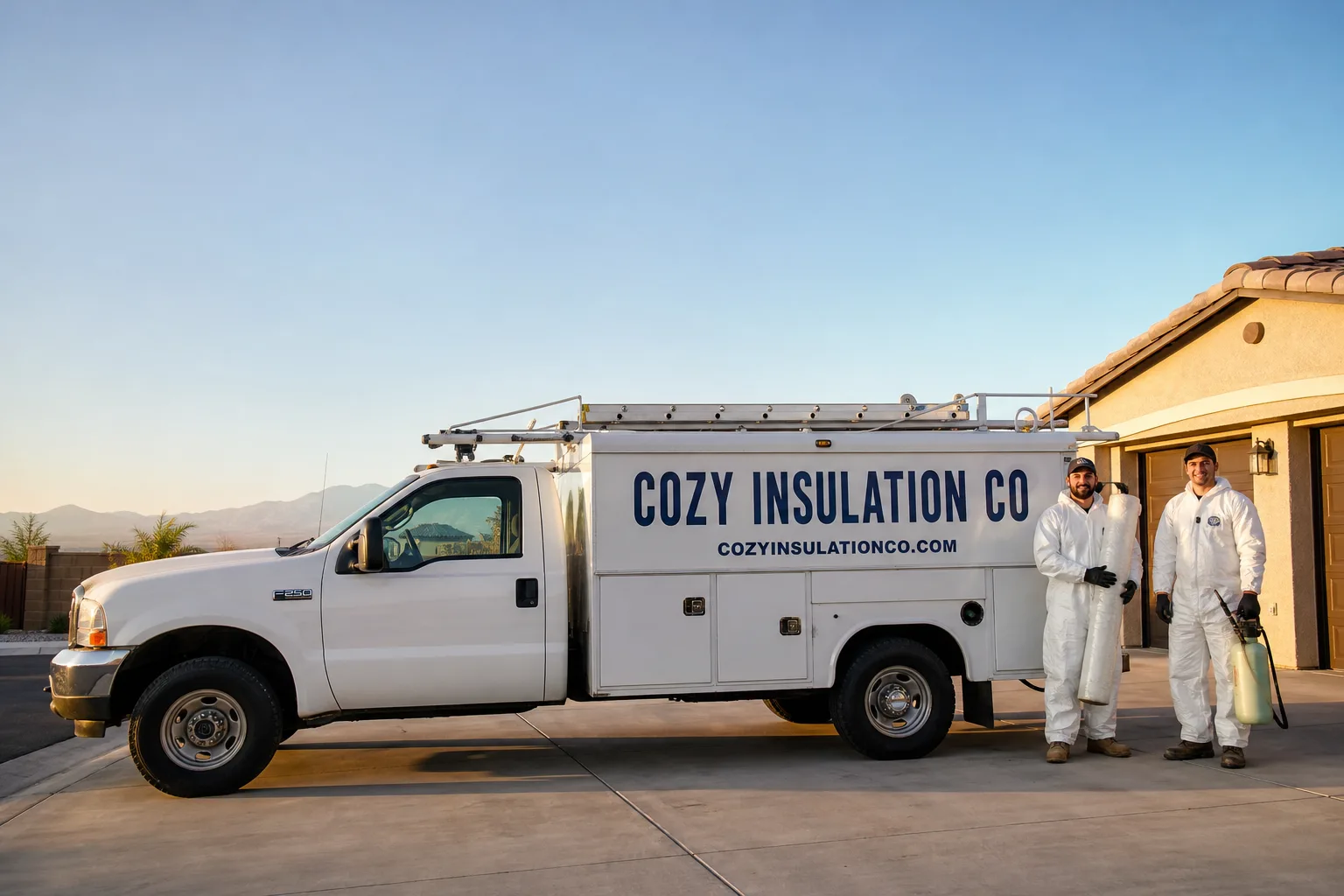
Fast, Reliable Attic Insulation Across Portola Hills
Attic insulation in Portola Hills typically costs $1.65 – $4.85 per square foot depending on material and scope, with most full-attic projects landing between $2,400 and $6,900. That’s the direct answer. What matters more is what you’re actually buying: an attic that stops fighting the Santa Ana winds, keeps the second floor comfortable on 95°F ridge afternoons, and doesn’t shed half its R-value the first windy week after installation. Our crews work throughout the 92610 zip code, from the tract homes above the 241 toll road down to the condos near Foothill Ranch. Call (855) 382-3925 and we’ll give you a straight read on what your attic actually needs.
Why Cozy Insulation Co Is Portola Hills’s Preferred Attic Insulation Company
Portola Hills isn’t a generic foothill suburb. The canyon wind patterns above the 241 toll road create insulation failures most contractors never see, because most contractors don’t work here week after week. We do. Mike Callahan built Cozy Insulation Co around a simple idea: match the material to the house, not to whatever’s on the truck. That means when a Portola Hills homeowner calls about a drafty hallway or a bedroom that won’t hold temperature, we look at ridge exposure, soffit condition, and original builder practices before we ever quote a product.
Our Attic Insulation team has handled hundreds of attics across Portola Hills, many of them in the 1980s – 2000s Mediterranean-revival tract homes that dominate the area. We know what’s behind those low-pitch tile roofs. We know how original fiberglass batts behave after two decades of canyon wind. And we know what actually fixes it, without upselling you into a product you don’t need.
Insulation Contractors in Portola Hills
Insulation Contractors in Portola Hills face a challenge you won’t find down in Lake Forest or Mission Viejo: wind-loading on attic assemblies that most builders never anticipated. When we take on an insulation job here, we’re not just blowing in material. We’re checking top plates, baffle placement, soffit vent condition, and the gable-end compaction pattern that Portola Hills ridgeline homes develop after repeated Santa Ana events. A typical insulation contractor visit runs $350 – $900 for inspection and targeted repairs. Full attic replacement usually lands between $2,400 and $6,900 depending on square footage and material choice.
Wind-Compaction Repair and Top-Up
When wind-driven air pushes through unbaffled top plates, fiberglass batts compress against the downwind gable end and lose a third or more of their effective R-value. We re-fluff or replace the compacted zones, add baffles at the top plates, and bring the attic back to a uniform depth. Most Portola Hills top-ups run $1,200 – $3,200.
Ember-Resistant Soffit Sealing
Standard soffit vents with open louvers let more than air through. During a Santa Ana event, embers and debris ride the same wind and end up sitting on top of your insulation. We seal soffit edges with ember-resistant mesh while preserving airflow, which protects both the insulation and the fire-defense envelope. This add-on typically costs $400 – $1,100 depending on linear feet of soffit.
Attic Ventilation in Portola Hills
Attic Ventilation in Portola Hills is about air movement that works with the wind, not against it. Those persistent afternoon winds that define the ridge above the 241 toll road don’t just cool things down. They pressurize attic cavities through soffit vents, displace insulation at the gable ends, and create dead zones where trapped heat and moisture accumulate against the underside of low-pitch concrete tile roofs. A proper ventilation assessment for a Portola Hills attic runs $175 – $400, and full vent-and-baffle work typically lands between $900 and $2,500.
Baffle Retrofit for Wind-Driven Attics
Most original Portola Hills builders skipped top-plate baffles, which is why insulation ends up bunched at the downwind end after a windy week. Installing baffles at every rafter bay stops wind from entering behind the insulation and keeps airflow channeled from soffit to ridge vent. For the ridgeline homes, this is often the single most valuable upgrade we make.
Condensation Control for Low-Pitch Tile Roofs
Low-pitch concrete tile roofs leave installers little vertical clearance at the eaves, and a rushed insulation crew will compress batts right where the roof needs air. Compressed insulation blocks airflow, condensation builds up, and the roof sheathing starts to suffer. We work carefully in tight eave spaces and specify baffles that maintain airflow in the shallowest parts of the roof.
Trusted Brands We Service in Portola Hills
We install insulation from eight manufacturers, and for Portola Hills work we lean on a few that consistently perform in canyon-wind conditions. Owens Corning blown-in fiberglass handles top-ups and full fills well, and we pair it with baffles to prevent the gable-end compaction that plagues this area. For homeowners who want recycled content and solid thermal performance, GreenFiber cellulose does excellent work in the 92610 zip code. And when air sealing matters most, we specify Demilec closed-cell spray foam for rim joists and top plates. We stock material locally for Portola Hills jobs, which means faster turnaround when you’re ready to schedule.
Common Attic Insulation Problems We See in Portola Hills Homes
- Wind-compacted batts at the downwind gable end. Homes backing to the ridgeline take the brunt of Santa Ana gusts, and unbaffled top plates let wind push fiberglass into a compressed mat. Effective R-value drops from R-30 to R-11 or worse in the worst zones.
- Compressed insulation at the eaves under low-pitch tile roofs. The shallow roof profile forces installers to cram insulation into tight spaces, which blocks airflow and invites condensation. We see this on nearly every 1980s – 2000s tract home we open up.
- Debris and ember intrusion through open soffit vents. After high-wind events, we routinely find pine needles, dust, and charred debris sitting on top of attic insulation. That’s an ember-shield problem on top of an insulation problem.
- Patchy coverage from age and settling. Original fiberglass batts installed two or three decades ago have settled in places, especially around duct runs and recessed light fixtures. The result is inconsistent ceiling temps room to room, even when the AC is running hard.
Pricing for Attic Insulation in Portola Hills, CA
Here’s what Portola Hills homeowners should expect to pay in 2026. Blown-in fiberglass top-ups typically run $1,200 – $3,200 for a standard 1,600 – 2,200 square foot attic. Full attic replacement with Owens Corning blown-in fiberglass runs $2,400 – $5,800. Spray foam work with Demilec closed-cell runs $2.90 – $4.85 per board foot depending on depth and accessibility. Attic batt installation with Owens Corning or Johns Manville batts runs $1,800 – $4,100. Baffle retrofit and soffit sealing runs $900 – $2,500. Every estimate is free, and we’ll show you exactly where the money goes before you commit. Call (855) 382-3925 for a straight quote on your attic.
We Also Serve Cities Near Portola Hills
Our crews work throughout the foothill corridor, so if you’re in Foothill Ranch or up in Trabuco Canyon, we’re close by. We also handle attics across Lake Forest and Mission Viejo. If you’re just outside Portola Hills proper, call us anyway. We’ll likely be in your area within a day or two, and the inspection is always free.
Serving Portola Hills, CA — Our Local Coverage Area
We’re based in the Portola Hills area and know this community well. Use the map below to see our service coverage — if you’re nearby, we can almost certainly help.
FAQs About Attic Insulation in Portola Hills
Wind-driven air enters through soffit vents and travels through the attic because original builders rarely installed baffles at the top plates. The insulation gets pushed to the downwind gable end and compressed, losing a large share of its R-value. This is the single most common failure we correct in Portola Hills attics, and it’s fixable with a baffle retrofit and top-up. Call (855) 382-3925 and we’ll confirm whether your attic is affected.
Yes, when it’s installed alongside ember-resistant soffit vent sealing. The insulation itself doesn’t stop embers, but sealing vent edges with ember-resistant mesh while installing new material keeps embers and debris from sitting on top of your insulation. In a wildland-urban interface zone like Portola Hills, proper attic work doubles as fire-defense work. We address both in the same visit.
It limits how insulation must be installed, not what material you can use. The shallow eave clearance means we have to be precise about baffle placement and can’t just pile material at the edges. Blown-in fiberglass from Owens Corning works well in these conditions, and Demilec spray foam is excellent when space is extremely tight. The key is the installer knowing how to work shallow roof profiles without compressing batts or blocking airflow.
We start by mapping the existing ventilation path, then add baffles at every rafter bay to keep airflow moving from soffit to ridge. We check for the wind-compaction pattern Portola Hills is known for, re-fluff or replace the damaged batts, and verify that eave vents aren’t being blocked by compressed insulation. The original fiberglass usually comes out. What goes back in is matched to the wind exposure of the individual home.
We install products from Owens Corning, Johns Manville, Knauf, CertainTeed, Rockwool, Icynene, Demilec, and GreenFiber. For most Portola Hills attics we recommend Owens Corning blown-in fiberglass for broad coverage, GreenFiber cellulose for recycled-content options, and Demilec closed-cell spray foam for air sealing at top plates and rim joists. We’ll match the material to the house, not to what’s easiest for us to install. Call (855) 382-3925 for a free estimate.
If your Portola Hills attic is running hot, losing insulation to the wind, or just not keeping rooms comfortable, call Cozy Insulation Co at (855) 382-3925. We’ll inspect the attic, explain what’s actually going on up there, and give you a free estimate with no pressure and no upselling.
Written by Mike Callahan, Owner at Cozy Insulation Co, serving Portola Hills and the surrounding foothill communities.