
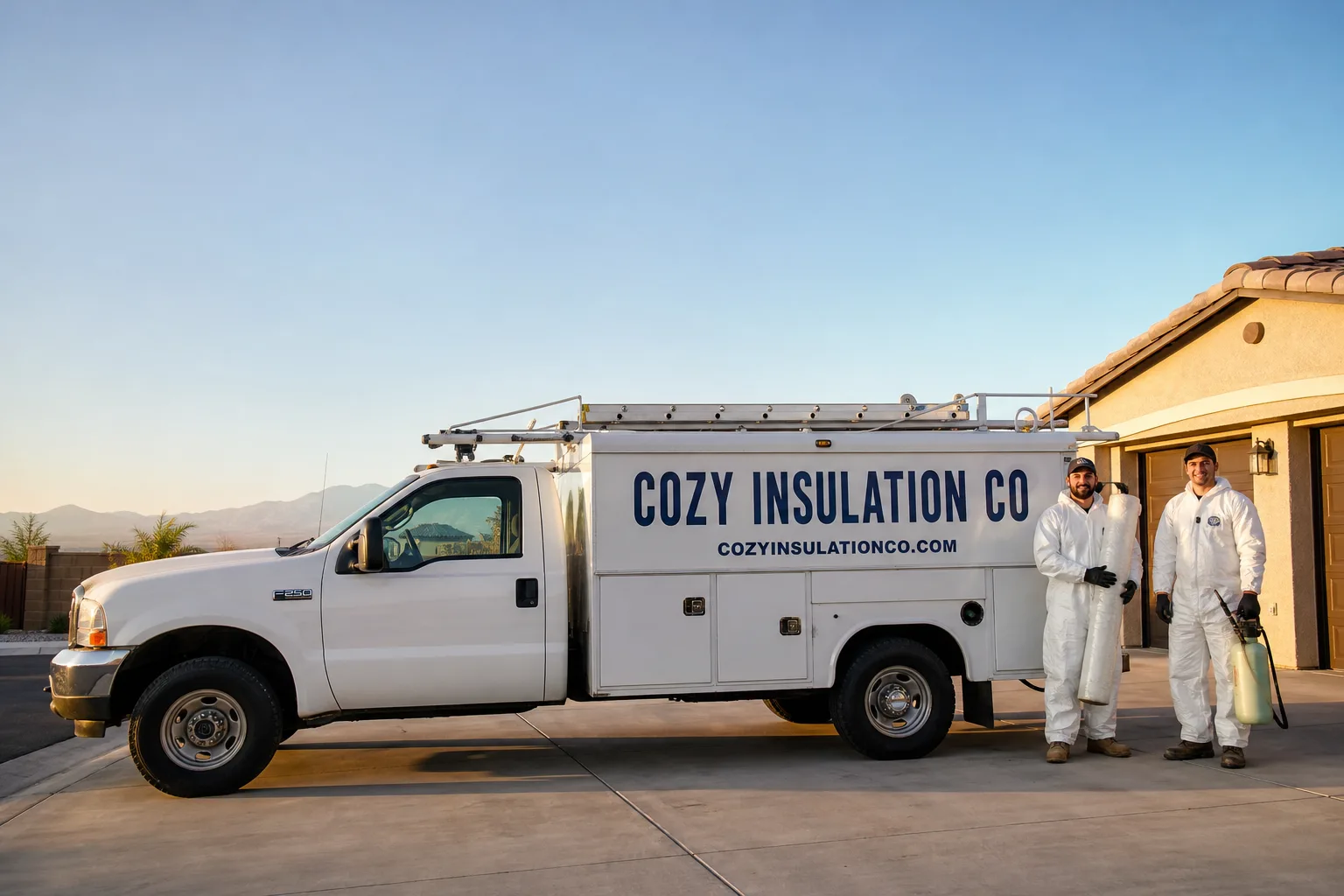
Fast, Reliable Attic Insulation Across Monrovia
Attic insulation in Monrovia runs $1,600 – $4,800 for a typical full-attic job, with most projects completed in a single day. We’re Cozy Insulation Co, and we’ve spent enough time in Monrovia attics to know the housing stock street by street: the pre-war bungalows near Old Town with their shallow joist bays, the 1960s tract homes climbing Myrtle Avenue toward the foothills, and the slope-side properties where ventilation behaves differently than it does anywhere in the LA basin. If your upstairs rooms bake by mid-afternoon or your heating runs nonstop on cool foothill nights, give us a call at (855) 382-3925. We’ll come out, look at what’s actually happening above your ceiling, and give you a straight answer.
Key Takeaways
- Full attic insulation in Monrovia typically runs $1,600 – $4,800 depending on attic size, access, and material choice.
- Monrovia’s foothill roof geometry means standard flat-land venting advice often fails here. Air sealing and venting redesign matter as much as the insulation itself.
- Older homes near Old Town frequently have compressed original batts and knob-and-tube wiring that requires careful handling before new insulation goes in.
- We install fiberglass, blown-in cellulose (GreenFiber), and spray foam (Icynene and Demilec), so the material recommendation actually fits your attic, not our inventory.
- Free estimates. Call (855) 382-3925 and we’ll schedule a look at your attic, usually within a day or two.
Why Cozy Insulation Co Is Monrovia’s Preferred Attic Insulation Company
Monrovia homeowners call us because we understand what this specific city does to attics. The houses along the foothill transition zone, from the flats near the 210 up through the sloping streets off Foothill Boulevard, deal with summer heat that lands harder than coastal LA and Santa Ana winds that stress attic ventilation in ways flat-land homes never experience. We’ve worked in attics from Mayflower Village to Bradbury, and the pattern is consistent: under-ventilated attics on sloping lots, original batts that have settled to half their rated depth, and older homes where air leaks at the top plates undo whatever insulation was originally installed. That’s why we do not sell insulation by square footage alone. We match material and method to what your attic actually needs. With eight vetted brands in our portfolio, from Owens Corning and CertainTeed fiberglass to Icynene and Demilec spray foam to GreenFiber blown-in cellulose, you get a recommendation built around your home, not a one-size pitch. Mike Callahan leads our team with a simple standard: get the air sealing right, get the ventilation right, then install the insulation that belongs there.
Homeowners around Monrovia consistently tell us the same two things after we finish. The rooms that used to be unbearable in August stay comfortable. And the furnace doesn’t kick on as often when the evening air drains down off the San Gabriels. That’s the outcome that matters. Call (855) 382-3925 for a free estimate, and we’ll tell you what’s happening above your ceiling.
Radiant Barrier in Monrovia
A radiant barrier in Monrovia is one of the highest-impact upgrades for homes on the north side of the city, where low-pitch attic roofs absorb intense foothill sun for six or seven hours a day in summer. A radiant barrier is a reflective foil layer installed on the underside of the roof rafters that bounces radiant heat back out before it can saturate your attic insulation and push heat down into your living space.
Radiant Heat Load on Slope-Side Homes
Homes climbing toward the San Gabriel foothills often have attic geometries that amplify heat gain. Low-pitch roofs put the roof deck closer to the ceiling below, which means less air volume in the attic to buffer radiant heat. Add in the sun exposure on west-facing slopes off streets like Canyon Boulevard, and the attic can reach 140 degrees or more on a hot July afternoon. A radiant barrier directly addresses that roof-deck heat gain. Installed properly, it keeps the attic air temperature meaningfully lower, which reduces the load on both your insulation and your air conditioner. For many Monrovia homes, a radiant barrier makes sense before or alongside adding more insulation, because it attacks the heat source rather than just slowing the heat transfer.
What Radiant Barrier Work Involves
We staple or fasten the reflective material to the underside of the rafters, with careful attention to air gaps, because radiant barriers only work when there’s an air space on at least one side. We also verify that your attic ventilation is functioning well enough to exhaust the heat that the barrier blocks. A radiant barrier is not a substitute for insulation, and we’ll tell you that plainly. In Monrovia’s climate, it works as a complement to batts or blown-in insulation, and the combination is what delivers rooms that hold their temperature. Radiant barrier work on a typical Monrovia attic runs $1,500 to $3,200 depending on roof area and attic accessibility.
Attic Cleaning Services in Monrovia
Attic cleaning services in Monrovia matter more here than in newer LA suburbs, because so many local attics are working with decades of accumulated dust, debris, old insulation, and sometimes rodent residue, all of which undercut whatever insulation you’re planning to install. If you’re upgrading insulation in a 1920s bungalow near Old Town or a 1960s tract home off Mountain Avenue, the first thing we recommend is a proper attic cleanup before any new material goes down.
The Cleaning Process Before Insulation
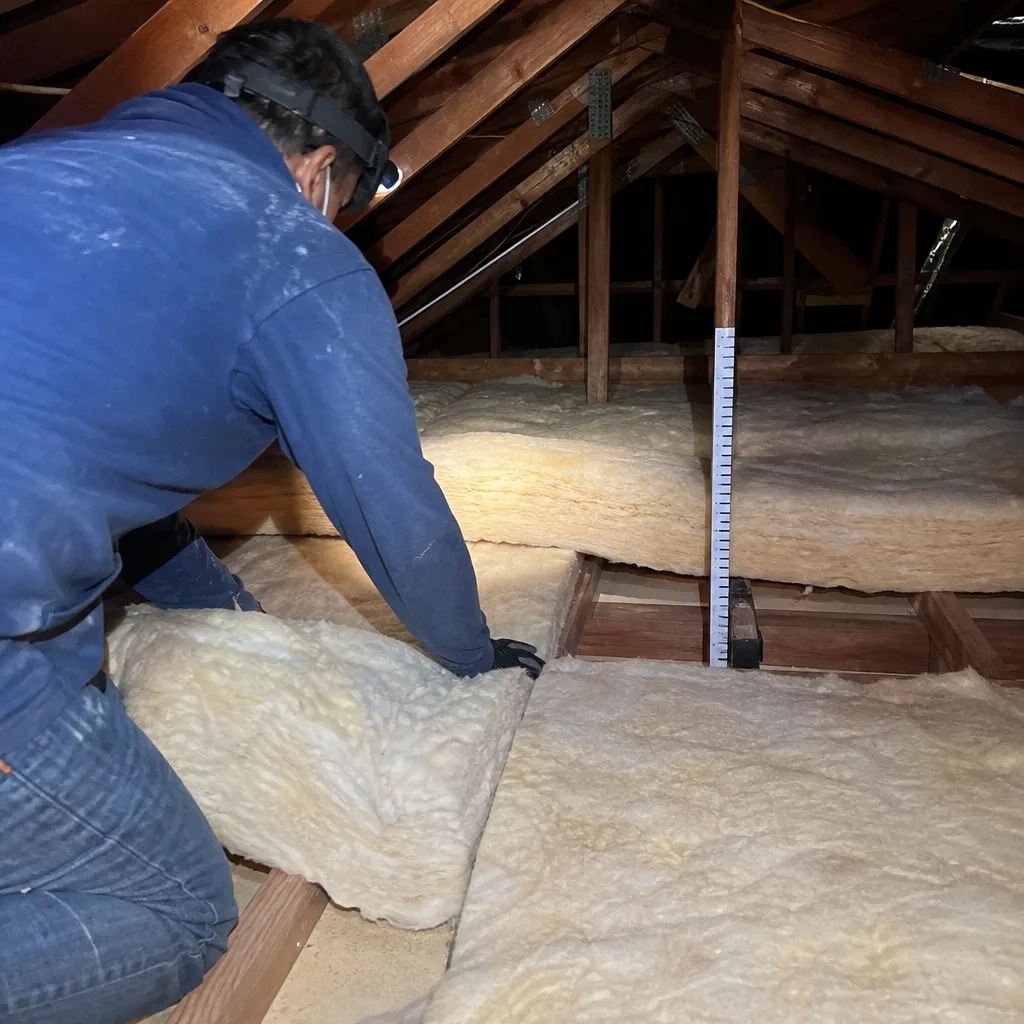
A full attic cleaning involves removing old, contaminated, or compacted insulation, vacuuming out dust and debris, and inspecting for air leaks, moisture intrusion, and wiring issues. In Monrovia’s older homes, this is frequently where we find the real problems: soffit bays stuffed with old batts, top plates with unsealed gaps, and evidence of past rodent activity in the eaves. Cleaning first lets us see the actual attic floor and ceiling structure, which means the air sealing and ventilation plan isn’t based on guesswork.
Rodent Debris and Air Quality
Foothill properties in Monrovia deal with more wildlife pressure than flat-land homes, simply because the forested slopes are right there. Roof rats and mice find their way into attics through gable vents and eave gaps. The droppings and urine-soaked insulation they leave behind affect indoor air quality, especially when attic air gets drawn down into living spaces through leaky top plates. Cleaning removes that contamination, sanitizes the affected areas, and gives you a clean slate for new insulationMonrovia homeowners can breathe easily around. Attic cleaning in Monrovia typically runs $1,200 to $2,800 depending on attic size, level of contamination, and how much old material needs to be hauled out.
What happens when you call
- 1
A real person answersNo phone trees — you reach a local pro.
- 2
You get an upfront price rangeHonest numbers before anyone is dispatched.
- 3
A background-checked tech heads outLicensed & insured, dispatched right away.
- 4
You approve before work beginsNothing starts until you say go.
Trusted Brands We Service in Monrovia
Cozy Insulation Co installs products from eight nationally recognized manufacturers, and we’re authorized to work with CertainTeed and Owens Corning fiberglass, Icynene and Demilec spray foam, Rockwool mineral wool, Knauf and Johns Manville batts, and GreenFiber cellulose. For Monrovia homeowners, that means the material recommendation comes from your attic’s actual conditions, not from a limited inventory. CertainTeed and Owens Corning products carry manufacturer-backed warranties that extend beyond the installation itself, which matters when you’re investing in a home you plan to keep. And because we stock GreenFiber cellulose and Demilec spray foam systems regularly, turnaround times for Monrovia jobs stay short. You won’t wait weeks on a material order. Call (855) 382-3925 and we’ll walk you through which material fits your home best.
Common Attic Insulation Problems We See in Monrovia Homes
- Settled and displaced original batts in pre-war bungalows. We routinely open attics near Old Town and find mineral wool or early fiberglass batts compressed to half their original depth, leaving bare ceiling drywall with almost no effective R-value. The insulation looks like it’s still there from the access point, but the thermal performance is long gone.
- Soffit intake bays packed with insulation on low-pitch foothill roofs. In slope-side tract homes, original installers often blew or laid batts right into the soffit bays, choking off intake airflow. When Santa Ana winds hit, the attic can’t vent properly, and the roof deck gets stressed from trapped heat and moisture.
- Knob-and-tube era wall cavities in pre-war homes. Many Monrovia homes built before 1935 still have active or abandoned knob-and-tube wiring running through wall and ceiling cavities. Adding blown-in insulation around live knob-and-tube is a fire risk, and even abandoned wiring needs to be identified and separated before insulation goes in.
- Split and stepped attic framing on steep foothill lots. Attics on Monrovia’s steeper streets often have unusual framing: splits, steps, and low-pitch sections that create dead air pockets and make uniform insulation depth hard to achieve. Standard venting assumptions don’t hold, and uneven coverage becomes a major comfort problem room-by-room.
Pricing for Attic Insulation in Monrovia, CA
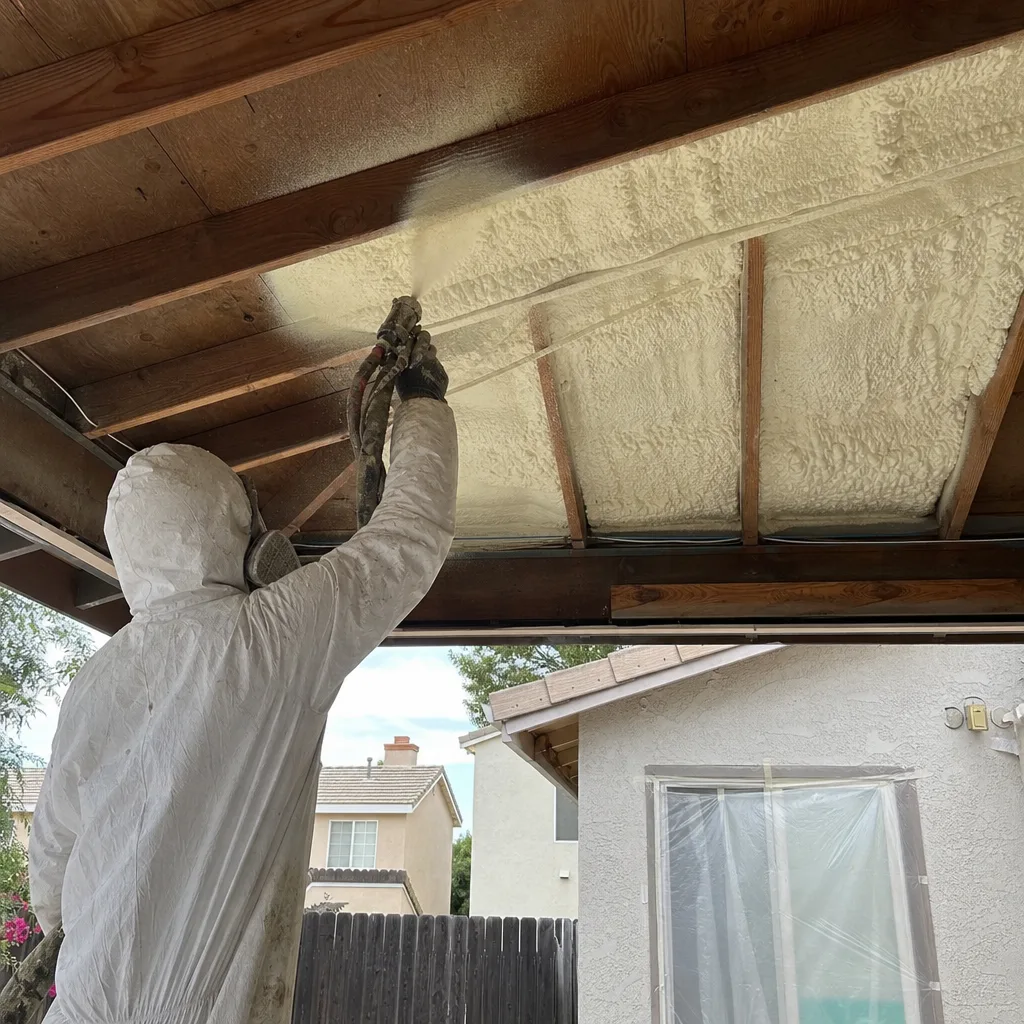
Attic insulation pricing in Monrovia runs from about $1,600 for a straightforward blown-in cellulose job in a modest attic to $4,800 for a full air sealing, venting correction, and insulation replacement in a larger or more complicated foothill home. Radiant barrier installation runs $1,500 – $3,200 depending on roof area. Attic cleaning before insulation runs $1,200 – $2,800 based on contamination level and how much old material needs removal. A simple Attic Insulation top-up, where we add blown-in material over existing batts, typically lands between $1,200 and $2,400. Spray foam work using Icynene or Demilec systems runs higher, usually $3,500 to $8,000, because it changes the attic into a conditioned space and requires more prep work. Every estimate we give is free, itemized, and based on what we actually find in your attic, not a phone quote. Call (855) 382-3925 and we’ll schedule a look.
We Also Serve Cities Near Monrovia
Beyond Monrovia proper, we regularly work in Mayflower Village, Duarte, Bradbury, and Arcadia. Each of these foothill communities has its own mix of older bungalows and mid-century tract homes, and we treat each attic as its own project rather than applying a formula. If you live near Monrovia and want a professional assessment of your attic’s insulation and ventilation, Attic Insulation in Monrovia is our service area hub, or you can call (855) 382-3925 directly. We’ll tell you if we serve your street and get you scheduled.
Serving Monrovia, CA — Our Local Coverage Area
We’re based in the Monrovia area and know this community well. Use the map below to see our service coverage — if you’re nearby, we can almost certainly help.
FAQs About Attic Insulation in Monrovia
Foothill attics in Monrovia sit inside a wind and sun corridor that flat-land LA homes never experience. The low-pitch or stepped roofs common on sloping lots put the roof deck closer to the ceiling, reducing the buffer air space. Santa Ana wind events push air against vent openings and can reverse airflow patterns, especially when soffit intake bays are partially blocked. On many Monrovia homes, standard ridge-and-soffit venting assumptions simply don’t match the actual roof geometry. The fix is to design venting per roof shape, which is exactly what we do on every attic we service here. Call (855) 382-3925 for an assessment.
Old batts that look intact are often the worst offenders, because fiberglass and mineral wool lose loft and R-value over decades even when the material appears unchanged from the access point. In Monrovia bungalows, we find batts settled to half depth, shoved aside along rafters, or compressed by years of foot traffic and storage. Add in air leaks at top plates, which are common in pre-war framing, and the attic insulation becomes almost decorative. The solution is usually removal, air sealing, and re-insulation matched to the shallow joist bays typical of Old Town homes.
Yes, but it requires a specific sequence and careful separation, not a standard blow-and-go job. Live knob-and-tube wiring generates heat at connections and cannot be buried under insulation without fire risk. We identify all active and abandoned circuits, coordinate with a licensed electrician where needed, and use intumescent caulking at penetrations before any insulation goes in. Blown-in cellulose or batts can then be installed with proper clearances maintained. We’ve done this work in Monrovia homes across the pre-war neighborhoods, and we’ll never cut corners on wiring safety. Call (855) 382-3925 for a free attic inspection.
Yes, and it’s often the single highest-value upgrade you can make on a slope-side tract home. These attics bake under direct foothill sun, with low-pitch roof decks that radiate heat straight down into the ceiling below. A radiant barrier installed on the underside of the rafters reflects that radiant heat before it reaches your insulation, lowering attic temperatures and reducing the load on your AC. It’s not a substitute for insulation, but combined with proper venting and air sealing, it transforms how the upstairs of a Monrovia hillside home holds temperature.
Attic cleaning before new insulation involves removing old, contaminated, or compacted insulation, vacuuming out dust and debris, inspecting for moisture and air leaks, and sanitizing any areas affected by rodent activity. In Monrovia foothill homes, we also clear out soffit bays that have been packed with old material, because that’s a major cause of ventilation failure. The cleaning stage is when we find the real scope of the job: air leaks at top plates, wiring issues, and any water intrusion from the roof. Cleaning first means the insulation we install actually performs. Call (855) 382-3925 for an exact quote, and estimates are free.
Attic Insulation Done Right in Monrovia
Monrovia sits directly at the foot of the San Gabriel Mountains, and that geography shapes every attic in this city. Hot dry summers heat the roof deck intensely. Cool canyon-fed evenings drain down off the mountains and drop indoor temperatures fast, so insulation needs to handle both directions of heat transfer. Santa Ana wind events stress attic ventilation and air sealing in ways that flat-land LA suburbs never deal with. The housing stock spans an unusual range for a small city: early-1900s Craftsman bungalows near Old Town, 1960s and 70s tract homes climbing toward the foothills, and everything in between. Each needs a different insulation approach, which is exactly why we carry eight brands and three installation methods. Fiberglass batts from CertainTeed and Owens Corning. Open- and closed-cell spray foam from Icynene and Demilec. Blown-in cellulose from GreenFiber. The right insulation for your Monrovia home, not just the easiest install. Call Mike Callahan and the team at Cozy Insulation Co at (855) 382-3925 for a free estimate. We’ll get into your attic, show you what’s going on, and give you a plan that makes every room in your home comfortable, no matter what the foothill weather does.
Written by Mike Callahan, Owner at Cozy Insulation Co, serving Monrovia and the surrounding foothill communities.