
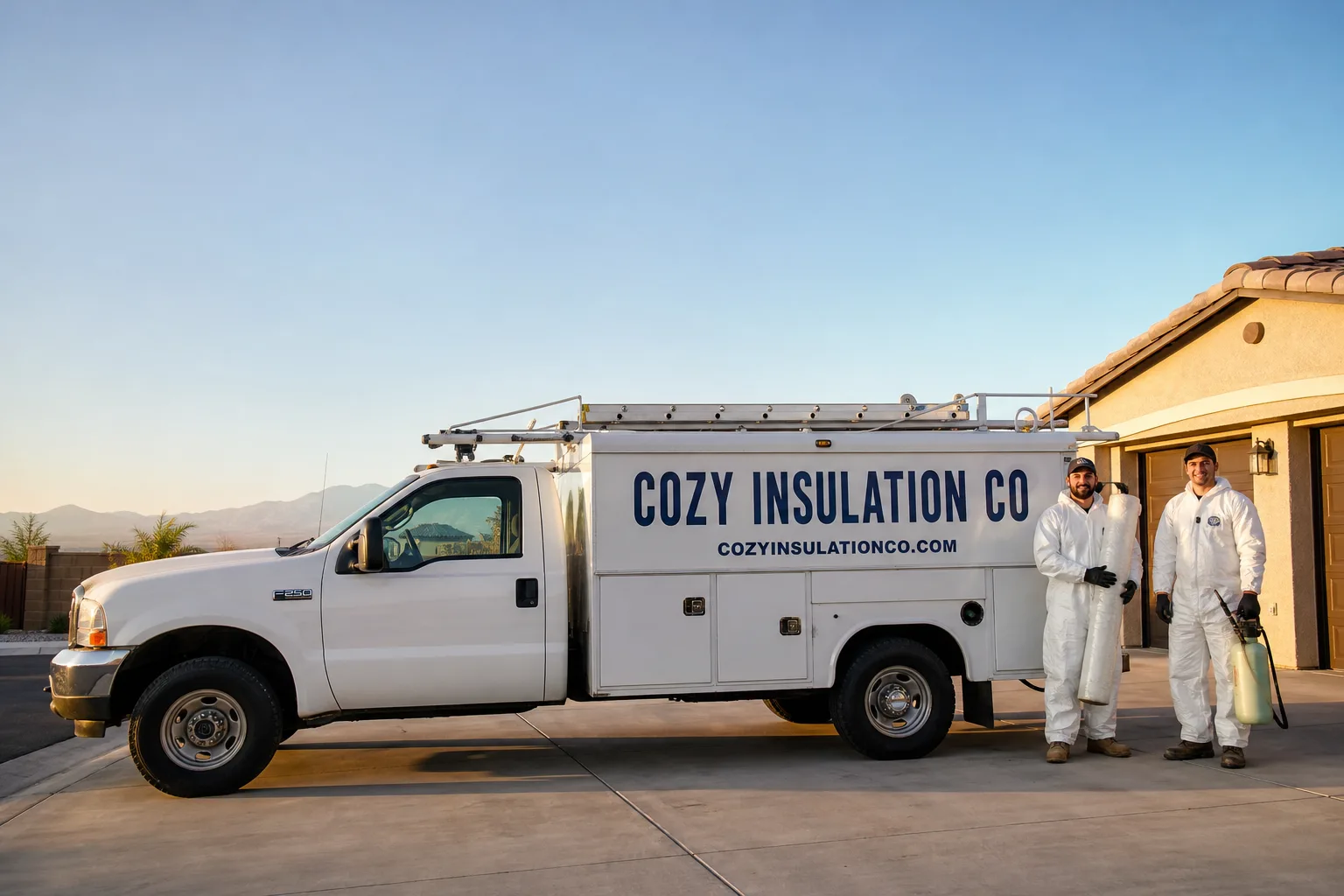
Fast, Reliable Attic Insulation Across Long Beach
Attic insulation replacement and mold treatment in Long Beach runs $2,800 – $7,500 depending on square footage, material choice, and whether we’re removing old material or dealing with salt-air damage first. Most jobs in Long Beach neighborhoods are finished in one to two days, and we answer calls on the same day and schedule site visits within 48 hours. We know the difference between a Naples Island bungalow and a Lakewood-adjacent tract home, because the insulation needs are not the same. Call (855) 382-3925 for a free estimate and an honest recommendation, not a sales script.
Why Cozy Insulation Co Is Long Beach’s Preferred Attic Insulation Company
Long Beach homeowners call us because we match the material to the house rather than pushing whatever is cheapest to install. That matters here more than in most cities, since a 1920s bungalow in Belmont Heights needs different treatment than a 1950s track house near Los Coyotes Diagonal. We’re based in Corona but serve Long Beach from Signal Hill to West Carson regularly enough that we know the building inspectors, the permit expectations, and the failure patterns those homes share. When a customer in the 90814 ZIP calls about a drafty upstairs, we already know to ask whether the original single-pane windows are still in place, because the answer changes the insulation plan.
Mike Callahan built this company around the idea that insulation is not a commodity. Eight brands, three installation methods, one crew that knows which combination fits a 1930s raised foundation with original wood siding versus a 1960s tract home with stucco. Customers appreciate that we do not arrive with a single product and a sales pitch. We arrive with questions and calibrated tools, then we make a recommendation we can defend.
Attic Insulation is all we do, including blown-in, batt, spray foam, top-ups, and full removal and replacement.
Attic Mold Removal in Long Beach
Attic mold removal in Long Beach is a recurring service for us because the marine layer creates condensation inside attics that inland houses rarely see. When warm air from the house meets the cool roof deck during May gray or June gloom, moisture condenses. Add old insulation that has lost its loft, and that moisture lingers. Mold follows. The job involves removing affected insulation, treating the framing with an antimicrobial, finding and fixing the ventilation or air-sealing gap that caused the condensation, and installing new material. In Long Beach, expect to pay $1,800 – $4,200 depending on attic size and how far the mold has spread.
Signs You Have a Problem
You smell something musty when you open the attic hatch. You see dark staining on the underside of the roof sheathing. Or you open the attic door in July and the air feels heavy and damp. Those are the calls we get every week from Long Beach homeowners after months of marine-layer humidity, and every one of them says the same thing: it smelled fine in winter.
Why Quick Handling Matters
Mold in an attic does not stay in the attic. It moves through the house as air pressure shifts, and spores end up in bedrooms and hallways. Long Beach homes with older HVAC returns are especially vulnerable since those systems pull air from the attic cavity. We tell customers to call when they first smell it, because a small treatment now costs far less than a roof-deck replacement later.
Attic Insulation Removal in Long Beach
Attic insulation removal in Long Beach is the first step in a proper retrofit, and it is not something we shortcut. We remove everything down to the joists, evaluate the framing, check for knob-and-tube wiring, inspect the fastener points, and only then install new material. The job costs $1.50 – $3.00 per square foot in Long Beach, including disposal, which for a typical 1,200-square-foot attic lands between $1,800 and $3,600. If old insulation is wet from a roof leak or saturated by marine-layer condensation, removal is not optional, it is the only responsible path.
When Removal Beats a Top-Up
If the existing insulation is damp, moldy, compressed, or full of rodent droppings, adding new material on top just buries the problem. Long Beach attics that have gone decades with poor ventilation often have insulation that looks intact from the hatch, but the batts near the eaves are hanging wet and useless. We pull it all out, then we look at what the framing and the wiring actually need.
What We Find Underneath
A lot of 1920s and 1930s Long Beach homes still have knob-and-tube wiring running across the attic floor. That wiring needs separation and proper air-sealing before any insulation touches it, because covering it with cellulose or fiberglass can trap heat and create a real safety issue. We flag it, we know the code, and we do not bury live circuits just to finish a job.
Trusted Brands We Service in Long Beach
We work with eight manufacturers so we are never stuck shilling one product line. For Long Beach homes, we most often reach for Owens Corning fiberglass batts for standard attics, GreenFiber cellulose when we are blowing into irregular bays in older bungalows, and Icynene or Demilec spray foam when a customer on Ocean Boulevard or in the Peninsula wants the best air-sealing available. We keep common sizes and corrosion-resistant fasteners stocked in our trucks, which means we do not have to leave a Long Beach job half-open while we wait on a supply run.
Common Attic Insulation Problems We See in Long Beach Homes
- Salt-air corrosion on fasteners. In ZIP codes 90802 and 90803 especially, metal insulation clips and wire fasteners rust through and let batts sag away from the roof deck. That opens a gap where warm, moist house air condenses against cold framing, and the cycle accelerates.
- Marine-layer moisture trapped by poor ventilation. May gray and June gloom are real climate events in Long Beach. If the attic does not have adequate ridge and soffit vents, that persistent humidity settles into insulation and turns it into a wet blanket that does not insulate and does invite mold.
- Old wiring buried under previous insulation jobs. We regularly open attics in the 90813 and 90815 ZIP codes and find original knob-and-tube under a layer of 1980s fiberglass. That is a code violation, a fire risk, and a moisture trap, and it changes the entire retrofit plan.
- Single-pane windows and leaky can lights undermining new insulation. You can install perfect attic insulation and still feel drafts if the ceiling penetrations and windows are leaking air. We air-seal around can lights, top plates, and plumbing penetrations before we insulate, because insulation does not stop airflow, air-sealing does.
Pricing for Attic Insulation in Long Beach, CA
Here are the ranges Long Beach homeowners can expect, based on work we have done across the city from Bixby Knolls to the coast:
- Attic insulation top-up (blown-in cellulose or fiberglass): $1,200 – $2,800 for a typical 1,200-square-foot attic
- Full attic insulation replacement (remove old, install new batts): $2,800 – $5,500
- Attic mold removal and treatment: $1,800 – $4,200
- Attic insulation removal only: $1,800 – $3,600
- Spray foam attic upgrade (Icynene or Demilec systems): $6,000 – $14,000 depending on depth and roof configuration
Square footage, accessibility, the condition of existing wiring, and whether we are sealing and prepping the attic beforehand all shape the final number. A cramped 1930s attic with a 4-foot peak costs more per square foot than an open 1980s truss attic. Call (855) 382-3925 and we will give you a precise quote, in writing, after a free attic inspection.
We Also Serve Cities Near Long Beach
If you are in Long Beach today, we can probably reach you from Signal Hill within twenty minutes. We also work in Lakewood, Carson, and West Carson with the same crew and the same approach: match the material, fix the ventilation, do the job right. Wherever you are around the harbor, we are not far.
Serving Long Beach, CA — Our Local Coverage Area
We’re based in the Long Beach area and know this community well. Use the map below to see our service coverage — if you’re nearby, we can almost certainly help.
FAQs About Attic Insulation in Long Beach
Salt air corrodes standard metal insulation clips and wire fasteners within a few years, causing batts to sag and pull away from the roof deck. We use corrosion-resistant fasteners made from stainless or coated steel in those coastal ZIPs, and we check existing fasteners for rust even when we are only doing a top-up. Call (855) 382-3925 if you want an evaluation of what is currently holding your insulation up.
The marine layer brings months of high humidity that can saturate attic insulation if ventilation is inadequate, especially during May gray and June gloom. That saturated insulation loses its thermal performance and can drip condensation onto rafters and ceiling drywall. Good ventilation and proper air-sealing are as important as the insulation itself in Long Beach.
Yes, but not by burying the wiring. The wiring must be assessed, and in many cases it needs to be either replaced or protected with proper air-sealing and separation from insulation. We handle this carefully because a 1920s bungalow in Belmont Shore deserves the same respect as the people living in it, and we do not cut corners on old electrical systems.
We are authorized installers for Owens Corning, Johns Manville, Knauf, Rockwool, CertainTeed, Icynene, Demilec, and GreenFiber. For coastal Long Beach homes with moisture concerns, we often recommend Owens Corning fiberglass with good ventilation or closed-cell spray foam from Icynene or Demilec for the best air and moisture barrier.
Whenever the existing insulation is damp, moldy, compressed, or contaminated, removal comes before anything else. Adding new material on top of wet or moldy batts just locks the problem in. If you can smell something musty in the attic or see staining on the roof sheathing, call us at (855) 382-3925 before you spend money on a top-up that will fail.
Written by Mike Callahan, Owner at Cozy Insulation Co, serving Long Beach and the surrounding coastal communities.