
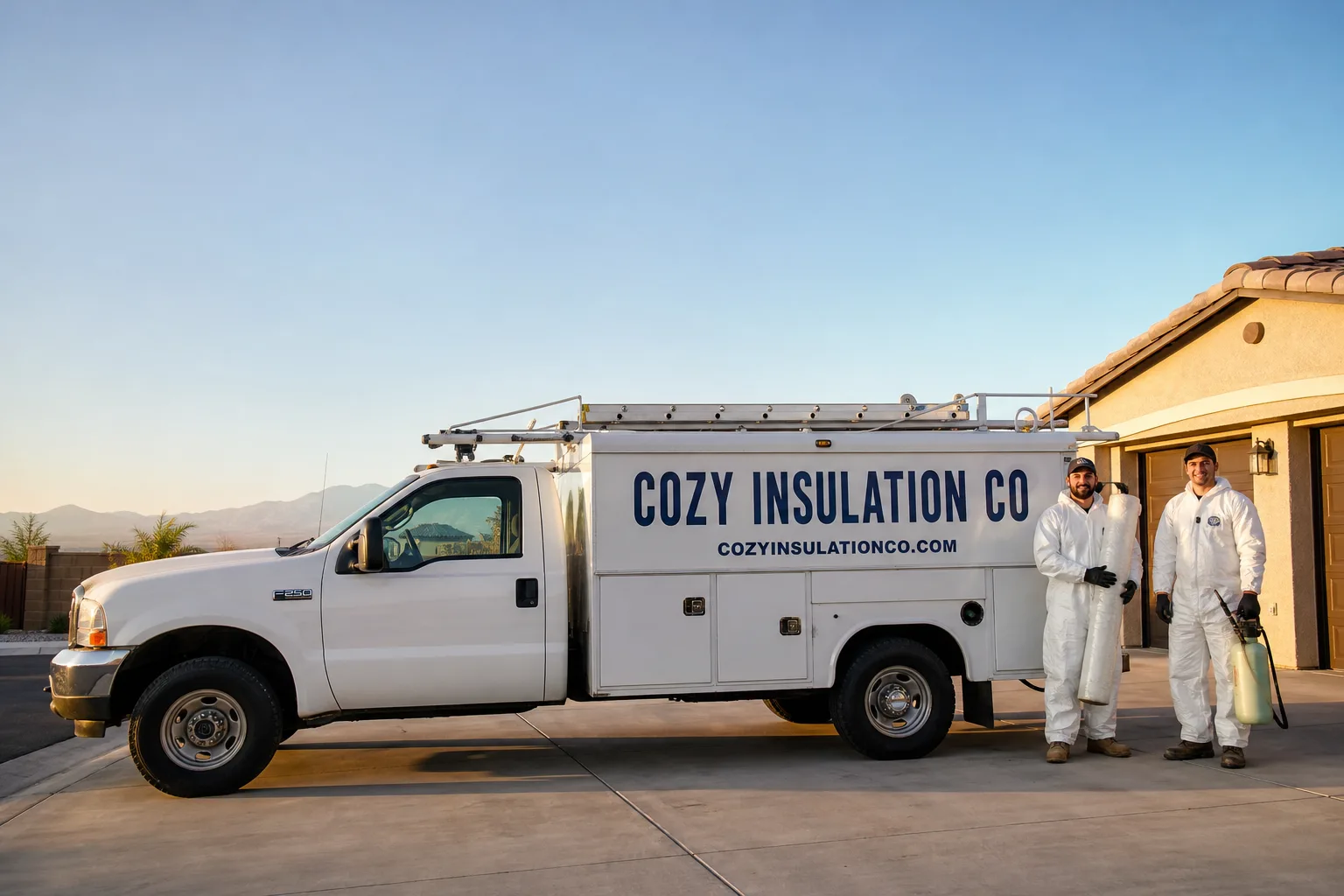
Fast, Reliable Attic Insulation Across Lake Arrowhead
Attic insulation in Lake Arrowhead is a different animal than it is down the hill. At 5,000+ feet, your attic isn’t just a hot box in summer – it’s the front line against teens-and-single-digit winter nights, snow sitting on your roof for weeks, and the ice dams that follow when warm indoor air sneaks into a cold attic. Most Lake Arrowhead homes were built between the 1950s and 1980s as mountain cabins and A-frames, and their attics often hold fiberglass batts that have been compressed, dampened, or settled into near-uselessness. Cozy Insulation Co handles attic insulation removal, replacement, and top-ups across the 92352 zip code, with crews who know exactly what mountain freeze-thaw cycles do to insulation. If your rooms won’t hold heat or you’re seeing ice build up at the eaves, call (855) 382-3925 for a free estimate.
Why Cozy Insulation Co Is Lake Arrowhead’s Preferred Attic Insulation Company
Mike Callahan built Cozy Insulation Co around a simple idea: match the insulation to the house, not to whatever’s sitting in the warehouse. For Lake Arrowhead homeowners, that means understanding the difference between a 1970s A-frame in Blue Jay with vaulted ceilings and a 1980s cabin in Cedar Glen with a vented attic. Both need different materials, different air-sealing, and different install methods.
We’re authorized to install products from eight nationally recognized manufacturers: Owens Corning, Johns Manville, Knauf, Rockwool, CertainTeed, Icynene, Demilec, and GreenFiber. That roster matters up here. A Lake Arrowhead homeowner worried about fire risk can choose Rockwool mineral wool. A vacation-cabin owner who wants recycled content and solid air-sealing can go with GreenFiber cellulose blown to R-49. Someone converting a cabin to full-time living might want closed-cell spray foam from Demilec to seal and insulate in one pass. You get options, and we’ll tell you honestly which one fits your roof assembly and your budget.
Our crews respond to Lake Arrowhead calls within 24 to 48 hours in most cases, and we schedule around mountain weather – we’re not going to schedule a full attic removal when the road to your place is iced over and the crew can’t safely get materials up. Local knowledge is part of the job. For more on how we approach this work across the region, see our Attic Insulation overview page.
Attic Insulation Removal in Lake Arrowhead
Attic Insulation Removal in Lake Arrowhead usually means pulling out fiberglass batts that have been sitting in a cold, sometimes damp attic for 30 to 50 years and have lost most of their R-value. In a mountain cabin, old insulation isn’t just underperforming – it’s often actively trapping moisture against the roof sheathing during freeze-thaw cycles, which is how you get condensation, mold, and wood rot inside a roof assembly that’s supposed to stay cold and dry.
When Removal Makes Sense
We recommend removal when batts have slumped or compressed under snow load, when insulation is visibly wet or moldy, or when rodents have made a home in it. In vaulted cathedral ceilings, we often find the original fiberglass has slid down toward the eaves, leaving the upper roof plane nearly bare. That’s a full removal and re-insulation job, not a top-up.
What Removal Costs Here
Attic insulation removal in Lake Arrowhead typically runs $1.50 to $3.00 per square foot, including bagging, removal, and basic cleaning. For a 1,200-square-foot attic, that’s roughly $1,800 to $3,600 before re-insulation. Vaulted ceilings and difficult access push toward the higher end.
Insulation Contractors in Lake Arrowhead
Insulation contractors who work in Lake Arrowhead need to understand mountain construction, not just insulation. The housing stock here is dominated by 1950s – 1980s cabins and A-frames with vaulted, often poorly ventilated roofs and single-pane or early dual-pane windows. Many were built as second homes and later converted to full-time use, so attic and crawlspace insulation is frequently thin, settled, or missing entirely. That’s the work we do most often.
Air Sealing Before Insulation
Before we blow in new material, we look for the leaks that cause the actual problems: recessed can lights, attic hatches, plumbing penetrations, and the gaps where vaulted ceilings meet exterior walls. Warm air leaking through those gaps is what melts snow unevenly on your roof and forms ice dams. Insulation without air sealing just hides the problem.
Retrofit Options for Existing Cabins
For homes with vented attics, blown-in cellulose or fiberglass from GreenFiber or Owens Corning is usually the fastest, most cost-effective retrofit. For cathedral ceilings with no venting, closed-cell spray foam from Icynene or Demilec is often the only insulation that performs correctly without a full roof rebuild. We’ll walk you through both paths and give you straight numbers.
Trusted Brands We Service in Lake Arrowhead
Cozy Insulation Co installs products from eight vetted manufacturers, and for Lake Arrowhead work we lean on a few that solve mountain problems particularly well. CertainTeed and Owens Corning fiberglass batts are solid, widely available, and carry manufacturer-backed warranties. Icynene and Demilec make the open- and closed-cell spray foam systems we use on vaulted ceilings and unvented roofs – the performance ceiling for residential insulation. GreenFiber cellulose is a favorite for attic top-ups where homeowners want recycled content and strong air-sealing at a mid-range price. We keep a ready inventory of these materials staged for mountain jobs, so a Lake Arrowhead removal-and-replacement doesn’t stall waiting on freight up the 18 or the 330.
Common Attic Insulation Problems We See in Lake Arrowhead Homes
- Slumped and compressed fiberglass in vaulted ceilings. In A-frames and cabins around Blue Jay and Cedar Glen, we regularly open ceiling sections to find batts that have slid or been crushed under decades of snow load, leaving R-values far below code and cold spots along the upper walls.
- Ice dams caused by leaky can lights and attic hatches. Warm air escapes through recessed lights and hatch gaps into an otherwise cold attic, melts the snow at the eaves, and the water refreezes into dams that back up under the shingles. The fix is air sealing, not just more insulation.
- Moisture-trapping fiberglass in unvented roof assemblies. Lake Arrowhead’s freeze-thaw cycles push condensation into any insulation that touches the roof sheathing without ventilation. Wet fiberglass loses most of its insulating power and invites mold into the framing.
- Near-bare attic floors in converted vacation cabins. Many of these homes were built as summer escapes and later winterized with whatever was cheap at the time. We often find 2 to 4 inches of settled insulation where R-38 or R-49 is called for at this elevation.
Pricing for Attic Insulation in Lake Arrowhead, CA
Attic insulation projects in Lake Arrowhead run a wide range because the housing stock varies so much. A basic blown-in cellulose top-up over existing insulation runs $1.20 to $2.50 per square foot. Full removal and re-insulation of a 1,200-square-foot attic typically lands between $3,500 and $6,000 depending on access, pitch, and material choice. Closed-cell spray foam on vaulted cathedral ceilings runs $3.50 to $6.50 per square foot. Blown-in fiberglass is the least expensive new-install option, while mineral wool from Rockwool sits at the premium end and makes particular sense for fire-conscious mountain homeowners. The biggest cost drivers up here are roof pitch, access, and how much old material has to come out first. Call (855) 382-3925 for a free estimate – we’ll give you real numbers based on your cabin’s actual construction, not a generic per-square-foot guess.
We Also Serve Cities Near Lake Arrowhead
Our crews regularly work in Crestline, Running Springs, Highland, and Muscoy, and we schedule those jobs alongside our Lake Arrowhead calls so mountain dispatch stays efficient. If you’re looking for the full picture on what we do across the area, see Attic Insulation in Lake Arrowhead for local service details.
Serving Lake Arrowhead, CA — Our Local Coverage Area
We’re based in the Lake Arrowhead area and know this community well. Use the map below to see our service coverage — if you’re nearby, we can almost certainly help.
FAQs About Attic Insulation in Lake Arrowhead
Recessed can lights in older Lake Arrowhead cabins are rarely air-sealed, so warm indoor air moves straight through them into the attic and melts the snow on the roof deck above. The meltwater runs down to the cold eaves and refreezes into an ice dam. We fix this by replacing or sealing the cans with airtight housings before adding insulation. Call (855) 382-3925 and we’ll take a look.
Usually not. In vaulted cathedral ceilings, old batts have often slumped or been compressed under snow load, leaving hidden voids. Blowing new material on top ignores those voids and can trap the moisture that’s already in the old batts. The right fix is full removal, air sealing, and re-insulation with spray foam or properly fitted batts. We’ll tell you which path makes sense after opening a section of the ceiling.
Yes, and it’s often more critical for vacation cabins than for full-time homes. A cabin sitting empty in Lake Arrowhead winter is still losing heat if the thermostat is set to protect the pipes, and an under-insulated attic means your furnace runs constantly against the cold. Poor insulation and air leaks also cause the freeze-thaw moisture problems that rot sheathing while nobody’s around to notice. The right insulation keeps the cabin stable, dry, and cheaper to reopen each time you come up.
Ice dams at the eaves after snow, rooms that won’t hold set temperature on cold nights, visible frost or condensation inside the attic hatch, and higher propane or electric bills during mountain winters all point to failed or inadequate insulation. In vaulted-ceiling cabins, cold spots along the upper walls and ceiling often mean batts have slumped. If you’re seeing any of these, call (855) 382-3925 for an attic inspection – estimates are free.
In most Lake Arrowhead cabins built before 1990, yes. The original insulation is usually compressed, damp, or rodent-damaged, and leaving it in place compromises whatever you put on top. Removal adds cost upfront but it’s the only way to air-seal properly and start clean. We’ll show you what’s actually up there before making the call.
In Blue Jay, we opened an attic hatch on a 1970s A-frame and found the original fiberglass batts had slumped to a 2-inch mat over the eaves while warm air from a recessed can light had melted snow into an ice dam. We removed the collapsed batts, air-sealed the hatch and can lights, and blew in GreenFiber to R-49. The homeowner reported no more ice buildup that winter, even with the cabin sitting empty for weeks. That’s the work we do here. If your attic is underperforming, call (855) 382-3925 for a free estimate and we’ll give you an honest read on what needs to happen.
Written by Mike Callahan, Owner at Cozy Insulation Co, serving Lake Arrowhead and the San Bernardino Mountains.