
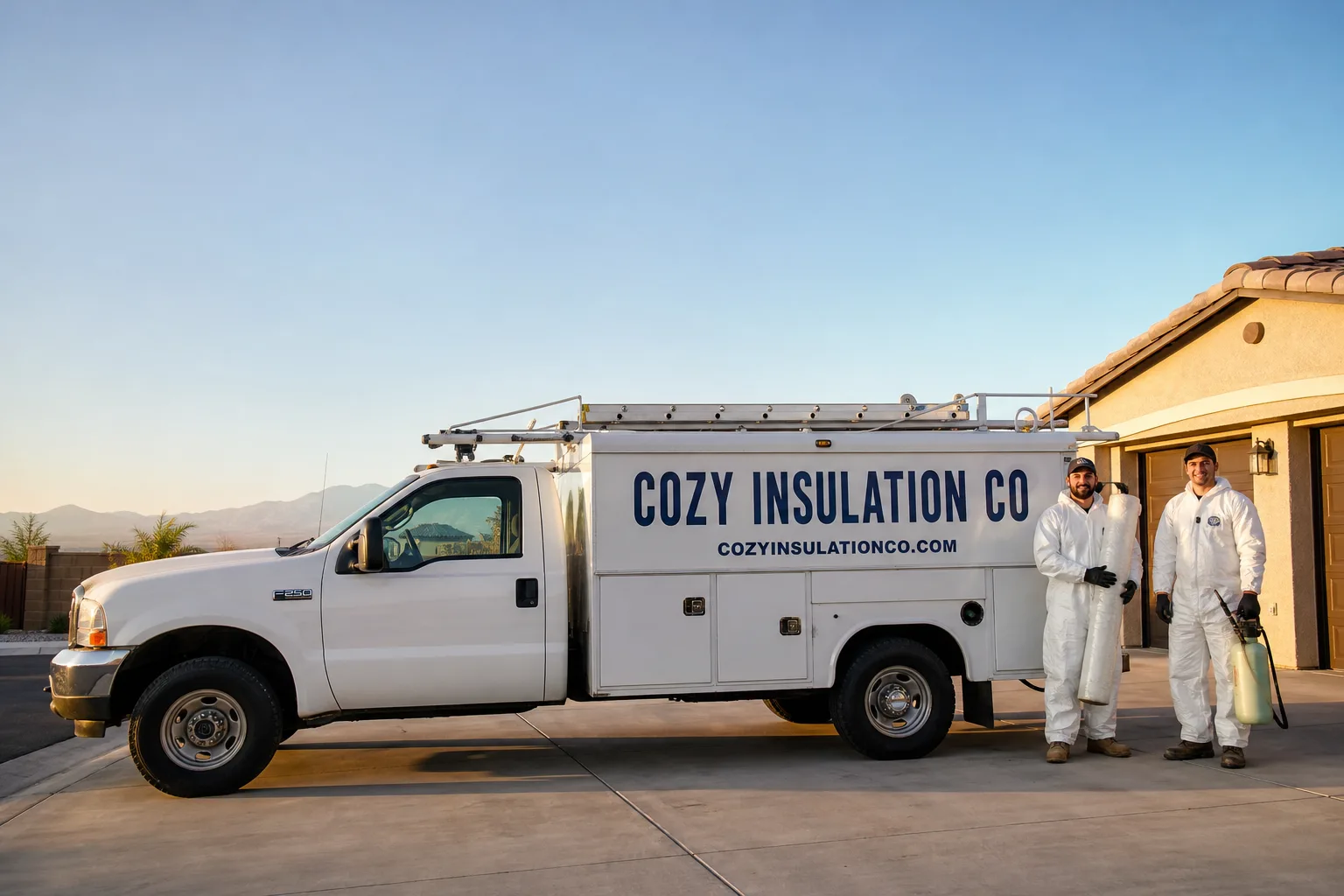
Fast, Reliable Attic Insulation Across El Segundo
Attic insulation in El Segundo isn’t a one-size job. The salt-laden marine fog off Santa Monica Bay gets driven into attics by the afternoon onshore breeze, and that changes what works. We see damp, compressed batts along north and west roof slopes in homes near Grand Avenue long before the insulation would have failed from age alone. Our Attic Insulation team knows which materials hold up in that environment and which ones turn into a moldy mess. If your attic smells musty or your upstairs rooms won’t hold temperature, call (855) 382-3925. We’re in El Segundo most weeks and can usually be at your door within a day or two.
Why Cozy Insulation Co Is El Segundo’s Preferred Attic Insulation Company
Mike Callahan built Cozy Insulation Co around a simple idea: match the material to the house, not the other way around. In El Segundo, that means we don’t default to the cheapest fiberglass and call it done. We’ve worked in enough 1940s and 1950s stucco homes west of Sepulveda to know exactly what happens when marine fog meets an under-sealed attic. Homeowners in the 90245 zip code call us because their upstairs bedrooms are ten degrees warmer than the living room in August, or because they can smell the ocean inside their house. Both problems trace back to the attic.
We carry eight insulation brands, so we’re not boxed into pitching one product. For El Segundo’s salt air, we often recommend corrosion-resistant-faced batts from Owens Corning or CertainTeed, or closed-cell spray foam from Icynene or Demilec when the roof deck needs an air barrier as much as an insulator. The point is options, backed by someone who actually knows which one fits your house.
Response time to El Segundo matters, and we keep it tight. We’re based in Corona, but El Segundo is a regular stop for our crews. Free estimates, straight answers, no pressure to upgrade to something you don’t need.
Attic Insulation Removal in El Segundo
Attic Insulation Removal in El Segundo is usually the right first step when original 1940s or 1950s batts have been sitting in fog-damp air for fifty or sixty years. The old material gets saturated, compressed, and often carries mold spores or rodent droppings. We vacuum it out, treat the affected sheathing, and prep the space for new insulation. A typical removal job in El Segundo runs $1.50 to $2.50 per square foot, depending on access and how much contamination is present. A 1,200 square foot attic lands around $1,800 to $3,000. If your attic smells like a wet basement every time the marine layer rolls in, removal isn’t optional. It’s the only way to start clean.
When Removal Beats Adding More
If the existing batts are blackened, slumped, or pulling away from the top plates, adding new insulation on top just buries the problem. The old material keeps holding moisture, the new material soaks it up, and you’ve thrown money into a sponge. Removal resets the assembly so air sealing and vapor management actually work.
What Removal Involves
We use commercial vacuums with HEPA filtration, bag the old material, and dispose of it properly. After removal, we inspect the top plates and penetrations for gaps where the onshore breeze pushes fog into the attic. Sealing those gaps is part of the prep, not an upsell.
Insulation Contractors in El Segundo
Insulation Contractors in El Segundo come in two flavors: those who blow in whatever’s cheap and leave, and those who look at the whole attic assembly. We’re the second kind. Before we install anything, we check how the roof deck is handling moisture, whether the baffles are doing their job, and where air is leaking from the living space below. A typical attic insulation project in El Segundo runs $2,800 to $6,500 for a full removal and reinstall on a standard 1,200 to 1,800 square foot home. Smaller top-up jobs where the existing batts are in decent shape run $1,200 to $2,400.
Air Sealing Comes First
In a coastal town, insulation without air sealing is a half job. The gaps around top plates, recessed lights, and plumbing penetrations are exactly where the fog finds its way in. We seal those before the new insulation goes down, especially in raised-foundation homes where wind-washed gaps along the exterior walls are common.
Choosing the Right Material
For most El Segundo homes, we lean toward fiberglass batts with a corrosion-resistant facing or mineral wool from Rockwool, which shrugs off moisture. Where the roof deck shows persistent condensation, closed-cell spray foam from Icynene or Demilec acts as both insulation and air barrier. No single product wins every house, which is why we stock options.
Trusted Brands We Service in El Segundo
We’re authorized installers for Owens Corning, Johns Manville, Knauf, Rockwool, CertainTeed, Icynene, Demilec, and GreenFiber. For El Segundo customers, we keep the brands that matter most for coastal conditions: CertainTeed for its vapor-permeable faced batts, Icynene and Demilec for closed-cell spray foam, and Rockwool for its moisture tolerance. We carry replacement facing and staples locally in our trucks, so if we find corroded fasteners during an inspection, we can fix it on the spot instead of scheduling a second visit.
Common Attic Insulation Problems We See in El Segundo Homes
- Salt-fog condensation on north and west roof sheathing. The afternoon breeze off Santa Monica Bay pushes humid marine air into the attic, where it condenses on the cooler roof deck. Batts get wet from above, compress, and lose R-value fast.
- Wind-washed gaps in 1940s and 1950s raised-foundation homes. Original batts sag and pull away from top plates along exterior walls. The onshore wind forces damp air straight through those gaps into the attic.
- Corroded staples and failed facing on legacy insulation. Salt air eats the metal fasteners and kraft paper or foil facing on original batts. Once the facing fails, the batts fall and stop insulating.
- Blocked or missing attic baffles in low-slope and flat-roofed homes. Many postwar El Segundo homes have shallow roof cavities. When baffles aren’t installed or have shifted, soffit ventilation stops working, trapping fog moisture inside.
Pricing for Attic Insulation in El Segundo, CA
Here’s what we actually quote in the 90245 area. Attic insulation top-up on a home where existing batts are still sound: $1,200 to $2,400. Full removal and reinstall on a 1,200 to 1,800 square foot attic: $2,800 to $6,500. Closed-cell spray foam runs $2.00 to $3.50 per board foot installed, which on a typical El Segundo attic roof deck lands between $4,500 and $8,500. Blown-in GreenFiber cellulose sits in the middle, around $1,800 to $3,200 for a full attic. The biggest cost variables are attic accessibility, whether removal is needed, and how much air sealing we have to do first. Every estimate includes a written line-item breakdown. Call (855) 382-3925 and we’ll schedule a free walk-through.
We Also Serve Cities Near El Segundo
Our crews work Attic Insulation in El Segundo and the surrounding beach communities regularly. If you’re in Lennox, Del Aire, Hawthorne, or Marina del Rey, we can usually combine trips when we’re already in the area, which keeps scheduling flexible. The same coastal salt-air issues apply across these cities, so the material choices and air-sealing approach translate directly.
Serving El Segundo, CA — Our Local Coverage Area
We’re based in the El Segundo area and know this community well. Use the map below to see our service coverage — if you’re nearby, we can almost certainly help.
FAQs About Attic Insulation in El Segundo
Homes near Grand Avenue sit closer to the ocean path of the afternoon onshore breeze. Salt-laden fog gets pushed into attic spaces through even small gaps, condenses on the north and west roof sheathing, and soaks batts from above. That moisture causes compression, mold growth, and corrosion of fasteners years before the insulation would fail from thermal aging. Call (855) 382-3925 for an inspection if you live in those blocks.
If the original material shows blackening, musty odor, or has slumped away from the top plates, yes. Adding new batts over compromised material just traps moisture and lets mold keep spreading. Removal costs $1.50 to $2.50 per square foot in El Segundo and gives us a clean surface for air sealing and vapor management.
For most El Segundo homes, we recommend fiberglass batts with corrosion-resistant facing from CertainTeed or Owens Corning, or Rockwool mineral wool for its natural moisture tolerance. Where condensation is persistent, closed-cell spray foam from Icynene or Demilec provides both insulation and an air barrier. The right choice depends on your roof slope and exposure, which is why our estimates start with an attic inspection rather than a product pitch.
Sometimes. If the sagging is limited to one section and the batts are dry and intact, we can re-secure them with new corrosion-resistant fasteners and fix the facing. But if the sagging is widespread or any moisture damage is present, spot repairs turn into a game of whack-a-mole. We’ll tell you honestly which situation you have. A repair visit in El Segundo typically runs $400 to $900, while a full replacement starts around $2,800.
The marine layer delivers consistent humidity rather than extreme heat, which means ventilation needs work differently here than in inland LA. The goal isn’t maximum airflow, it’s controlled airflow that expels moisture without pulling in more fog. That means properly placed baffles, sealed penetrations, and often a vapor-permeable underlayment so the assembly can dry. Standard soffit-and-ridge ventilation assumed by generic attic advice doesn’t always apply to low-slope El Segundo roofs.
If your attic smells damp, your energy bills climb every summer, or you can feel a draft near the ceiling, call (855) 382-3925. Mike and the Cozy Insulation Co team will walk your attic, tell you what’s actually going on, and give you a quote you can read without a decoder ring. Free estimates, honest answers, and insulation that’s matched to a salt-air town, not a generic spec sheet.
Written by Mike Callahan, Owner at Cozy Insulation Co, serving El Segundo with attic insulation, spray foam, and blown-in solutions since day one.