
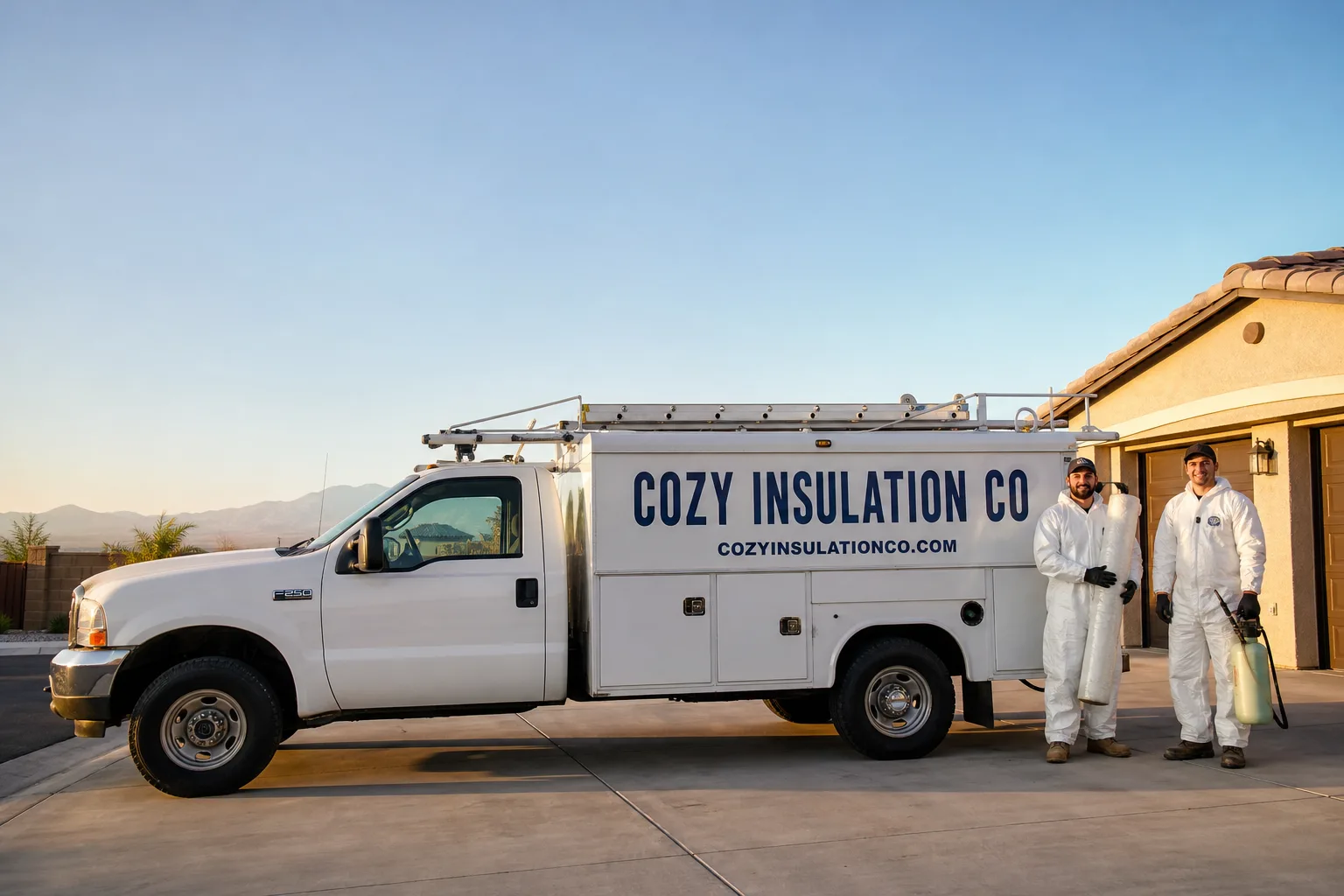
Fast, Reliable Spray Foam Insulation Across Rolling Hills Estates
Spray foam insulation in Rolling Hills Estates runs $2.50 to $6.50 per square foot installed depending on foam type, depth, and access, with typical whole-home projects landing between $4,800 and $14,000. We get calls from homeowners along Silver Spur Road, Portuguese Bend, and the gated equestrian lanes near Dapplegray who are tired of musty crawlspaces and drafty garages. Our crews know the Peninsula, and we typically reach Rolling Hills Estates within 24 to 48 hours for estimates. Call (855) 382-3925 and Mike will talk you through what your house actually needs.
Why Cozy Insulation Co Is Rolling Hills Estates’s Preferred Spray Foam Insulation Company
We spend a lot of time in Rolling Hills Estates, and the homes here keep us sharp. The housing stock is different from Torrance or Lomita: large mid-century ranch builds with crawlspaces, big detached garages, and attics that were insulated decades ago, if at all. Homeowners call us because the rooms facing the canyon stay cold, or because the crawlspace smells like wet earth every May and June when the marine layer sits low.
Our approach in Rolling Hills Estates starts with air-sealing and moisture control, because that is what actually moves the needle on this side of the Peninsula. We install Icynene and Demilec spray foam systems, which means you get closed-cell or open-cell options matched to your house, not whichever product happens to be on the truck. Mike Callahan has walked enough Rolling Hills Estates crawlspaces to know what failure looks like, and more importantly, how to prevent it.
We are licensed, insured, and we stand behind the install. Homeowners on the Peninsula expect a certain standard of work, and we have found that expectation is a good thing. It keeps everyone honest.
Crawl Space Spray Foam Insulation in Rolling Hills Estates
Crawl Space Spray Foam Insulation in Rolling Hills Estates means something specific: it means closed-cell foam applied to foundation walls and rim joists in homes built when nobody thought about vapor drive from damp soil. On a 1962 ranch home in the Palos Verdes Hills neighborhood, we found the original crawlspace fiberglass batts sagging and wind-washed from canyon gusts, with visible moisture wicking up the joists. We removed the failed batts, applied two inches of closed-cell Demilec spray foam to the crawlspace walls and rim joists, and sealed the foundation vents per local code, which stopped the musty odor and stabilized the floor temperature within days.
That job is typical here. Crawlspace spray foam in Rolling Hills Estates runs $3,200 to $8,500 depending on square footage, access height, and whether we are addressing existing moisture first. You cannot foam over active water intrusion and expect it to hold.
Moisture control before foam
In Rolling Hills Estates, the marine layer keeps crawlspace soil damp for months at a stretch. If we spray closed-cell foam over a wet foundation wall, the foam delaminates within a few seasons. We check drainage, downspouts, and any standing water before we even open a Demilec kit. The foam is only as good as the substrate.
Wind-washed rim joists
Canyon-edge lots get persistent onshore wind that finds every gap in the rim joist band. Spray foam here does double duty: it insulates and it stops wind-driven air from blowing through the floor assembly. For Rolling Hills Estates homes on hillside pads, this is often the single most effective upgrade we make.
Garage Spray Foam Insulation in Rolling Hills Estates
Garage Spray Foam Insulation in Rolling Hills Estates is usually about making a garage usable: a workshop, a home gym, a place for the horses’ tack that does not bake or freeze. Many garages here are detached or semi-attached, built with uninsulated stud walls and no ceiling plane worth mentioning. Closed-cell spray foam on the ceiling and walls transforms them. Expect to pay $1,800 to $4,600 for a typical two-car garage in Rolling Hills Estates, depending on whether we are foaming the ceiling, walls, or both.
Fire-resistant detailing
Palos Verdes Peninsula homeowners think about wildfire. Closed-cell spray foam from Demilec and Icynene carries a Class 1 fire rating when properly separated from living space by drywall, and in a detached garage, we can talk through ignition-resistant assembly details that make sense for hillside exposure. This is part of wildfire resilience, not a substitute for defensible space.
Workshop comfort
A foamed garage in Rolling Hills Estates stays cooler in August and warmer in January, but the bigger win is that tools stop rusting. The marine air that corrodes tool steel also condenses on exposed studs. Sealing the envelope stops that. We hear from woodworkers and car guys all over the Peninsula who wish they had done it years earlier.
Trusted Brands We Service in Rolling Hills Estates
We install Spray Foam Insulation systems from Icynene and Demilec, plus fiberglass from Owens Corning and Johns Manville when that is the right call for a particular cavity. GreenFiber cellulose shows up in attic retrofits where homeowners want recycled content. Because we have eight brands on our material list, we are not trying to force one product into every Rolling Hills Estates house. We stock what we need for the common Peninsula jobs, and we can get specialty Demilec or Icynene product to your job within a few days.
Common Spray Foam Insulation Problems We See in Rolling Hills Estates Homes
- Open-cell foam on roof sheathing in vented attics. The marine layer pushes dew points high enough that open-cell foam applied directly to the underside of plywood can absorb moisture from below, leading to sheathing rot and hidden mold. This is a real failure mode we have corrected in Palos Verdes Estates and Rolling Hills Estates homes, and it is almost always installed by a contractor unfamiliar with coastal microclimates.
- Crawlspace foam over unsealed, damp foundation walls. Homes from the 1950s through the 1970s often have concrete that transmits ground moisture. Spray foam over that surface without drainage work leads to delamination within two to five years. We see it in the ranch homes north of Palos Verdes Drive North and along the canyon slopes.
- Wind-washing at rim joists and attic edges. On hillside and canyon-edge lots, persistent onshore gusts erode poorly adhered foam and create convective air loops that defeat the insulation. This is a Rolling Hills Estates specialty problem: Torrance and Lomita see less of it because they are flatter and more built up.
- Ignored vented crawlspace transitions. Many Peninsula contractors will spray foam a crawlspace but leave the foundation vents open, which defeats the whole assembly. In Rolling Hills Estates, code and common sense both say you seal vents when you convert to a conditioned crawlspace. We handle that as part of the job.
Pricing for Spray Foam Insulation in Rolling Hills Estates, CA
Here are the numbers we quote most often in Rolling Hills Estates:
- Crawl space closed-cell spray foam: $3,200 – $8,500
- Garage spray foam (two-car, walls and ceiling): $1,800 – $4,600
- Rim joist air-sealing with closed-cell: $900 – $2,400
- Open-cell attic air-sealing package: $2,200 – $5,800
- Roof deck closed-cell for wildfire-hardened assemblies: $6,000 – $14,000
What moves the price in Rolling Hills Estates: crawlspace access height, whether the garage is attached or detached, how much moisture remediation is needed before we spray, and whether we are working on a steep hillside lot that makes material handling slower. Estimates are free, and we give you a written number before any work starts. Call (855) 382-3925 to schedule one.
We Also Serve Cities Near Rolling Hills Estates
Our crews work throughout the South Bay and the Palos Verdes Peninsula. We regularly install spray foam in Manhattan Beach, Torrance, Lomita, and Palos Verdes Estates. If you are in any of those cities and want to know how the marine layer is affecting your house, the same rules apply. Call us and we will tell you straight.
Serving Rolling Hills Estates, CA — Our Local Coverage Area
We’re based in the Rolling Hills Estates area and know this community well. Use the map below to see our service coverage — if you’re nearby, we can almost certainly help.
FAQs About Spray Foam Insulation in Rolling Hills Estates
Yes, if the wrong foam is used in the wrong assembly. Open-cell spray foam applied directly to roof sheathing in a vented attic traps marine-layer moisture against the plywood, and that leads to rot and mold. In Rolling Hills Estates, closed-cell foam or open-cell with a vapor-retarder layer is the correct approach, and any contractor who does not understand why should not be spraying here. Call (855) 382-3925 and Mike will explain what your specific attic needs.
Yes, closed-cell spray foam is an excellent fit for the crawlspaces of mid-century ranch homes, but only after drainage and moisture intrusion are addressed. We have foamed dozens of these crawlspaces in Rolling Hills Estates, and the successful ones all start with dry walls and working downspouts. Expect $3,200 to $8,500 for a typical Peninsula ranch.
Spray foam reduces ember intrusion by sealing the gaps and vents where firebrands enter a house during a wind-driven wildfire. Closed-cell foam on the roof deck and rim joists blocks the airflow that feeds ember ignition in attics and crawlspaces. This is increasingly part of why Rolling Hills Estates homeowners call us, and we spec Demilec and Icynene products that carry strong fire-resistance ratings.
Closed-cell foam adds structural rigidity, blocks moisture, and carries a better fire rating, which makes it the better choice for most Rolling Hills Estates garages exposed to marine air and canyon wind. Open-cell is lighter and cheaper per board foot but absorbs moisture, so we rarely recommend it for garage walls here. A two-car garage with closed-cell runs $1,800 to $4,600.
In most cases, spray foam insulation work that does not change the building envelope’s structural framing does not require a permit in Rolling Hills Estates, but if you are converting a vented attic or crawlspace to a sealed, conditioned assembly, the city may want to see the scope. We handle the paperwork whenever it is required, and we will tell you up front if your project triggers review.
Written by Mike Callahan, Owner at Cozy Insulation Co, serving Rolling Hills Estates and the Palos Verdes Peninsula.