
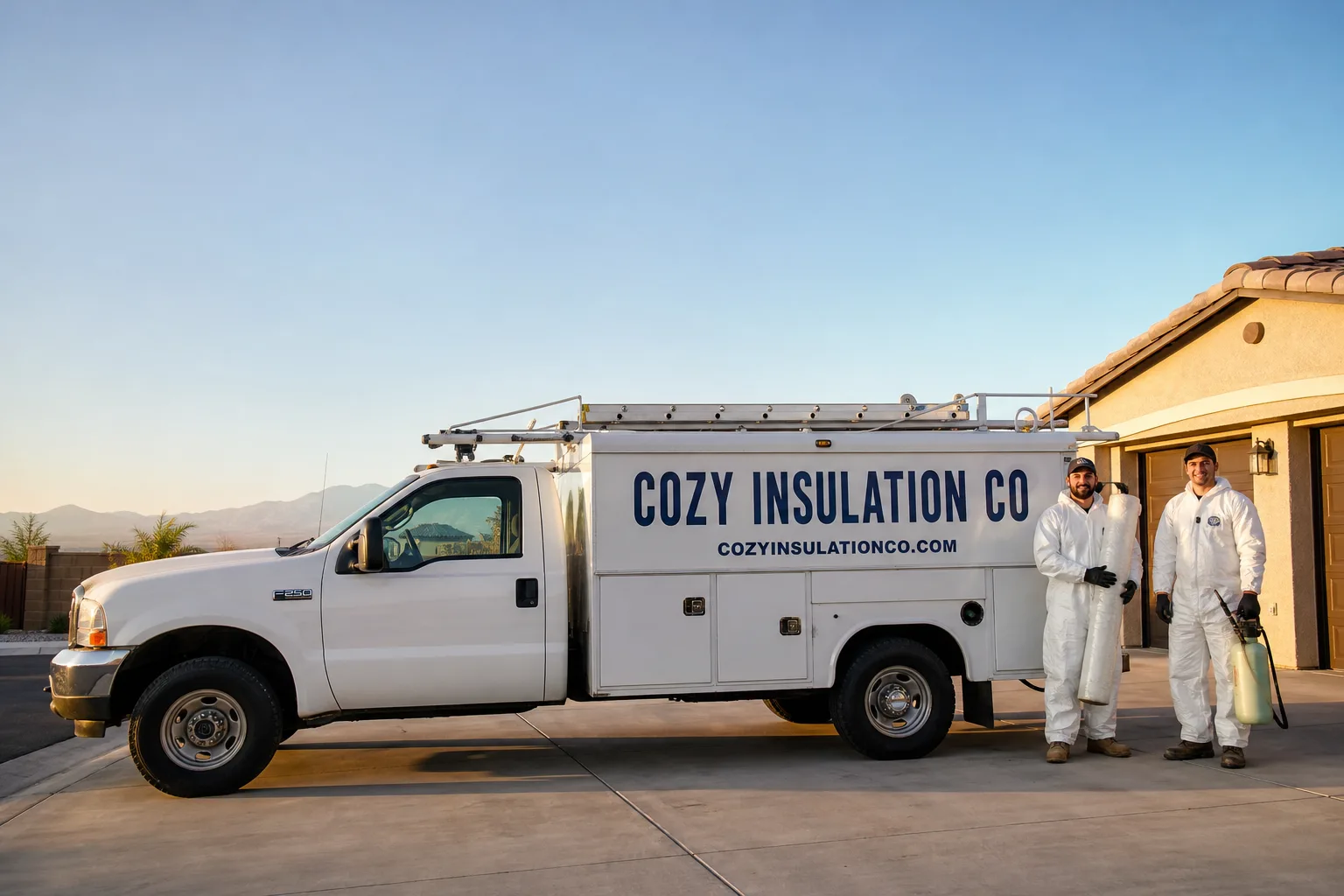
Fast, Reliable Spray Foam Insulation Across March Air Force Base
Spray foam insulation in March Air Force Base typically costs $2,800 to $7,500 for a full attic application, with wall installations running $3,500 to $9,000 depending on square footage and whether you choose open-cell or closed-cell foam. Most projects here are completed within one to three days. If your base housing or ranch-style home still has original fiberglass batts from the 1950s, you’re likely losing conditioned air through settled, wind-scoured insulation. Call (855) 382-3925 for a free estimate, and we’ll assess what your home actually needs.
We know March Air Force Base. Mike Callahan and our crew have worked on mid-century ranch homes, barracks-era duplexes, and newer construction around the base perimeter. We understand the coordination quirks, the wind exposure near the San Gorgonio Pass, and the older attics that never got proper air sealing. That local familiarity means we show up knowing what to look for before we even climb the ladder.
Why Cozy Insulation Co Is March Air Force Base’s Preferred Spray Foam Insulation Company
March Air Force Base homeowners call us because we don’t show up with one product and a sales pitch. We carry Icynene and Demilec spray foam systems, and we’ll also tell you honestly when fiberglass or cellulose makes more sense for your specific structure. That matters here, where some homes have historic preservation constraints and others just need a fast, effective retrofit. Our Spray Foam Insulation team has worked on base housing, off-base neighborhoods in the 92551 zip code, and everything in between.
Response time matters when your attic hits 140 degrees in July and your AC can’t keep up. We typically schedule estimates within 48 hours for Spray Foam Insulation in March Air Force Base projects, and emergency assessments are often available same-week. Mike Callahan personally walks every job before quoting, so you’re not getting a number from someone who’s never seen your attic.
We’re licensed, insured, and bonded. More importantly, we’ve done this work in March Air Force Base specifically. We know which attics have that peculiar wind-scour pattern near the vents. We know the older homes where the roof deck needs foam applied directly to the sheathing. That’s the difference between a contractor who serves the area and one who actually understands it.
Spray Foam Attic Insulation in March Air Force Base
Spray Foam Attic Insulation in March Air Force Base homes means applying open-cell or closed-cell foam directly to the underside of the roof deck, creating an unvented attic that stays within a few degrees of your living space. In this climate, that’s the single biggest upgrade most homeowners can make. With Inland Empire summers routinely pushing 100°F and the large diurnal temperature swing dropping nights into the 50s even in summer, your attic is working against you every single day if it’s not properly insulated.
Sealing Against Wind-Driven Air Intrusion
Because March Air Force Base sits in the San Gorgonio Pass wind corridor, spray foam in exposed attics and walls here must be secured against wind-driven intrusion and degradation. This is a step rarely needed in neighboring Riverside or Moreno Valley. High winds push through soffit vents, gable vents, and any gap in the sheathing, and poorly applied foam can pull away from the roof deck over time. We account for that in every attic application.
On a 1950s ranch house in the March ARB housing area, we found original fiberglass batts that had settled and were wind-scoured in the attic. After sealing gaps, we applied Icynene spray foam to the attic deck and walls, securing it against the high-wind drafts that had compromised the old insulation. The homeowner reported a noticeable drop in cooling costs the following summer.
What Attic Foam Costs Here
A typical spray foam attic in March Air Force Base runs $3,200 to $7,500 depending on square footage, roof pitch, and whether you choose open-cell (more affordable, sound-dampening) or closed-cell (higher R-value per inch, adds structural strength). Homes in the older base housing areas with low-slope roofs and awkward access points tend toward the higher end. The estimate is free, and we’ll show you the math before you commit.
Spray Foam Wall Insulation in March Air Force Base
Spray Foam Wall Insulation in March Air Force Base homes is most common in two scenarios: retrofitting original 1950s construction that has no wall insulation at all, or new additions and remodels where the walls are open anyway. Many barracks-era and early ranch homes around the base were built with empty wall cavities or thin fiberglass that’s now compressed and useless. Foam fills those cavities completely, sealing the thermal envelope in a way batts never could.
Open-Cell for Existing Walls, Closed-Cell for New Work
For retrofit wall applications where drywall stays in place, we typically recommend injection-style open-cell Icynene foam, which expands gently and won’t bow the wallboard. For new construction or full-gut remodels, closed-cell Demilec gives you the highest R-value per inch and acts as a moisture barrier. The wind exposure here makes closed-cell worth considering for exterior walls on the north and west sides of the home, where the San Gorgonio Pass gusts are strongest.
Wall Foam Pricing in the 92551 Area
Wall spray foam in March Air Force Base generally runs $3,500 to $9,000 for a whole-house application, with individual wall sections starting around $1,200 for smaller jobs like a garage or addition. Homes with original plaster-and-lath walls cost more because access is harder. We’ll walk the house with you and break down exactly what’s needed, room by room.
Trusted Brands We Service in March Air Force Base
We install spray foam systems from Icynene and Demilec, two of the most performance-tested names in the professional spray foam industry. For homeowners who want to compare options, we also offer Owens Corning fiberglass and GreenFiber cellulose, so you’re never locked into a material that doesn’t fit your home. We keep common foam formulations and sealant supplies stocked for March Air Force Base jobs, which means faster turnaround when your project is approved. Eight brands, matched to your home, not pushed onto it.
Common Spray Foam Insulation Problems We See in March Air Force Base Homes
- Wind-scoured attic insulation: The San Gorgonio Pass wind corridor pushes air through soffit vents and ridge gaps, degrading exposed fiberglass and even pulling poorly applied spray foam away from sheathing. We see this constantly in homes along the wind-exposed corridors and in attic spaces where the original venting was never properly balanced.
- Settled and compressed original fiberglass: Mid-century base housing built in the 1940s and 1950s often has fiberglass batts that have compressed to a fraction of their original loft. Once settled, they create convective loops that pull hot air down into living spaces. Spray foam eliminates these loops entirely.
- Unsealed rim joists and band boards: Forties-era construction rarely sealed the rim joist, and that gap lets wind-driven air into wall cavities year-round. Rim joist spray foam is one of the highest-value fixes we do on older March Air Force Base homes.
- Base facility coordination delays: If your home is on-base or within a historic preservation zone, insulation work may require facility coordination or design review before we can start. We’ll help you navigate that process and adjust our schedule accordingly.
Pricing for Spray Foam Insulation in March Air Force Base, CA
Here’s what you can expect to pay in the 92551 zip code, based on the work we’ve done in the area:
- Spray foam attic insulation (open-cell): $3,200 to $6,000
- Spray foam attic insulation (closed-cell): $4,500 to $7,500
- Spray foam wall insulation (retrofit, whole house): $3,500 to $9,000
- Rim joist spray foam sealing: $800 to $2,200
- Garage ceiling spray foam: $1,500 to $3,500
- Spray foam roof deck (new construction or full remodel): $5,000 to $12,000
What drives cost in March Air Force Base specifically: the age of your home, whether we’re working around original construction materials, roof pitch and attic access, and whether base coordination or historic review adds scheduling constraints. Our estimates are free, and we’ll give you a firm number before any work begins.
We Also Serve Cities Near March Air Force Base
Our crews work throughout the Inland Empire, including nearby Moreno Valley, Woodcrest, Perris, and Good Hope. If you’re just outside the base boundary in one of those communities, the same wind and climate conditions apply, and we can usually schedule visits the same week. Call us and we’ll get you on the calendar.
Serving March Air Force Base, CA — Our Local Coverage Area
We’re based in the March Air Force Base area and know this community well. Use the map below to see our service coverage — if you’re nearby, we can almost certainly help.
FAQs About Spray Foam Insulation in March Air Force Base
High winds force air through vents, soffits, and sheathing gaps, which can cause poorly applied foam to pull away from the roof deck and degrade over time. We account for this by properly sealing all penetrations before spraying, using the right foam density for exposed areas, and verifying adhesion after cure. Call (855) 382-3925 and we’ll inspect your attic for wind damage before recommending anything.
No. Existing fiberglass must be removed before spray foam is applied to those surfaces. Spraying foam over settled, dusty, wind-scoured batts creates poor adhesion and traps compromised material. We remove old insulation, seal the space, and then apply foam directly to clean sheathing.
For on-base housing and any structures within the base’s jurisdiction, insulation work may require coordination with base facilities and, in some historic preservation zones, design review. Off-base homes in the 92551 zip code typically don’t need permits for insulation retrofit work. We’ll help you determine what your specific property requires before scheduling.
Yes, and it’s arguably the most effective option for this climate. Closed-cell foam creates an air seal that keeps daytime heat from penetrating your attic and slows nighttime cooling loss. Homes here in the Inland Empire see some of the highest cooling loads in Southern California, and an unvented foam-sealed attic is the single best way to reduce that load.
We install Icynene and Demilec spray foam systems. Both are performance-tested brands with strong track records, and we’ll match the specific product to your home’s needs. For comparison options, we also install Owens Corning fiberglass and GreenFiber cellulose, so you get an honest recommendation, not a one-product pitch. Call (855) 382-3925 for a free estimate.
If your March Air Force Base home is drafty, hot upstairs, or running the AC nonstop from June through October, spray foam is worth a serious look. Mike Callahan and the Cozy Insulation Co team will inspect your attic and walls, show you exactly what’s there now, and give you a straight answer on what it’ll take to fix it. Call (855) 382-3925 today for a free estimate.
Written by Mike Callahan, Owner at Cozy Insulation Co, serving March Air Force Base and the Inland Empire.