
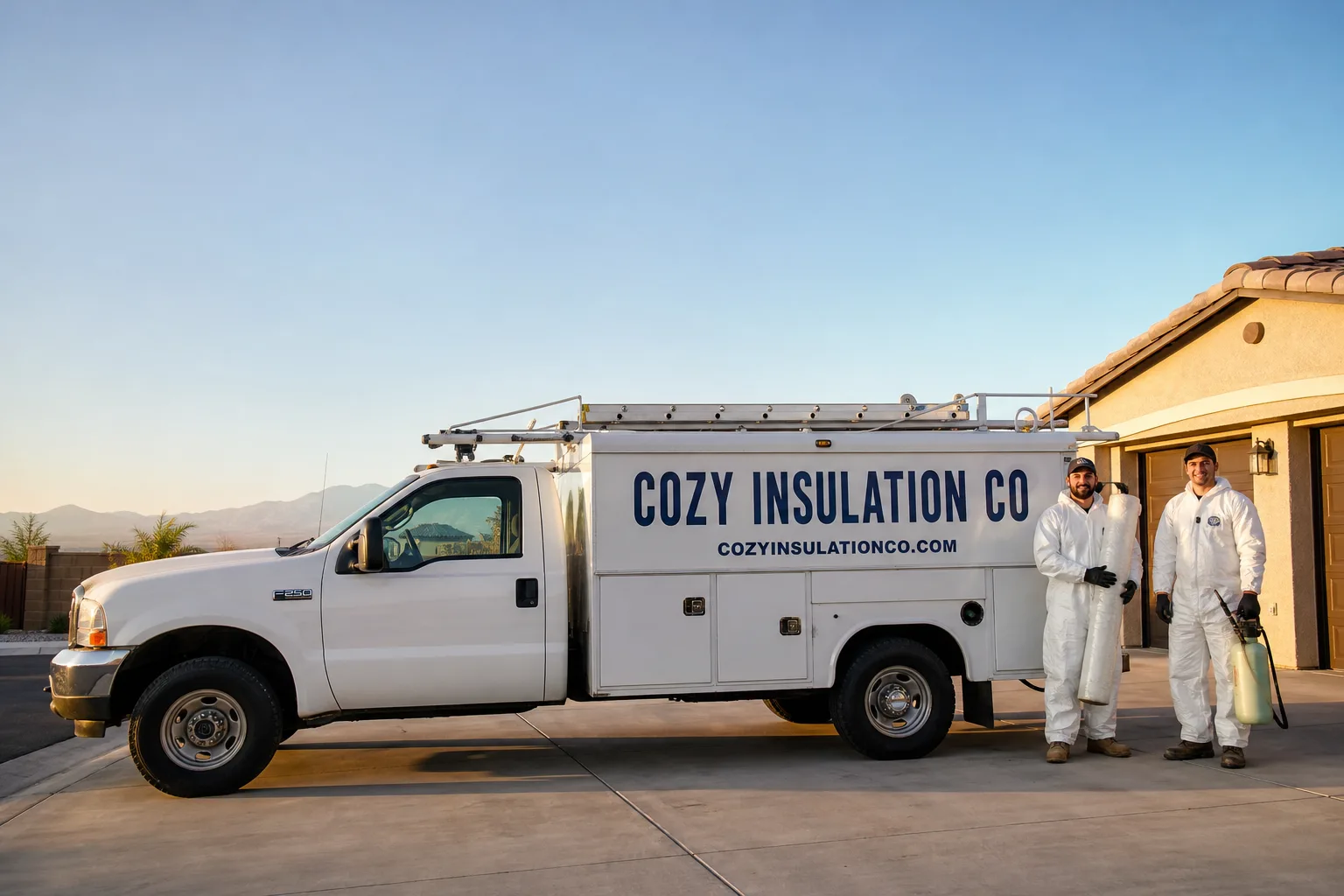
Fast, Reliable Spray Foam Insulation Across Lynwood
Spray foam insulation in Lynwood typically costs $2.50 – $6.50 per square foot depending on whether the job calls for open-cell or closed-cell foam, and most attic projects in the 90262 zip code run between $1,800 and $4,800 total. We’re Cozy Insulation Co, and our crews work in Lynwood weekly, so we can usually get a technician to your home within 24 to 48 hours for an estimate. Call Mike Callahan and the team at (855) 382-3925 to talk through what your attic actually needs.
What makes Lynwood different from neighboring cities is the age of the housing stock. Most homes here went up between the 1940s and 1960s, and many still have the original scuttle-only attic access with little to no insulation above the ceiling. That changes how we approach every spray foam job, from prep work to the type of foam we recommend. We know these attics because we’re in them every week.
Why Cozy Insulation Co Is Lynwood’s Preferred Spray Foam Insulation Company
Homeowners around Lynwood Park, along Imperial Highway, and in the neighborhoods east of Long Beach Boulevard call us because we actually understand what’s behind their attic hatches. A 1955 stucco bungalow in Lynwood doesn’t have the same attic as a 2005 house in Corona. Scuttle access means tight working conditions. Low-slope roofs mean limited headroom. Old framing means surface prep has to be done right or the foam won’t stick. We’ve handled enough of these attics to know exactly what we’ll find before we climb the ladder.
Mike Callahan built Cozy Insulation Co around a simple idea: match the material to the home, not the other way around. We’re not tied to one brand or one method. For a Lynwood attic with knob-and-tube wiring, we may recommend open-cell Icynene foam applied with careful air-sealing around the old electrical. For a garage ceiling that bakes in the afternoon sun, closed-cell Demilec often makes more sense. That flexibility matters in a city where every attic presents a slightly different challenge. Our customers in Lynwood consistently tell us the same thing: the difference in room temperature is noticeable within the first week, especially during those hot, dry afternoons when the Santa Anas push through.
Response time to Lynwood from our crews is typically same-week for estimates and within one to two weeks for scheduled installs, emergency attic work aside. We stock what these older homes need, which means less waiting when the crew arrives.
Crawl Space Spray Foam Insulation in Lynwood
Crawl Space Spray Foam Insulation in Lynwood addresses a problem most homeowners in this city don’t realize they have. The low-slung bungalows and compact tract homes that dominate Lynwood often sit on raised foundations with shallow crawl spaces underneath. That space is a direct pathway for outside air to seep up through the floorboards, carrying moisture and dust with it. We seal the crawl perimeter and floor system with spray foam to cut that airflow and keep the space drier and more stable. Typical crawl space spray foam work in Lynwood runs $1,200 to $3,500 depending on square footage and access clearance.
Sealing the Underfloor for Comfort and Humidity Control
The floors in these older Lynwood homes are often original hardwood over thin subflooring, and every gap between boards is a leak point. Open-cell spray foam applied to the underfloor creates a continuous air barrier and a modest thermal break. It also reduces the musty, damp smell that drifts up from vented crawl spaces, which is common in homes near the LA River corridor and in lower-lying parts of 90262. The result is floors that don’t feel cold in the morning and air that smells cleaner.
Addressing Ductwork in the Crawl
Many Lynwood crawl spaces contain duct runs for forced-air systems. When those ducts sit in an unconditioned crawl, they lose conditioned air through small leaks and gain heat from the surrounding dirt. Spray foam around the crawl perimeter effectively brings the duct environment closer to indoor temperature, which means less energy lost between the furnace and the living room. We see this frequently on the post-war tract homes off Long Beach Boulevard, where duct runs are short but leaky and the crawl is barely 18 inches deep.
Garage Spray Foam Insulation in Lynwood
Garage Spray Foam Insulation in Lynwood is one of the most requested upgrades we do, and it’s almost always driven by the same complaint: the garage is unbearable by mid-afternoon. Lynwood’s compact lots mean garages are often attached to the house or sit just a few feet away, with dark asphalt shingle roofs absorbing direct sun. When the garage ceiling has no insulation, that heat transfers into the garage and eventually bleeds into adjacent rooms. We spray the garage ceiling and, where applicable, the shared wall with the house. Typical garage spray foam projects in Lynwood run $900 to $2,600 depending on size and foam type.
Ceiling Application on Attached Garages
An attached garage in Lynwood is often a major thermal leak for the rooms above or beside it. Closed-cell Demilec spray foam on the garage ceiling creates both an air seal and a high R-value per inch, which is critical when joist cavities are shallow and headroom is limited. We’ve done this work on the compact single-story homes along Martin Luther King Jr. Boulevard, where the garage shares a wall with a bedroom and the temperature difference used to be stark. After foaming that shared wall and ceiling, the bedroom holds its temperature far better.
Trace Air Leaks Around the Garage Door Opening
Older Lynwood garages rarely have tight seals around the roll-up door, and the framing around the opening is often gapped. While we’re on site, we air-seal those penetrations and any wall-to-ceiling gaps before foam goes in. That detail keeps the space from re-pressurizing with hot outside air even after the foam is installed. It’s one of those things that gets skipped on a rush job, and it definitely shouldn’t be.
Trusted Brands We Service in Lynwood
Cozy Insulation Co is authorized to install spray foam systems from Icynene and Demilec, two of the most performance-tested names in the professional spray foam industry. For Lynwood homeowners who want a fire-resistant or eco-conscious option in other parts of the home, we also work with Rockwool mineral wool and GreenFiber cellulose, alongside fiberglass products from Owens Corning and Johns Manville. We keep specific materials on hand that these older Lynwood attics call for, which means your project doesn’t stall while parts get shipped. One call covers the whole house, from the scuttle attic to the crawl space.
Common Spray Foam Insulation Problems We See in Lynwood Homes
- Spray foam applied directly over knob-and-tube wiring without a thermal barrier. In Lynwood’s 1940s and 1950s homes, old wiring is ubiquitous. Foam that encases active knob-and-tube without the proper thermal and electrical separation creates a fire hazard, and it’s a mistake we see from contractors who don’t know these older attics. The right approach is careful air-sealing around the wiring and maintaining the required clearances.
- Foam sprayed too thick on low-slope roof decks. Lynwood’s bungalows often have shallow rafter bays and limited venting. An overzealous foam application against the roof sheathing traps moisture and accelerates shingle deterioration, especially on those dark asphalt roofs that already run hot. The foam depth has to be matched to the roof’s ventilation reality, not just an R-value target.
- Poor surface prep on dusty old framing. Attic wood in a 1960s Lynwood home has decades of fine dust, and spray foam won’t adhere to dust. We see delaminated foam panels from crews that skipped cleaning the rafter surfaces. Proper prep here means more time on the front end and a bond that lasts decades.
- Ignoring the radiant heat problem. The biggest source of summer heat gain in Lynwood attics is the roof deck itself, not the walls or floor. A spray foam job that doesn’t address radiant transfer from dark shingles leaves the attic hot even with foam on the ceiling. We integrate radiant barrier with foam application specifically because of how these older roofs perform under LA Basin sun.
Pricing for Spray Foam Insulation in Lynwood, CA
Here are the honest numbers for Lynwood’s market. Attic spray foam insulation usually runs $1,800 to $4,800 for a typical scuttle-access attic in the 90262 zip code, with open-cell on the lower end and closed-cell on the higher end. Crawl space work runs $1,200 to $3,500. Garage ceiling applications run $900 to $2,600. What moves the price most is the attic’s access difficulty, whether old insulation has to be removed first, and whether knob-and-tube wiring requires special handling. We give written estimates before any work starts, and we’ll walk you through exactly why your home falls where it does in these ranges. Estimates are free, so call (855) 382-3925 and Mike or one of our estimators will come out to Lynwood.
We Also Serve Cities Near Lynwood
If you’re in a neighboring community, we’ve got you covered as well. Our Spray Foam Insulation team regularly works in South Gate, East Rancho Dominguez, Willowbrook, and Paramount. Many of those homes share the same post-war construction patterns we see across Lynwood, so the expertise carries right over.
Serving Lynwood, CA — Our Local Coverage Area
We’re based in the Lynwood area and know this community well. Use the map below to see our service coverage — if you’re nearby, we can almost certainly help.
FAQs About Spray Foam Insulation in Lynwood
Yes, spray foam can be used in homes with knob-and-tube wiring, but it requires a specific installation approach that maintains proper clearance around the conductors and includes a thermal barrier where required. The foam should not directly encase active wiring. We’ve done this work across Lynwood’s 1940s and 1950s tract homes, and the key is an installer who understands both the insulation and the electrical constraints. Call (855) 382-3925 to schedule an attic inspection before you commit to anything.
Radiant barrier matters in Lynwood because the dominant heat load is the sun on the roof deck, not cold-weather loss. The city’s dark asphalt shingle roofs on low-slope bungalows turn attics into heat traps, and spray foam alone doesn’t stop radiant transfer. Pairing foam with radiant barrier addresses both convective and radiant heat, which is what actually makes these homes feel different in August. It’s the combination we recommend most often for Lynwood attics.
During Santa Ana events, hot, dry wind pushes against the house and forces its way through every small gap in the building envelope, carrying dust and heat inside. Spray foam’s air-sealing properties close those gaps at the attic floor, rim joists, and wall penetrations, which reduces how much outside air gets pulled through the home. A properly sealed attic also keeps the wind from pressurizing the house and pulling conditioned air out. That’s a real benefit in Lynwood, where the wind events come hot off the mountains.
Yes, crawl space spray foam is strongly recommended for Lynwood’s low-slung bungalows because those raised foundations sit close to the ground and breathe constantly. Foaming the crawl perimeter cuts moisture migration, reduces dust intrusion through floor gaps, and stabilizes floor temperatures. The shallow crawl depth in many Lynwood homes makes the sealing work harder, but the payoff is bigger precisely because the space is so tight and leaky.
Most Lynwood homeowners see a meaningful reduction in cooling-season energy use within the first full summer after installation, with the biggest gains coming from homes that previously had zero insulation. Exact payback depends on the home’s current insulation state, AC efficiency, and how much of the envelope gets sealed. What we can say from field work is that scuttle-attic homes with no prior insulation respond fastest, often within two to three years on the foam investment alone. Call us at (855) 382-3925 for a free estimate and we’ll give you a straight read on your home.
Written by Mike Callahan, Owner at Cozy Insulation Co, serving Lynwood’s homes since the company’s founding.