
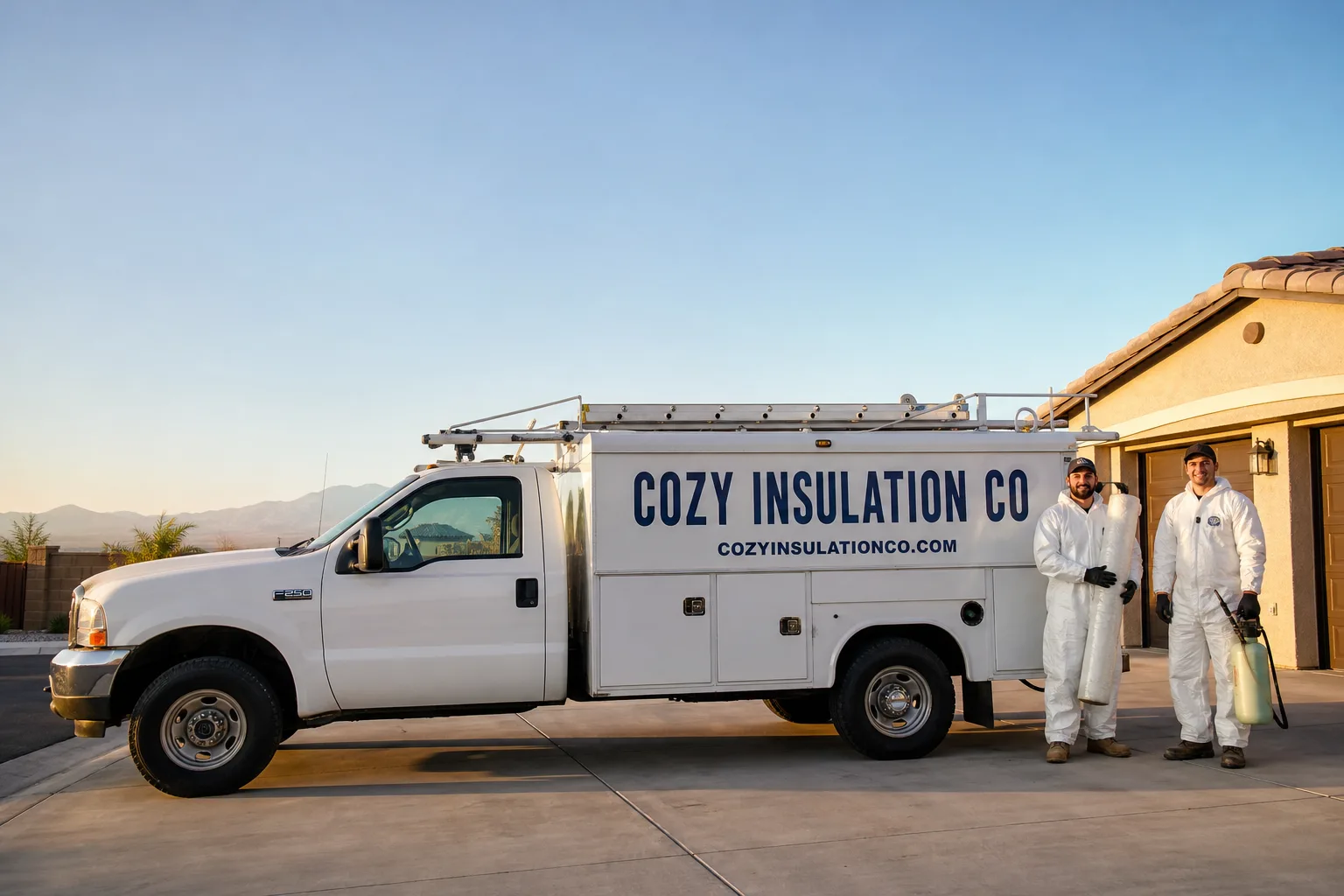
Fast, Reliable Attic Insulation Across Tujunga
Attic insulation in Tujunga has to work harder than almost anywhere else in Los Angeles County. Summer highs routinely push past 100°F while winter nights in the foothills can drop below freezing, and many of the ranch and cabin-era homes here were built with R-7 or less in the attic – or nothing at all. That’s why we respond to Tujunga within a day for most estimates and can often schedule installation within the week. If your rooms won’t hold temperature no matter what the thermostat says, call Cozy Insulation Co at (855) 382-3925. We’ll diagnose what’s actually happening in your attic and crawl space, not just sell you batts.
Why Cozy Insulation Co Is Tujunga’s Preferred Attic Insulation Company
Most Tujunga customers come to us after living with the same problem for years: upstairs bedrooms that bake in summer, living rooms that never warm up in December, and energy bills that keep climbing. Our Attic Insulation team has walked through dozens of homes along Foothill Boulevard, off Mt. Gleason Avenue, and up in the canyon pockets near Big Tujunga Wash. We know what’s behind the knee walls in a 1950s post-and-beam, and we know how a pier-and-beam foundation in the hills changes the entire insulation strategy.
Mike Callahan leads every project with a materials-first mindset. Eight brands sit on our shelf: Owens Corning, Johns Manville, Knauf, CertainTeed, Icynene, Demilec, Rockwool, and GreenFiber. That means when a Tujunga homeowner asks what’s best for their house, we’re not stuck recommending the one product we happen to stock. We match the material to the home’s construction, exposure, and the specific way heat moves through Tujunga’s hillside lots.
We serve the 91042 and 91043 ZIP codes regularly, and our crews know which streets in Sunland-Tujunga have the oldest housing stock and which canyon roads make material delivery tricky in a Santa Ana blow. That local knowledge changes how we schedule, how we stage equipment, and how we protect your home during install.
Attic Ventilation in Tujunga
Attic Ventilation in Tujunga isn’t a nice-to-have – it’s the difference between an attic that vents 140°F air and one that traps it against your ceiling all afternoon. The older ranch homes and hillside cabins here often have gable vents that were adequate before the climate shifted, but no soffit intake to create actual airflow. When we assess a Tujunga attic, we check whether air can move from the eaves to the ridge. If it can’t, the insulation we add will underperform no matter what R-value it carries.
Most Tujunga ventilation upgrades involve adding or repairing soffit vents, installing baffles to keep insulation from blocking airflow, and confirming ridge or gable exhaust is balanced with intake. For homes in the canyons and against the foothills, we also account for how Santa Ana winds pressurize the attic from certain directions.
Ventilation-focused work in Tujunga typically runs $350 to $900 depending on accessibility and the number of vents involved. If we’re already in the attic for insulation, adding baffles and vent prep costs less than doing it as a separate trip.
Attic Baffles and Airflow Prep
Baffles keep blown-in or batt insulation from smothering your soffit vents. In Tujunga’s tighter attic cavities – common in 1940s and 1950s ranches with shallow roof pitches – baffles are non-negotiable.
We install baffles at every rafter bay with soffit intake, then confirm the air path is clear before any insulation goes in. Skipping this step is exactly how some homes end up with mold at the eaves and a 120°F attic in July.
Attic Fan and Gable Vent Assessment
Powered attic fans can help pull hot air out, but only if the intake side is working. We see homes in Tujunga where someone bolted in a fan and sealed the soffits, which makes the fan pull air from the living space instead.
We’ll test what’s actually moving and recommend changes based on that, not on what’s cheapest to install. Sometimes the right answer is more soffit vents and no fan at all.
Radiant Barrier in Tujunga
Radiant Barrier in Tujunga makes more sense here than in most LA neighborhoods because of how much direct sun these foothill roofs absorb. A reflective barrier installed against the roof deck can cut radiant heat gain through the roof by a measurable margin – and in a home that already has decent ceiling insulation, it’s often the single most effective upgrade for summer comfort.
We recommend radiant barrier most often for Tujunga homes with tile or composition shingle roofs that get full western or southern exposure. The biggest mistake we see is radiant barrier installed without air-sealing first. If the attic floor isn’t sealed, Santa Ana winds and the daily temperature swing push conditioned air straight out through gaps and seams. The barrier still works, but you leave comfort and efficiency on the table.
Radiant barrier installation in a typical Tujunga attic runs $1,400 to $2,800 depending on square footage and roof geometry. Attics with low pitch and lots of angles take longer and land at the higher end.
Attic Floor Air-Sealing Before Radiant Barrier
Gaps around plumbing penetrations, electrical boxes, and partition walls leak air between your living space and the attic. In Tujunga’s daily temperature swings, that leak is expensive.
We air-seal the attic floor with foam and caulk before adding radiant barrier or any new insulation. It’s the step most low-bid contractors skip because nobody sees it, and it’s the step that makes everything else perform.
Combining Insulation, Ventilation, and Radiant Barrier
No single product fixes a Tujunga attic by itself. Insulation slows conductive heat transfer. Radiant barrier reflects radiant heat. Ventilation removes trapped hot air. Each one relies on the others.
When a home needs all three, we bundle the work into one project so the attic is done once and done right. That’s the Cozy approach: the right insulation for your home, not just the easiest install.
Trusted Brands We Service in Tujunga
We install Owens Corning fiberglass batts in more Tujunga attics than any other product, but it’s not the right call for every home. For canyon properties with fire-risk concerns, we carry Rockwool mineral wool, which is naturally fire-resistant and also dampens sound. For homes where the attic is being converted or the roof deck needs an air seal, Demilec closed-cell spray foam is the performance ceiling, literally and figuratively. GreenFiber cellulose works well for older attics with unusual joist spacing and lots of nooks where batts fit poorly. Eight trusted brands, one company – and we stock the materials locally so Tujunga jobs don’t wait on a distribution center in Riverside.
Common Attic Insulation Problems We See in Tujunga Homes
- Settled or thinning insulation in 1940s-1970s ranch attics. Many Tujunga homes still have whatever rock wool or R-7 fiberglass was installed when they were built. Rock wool settles over decades, losing a third or more of its effective R-value. A top-up with blown-in GreenFiber cellulose or new Owens Corning batts restores the thermal barrier and makes a visible difference in both summer and winter.
- Pier-and-beam crawl spaces acting as a chimney. Hillside and canyon homes built on open foundations let outside air move straight up through floor cavities and into the attic. Attic insulation alone can’t fix that. We address under-floor and rim-joist insulation at the same time, which is the combination flat-lot coastal contractors rarely think to specify.
- Radiant barrier or ventilation added without air-sealing first. We see this constantly in Tujunga, especially in homes where a previous contractor worked fast and cheap. Air leaks at the attic floor make insulation, ventilation, and radiant barrier all underperform. The fix is not more product – it’s doing the prep work that was skipped.
- Knee walls and attic accesses in converted hillside homes that leak air. Older Tujunga houses often have knee wall cavities that were never insulated and attic hatches with no weatherstripping. Sealing these smaller details is often what finally stabilizes rooms that have been uncomfortable for decades.
Pricing for Attic Insulation in Tujunga, CA
A full attic insulation replacement for a typical 1,200-square-foot Tujunga ranch lands between $1,800 and $3,200. That range includes removal of old or settled material, air-sealing the attic floor, and installing fresh batts or blown-in insulation to R-38. A blown-in attic insulation top-up over existing material runs $900 to $1,600, which is the right call when the current insulation is in decent shape but too thin. Attic ventilation work, as noted above, runs $350 to $900. Radiant barrier adds $1,400 to $2,800. Homes with pier-and-beam foundations need under-floor and rim-joist work too, which we quote as a separate line item so you always know what you’re paying for. Call (855) 382-3925 for a free estimate – we’ll measure your attic and give you exact numbers, not a range pulled from a website.
We Also Serve Cities Near Tujunga
Our crews work throughout the northeast San Fernando Valley and foothill communities. If you’re in Tujunga, you’re likely to see our vans in Sunland, La Crescenta-Montrose, Shadow Hills, and Burbank as well. Same-day estimates are often available in these areas, and we schedule by ZIP code so our routes stay efficient. If you’re on the edge of Tujunga and wondering whether we cover your street, call (855) 382-3925 and ask.
Serving Tujunga, CA — Our Local Coverage Area
We’re based in the Tujunga area and know this community well. Use the map below to see our service coverage — if you’re nearby, we can almost certainly help.
FAQs About Attic Insulation in Tujunga
Because pier-and-beam crawl spaces in Tujunga’s hillside and canyon homes let outside air flow straight up through the floor and into the attic, creating a chimney effect that defeats attic insulation on its own. The warm or cold air that gets pulled through the floor cavities has to be stopped at the source, which means insulating the floor, rim joists, and crawl space along with the attic. If you only do the attic, you’ll feel a partial improvement and wonder why your bills didn’t drop more. We quote the whole system so you can choose what gets done first. Call (855) 382-3925 for a free assessment.
R-38 to R-49 for the attic floor is the range we recommend for Tujunga homes, where summer days exceed 100°F and winter nights near freezing at higher elevations. Building code sets a floor, not a ceiling, and the extreme daily spread here means the higher end pays off faster. The exact number depends on the roof’s sun exposure, your HVAC system, and whether you have a pier-and-beam foundation that’s leaking air. Call (855) 382-3925 and we’ll take measurements and give you a specific target, not a guess.
Yes, and in most of these older foothill cabins the attic is both the biggest heat gain source in summer and the biggest heat loss source in winter. Single-pane windows and uninsulated walls are real problems, but they’re smaller problems than an attic with R-7 or less of settled material. We typically recommend bringing the attic up to R-38 or R-49 first, air-sealing the attic floor, and then deciding whether wall insulation or window work makes sense as a phase two. Mike Callahan can walk you through that sequence honestly. Call (855) 382-3925 for a free attic inspection.
Yes, in two ways. First, high winds pressurize the attic from certain directions, which pushes hot or cold air through any unsealed gaps between the attic and living space. Second, wind-driven dust and debris get pulled into attic vents, which can clog them over time and reduce ventilation. This is why we air-seal the attic floor before installing insulation and why we check vent screens during Santa Ana season in the 91042 and 91043 ZIP codes. Call (855) 382-3925 if your attic feels dusty or drafty after a wind event.
Radiant barrier is a reflective surface installed against the roof deck that blocks radiant heat from the sun before it can heat the attic. Ventilation is airflow that carries away whatever heat does build up. They do different jobs. In Tujunga, where summer sun is intense, radiant barrier often delivers the biggest single improvement for second-story or vaulted-ceiling rooms. Ventilation matters more for homes with dark shingle roofs and poor soffit airflow. Many homes benefit from both, plus air-sealing and insulation. Call (855) 382-3925 and we’ll tell you which one actually fits your house.
Ready to Fix the Attic in Your Tujunga Home?
We just finished a 1952 post-and-beam ranch off Mt. Gleason Avenue where the original attic had a thin layer of settled rock wool and the pier-and-beam foundation left a wide-open crawl space. After air-sealing the attic floor and installing Owens Corning R-38 fiberglass batts, we added reflective radiant barrier along the roof deck and insulated the rim joists with Rockwool to stop the chimney effect that had been pulling hot canyon air up through the floor all summer. The homeowner told us the upstairs rooms finally held temperature during a 104°F August afternoon. That’s the outcome we work for in every Tujunga attic. Call Cozy Insulation Co at (855) 382-3925 for a free estimate, or to ask Mike anything about your home’s insulation. A cozy home isn’t luck – it’s the right insulation, installed correctly.
Written by Mike Callahan, Owner at Cozy Insulation Co, serving Tujunga and the surrounding foothill communities.