
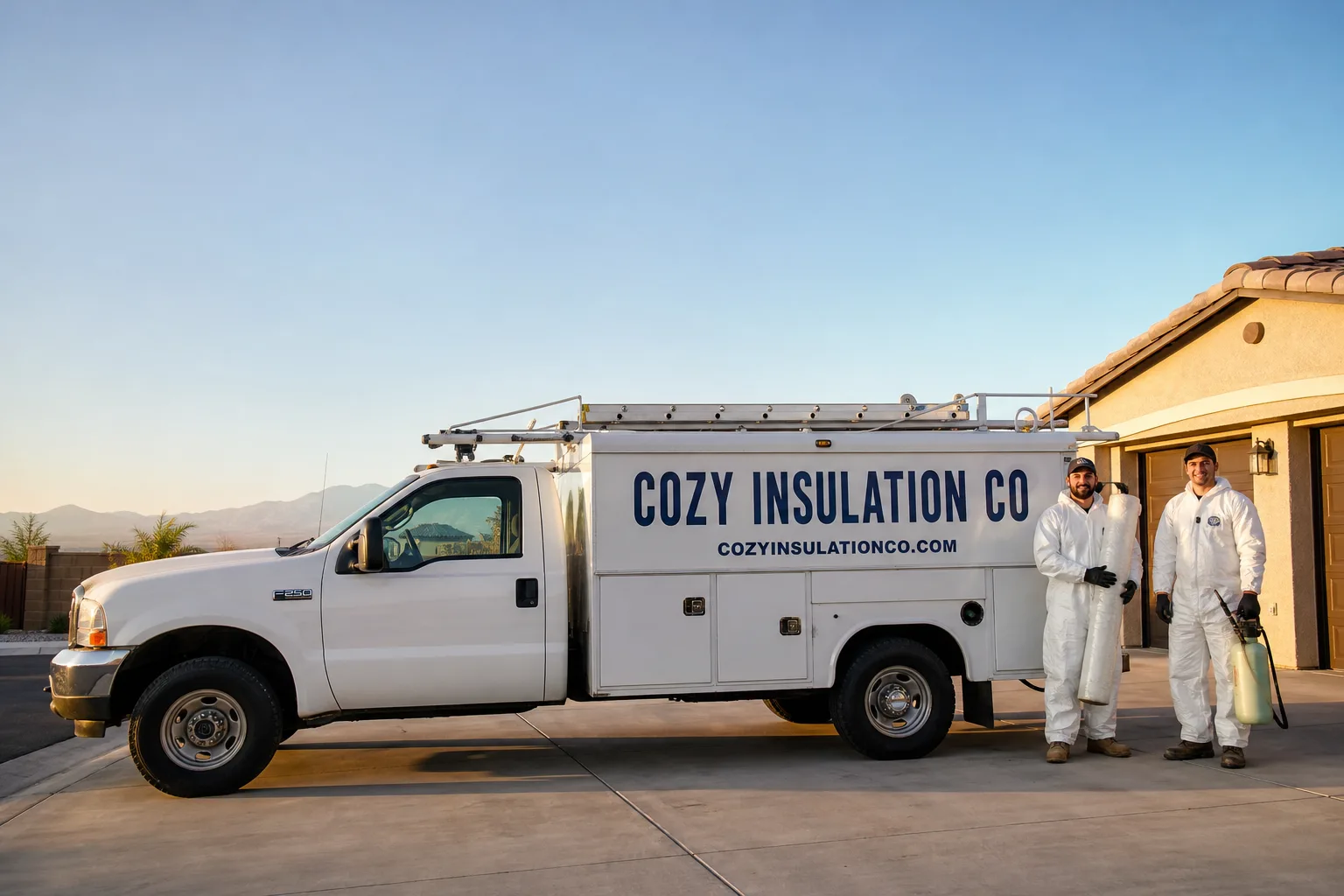
Fast, Reliable Attic Insulation Across Studio City
Attic insulation in Studio City needs to solve two problems at once: brutal Valley heat that turns attics into ovens, and a fire-severity zone on the south hillside that demands more than just fiberglass. Our crews know the difference between a 1960s ranch off Coldwater Canyon and a newer rebuild near Ventura Boulevard, and we stock materials for both. Whether you’re in the 91604 hillside or the 91614 flats, we’ll match the right insulation to your roofline, your eaves, and your exposure. Call (855) 382-3925 and we’ll get someone to your Studio City home fast, usually same week.
Why Cozy Insulation Co Is Studio City’s Preferred Attic Insulation Company
Studio City homeowners call us because we don’t show up with one product and a sales pitch. Mike Callahan built this company around a simple idea: match the material to the house. That means open-cell spray foam where a hillside attic has awkward cavities, dense-pack cellulose for older bungalows near Ventura Blvd, and Rockwool when fire resistance matters most. We’ve worked on mid-century ranches along Laurel Canyon, stucco builds above Moorpark Street, and recently rebuilt homes south of the boulevard, so we already know what’s behind your attic hatch before we open it.
Our crew leaders have spent enough time in Studio City to know the parking constraints on narrow hillside streets and the HOA considerations in some of the newer developments. That local knowledge means the job runs smoother. More importantly, homeowners tell us the same thing after every project: the upstairs finally holds temperature, and the AC doesn’t kick on as often. That’s the outcome we’re after. If you need a reference from a Studio City job, ask and we’ll connect you with a neighbor who’s already had us out.
Insulation Contractors in Studio City
Insulation Contractors in Studio City have to understand something that contractors in Van Nuys or Burbank rarely deal with: the south hillside above Ventura Blvd sits in a high fire-severity zone, and that changes how every attic job gets scoped. A typical attic insulation project here starts with an inspection of your existing vents, eaves, and top plates, because you can’t just blow in new fiberglass and call it done. For a 1,200 to 1,800 square foot Studio City home, expect a full attic insulation replacement to run $3,200 to $5,800, depending on how much old material needs to come out first.
Air-Sealing Before Insulation
Before a single batt goes in, we seal top plates, plumbing chases, and any gaps where hot attic air moves into wall cavities. On balloon-frame hillside ranches this step is non-negotiable. Skipping it means your new insulation performs at a fraction of its rating, and in a Santa Ana wind event, those same gaps become pathways for embers.
Old Insulation Removal
Many 1960s Studio City attics still hold their original fiberglass, and it’s usually compacted, dusty, and performing at R-7 or worse. We remove it, sanitize the deck where needed, and dispose of it properly. Then the new material, whether Owens Corning batts or Demilec spray foam, gets installed to fill the full joist depth.
Attic Ventilation in Studio City
Attic Ventilation in Studio City carries a weight it doesn’t have in most of Los Angeles, because on the south hillside, vents are ember entry points. Homes built for Valley heat often have open-eave or gable-vent attics that move air beautifully in August, but during a Santa Ana event they let burning material straight into the attic. The right fix is ember-resistant venting paired with non-combustible air-sealing, and that combination typically adds $900 to $2,200 to an attic project, depending on the number of vents and the size of the eave line.
Fire-Rated Vent Retrofit
If your home sits above Ventura Blvd, you need this regardless of whether you’re re-insulating. We replace standard gable and eave vents with ember-resistant models rated for high fire-severity zones. The upgrade is straightforward, and it means your insulation work actually protects the house instead of just making it more comfortable.
Radiant Barrier and Valley Heat
Studio City bakes through dry summer days and cools off hard at night, so radiant-barrier sheathing under the roofline can reduce attic temperatures by a measurable margin. Pair it with proper ventilation and your insulation works with the house instead of against it. On hillside exposures with heavy afternoon sun, this is often the difference between an attic that stabilizes at 130 degrees and one that climbs much higher.
Trusted Brands We Service in Studio City
We install products from a roster of eight manufacturers, and for Studio City homes we lean on the brands that excel in heat and fire performance. Owens Corning batts handle the temperature swings well, and CertainTeed carries manufacturer-backed warranties that extend protection beyond the install. Where fire resistance is a priority on the hillside, Rockwool mineral wool gives homeowners a non-combustible option that also dampens sound between rooms. We keep the common materials for Studio City jobs in our local inventory, which means shorter turnaround when you need work scheduled around an escrow timeline or a stretch of triple-digit days. No waiting on a freight order from the Midwest.
Common Attic Insulation Problems We See in Studio City Homes
- Degraded original fiberglass in mid-century ranches. Homes built in the 1950s and 60s off streets like Sunnyslope Drive and along the 91604 hillside often still have their first layer of insulation. It’s compacted, dirty, and doing almost nothing, typically testing around R-7 to R-11 when it should be R-38 or higher.
- Open-eave vents acting as ember entry points. The same design that kept these attics cool in 1965 now makes them vulnerable during Santa Ana wind events. We see this constantly on homes above Ventura Blvd, where gable and eave vents have no ember resistance at all.
- Unsealed top plates and chases in balloon-frame construction. Hillside ranches often have open cavities running from attic to crawlspace. Hot air rises into the attic, but it also moves into walls, and during wind events embers can follow the same path. Air-sealing is the first fix, before any new insulation goes in.
- Uneven temperatures between upstairs and downstairs. Flat-floor homes near Ventura Blvd sometimes have surprisingly shallow attic cavities, and the wrong insulation choice makes rooms feel five or eight degrees apart. The right material, blown-in cellulose or spray foam, evens that out fast.
Pricing for Attic Insulation in Studio City, CA
Attic insulation in Studio City runs a wide range because the housing stock varies so much. A simple top-up over existing insulation in a 1,000 square foot attic starts around $1,800 to $2,600. Full removal and replacement in a 1960s ranch, including air-sealing and ember-resistant vent retrofit, lands between $5,200 and $8,400. Spray foam jobs with Icynene or Demilec systems run higher, typically $6,500 to $11,000 for a complete attic, because the material cost and installation complexity are greater. The biggest cost drivers are attic square footage, how much old material needs removal, and whether fire-rated venting is required. Call (855) 382-3925 for a free estimate, and Mike Callahan will walk you through exactly what your house needs.
We Also Serve Cities Near Studio City
Cozy Insulation Co runs crews into North Hollywood, Universal City, Sherman Oaks, and West Hollywood every week. If your project is across the city line, our Attic Insulation team covers the whole San Fernando Valley and adjacent hillsides. You can learn more about our broader coverage by visiting our Studio City service area page.
Serving Studio City, CA — Our Local Coverage Area
We’re based in the Studio City area and know this community well. Use the map below to see our service coverage — if you’re nearby, we can almost certainly help.
FAQs About Attic Insulation in Studio City
Yes, homes on the south hillside above Ventura Blvd sit in a high fire-severity zone, and insulation work there should include ember-resistant venting and non-combustible air-sealing as standard practice, not optional upgrades. Call (855) 382-3925 and we’ll scope the fire-rated portion of the job along with the insulation.
Rooms that heat up fast in summer, upstairs spaces that never match the thermostat, and attic insulation that looks dusty, flattened, or thin are the three big tells. If you can see your ceiling joists above the insulation line, it’s time. We’ll confirm with a quick attic inspection and give you an honest read on whether you need a top-up or full replacement.
Hillside homes above the boulevard need ember-resistant venting paired with air-sealing because open-eave and gable-vent designs become fire pathways during Santa Ana winds. Valley floor homes don’t face the same severity, so ventilation work there focuses more on temperature and moisture control. The material and labor difference runs about $900 to $2,200 for a typical hillside retrofit.
Yes, we routinely handle insulation replacement, air-sealing, and ember-resistant vent installation in a single visit for Studio City homes. On a 1960s ranch off Sunnyslope Drive, we found original fiberglass batts degraded to R-7 and open-eave vents acting as ember entry points. We replaced the insulation with Owens Corning R-38 batts, sealed the eaves with non-combustible air-sealing, and installed ember-resistant vents, all in one trip. The homeowner now has a fire-safe attic that also holds temperature through Santa Ana wind events.
Because Studio City’s hillside homes often have balloon-frame construction with unsealed top plates and chases, and adding insulation without sealing those gaps traps heat and moisture while leaving ember pathways open. Air-sealing first ensures the new insulation actually performs, and it’s the only sequence that makes sense in a fire-severity zone. Call (855) 382-3925 for a free estimate, and we’ll include air-sealing in every Studio City attic scope.
Written by Mike Callahan, Owner at Cozy Insulation Co, serving Studio City and the San Fernando Valley.