
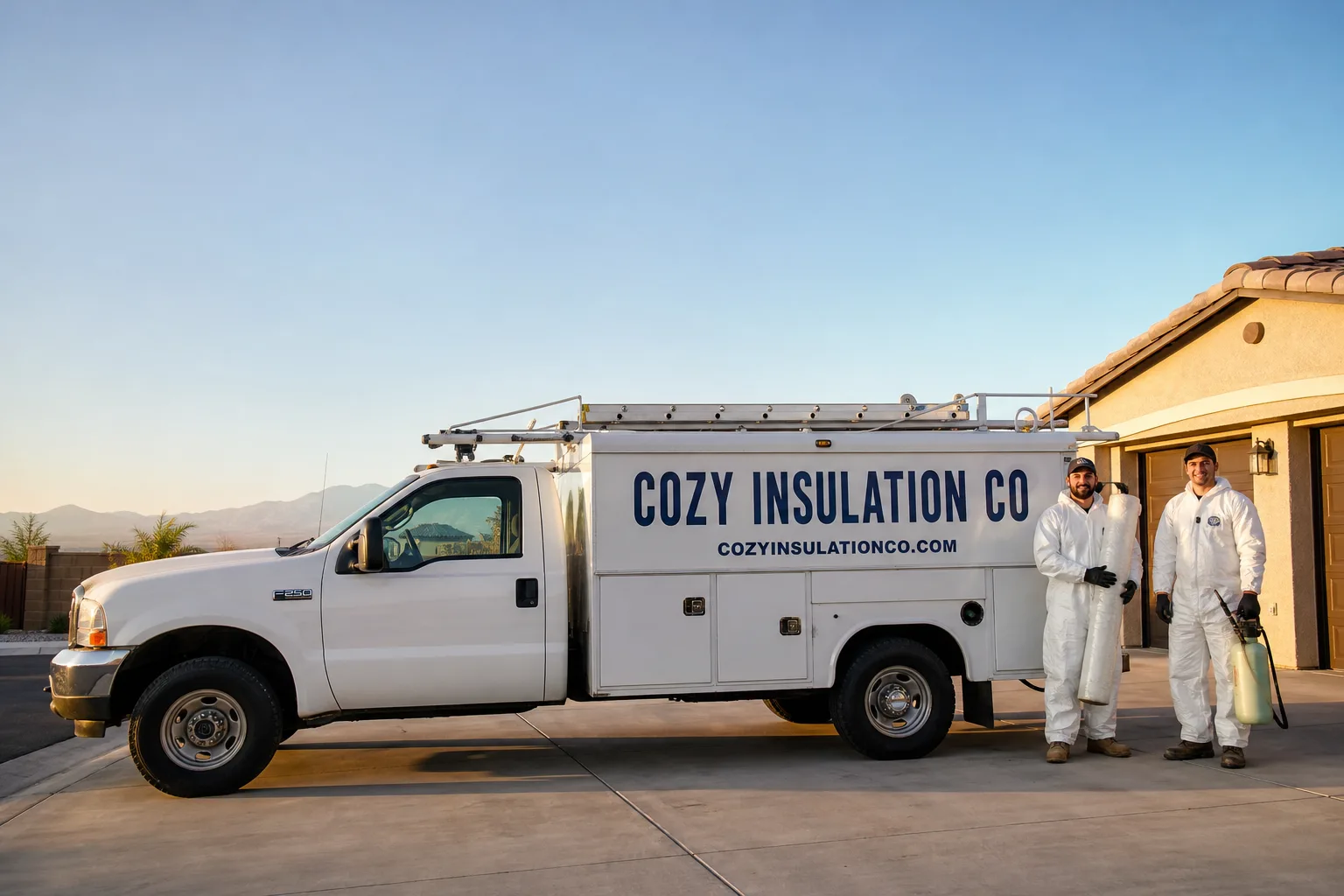
Fast, Reliable Attic Insulation Across Stanton
Attic insulation in Stanton typically runs $2,800 to $5,600 for a full retrofit on a 1,100 to 1,500 square foot tract home, with blow-in top-ups starting around $1,200 and radiant barrier at $900 to $2,200 depending on attic footprint. Most Stanton jobs are completed same-day or next-day. Our crews know the 90680 zip code well – they’re in and out of attics between Katella and Cerritos every week, working around the tight clearances and older framing that define this city’s housing stock. Call (855) 382-3925 for a free estimate and a straight answer on what your attic actually needs.
Stanton isn’t a city where you can just blow insulation over whatever is up there and call it done. The homes here were built when R-11 batts were the standard, and six decades of furnace swaps, cable runs, and roof repairs have left most attics full of thermal holes that a top-off alone won’t touch. We’ll treat your retrofit like the old-house job it is, not a cookie-cutter install.
Why Cozy Insulation Co Is Stanton’s Preferred Attic Insulation Company
We didn’t start as a general contractor who happened to add insulation as a side service. Attic Insulation is what we do. Mike Callahan built Cozy Insulation Co around the idea that Stanton homeowners deserve a company that can actually match the right material to the right house instead of pushing whatever is cheapest to install. That means fiberglass where it makes sense, spray foam where the framing demands it, and cellulose where old-house quirks call for it.
Our crews have spent enough time in Stanton attics to know what 1962 construction looks like from the inside: 2×4 rafters on 24-inch centers, original nail plates, and the occasional surprise from a 1970s remodel. That familiarity matters when you’re dealing with a low-pitch roof where every inch of clearance counts. Stanton customers keep us on speed dial for one reason – we show up when we say we will, and we don’t tell them they need a full replacement when a targeted repair plus top-up will do the job.
You won’t find us subcontracting your job to a crew we’ve never met. The team that quotes your Stanton project is the team that installs it. That’s how we protect the quality bar, and it’s why our Stanton referrals come from neighbors on the same block, not from a marketing funnel.
Radiant Barrier in Stanton
A Radiant Barrier makes a measurable difference in Stanton’s summer afternoons, when the sun hammers low-pitch composition roofs and turns the attic into a convection oven by 2 p.m. The product is a reflective foil layer installed along the underside of the roof deck or rafters. It doesn’t replace insulation – it works alongside it, reflecting radiant heat before it ever reaches your blown-in fiberglass or batt material. In Stanton’s coastal-inland climate, where summer highs regularly push into the 90s, a radiant barrier can drop attic temperatures by 20 to 30 degrees in peak sun. That directly reduces the heat load on your ductwork, which in older tract homes often runs through the attic where it’s absorbing all that superheated air.
When Stanton Homes Benefit Most
Stanton’s post-war tract homes are prime radiant barrier candidates because they typically have dark composition shingle roofs, low-pitch attics with minimal ventilation, and HVAC ducts running through unconditioned attic space. If your upstairs or back bedrooms run 8 to 10 degrees warmer than the rest of the house on hot afternoons, the problem is often radiant heat gain in the attic, not a failing AC. A radiant barrier addresses that at the source. For a typical 1,000 to 1,300 square foot Stanton attic, expect to pay $900 to $2,200 for professional foil installation, depending on whether we’re stapling to rafters or laying over existing insulation.
How It’s Installed in Tight Tract Attics
Low clearance is the wildcard in Stanton. Many of these attics barely have 30 inches of headroom at the peak, which means installers must work on their knees and hands the whole time. We’re honest about this – it’s slow, uncomfortable work, and it’s exactly why you’ll see skip-level pricing from crews that don’t want the job. Our team expects tight attics here. We budget for them, we don’t upcharge mid-job, and we install the foil so it won’t sag or trap moisture against the roof deck.
Attic Cleaning Services in Stanton
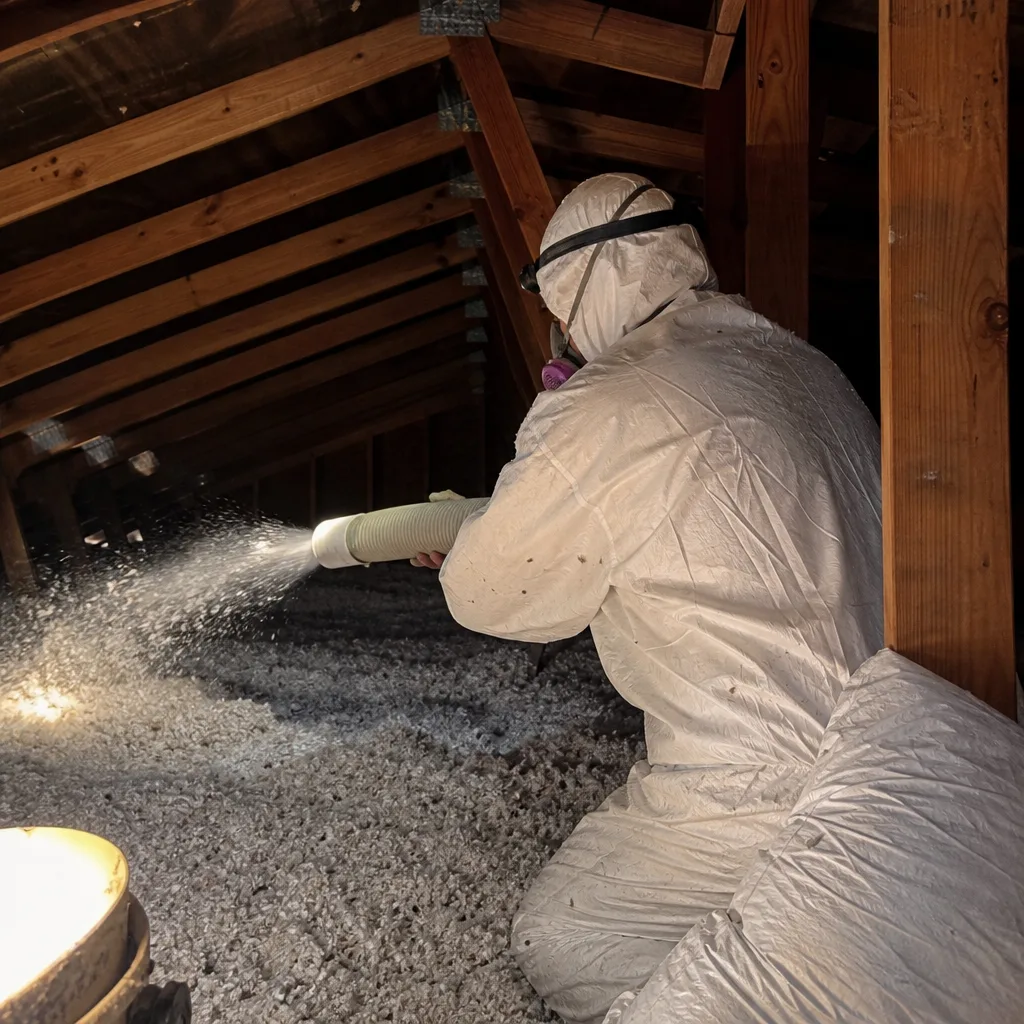
Attic Cleaning Services in Stanton usually means more than hauling out a few old boxes and sweeping. In these 1950s and 1960s tract homes, the attic is where rodents, birds, and decades of dust have been living rent-free. Older Stanton homes frequently have original loose-fill or batts that have been soiled by pests, and installing new insulation over that mess locks in the odor and the allergen load. A proper attic cleaning before insulation runs $400 to $1,200 depending on attic size, accessibility, and how much contaminated material needs removal. We handle the full sequence: remove old insulation, vacuum or clean the deck, sanitize, air seal, and then install new material.
Pest Damage and Contamination
Stanton’s small lots mean neighbors’ roofs are close, and trees overhang from adjacent yards. That creates rat highways between homes. Once rodents get into an attic, they nest in the insulation, chew through duct boots, and leave waste throughout the material. You can’t insulate over that. We remove the contaminated fiberglass or cellulose, sanitize the affected areas, and seal entry points before anything new goes in. Skipping this step means your new insulation becomes the next nest.
Cleaning Before a Blow-In Top-Up
Even without pests, Stanton attics collect a surprising amount of debris: construction scrap from the original build, furnace replacement dust, and broken bits of plaster from ceiling repairs below. If you’re planning a blow-in top-up, that debris needs to be cleared and the deck inspected first. We can’t properly air seal top plates and wire penetrations through a layer of dust and old material. The clean-out also gives us a clear read on what existing insulation remains and whether it’s doing anything at all.
What happens when you call
- 1
A real person answersNo phone trees — you reach a local pro.
- 2
You get an upfront price rangeHonest numbers before anyone is dispatched.
- 3
A background-checked tech heads outLicensed & insured, dispatched right away.
- 4
You approve before work beginsNothing starts until you say go.
Trusted Brands We Service in Stanton
We’re authorized to install products from eight nationally recognized manufacturers, which means your Stanton home gets the material that fits its framing, not the one material we happen to stock. For most older Stanton attics, we recommend Owens Corning fiberglass for blow-in top-ups after air sealing, because it settles predictably and holds its R-value over time. When a tract home needs air sealing plus insulation in a single pass, Icynene open-cell spray foam is often the right call for low-pitch roof decks and knee walls. And for Stanton homeowners who want recycled-content material, GreenFiber cellulose blown-in gives you a dense pack that fills the odd bays in old framing better than batts ever will.
Because we stock common products and order weekly from all these manufacturers, turnaround for Stanton jobs is typically within a few days, not a few weeks. If we quote you on Thursday, we can usually be in your attic by the following Tuesday.
Common Attic Insulation Problems We See in Stanton Homes
- Compressed or displaced batts from decades of HVAC and cable installs. Every furnace replacement, every satellite dish, every ceiling fan wiring job means someone crawled through your attic and shoved insulation aside. Those bare spots become invisible thermal bypasses. A blow-in top-off alone won’t fix them – the air still moves through the gaps.
- Original 1950s to 1970s fiberglass batts sagging and losing R-value. Insulation doesn’t last forever. Old batts get walked on, compressed by ductwork, and degraded by moisture from bathroom fans venting into the attic. We regularly find R-19 batts performing like R-8 or less.
- Minimal attic clearance in low-pitch tract roofs slowing down proper air sealing. Stanton’s post-war homes were built fast with shallow roof pitches. That means installers have to work in cramped conditions to reach top plates, baffles, and vent openings. Crews that rush this skip the air sealing, which is the most important part of the retrofit.
- Rooms over the garage or on the west side running hot all summer. This is the radiant heat problem again. In Stanton’s dense lots, west-facing walls and garage-adjacent rooms absorb afternoon sun directly. The fix is usually a combination of attic air sealing, proper insulation depth, and a radiant barrier on the roof deck.
Pricing for Attic Insulation in Stanton, CA
Honest numbers: for a typical Stanton tract home between 1,000 and 1,400 square feet, a full attic air sealing plus blow-in insulation job runs $2,800 to $5,600. A blow-in top-up over existing but underperforming insulation starts around $1,200 to $2,000. Attic cleaning before insulation adds $400 to $1,200 depending on contamination level. Radiant barrier installation for the same attic footprint runs $900 to $2,200. The biggest variables are attic accessibility, existing insulation condition, and how much air sealing the home actually needs. Estimates are free. Call (855) 382-3925 and Mike or one of the crew leads will walk the attic with you, show you what’s up there, and give you a number you can plan around.
We Also Serve Cities Near Stanton
Our trucks roll through Stanton daily, and we extend the same pricing and service to nearby cities. That includes Garden Grove to the east, Cypress to the west, Westminster to the south, and Midway City just across the 22. If you’re a Stanton homeowner with friends or family in these areas, send them our way – we treat every attic the same way, no matter the zip code.
Serving Stanton, CA — Our Local Coverage Area
We’re based in the Stanton area and know this community well. Use the map below to see our service coverage — if you’re nearby, we can almost certainly help.
FAQs About Attic Insulation in Stanton
Yes, but with a caveat. Insulation alone cuts some high-frequency noise, but the real noise reduction in Stanton comes from air sealing first. Beach Blvd traffic noise enters through attic vents, gaps around duct boots, and unsealed top plates – not through the insulation itself. When we seal those openings and then blow in dense-pack fiberglass or cellulose to R-38, customers consistently report a noticeable drop in traffic rumble and plane noise. On the 1962 tract house off Beach Blvd we mentioned earlier, the homeowner said the back bedroom finally felt quiet enough to sleep with the window closed. Call (855) 382-3925 if you want us to assess your specific noise path.
In a 1958 Stanton original, replacement is almost always the right call. Batts that old have been compressed, walked on, and degraded by decades of attic heat cycling. They’re performing at a fraction of their labeled R-value. Repair – meaning patching thin spots – leaves you with an attic that’s still mostly underinsulated. Replacement means removing the old material, air sealing properly, and installing fresh insulation to current code depth. For most Stanton homes of this vintage, we recommend full removal and replacement, not a patch job. The cost is higher upfront, but you get a 30-year solution instead of a 3-year stopgap.
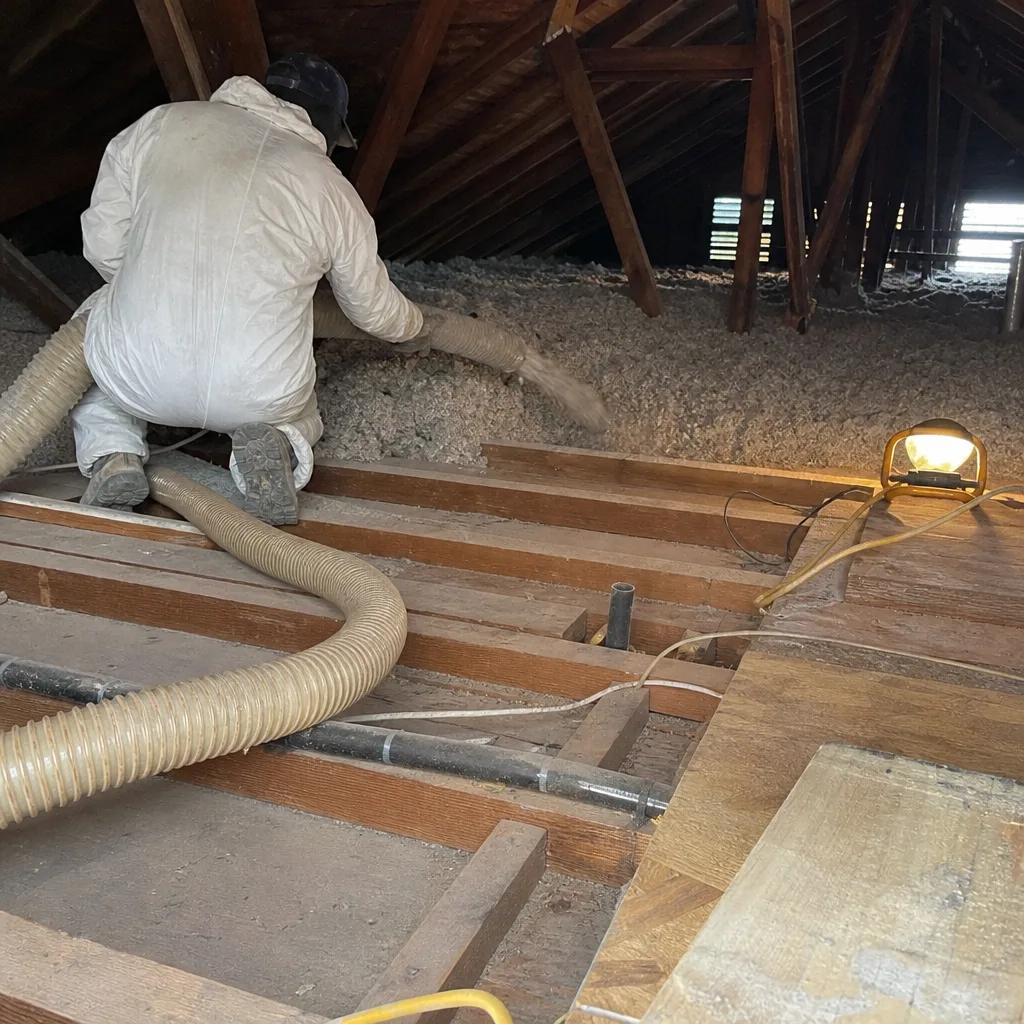
We work in it, slowly and carefully. Stanton’s post-war tract homes often have peak clearances around 30 inches, which means our installers are on their knees or bellies for most of the job. We don’t rush this, and we don’t cut corners to speed it up. Baffles get installed at the eaves with proper staples, top plates get sealed with foam or mastic even when reaching them means lying flat across joists. If the clearance is too tight for safe baffle work, we’ll tell you that before we start and recommend the right alternative, like spray foam on the roof deck instead. No surprises mid-job.
The sequence that works in Stanton is: air seal first, then insulate to R-38 or better, then add a radiant barrier if your west-facing rooms are still running hot. Air sealing alone can drop bedroom temperatures by several degrees because it stops hot attic air from being pulled into the living space through duct leaks and top plate gaps. Insulation then slows the conductive heat transfer through the ceiling. Radiant barrier addresses the third piece – the radiant heat radiating down from a 140-degree roof deck. In Stanton’s climate, where summer sun is relentless and nights stay warm, all three together are what make the difference. Need help figuring out which piece your home is missing? Call (855) 382-3925.
Yes, and for Stanton’s older housing stock, pest-contaminated insulation is one of the most common reasons we’re called in the first place. Rats and mice love the warm, quiet space between a 1960s ceiling and a hot roof deck. We remove the soiled insulation, sanitize the deck and framing cavities, seal the entry points, and only then install new material. Installing over pest debris locks in odor and allergens and gives the next generation of rodents a head start. Cleaning adds $400 to $1,200 to the project depending on contamination, and it’s worth every dollar. Estimates are free – call (855) 382-3925 and we’ll come take a look.
Written by Mike Callahan, Owner at Cozy Insulation Co, serving Stanton since day one.