
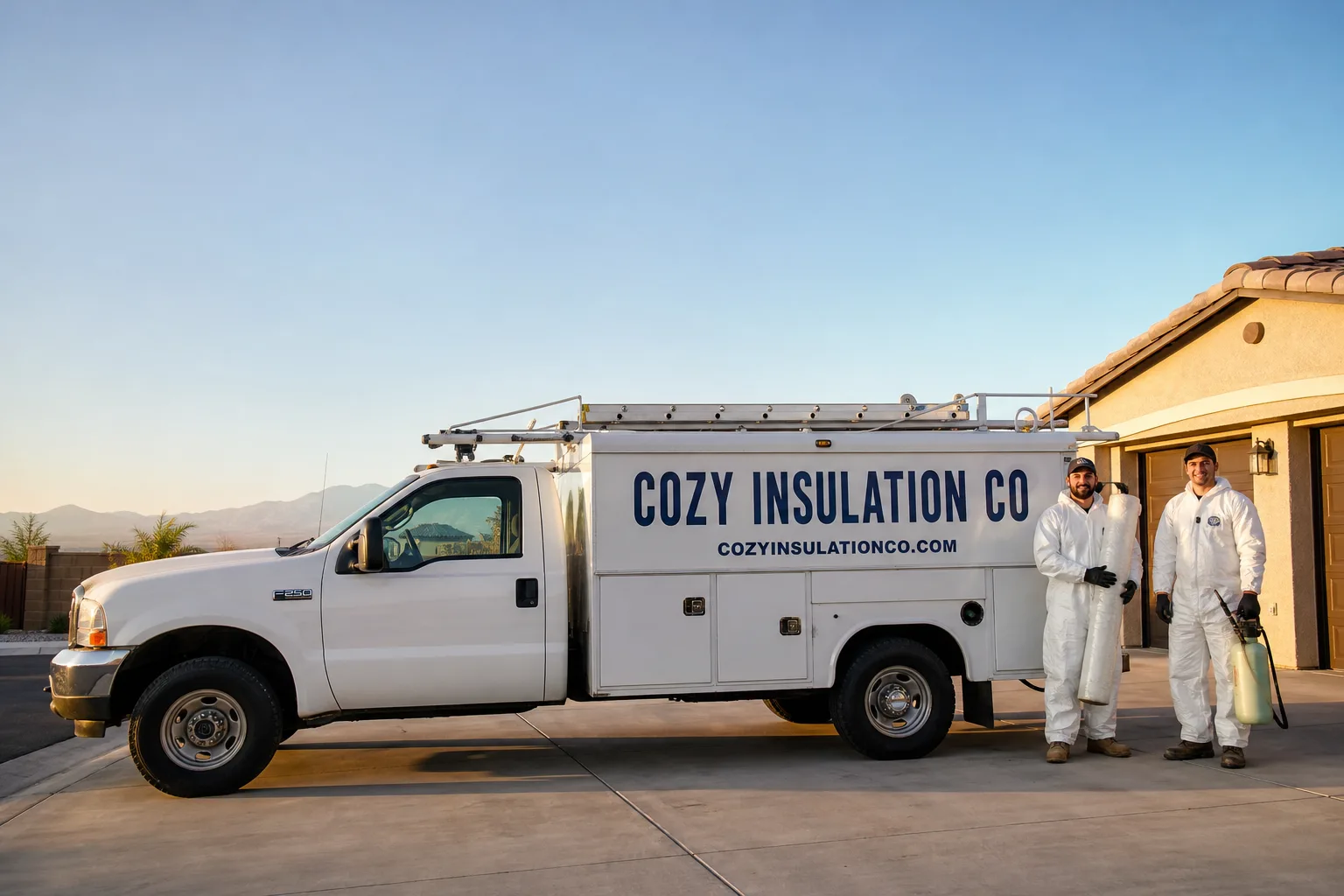
Fast, Reliable Attic Insulation Across South San Jose Hills
Attic insulation in South San Jose Hills is a cooling-season problem first, not a winter one. With summer attic temperatures routinely pushing past 140°F in ZIP 91792, the job here is about stopping that heat from pouring down through your ceiling. Our crews work in South San Jose Hills weekly and we quote most jobs within 24 hours. If your back rooms can’t hold temperature after 2 p.m., call Mike Callahan’s team at Cozy Insulation Co at (855) 382-3925. We’ll inspect, measure, and tell you exactly what’s going on up there, free of charge.
Why Cozy Insulation Co Is South San Jose Hills’s Preferred Attic Insulation Company
South San Jose Hills homeowners call us because we understand what those 1950s – 1970s tract homes do in the heat. The single-story ranches off Valley Boulevard and the later infill around Amar Road share a pattern: low-pitch roofs, original rock-wool or thin batts, and duct insulation that’s been drying out for fifty years. We don’t show up and push one product. We bring eight brands, three installation methods, and the experience to know which one fits your ceiling plane, your duct layout, and how long you plan to stay in the house.
Mike Callahan started Cozy Insulation Co specifically to serve foothill communities like this one, where the answer is usually a combination of air-sealing, ventilation, and the right material. Our crews know the Permit requirements in unincorporated LA County and we schedule around the heat, not against it. When a South San Jose Hills homeowner calls about a room that won’t cool, we start with the ceiling plane, because that’s where the problem almost always is.
Attic Ventilation in South San Jose Hills
Attic Ventilation in South San Jose Hills is not optional. A well-insulated but poorly vented attic still cooks; the heat builds under the ridge and radiates down through whatever insulation you have. On a 95°F August afternoon, an unvented low-pitch attic off Valley Boulevard can hit 150°F and hold it past midnight. That’s why our Attic Insulation team always checks ridge and soffit airflow before we recommend adding material.
Ventilation work here usually means adding soffit vents, ridge vents, or attic fans, and making sure insulation hasn’t blocked the eave airflow. In older South San Jose Hills ranches, we frequently find original gable vents painted over or soffits sealed when new fascia went on. A typical attic ventilation upgrade in South San Jose Hills runs $450 – $1,200 depending on roof geometry and the number of vents needed.
Signs Your Attic Needs Better Airflow
Rooms along the rear of the house, the ones under the highest part of the roof, stay warm long after sunset. You may also see attic-side condensation in winter or notice the AC cycling more often on mild days. If the upstairs hall (in a split-level) feels 8 – 10 degrees warmer than the front rooms, airflow is part of the problem.
How We Match Ventilation to Your Roof
On low-pitch tract roofs, we prefer a combination of continuous soffit intake and ridge exhaust for passive airflow. On hipped roofs, where ridge length is short, we size a solar or hard-wired attic fan to move air mechanically. The goal is a temperature difference of no more than 10 – 15°F between outside air and attic air, even on a summer afternoon in South San Jose Hills.
Radiant Barrier in South San Jose Hills
Radiant Barrier in South San Jose Hills addresses the single biggest source of attic heat: the sun beating directly on your roof deck. A radiant barrier is a reflective material stapled to the underside of the rafters, and it stops heat from radiating down onto your insulation and ceiling. Given how hard the foothill sun hits ZIP 91792, this is one of the most effective upgrades a homeowner here can make. A typical radiant barrier install in South San Jose Hills runs $1,200 – $2,800 depending on attic size and whether we’re working around existing ductwork.
What we often find in these homes is the original 1960s foil-backed batts that were supposed to act as a radiant barrier. That foil facing was thin to begin with, and after fifty years of 140°F-plus attic temperatures, it’s baked brittle and peeling away from the fiberglass. It’s not reflecting anything anymore. We remove what’s failed and install a proper perforated radiant barrier that will actually do the job.
Why the Original Foil Facing Has Failed
Heat breaks down the adhesive and the foil itself over time. Once the surface tears or separates, it stops reflecting radiant energy. The dry valley air accelerates the process by baking everything in the attic. We see foil that flakes apart under the ridge and settles in pieces on top of the insulation.
Pairing Radiant Barrier with Insulation
Radiant barrier is not a substitute for insulation; it’s a multiplier. It lowers the surface temperature of the insulation beneath it, which means the insulation works more efficiently. We usually recommend radiant barrier first in South San Jose Hills, because the sunload here is so intense. Without it, you’re paying to cool an attic that keeps re-heating itself.
On a low-pitch tract attic off ZIP 91792, our crew found 1960s foil-backed batts that had crumbled and settled to about 3 inches, with the old radiant barrier already flaking apart under the ridge. We air-sealed the ceiling plane first, then blew in GreenFiber cellulose to a proper depth and added attic ventilation, and the homeowner noticed the back rooms running noticeably cooler the same week.
Trusted Brands We Service in South San Jose Hills
We’re authorized to install products from Owens Corning, Johns Manville, Demilec, GreenFiber, and four other national manufacturers, which means we stock the right materials for South San Jose Hills attics and don’t have to order and wait. If your home needs blown-in cellulose for a tight pitch, we use GreenFiber. If you want a fire-resistant ceiling assembly, we’ll quote Rockwool. If you’re sealing and insulating an attached garage conversion, we may recommend a Demilec closed-cell foam for the ceiling and rim joist. The point is the material fits the house, not the other way around.
Common Attic Insulation Problems We See in South San Jose Hills Homes
- Settled rock-wool and blown-in cellulose at 3 – 4 inches. In these low-pitch 1950s – 1970s tract attics, fifty years of gravity and foot traffic have compressed original insulation to a fraction of what it was. Ceiling heat gain gets worse every summer.
- Brittle, flaking foil-faced batts. The sustained 140°F-plus attic heat has cooked the foil facing off original fiberglass batts. Once the reflective surface fails, those batts are doing almost nothing.
- Dried-out duct insulation and unsealed attic penetrations. Many South San Jose Hills homes have original duct wrap that has dried to a crumble. Hot attic air leaks into the ducts and into the rooms through unsealed top plates, can lights, and plumbing chases.
- Uninsulated attached garages and additions. Additions off the back of 91792 homes were often built without ceiling insulation or with only a thin layer. The garage or bonus room becomes a heat radiator that warms the whole west side of the house.
Pricing for Attic Insulation in South San Jose Hills, CA
For a typical single-story South San Jose Hills home of 1,200 – 1,800 square feet, here’s what we quote:
- Attic air-sealing and prep: $600 – $1,200
- Blown-in cellulose top-up to R-38: $1,400 – $2,200
- Full attic insulation replacement (remove old, air-seal, new blown-in or batts): $2,800 – $4,500
- Attic ventilation upgrade: $450 – $1,200
- Radiant barrier install: $1,200 – $2,800
- Closed-cell spray foam (Icynene or Demilec) for a small attic or garage ceiling: $2,200 – $4,000
The biggest price driver in South San Jose Hills is whether we need to remove failed original material first. That’s common here. We give you a firm quote after an in-person inspection, not a number over the phone. Call (855) 382-3925 and we’ll schedule a free walkthrough. Mike Callahan reviews every quote before it goes out.
We Also Serve Cities Near South San Jose Hills
We work throughout the San Gabriel Valley, including Valinda, Walnut, West Covina, and Rowland Heights. If you’re in any of those areas and searching for Attic Insulation in South San Jose Hills, we can usually be at your door within a day or two. Same crew, same material lineup, same free estimate.
Serving South San Jose Hills, CA — Our Local Coverage Area
We’re based in the South San Jose Hills area and know this community well. Use the map below to see our service coverage — if you’re nearby, we can almost certainly help.
FAQs About Attic Insulation in South San Jose Hills
South San Jose Hills sits on the inland-foothill side of the hills, not in the marine-cooled zone west of the hills. Marine layer air cools Valinda and West Covina on many summer afternoons, but it doesn’t reliably push this far east. Your attic bakes under direct foothill sun and dry air, and heat radiates down through the ceiling for hours after sunset. Proper insulation plus ventilation and a radiant barrier works together to cut that heat gain. Call (855) 382-3925 to have us measure what’s happening in your attic.
Almost never. By the time we see them in South San Jose Hills, the foil facing has baked brittle, torn, and separated from the fiberglass. The batts underneath have compressed to 3 – 4 inches and lost most of their R-value. Trying to save them costs more in labor than replacing them properly. We remove the failed material, air-seal the ceiling plane, and install new insulation that will actually hold its performance.
Air-sealing is worth more per dollar than insulation in most South San Jose Hills attics. The original construction left gaps around top plates, can lights, and plumbing chases that let hot attic air blow straight into the rooms. Adding insulation on top of those leaks is like putting a heavier blanket over an open window. We seal first, then insulate, and the results are immediate. Estimates are free, so call (855) 382-3925.
The sustained 140°F-plus attic heat dries out duct wrap until it crumbles off, leaving ducts exposed and leaking cold air into the attic. Old radiant barriers flake and tear the same way. The dry heat accelerates the breakdown. When we inspect attics in South San Jose Hills, we check duct insulation and radiant barrier condition before recommending how much new insulation to add, because those two failures often waste more energy than a thin ceiling layer does.
For a single-story home in ZIP 91792, we recommend R-38 to R-49 in the attic ceiling plane, which in most cases means 14 – 18 inches of blown-in cellulose or fiberglass, or closed-cell spray foam at R-21 to R-30. We install Owens Corning, Johns Manville, Demilec, and GreenFiber products, matched to your specific attic and ceiling conditions. Come have a look and we’ll tell you exactly what your home needs. Call (855) 382-3925.
Get Your South San Jose Hills Attic Inspected Free
If your South San Jose Hills home can’t hold temperature in the summer, the problem is in your attic and we can find it. Mike Callahan and the Cozy Insulation Co team will inspect your ceiling plane, ductwork, ventilation, and existing insulation, then give you a firm, itemized quote. No pressure, no single-product pitch. Call (855) 382-3925 today and let’s get your back rooms cool again.
Written by Mike Callahan, Owner at Cozy Insulation Co, serving South San Jose Hills and the San Gabriel Valley.