
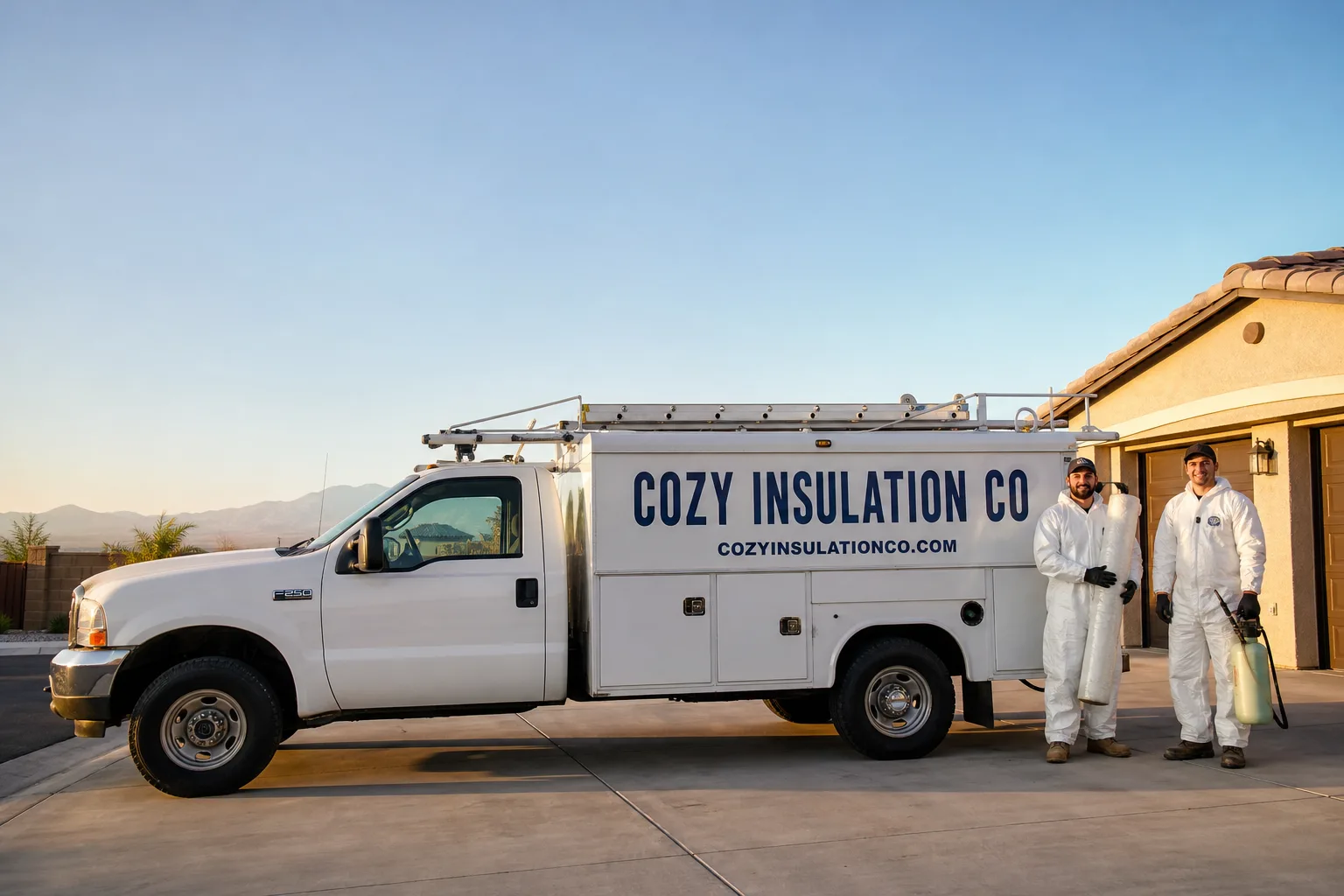
Fast, Reliable Attic Insulation Across Rossmoor
Attic insulation in Rossmoor often looks different than it does in neighboring cities. Most homes here were built between 1950 and 1968 as slab-on-grade ranches with low-pitch roofs and little to no crawl attic space. That means the work we do in Rossmoor rarely involves a traditional attic retrofit. Instead, we’re insulating flat-roof assemblies, wall cavities, and garage walls that share a common wall with living space. If your Rossmoor home runs hot in the afternoon or cold in the early morning, call Mike Callahan and the team at Cozy Insulation Co at (855) 382-3925. We know these houses because we work in them every week.
Why Cozy Insulation Co Is Rossmoor’s Preferred Attic Insulation Company
Rossmoor homeowners call us because we understand mid-century slab-on-grade construction, and we don’t try to sell a standard attic retrofit to a house that doesn’t have an attic. Our crew has worked on ranches along St. Cloud Drive, homes near Rush Park, and properties throughout the 90720 ZIP code. When a Rossmoor customer describes an exposed-beam ceiling or a flat-roof assembly that radiates heat, we know exactly what they’re dealing with before we even arrive. Mike Callahan has built a team that treats each job as its own project, not a template. We stock insulation products from eight manufacturers, so the material we recommend is the one that fits your home, not whatever happens to be on the truck. And our response time to Rossmoor is fast, often same-week for assessments, because we’re based right here in the region.
Attic Ventilation in Rossmoor
Attic Ventilation in Rossmoor is not a one-size-fits-all job, because most homes in the neighborhood don’t have a traditional vented attic. What we’re really doing is managing airflow through low-pitch roof assemblies and flat-roof cavities. When the original foil-backed batts in a 1962 Rossmoor ranch compress or sag, the roof deck stops breathing properly. Heat gets trapped above the ceiling and radiates into the living space. We address this by checking the existing baffle and vent configuration, clearing any blocked pathways, and making sure the roof assembly can release heat without pulling conditioned air out of the house.
Flat-Roof Airflow Correction
On low-pitch and flat roofs, ventilation prep usually means confirming that existing baffles are positioned correctly and that the air channel between the roof deck and insulation hasn’t collapsed. We see this constantly in Rossmoor homes built with the original 1960s framing. A collapsed channel means trapped heat, and trapped heat means a living room that is ten degrees warmer than the thermostat says.
Attic Hatch and Pull-Down Stair Sealing
Rossmoor’s mid-century homes almost all have an interior access hatch or pull-down stair to the roof cavity. Builder-grade hatches were installed without insulation or weatherstripping. They leak conditioned air year-round. Sealing and insulating the hatch is one of the fastest, lowest-cost fixes we do in Rossmoor, and it makes an outsized difference on early-morning chill.
Radiant Barrier in Rossmoor
Radiant Barrier in Rossmoor makes particular sense because of the marine layer and how these homes are oriented. We’re about four miles inland from the coast. Mornings are cool and overcast, afternoons are bright and hot, and the sun beats directly onto low-pitch roofs all day. A radiant barrier slows that heat transfer before it can soak through the roof assembly and into the ceiling. In a home with exposed-beam ceilings, which is common in older Rossmoor ranches, this is often the most effective single upgrade available.
Radiant Barrier Placement in Low-Pitch Roofs
We install the radiant barrier directly under the roof deck, facing an air gap. In Rossmoor’s low-pitch assemblies, getting that air gap right is critical. Without it, the barrier doesn’t reflect heat; it just conducts it. Our crews pay close attention to gap depth on every Rossmoor installation.
Pairing Radiant Barrier with Existing Insulation
Radiant barrier is not a substitute for insulation, but it makes existing insulation perform better. If your Rossmoor home still has original foil-backed batts that have compressed over time, adding a radiant barrier above them cuts the heat load that the old batts have to fight. That means cooler afternoons even before we replace the batts themselves.
Trusted Brands We Service in Rossmoor
We install products from eight manufacturers, including Attic Insulation systems built around Owens Corning fiberglass, Demilec spray foam, and GreenFiber cellulose. For Rossmoor’s low-pitch roofs, Owens Corning R-30 fiberglass batts are a workhorse, but GreenFiber blown-in cellulose works well in wall cavities where the original insulation was thin or never installed. Demilec closed-cell spray foam is the answer for uninsulated garage walls that share a common wall with the living room. We keep materials stocked for fast turnaround so Rossmoor customers aren’t waiting on a supply run from across the county.
Common Attic Insulation Problems We See in Rossmoor Homes
- Uninsulated garage walls sharing a wall with the living room. In Rossmoor’s slab-on-grade homes, the garage is often attached directly to the main living area. Heat soaks through that shared wall on hot afternoons. We insulate the garage wall cavity and the interior side to stop the bleed.
- Compressed or sagging foil-backed batts in low-pitch roof assemblies. The original 1960s batts, typically thin foil-backed fiberglass, lose their loft over decades. Once compressed, their effective R-value drops sharply, and the afternoon sun turns the ceiling into a heat panel.
- Builder-grade attic hatches and pull-down stairs without insulation or weatherstripping. A two-by-two-foot uninsulated hatch can leak more heat than a small window left open all day. Rossmoor homes almost universally need this addressed.
- Exposed-beam ceilings with no roof-deck barrier. Gorgeous mid-century detail, terrible thermal performance without a radiant barrier. We work around the beams carefully and get the barrier where it needs to go.
Pricing for Attic Insulation in Rossmoor, CA
Rossmoor pricing reflects the reality of these homes: most jobs are flat-roof or wall-cavity work, not standard attic retrofits. For air-sealing and insulating an attic hatch or pull-down stair, expect roughly $200 to $500. Radiant barrier installation in a low-pitch roof assembly typically runs $1,500 to $3,500 depending on roof area and access. A full flat-roof assembly insulation replacement with R-30 fiberglass for a 1,600-square-foot ranch usually lands between $3,200 and $5,800. Garage wall insulation for the shared wall runs $900 to $2,200. These are honest ranges based on recent Rossmoor jobs we’ve completed. Every quote is free, and we’ll walk you through the exact scope before any work begins. Call (855) 382-3925 to schedule a look.
We Also Serve Cities Near Rossmoor
Cozy Insulation Co serves Rossmoor and the surrounding communities including Los Alamitos, Cypress, Hawaiian Gardens, and La Palma. If you’re in a neighboring city with a similar mid-century home, the same material-matching approach applies. Call us and we’ll figure out what your house actually needs.
Serving Rossmoor, CA — Our Local Coverage Area
We’re based in the Rossmoor area and know this community well. Use the map below to see our service coverage — if you’re nearby, we can almost certainly help.
FAQs About Attic Insulation in Rossmoor
Most Rossmoor homes do not have a traditional walkable attic. Built between 1950 and 1968 as slab-on-grade ranches with low-pitch or flat roofs, these houses have a shallow roof cavity at best. That means “attic insulation” in Rossmoor usually means insulating the flat-roof assembly, wall cavities, or the shared garage wall. We scope every Rossmoor job around what the home actually has, not a generic attic retrofit. Call (855) 382-3925 and we’ll tell you what applies to your specific house.
The best upgrade is usually a radiant barrier paired with new R-30 or higher fiberglass batts in the roof assembly. Exposed-beam ceilings mean there’s no attic floor to insulate, so the roof deck itself is your insulation plane. We recommend air-sealing the roof deck, installing a radiant barrier with proper air gap, then adding the batts. For a 1962 ranch we worked on near Rossmoor Highlands, this combination dropped the summer ceiling temperature enough that the owner noticed the difference the first afternoon.
In the late afternoon, place your hand against the interior wall shared with the garage. If it feels warm to the touch while the rest of the house is cool, the garage wall lacks insulation. This is extremely common in Rossmoor’s slab-on-grade homes where original construction skipped the garage wall entirely. We can inspect it during a free estimate and tell you whether the fix is simple batt insulation or a closed-cell foam application.
Yes, they are a significant heat leak. Original hatches and pull-down stairs in Rossmoor homes were installed without insulation or weatherstripping. During the afternoon heat, hot air from the roof cavity pushes through the gaps. During cool mornings, conditioned air escapes upward. Sealing and insulating the hatch costs a few hundred dollars and typically pays for itself in the first year. Call (855) 382-3925 for an exact quote.
We install from a portfolio of eight manufacturers, but for Rossmoor we most often use Owens Corning fiberglass batts for flat-roof assemblies, GreenFiber cellulose for wall cavities, and Demilec spray foam for garage walls and hard-to-reach areas. The brand is chosen based on the application, not a company preference. We’ll show you why each material fits your specific home before any work begins.
If your Rossmoor home fights the afternoon heat or feels cold the moment the sun drops, give us a call. (855) 382-3925. We’ll walk your roof, check the cavities, and tell you straight what’s worth doing and what isn’t. Estimates are free, and Mike Callahan stands behind every job.
Written by Mike Callahan, Owner at Cozy Insulation Co.