
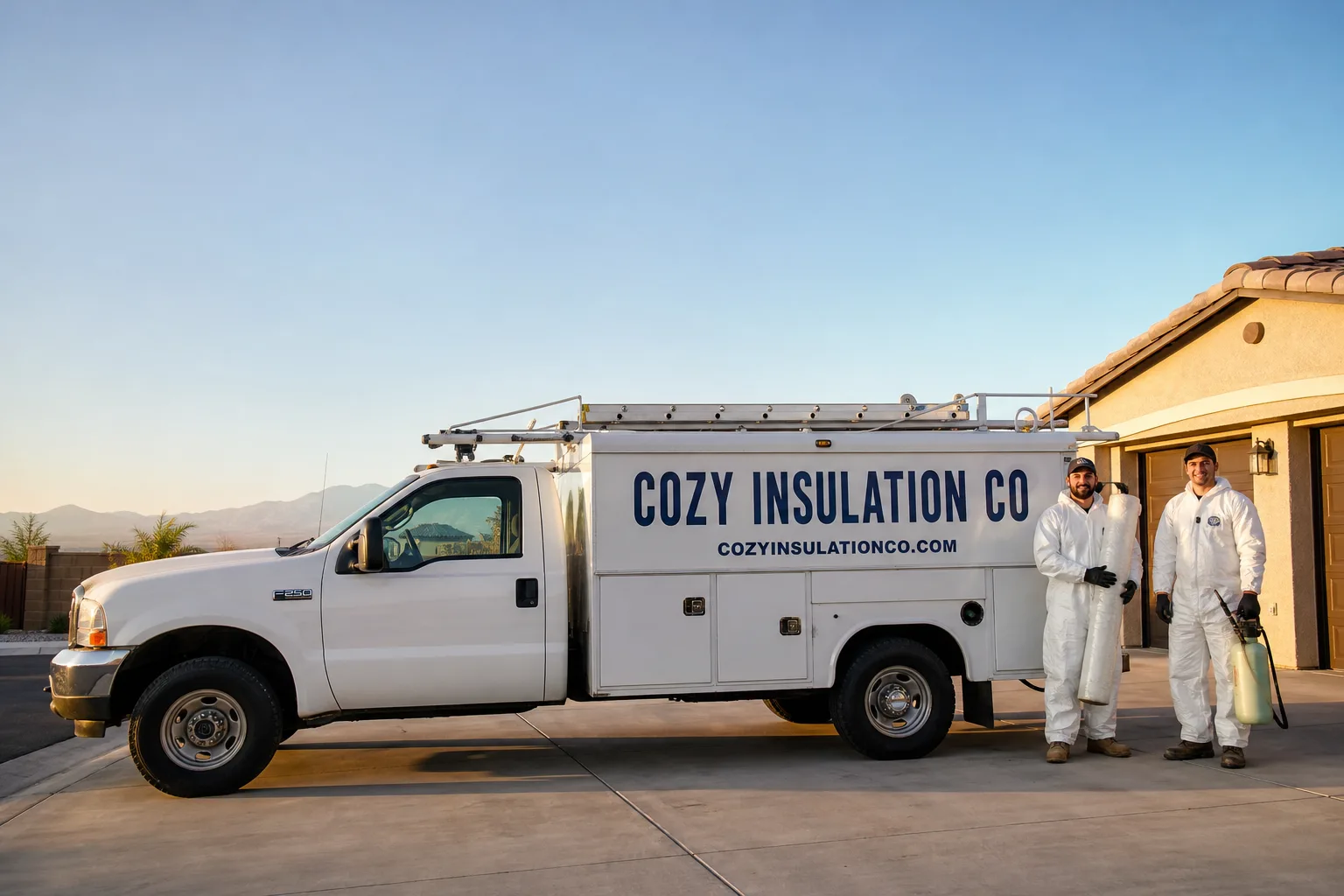
Fast, Reliable Attic Insulation Across Rolling Hills Estates
Attic insulation in Rolling Hills Estates often costs between $2,200 and $6,800 depending on home size, material choice, and whether we’re removing old insulation first. Most jobs on the Peninsula run toward the higher end because we’re typically dealing with moisture-affected blown-in fiberglass that has to come out before anything new goes in. Cozy Insulation Co has worked on homes all over Rolling Hills Estates and we know the marine-layer realities here better than any contractor coming up from the flatlands. Call (855) 382-3925 and we’ll get a real answer to you this week.
This isn’t a one-size-fits-all insulation project town. The homes off Palos Verdes Drive East, the ranch-style places tucked into canyon draws, the big custom builds with two-story attics and odd framing: each one needs a different approach. Mike Callahan built this company around material matching, not product pushing. We install eight brands because no single insulation is right for every attic on the Peninsula.
Why Cozy Insulation Co Is Rolling Hills Estates’s Preferred Attic Insulation Company
We didn’t start as a general contractor who picked up insulation as a side service. Attic insulation, spray foam, and blown-in are what we do, and it’s all we do. That focus has earned us a reputation across Rolling Hills Estates for showing up with the right material and the right plan on the first visit. Homeowners here tend to be informed. They ask good questions about vapor drive, ventilation baffles, and exhaust routing. We like that. It means they’ve been burned before or they’ve done their homework.
Our crews arrive in Rolling Hills Estates within about 45 minutes of leaving our base in Corona. For most standard attic jobs we can be on-site within one to two business days of your call. The homes in 90505 are not interchangeable. A 1958 ranch on a canyon-edge lot faces a different set of problems than a 1990s custom build on a flat interior street. Knowing which house you have before we load the truck saves you a wasted trip and a wasted quote.
We carry material stock for Peninsula conditions: open-cell foam for air-sealing older framing, dense-pack cellulose for wind exposure, Rockwool batts for fire-conscious homeowners, and fresh Owens Corning fiberglass for straightforward top-ups. When Mike Callahan sends a crew to Rolling Hills Estates, the truck is loaded for the actual house, not a generic Los Angeles attic.
Attic Cleaning Services in Rolling Hills Estates
Attic Cleaning Services in Rolling Hills Estates start with what’s actually up there, which in this city is frequently dust, rodent evidence, old batts matted by marine-layer moisture, and loose-fill insulation that’s been wind-washed away from the eaves. We remove the old material, clean the decking, inspect the exhaust ducts and bath fans, and prep the space for whatever comes next. A full attic cleaning in Rolling Hills Estates typically runs $1,100 to $2,400 for a standard single-family attic, and it’s almost always the right first step before any insulation retrofit on a 1950s to 1970s home.
You need this when the existing insulation is visibly damp, compressed, or contaminated, or when you’ve had rodents up there. On the Peninsula specifically, many homeowners call us for cleaning after discovering that builder-grade bath exhaust ducting was never routed outside. We’ll cover that in more detail below.
Removal, Detail Cleaning, and Prep
We vacuum out old loose-fill and batt material using commercial extraction equipment, then clean the decking and joist bays. If there’s evidence of pest activity, we sanitize and note any chewed wiring or damaged vent screens. The prep step matters: we verify that all exhaust ducts terminate outside and that soffit vents aren’t blocked before anything new is installed.
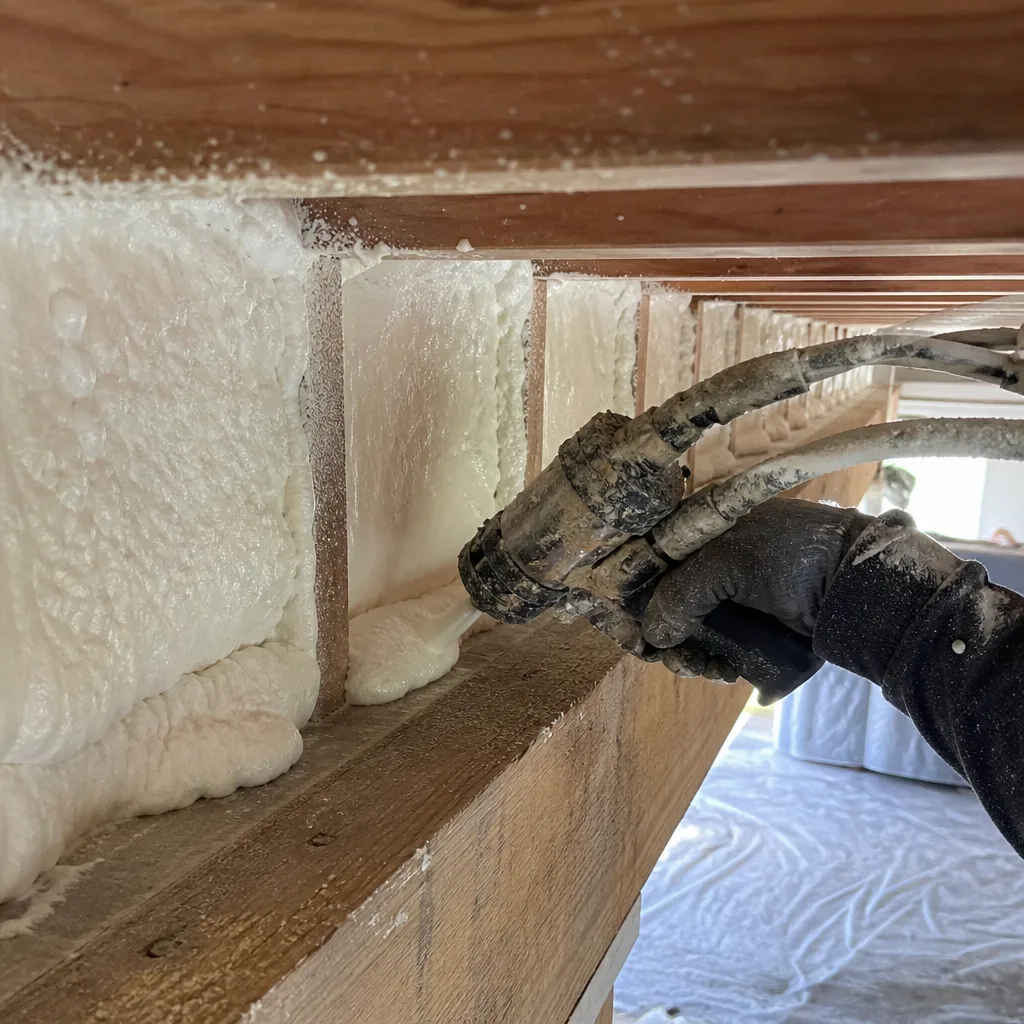
When Cleaning Isn’t Optional
If your attic insulation in Rolling Hills Estates has been wet for any length of time, cleaning is not a cosmetic step. Damp fiberglass loses its loft and its R-value, and it holds moisture against the decking, feeding mold. You can’t blow new insulation over a problem like that and expect the house to perform.
What happens when you call
- 1
A real person answersNo phone trees — you reach a local pro.
- 2
You get an upfront price rangeHonest numbers before anyone is dispatched.
- 3
A background-checked tech heads outLicensed & insured, dispatched right away.
- 4
You approve before work beginsNothing starts until you say go.
Attic Mold Removal in Rolling Hills Estates
Attic Mold Removal in Rolling Hills Estates is the service we recommend first more often than any other, because the marine layer off the Palos Verdes hills keeps attic decking damp for weeks at a stretch during heavy June gloom. Mold grows on the underside of the roof sheathing when warm, moist air from the house rises into a cool attic and condenses on the wood. It’s a biology problem, but the cause is always mechanical: missing air-sealing, exhaust ducts dumping into the attic, or inadequate ventilation. Mold removal on a typical Rolling Hills Estates attic runs $1,800 to $4,200, with the final figure tied to the affected area and whether insulation replacement is bundled in.
We don’t bleach and leave. We treat the wood, then we fix the airflow problem so the mold doesn’t return. That second step is what separates a real fix from a temporary wash.
Treating the Decking, Fixing the Airflow
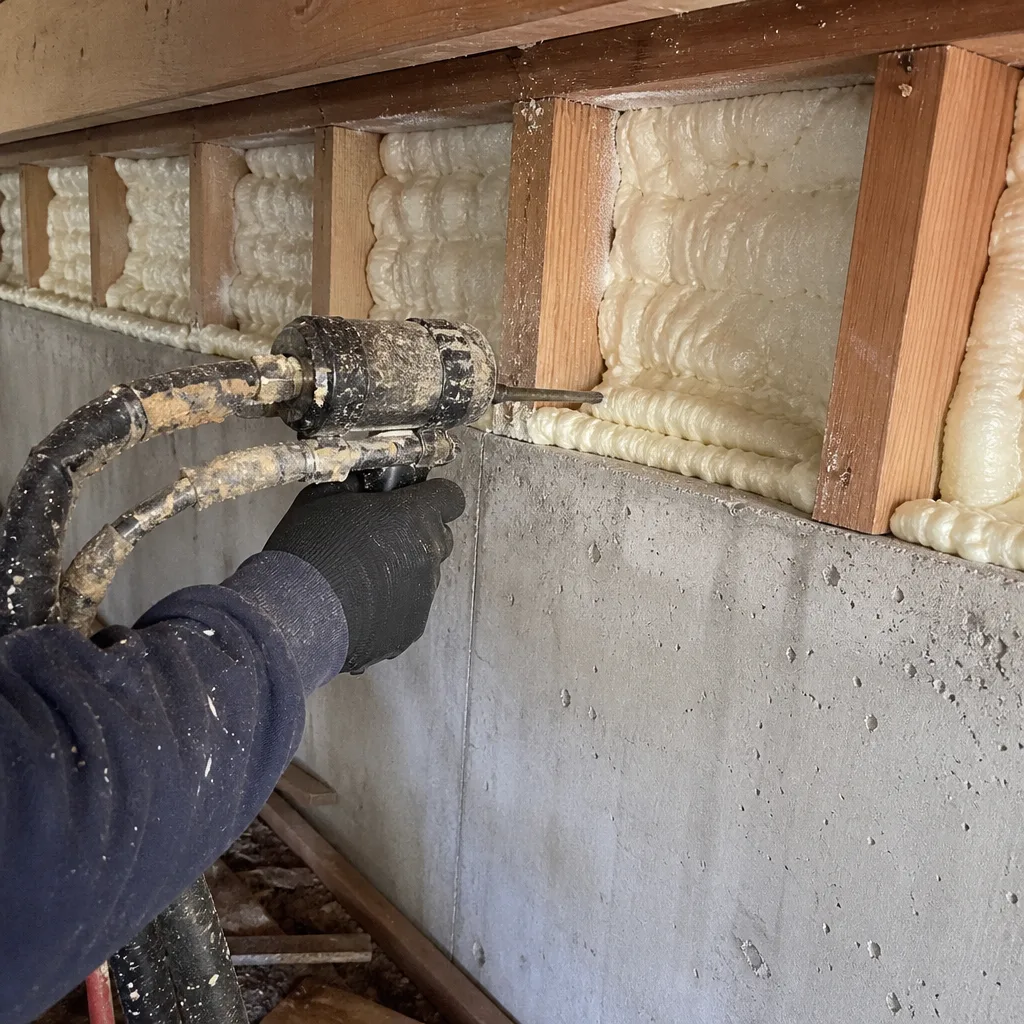
We apply an EPA-registered fungicide to affected sheathing and framing, then assess ventilation. Often the fix is adding or correcting soffit and ridge venting, plus rerouting exhaust fans. On the Peninsula, the goal is to move moist air out and keep onshore wind from creating pressure differences that pull damp air into the attic to begin with.
Bundled Mold Removal and Re-insulation
If mold-affected insulation has to come out anyway, bundling the removal of the old material, treatment of the sheathing, and installation of new insulation saves you a second mobilization and a second disruption. We quote this as one job with one crew, which is how it should be handled.
Trusted Brands We Service in Rolling Hills Estates
We’re authorized to install products from eight manufacturers, and on any given Rolling Hills Estates job we typically draw from three or four: open-cell Icynene for attic air-sealing on hard-to-reach framing, Demilec closed-cell for cathedral ceilings and vaulted attics that need a moisture barrier, GreenFiber cellulose for homeowners who want recycled content, and Owens Corning fiberglass for standard top-ups and batts. We stock these materials for Peninsula-specific conditions, which means your job doesn’t stall while we order in a special SKU from a warehouse. You get a material recommendation based on your attic’s actual exposure and moisture history, not whatever is cheapest for us to install.
Common Attic Insulation Problems We See in Rolling Hills Estates Homes
- Builder-grade bath exhausts dumping into the attic. This is the number one problem we find on Rolling Hills Estates homes, especially mid-century ranches. A bath fan that terminates in the attic releases warm, humid air straight into the insulation. Over months of showers, that moisture soaks the fiberglass and wets the decking. The fix is rerouting the duct to an exterior roof or soffit vent, and we do that work during the insulation retrofit.
- Wind-washing along canyon-edge eaves. The persistent onshore wind off the Palos Verdes hills doesn’t stop at the roofline. It moves through soffit vents and pushes loose-fill insulation back from the eaves, leaving bare drywall at the perimeter of the attic. Dense-pack cellulose or batts with a wind baffle solution hold their position far better than loose fiberglass in these microclimates.
- Missing air-sealing at top plates and recessed fixtures. Homes built in the 1950s through 1970s on the Peninsula rarely had any top plate sealing done. Damp coastal air infiltrates around plumbing stacks, wire penetrations, and recessed can lights, then hits the cool attic and releases moisture. We air-seal these penetrations with foam before any insulation goes in.
- Compressed or matted batt insulation. In older Rolling Hills Estates homes it’s common to find fiberglass batts that were installed 30 or 40 years ago, then walked on and compressed during decades of attic storage and repairs. Compressed fiberglass loses most of its insulating value. We remove it, air-seal, and reinstall at full loft with the correct depth for the space.
Pricing for Attic Insulation in Rolling Hills Estates, CA
Here’s what we actually see on Peninsula jobs. A basic top-up of blown fiberglass in a 1,500-square-foot attic runs $1,400 to $2,300. A full removal and replacement for a mid-century ranch in Rolling Hills Estates, including air-sealing and new blown-in insulation, lands between $3,200 and $5,800. Spray foam retrofits, whether open-cell attic ceiling applications or closed-cell on cathedral ceilings, range from $5,500 to $12,000 depending on roof deck square footage and access difficulty. Attic cleaning alone is $1,100 to $2,400. Attic mold removal runs $1,800 to $4,200. Homes on hillside lots with steep roof pitches or limited attic access run higher on labor. The best way to get a real number is to call (855) 382-3925 and have us look at the actual attic. Estimates are free, and Mike stands by the numbers we quote.
We Also Serve Cities Near Rolling Hills Estates
Our Attic Insulation team regularly works in Manhattan Beach, Torrance, Lomita, and Palos Verdes Estates as well. If you’re in Rolling Hills Estates or any neighboring Peninsula community, we’re already familiar with the local housing stock and the marine-layer attic conditions. You can reach us at (855) 382-3925 from anywhere in the area. For more about our work across the Peninsula and the 90505 ZIP code specifically, see Attic Insulation in Rolling Hills Estates.
Serving Rolling Hills Estates, CA — Our Local Coverage Area
We’re based in the Rolling Hills Estates area and know this community well. Use the map below to see our service coverage — if you’re nearby, we can almost certainly help.
FAQs About Attic Insulation in Rolling Hills Estates
It feels wet because the moisture isn’t coming from rain, it’s coming from inside your house and from the marine layer itself. Bath fan exhaust that terminates in the attic dumps warm humid air directly into the insulation every time someone showers. Meanwhile, the coastal air streaming in through unsealed top plates and recessed fixtures hits the cold attic surfaces and condenses. On a Peninsula home, damp insulation is almost always an airflow and exhaust problem, not a roof leak. Call (855) 382-3925 and we’ll identify the source and fix it.
Better air-sealing, almost always. The heating and cooling load in Rolling Hills Estates is mild, so chasing high R-values delivers diminishing returns. What transforms comfort and durability here is stopping the constant wind and moisture infiltration through ceiling penetrations, then making sure exhaust ducts actually go outside. Air-sealing first, then insulation depth appropriate for a coastal climate.
If the mold is confined to the decking and the insulation is dry and in good condition, we can treat the wood and leave the insulation in place. That’s common on Peninsula attics where the mold is limited to the marine-layer side of the sheathing. If the insulation itself is damp, compressed, or moldy, it has to come out. We’ll tell you which situation you have during the inspection, not after we’ve opened the attic.
Wind off the Palos Verdes hills pushes through soffit vents and scours loose-fill insulation away from the eaves, leaving bare spots at the coldest, windiest edge of the attic. That wind enters the attic even when the house feels calm at ground level. The fix is wind baffles at the eaves and, in many cases, dense-pack cellulose or batt insulation that resists wind-washing better than loose fiberglass.
We install products from eight manufacturers, including Icynene and Demilec spray foam systems, GreenFiber cellulose, and Owens Corning fiberglass. The material we recommend for a Rolling Hills Estates attic depends on your home’s exposure, framing, and moisture history. You’re getting a matched recommendation, not a brand pitch. Call (855) 382-3925 for a free estimate and we’ll talk through the options honestly.
On a ranch-style home off Palos Verdes Drive East, our crew found builder-era bath and dryer exhaust ducting terminating in the attic rather than through the roof, leaving the blown Owens Corning fiberglass damp and matted along the canyon-facing slope. We rerouted the exhaust to exterior vents, removed and replaced the wet insulation, and air-sealed the top plates before re-blowing to restore coverage against the onshore wind. That’s the work we do here, and it’s why Rolling Hills Estates homeowners call us back for the next house.
Tell us what’s happening in your attic. Call (855) 382-3925 for a free estimate and a straight answer. Mike Callahan and the crew will come out, look at the actual space, and tell you what’s needed and what isn’t. No pressure, just a plan that works for a coastal attic.
Written by Mike Callahan, Owner at Cozy Insulation Co, serving Rolling Hills Estates and the Palos Verdes Peninsula.