
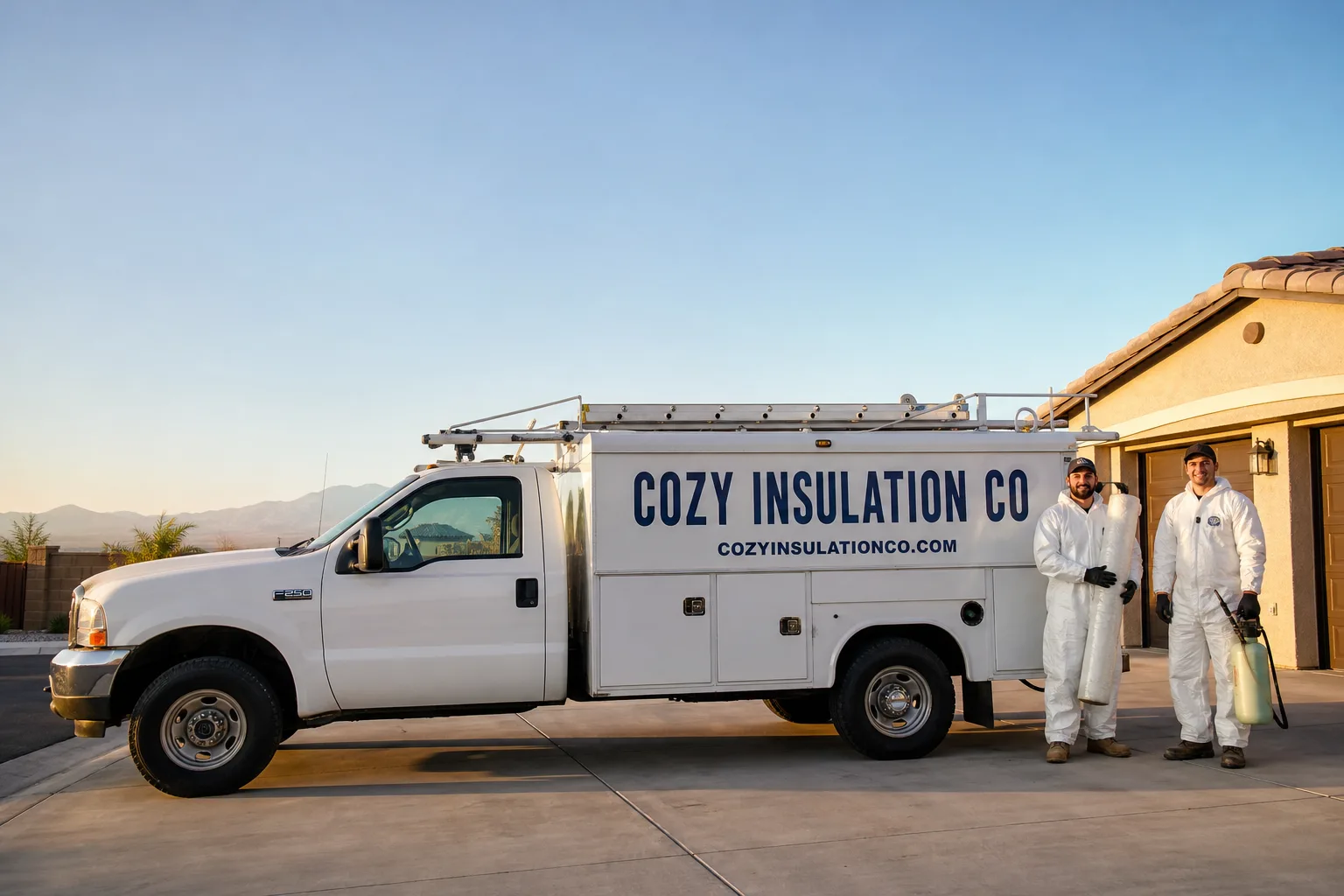
Fast, Reliable Attic Insulation Across Northridge
When a Northridge attic stops doing its job, you feel it in the house. Upstairs rooms bake by 4 p.m. in summer. The AC runs nonstop and the thermostat never quite catches up. Most of the time, the culprit isn’t the HVAC – it’s what’s sitting above the ceiling. Attic insulation in Northridge works, or fails, based on what was put up there decades ago and whether it ever got touched again after the 1994 earthquake. We scope every job verification-first, because in this part of the Valley, we’ve learned the hard way that what a homeowner *thinks* is up there rarely matches what’s actually there. Mike Callahan built Cozy Insulation Co around that exact reality. Call (855) 382-3925 and we’ll send someone out to look, test, and give you a straight answer.
Key takeaways:
- Northridge attics – especially in 1950s-70s tract homes – routinely have insulation that was disturbed or removed during post-quake retrofits and never documented.
- We verify what’s in your attic before recommending anything. No blind top-ups over a mess.
- We install fiberglass, spray foam, and blown-in cellulose from eight brands, including CertainTeed, Icynene, and GreenFiber.
- We handle the whole attic: insulation, air sealing, ventilation, and radiant barrier.
- Free estimates, and we’re local enough to get to Northridge fast – usually same week.
Why Cozy Insulation Co Is Northridge’s Preferred Attic Insulation Company
Northridge homeowners call us because we approach attics differently than the average insulation crew. Most companies show up, measure square footage, quote a blanket R-value, and start blowing. That works in a new build. It fails in a 1963 tract house on the north side of the 118 where half the original batts were shoveled aside during a seismic retrofit and never put back. Our team knows those attics. We’ve been in them. We know the difference between a 91325 rental near CSUN that’s been through five turnovers and a 91327 home that hasn’t had its attic opened since the Nixon administration.
We also don’t push one product. The right insulation for your home, not just the easiest install – that’s the whole point of having an eight-brand portfolio. On some Northridge attics that means GreenFiber cellulose blown over air-sealed top plates. On others it means closed-cell spray foam from Icynene or Demilec where a post-quake addition left awkward framing that batts will never seal. A cozy home isn’t luck – it’s the right insulation, installed correctly, in the right attic. Northridge has taught us that lesson more times than we can count.
Attic Ventilation in Northridge
Attic Ventilation in Northridge is the quiet half of a comfortable house, and it gets ignored constantly. A well-insulated attic with no airflow still turns into an oven by mid-afternoon. In the Valley’s 95-105°F summers, trapped attic heat radiates down through the ceiling for hours after sunset. Proper ventilation gives that heat somewhere to go. We check soffit vents, ridge vents, gable vents, and whether baffles were ever installed between the insulation and the roofline.
Signs Your Attic Is Underventilated
You’ll notice the upstairs rooms stay hot even after the AC has been running for an hour. The ceiling feels warm to the touch in late afternoon. You might see condensation on nails or sheathing in winter months – rare in Northridge, but it happens during those cooler damp spells. Mildew smell in the attic is another tell. If your 1960s tract home still has the original gable-only vent setup, it’s almost certainly moving too little air for modern insulation loads.
What Ventilation Work Costs Here
For a typical single-story Northridge tract home, adding or upgrading attic ventilation runs $450-$1,100 depending on whether we’re installing baffles in the existing bays, adding a ridge vent, or both. If the original soffits are painted shut or undersized, expect the higher end. We’ll never sell you ventilation you don’t need, but in the Valley’s heat, few homes need none of it.
Radiant Barrier in Northridge
Radiant Barrier in Northridge deserves its own conversation, because in this part of the San Fernando Valley it’s often the single biggest lever you can pull against summer heat gain. A radiant barrier is a reflective material – typically stapled to the underside of the roof rafters – that bounces radiant heat back out instead of letting it soak into the attic air. For Reflectix repair in Northridge, we use similar reflective technology to restore damaged or aging barriers. Under a dark shingle roof in August, an unshielded attic can hit 140°F or more. With a radiant barrier, that number drops dramatically. The difference shows up at the thermostat within days.
When a Northridge Home Needs a Barrier Before More Insulation
If your attic already has six to eight inches of insulation but the upstairs still cooks, more batts won’t fix it. The problem is radiant gain, not conductive loss. We see this constantly in 1970s tracts with dark comp shingle roofs and no barrier. In those homes, we’ll recommend barrier first. The GreenFiber top-up can come after, if it’s even needed at all.
Radiant Barrier Cost in Northridge
For a typical 1,200-1,500 square foot attic, a radiant barrier install in Northridge runs $1,200-$2,400 depending on roof pitch, rafter condition, and whether the attic still has old wiring or plumbing that needs to be worked around. It’s a one-day job in most cases. And no, paint-on “radiant barrier” products don’t perform like the real stapled film under Valley sun. We carry the real thing, and we install it so it actually breathes.
Trusted Brands We Service in Northridge
Cozy Insulation Co carries and installs products from eight established manufacturers, and we stock common materials locally so Northridge jobs don’t stall waiting on a truck from somewhere else. For blown-in work we lean on Attic Insulation systems like GreenFiber cellulose – good recycled content, trustworthy settled R-value, and it flows into irregular post-retrofit bays that batts can’t reach. For closed-cell and open-cell spray foam, we use Icynene and Demilec systems, which set the ceiling for residential insulation performance. CertainTeed batts and rolls round out the fiberglass side when the existing framing is clean and consistent. We’re authorized for all of it. That matters because the material matching the attic matters, not the material the installer has on the truck.
Common Attic Insulation Problems We See in Northridge Homes
- Compressed original batts. A 1960s tract home off Reseda Boulevard might have started with R-19 fiberglass. Thirty or forty years of foot traffic, rodent activity, and neglect later, it’s sitting at two inches and doing almost nothing.
- Post-1994 retrofit gaps. Earthquake retrofits around Northridge often required moving insulation out of the way to bolt shear walls or brace cripple studs. In a lot of attics, those batts never went back. We find empty bays on the south slope constantly.
- Missing or deteriorated radiant barrier. Homes built before Title 24 radiant-barrier and cool-roof rules went into effect have zero protection from radiant heat. In a 100°F Valley afternoon, the dark shingles cook, the attic bakes, and the bedroom below pays for it.
- Uneven, undocumented top-ups. Rental turnover around CSUN often means three different handymen added insulation three different ways. Some bays have eight inches, some have none. Without verification, adding more on top hides the gaps instead of fixing them.
Pricing for Attic Insulation in Northridge, CA
For a standard 1960s-70s single-story Northridge house, here’s what we quote most often. Blown-in cellulose from GreenFiber over about 1,200 square feet runs $1,800-$3,100. Attic batt insulation replacement with CertainTeed fiberglass runs $2,200-$3,600 depending on depth and existing material removal. A full attic insulation top-up, done properly after we verify what’s there, runs $900-$1,800. Radiant barrier adds $1,200-$2,400. Attic baffles and ventilation prep runs $450-$1,100. Site conditions move the numbers – tight attics, old wiring, post-quake framing, or the need to remove compressed original material all add labor. Call (855) 382-3925 and we’ll walk you through a real number for your attic. The estimate is free.
We Also Serve Cities Near Northridge
Our trucks run the Valley daily, so if you’re in North Hills, Encino, Van Nuys, or Valley Glen, the same crew that works Attic Insulation in Northridge can get to you just as fast. Northridge is the hub of our Valley service area, but the rigs don’t stop at the city line. Same verification-first approach, same eight-brand material options. Call (855) 382-3925 from anywhere in the west Valley and we’ll line up the visit.
Serving Northridge, CA — Our Local Coverage Area
We’re based in the Northridge area and know this community well. Use the map below to see our service coverage — if you’re nearby, we can almost certainly help.
FAQs About Attic Insulation in Northridge
Because we consistently find attics in 91325, 91327, 91328, and 91330 where post-1994 earthquake retrofits moved or removed original batts and nobody documented where. Adding new material over that leaves gaps hidden under fresh cellulose. Verification takes twenty minutes, costs nothing on the estimate visit, and tells us exactly what’s compressed, what’s missing, and what’s been air-sealed. Call (855) 382-3925 to schedule yours.
In many of the 1950s-70s tract homes we service, yes. Once you have a reasonable insulation depth, the big remaining gain in the Valley’s inland heat is radiant. A dark shingle roof with no barrier makes the attic hotter than any amount of batts can fight. We’ll tell you which matters more for your specific roof and attic after we look at both.
We find a mix of old and new that rarely lines up. Original 1960s batts compressed to a couple inches, half-empty bays where seismic work moved material, and newer batts or foam dropped in without air sealing. Some post-quake rebuilds also left top-plate gaps where framing was replaced, which leak air straight into the attic. We scope all of it before quoting.
We install fiberglass batts and rolls from CertainTeed, Owens Corning, Johns Manville, and Knauf; open- and closed-cell spray foam from Icynene and Demilec; mineral wool from Rockwool; and GreenFiber blown-in cellulose. Eight brands means we match the material to your attic’s actual condition, not the other way around. The estimate will tell you which one fits.
In this climate, yes – the two work together. Insulation slows conductive heat moving through the ceiling. Ventilation removes the heat that still builds up in the attic air. Without ventilation, even a well-insulated attic becomes a heat reservoir by late afternoon. We evaluate both on every Northridge job, because half-fixing an attic isn’t fixing it.
Written by Mike Callahan, Owner at Cozy Insulation Co, serving Northridge and the San Fernando Valley.