
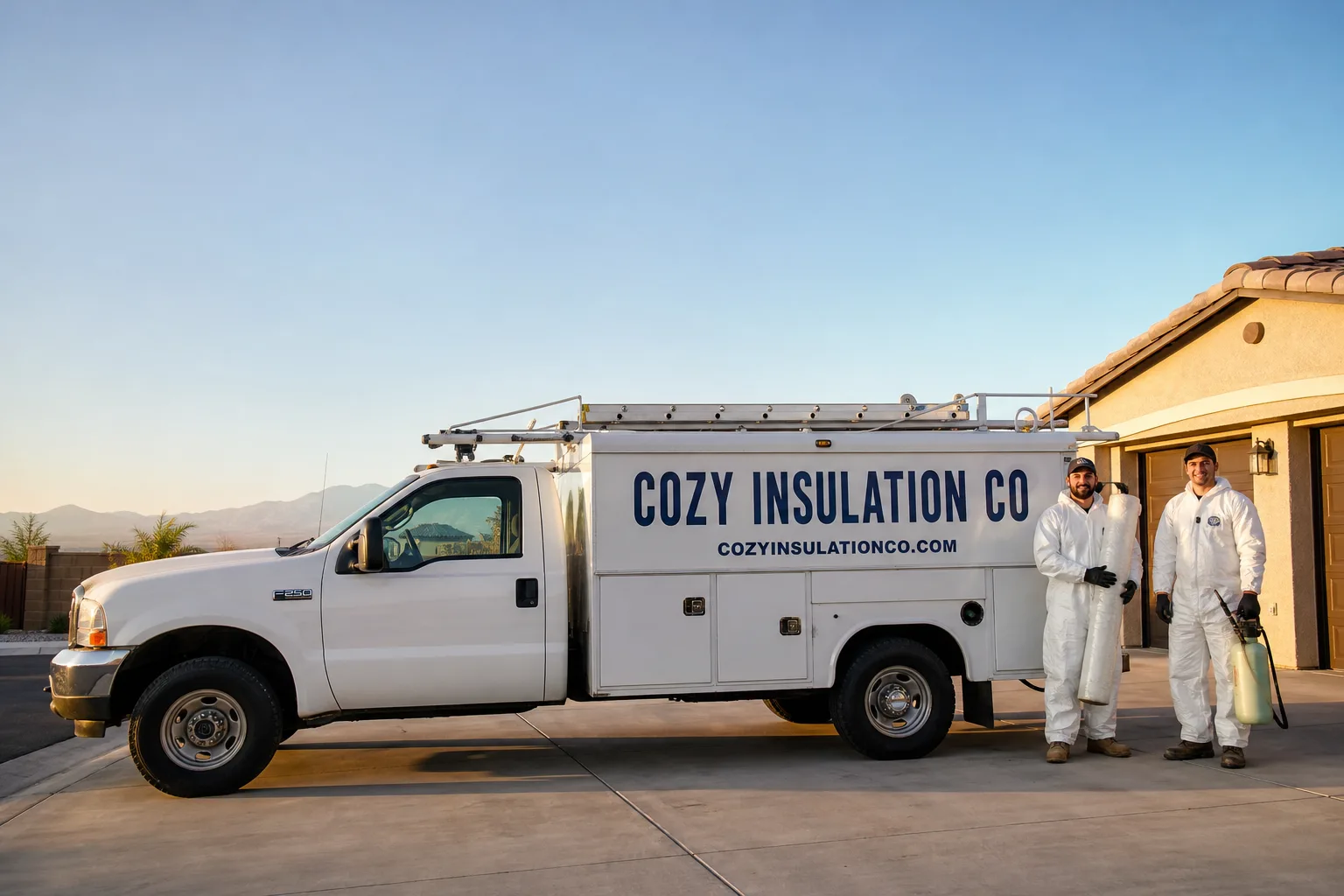
Fast, Reliable Attic Insulation Across Newport Beach
Attic insulation in Newport Beach usually costs between $1,800 and $6,400, depending on the method, square footage, and how much old material needs to come out first. Most jobs wrap up in one day. If your upstairs rooms won’t hold a temperature or your cooling bill climbs every summer, the attic is almost always where the problem starts. We’re in Corona, but our crews work Newport Beach weekly: Balboa Island, the Peninsula, Newport Heights, Dover Shores, and everywhere between the 92658 and 92663 ZIPs. Call (855) 382-3925 for a free estimate and we’ll give you an honest read on what your attic actually needs.
Why Cozy Insulation Co Is Newport Beach’s Preferred Attic Insulation Company
Newport Beach homes punish cheap insulation work. Salt air, marine-layer humidity, and thirty-year-old fiberglass batts that have absorbed decades of coastal moisture create a set of problems most insulation contractors never see inland. We’ve spent years working attics and crawlspaces across the Peninsula, Balboa Island, and the 92660 corridor, and that local time on the ground matters more than any product brochure. Mike Callahan, our owner, built the company around a simple idea: match the material to the house, not to whatever happens to be in stock. That’s why we draw from eight manufacturers – Owens Corning, Johns Manville, Knauf, CertainTeed, Rockwool, Icynene, Demilec, and GreenFiber – instead of pushing one product line on every home we visit. When we drive over the bridge onto Balboa Island, we know what we’re going to find before we open the attic hatch. That’s the difference between a contractor who works near Newport Beach and one who actually understands how this city’s climate attacks insulation.
Attic Cleaning Services in Newport Beach
Attic Cleaning Services in Newport Beach start with the reality that attics here accumulate more than dust. Marine-layer condensation pulls salt and moisture into every porous surface, which means the existing insulation often sits on a layer of damp debris, rodent evidence, and surface mold that has to go before anything new can go in. In Newport Beach, expect to pay $950 to $2,400 for a full attic cleaning depending on size, access, and how much contaminated material needs removal. If your home is on the Balboa Peninsula or Balboa Island, where the marine layer hangs heaviest, this step is non-negotiable: adding fresh insulation over damp, salty old material simply moves the problem six inches higher.
Removal and Preparation
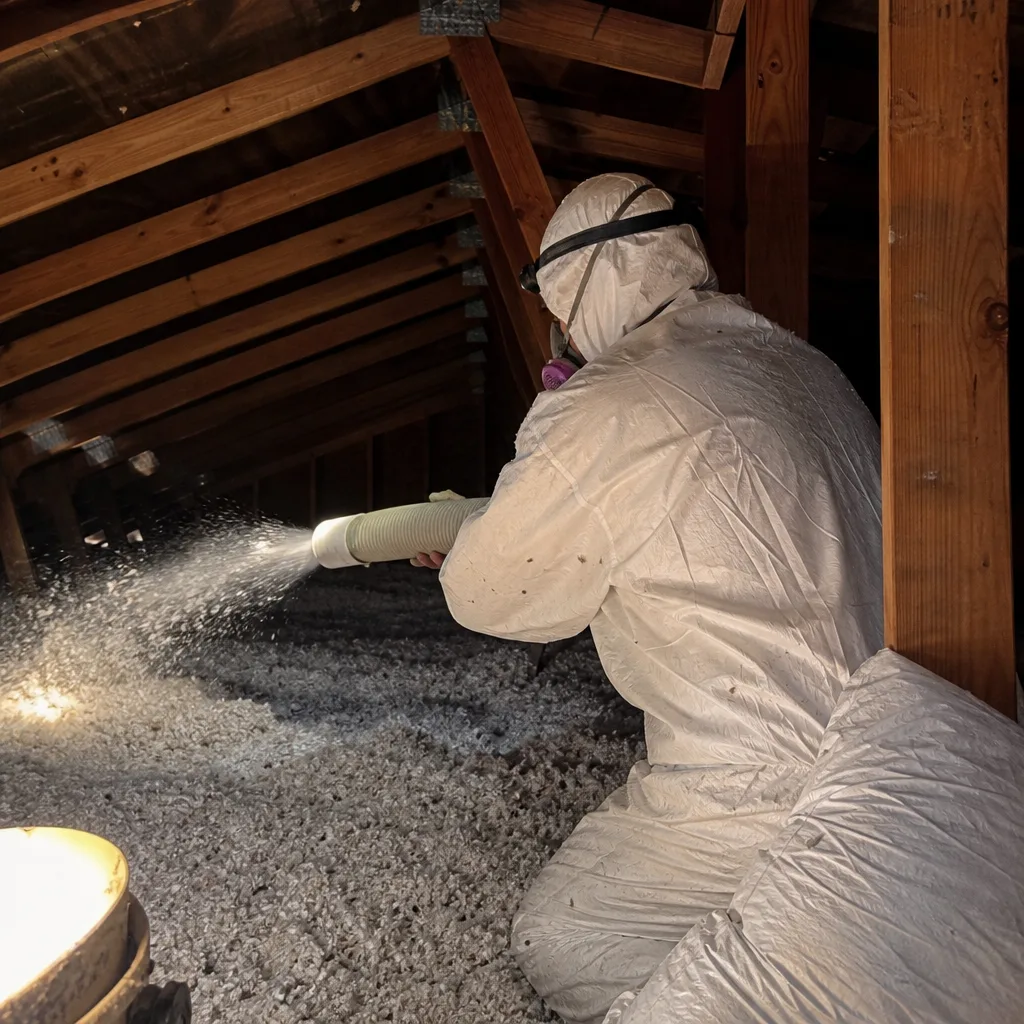
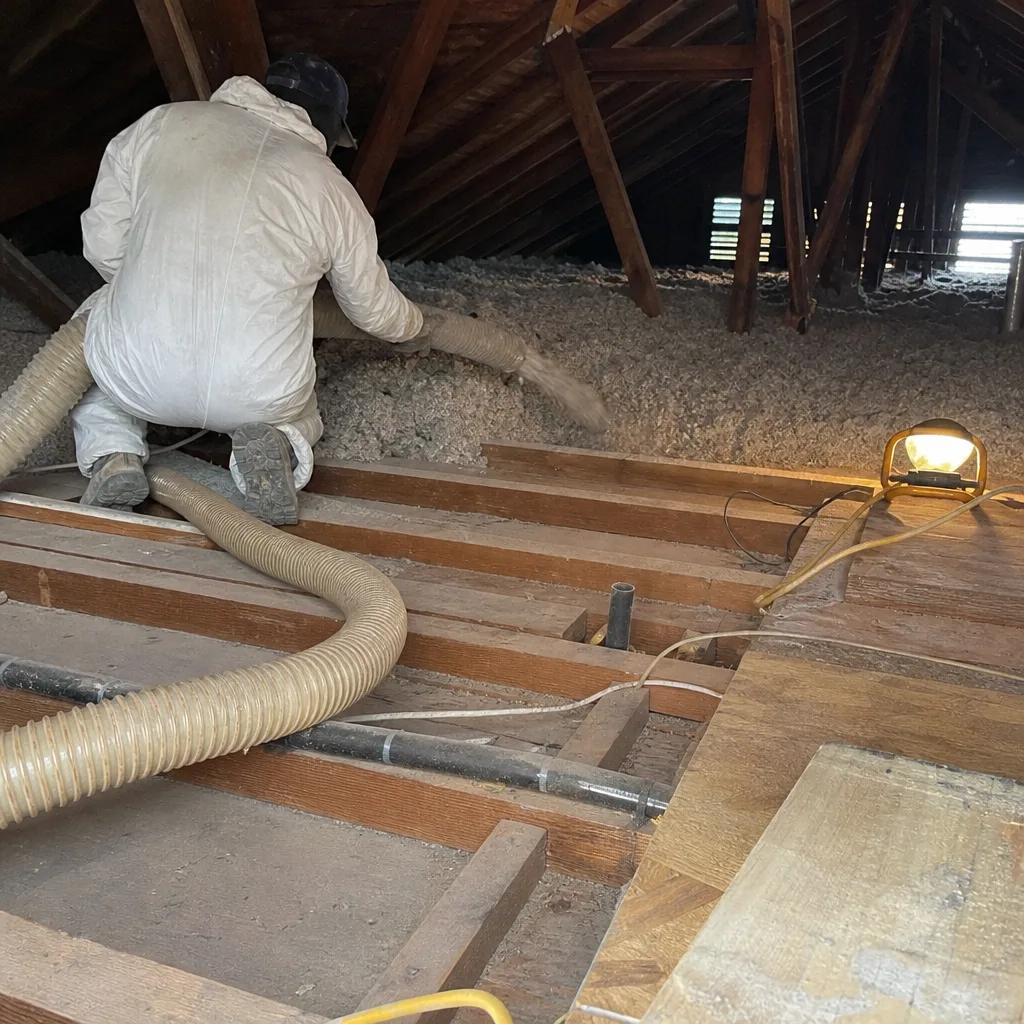
A clean attic starts with removing every compromised batt, bagging it, and extracting it without dragging contaminants through your living space. We then vacuum the attic deck, inspect for rusted fasteners and roof leaks that were hidden under old insulation, and surface-treat mold before any new material goes down. This is the step most contractors rush, and it’s the step that determines whether your new insulation lasts five years or twenty.
Post-Cleaning Inspection
Once the attic is clear, we photograph the deck, the venting, and the air-sealing points. You get a plain-English read on what we found: rusted nail heads, a failed bathroom vent, a soffit vent that was blocked by old batts. Then we make recommendations. Not a sales pitch. A scope of work based on what your attic actually looks like, not what a generic checklist says it should look like.
What happens when you call
- 1
A real person answersNo phone trees — you reach a local pro.
- 2
You get an upfront price rangeHonest numbers before anyone is dispatched.
- 3
A background-checked tech heads outLicensed & insured, dispatched right away.
- 4
You approve before work beginsNothing starts until you say go.
Attic Mold Removal in Newport Beach
Attic Mold Removal in Newport Beach is less about visible mold blooms and more about what’s happening underneath: trapped humidity, salt-laden air, and insulation that’s been holding moisture against framing for years. We charge between $1,200 and $3,800 for attic mold remediation in this market, depending on the affected square footage and whether the mold is surface-level or has penetrated the insulation itself. Balboa Island and Peninsula homes see the worst of it because the marine layer keeps attics damp for months at a stretch, and old fiberglass holds that moisture like a sponge. Mold in a Newport Beach attic is rarely the root problem; it’s the symptom of a venting or air-sealing failure that has to be fixed as part of the remediation, or you’ll be back in the same spot next spring.
Source Correction
We don’t just kill the mold and walk away. We find why the moisture is there in the first place: a bathroom fan venting into the attic instead of through the roof, a missing vapor barrier, soffit vents painted shut in a 1950s remodel, or humidity rising through pier-and-beam floors. Fixing that source – often with venting upgrades and air sealing – is what keeps the mold from returning after the treatment.
Treatment and Prevention
After removing contaminated insulation and treating affected surfaces with a mold-rated antimicrobial, we rebuild the attic with moisture-resistant materials that fit Newport Beach conditions. That might mean Johns Manville batts with a vapor barrier on Balboa Island, GreenFiber cellulose treated for humidity resistance in Newport Heights, or a closed-cell spray foam air barrier for an ocean-facing custom home where moist air drives through every gap. The material matches the house and its block, not a statewide one-size-fits-all playbook.
Trusted Brands We Service in Newport Beach
You shouldn’t have to wonder whether the insulation you’re paying for will survive Newport Beach’s salt air. That’s why we install only products from manufacturers with proven coastal performance: Attic Insulation systems built on Owens Corning and Johns Manville batts, Icynene and Demilec spray foam for the high-performance envelope, and GreenFiber cellulose when a homeowner wants a recycled-content material that breathes properly in humid conditions. We keep the most common R-values and accessory materials local to our Newport Beach work, so a typical project doesn’t wait on a distributor order. No scarcity game, no “we can get that brand next week.” If it’s on the scope, it’s on the truck.
Common Attic Insulation Problems We See in Newport Beach Homes
- Sagging, salt-soaked fiberglass batts. On Balboa Island and the Peninsula, the marine layer pushes humidity into attics for months at a stretch. The original fiberglass installs from the 1950s and 60s have absorbed decades of it: R-value drops, the batts settle and sag between joists, and what’s left in the attic isn’t insulating much of anything. You’ll often see rusty nail heads poking through the ceiling drywall before you see a utility bill spike, because moisture damage shows itself through the finish, not the meter.
- Corroded fasteners and vent hardware. Salt-laden fog works on metal the same way it works on a beach cruiser left outside. Staples that once held insulation in place rust through; vent grilles and baffle clips disintegrate. That leaves insulation drooping, falling away from roof decking, and venting paths blocked by material that’s shifted. In homes within a few blocks of the water, fastener corrosion is a five-to-ten-year wear item, not a fifty-year one.
- Air sealing failure in vaulted ceilings. The larger custom homes in Newport Heights, Dover Shores, and the 92660 corridor lean heavily on vaulted ceilings and wide ocean-facing glazing. Those designs create knotty air-sealing challenges: warm, moist interior air sneaks into attic cavities, condenses against the underside of the roof deck, and slowly soaks whatever insulation sits nearby. The result is cold spots, drywall staining, and a musty odor that comes and goes with the fog.
- Wet crawlspace insulation beneath pier-and-beam floors. This one hides below the living space, but it fails the same way. The Peninsula and Balboa Island hold hundreds of raised cottages with crawlspaces open to moist marine air. Underfloor batts soak up that humidity, sag, lose their R-value, and host mold in the dark. The fix starts with vapor barrier and ventilation work under the house, not by gluing new insulation over the top of a soggy mess.
Pricing for Attic Insulation in Newport Beach, CA
Expect to spend between $1,800 and $6,400 for attic insulation work in Newport Beach. Blown-in cellulose or fiberglass for a standard mid-century ranch runs $1,800 to $3,400. Batt insulation for a two-story Newport Heights home typically lands between $2,400 and $4,800. Closed-cell spray foam on an ocean-facing custom build starts around $4,500 and can reach $6,400 when you’re air sealing vaulted ceilings at the same time. The wild card in this city is always the old material: removal, mold treatment, and venting corrections add cost but skip them and you’re paying twice. We give free, itemized estimates with no pressure and no mystery line items. Call (855) 382-3925 and we’ll come measure your attic and quote it straight.
We Also Serve Cities Near Newport Beach
Our crews work Newport Beach every week, and we cover the surrounding communities with the same coastal-exposure knowledge: Costa Mesa, San Joaquin Hills, Fountain Valley, and Irvine. If you’re in one of those cities and your attic is dealing with humidity or salt-air failure, the material matching still matters. We apply the same approach wherever the marine layer reaches.
Serving Newport Beach, CA — Our Local Coverage Area
We’re based in the Newport Beach area and know this community well. Use the map below to see our service coverage — if you’re nearby, we can almost certainly help.
FAQs About Attic Insulation in Newport Beach
It fails faster on the Balboa Peninsula because the marine layer keeps attic air humid for months at a time, and old fiberglass batts absorb that moisture until they sag, lose R-value, and support mold growth. Inland Newport Beach homes in the 92660 corridor dry out between fog events; Peninsula homes often don’t. That’s why the first fix on the Peninsula is usually vapor barrier and venting correction, not just adding more insulation. Call (855) 382-3925 and we’ll assess what’s actually failing in your attic before recommending material.
The earliest signs of salt-air damage are rusty nail heads showing through ceiling drywall, a musty smell that strengthens during foggy weeks, and insulation that has settled or sagged between joists when viewed from the attic hatch. You may also see corrosion on vent grilles and discolored areas around bathroom fan housings. These symptoms appear long before your energy bill tells you anything, which is why coastal attics need a proactive inspection rather than a reactive one.
Yes, moldy attic insulation has to come out before new insulation goes in. Encapsulating mold or burying it under a fresh layer doesn’t stop the spores, and in Newport Beach’s humid attic conditions the problem keeps spreading underneath. We remove the contaminated material, surface-treat the affected framing, correct the moisture source, and only then install the new insulation. Skipping removal saves money today and costs double within a few years.
The marine layer keeps crawlspaces under Balboa Island homes damp for much of the year, and the pier-and-beam floor insulation in those tight, low-lying lots absorbs that humidity constantly. The batts sag, lose loft and R-value, and eventually support mold in the dark, poorly vented space under the house. The fix order matters: vapor barrier and ventilation first, then replace the underfloor insulation with a material that can handle the moisture, never the other way around.
Johns Manville batts with vapor barriers, closed-cell spray foam from Icynene or Demilec, and GreenFiber cellulose all perform well in Newport Beach when matched correctly. Closed-cell foam air seals while it insulates, which is why we often recommend it for ocean-facing custom homes with vaulted ceilings. GreenFiber cellulose manages humidity better than standard batts and suits homeowners who want recycled-content material. The right choice depends on your home’s construction and block, not a brand preference. Call (855) 382-3925 and we’ll match the material to the specific conditions of your house.
Ready to Fix Your Newport Beach Attic?
If your upstairs rooms swing hot and cold, your cooling bills keep climbing, or you’ve noticed a musty smell that comes and goes with the fog, the attic is almost certainly part of the problem. We’ll inspect it, explain what we find in plain English, and give you a straight quote for the fix. No pressure, no upsell, just the right insulation for your home and your block. Call (855) 382-3925 for a free estimate, or reach out to us through our website and we’ll get you scheduled. Newport Beach attics need a coastal-specific approach, and that’s exactly what we bring to every job we do in this city.
Written by Mike Callahan, Owner at Cozy Insulation Co, serving Newport Beach attics and crawlspaces with coastal-specific insulation expertise.