
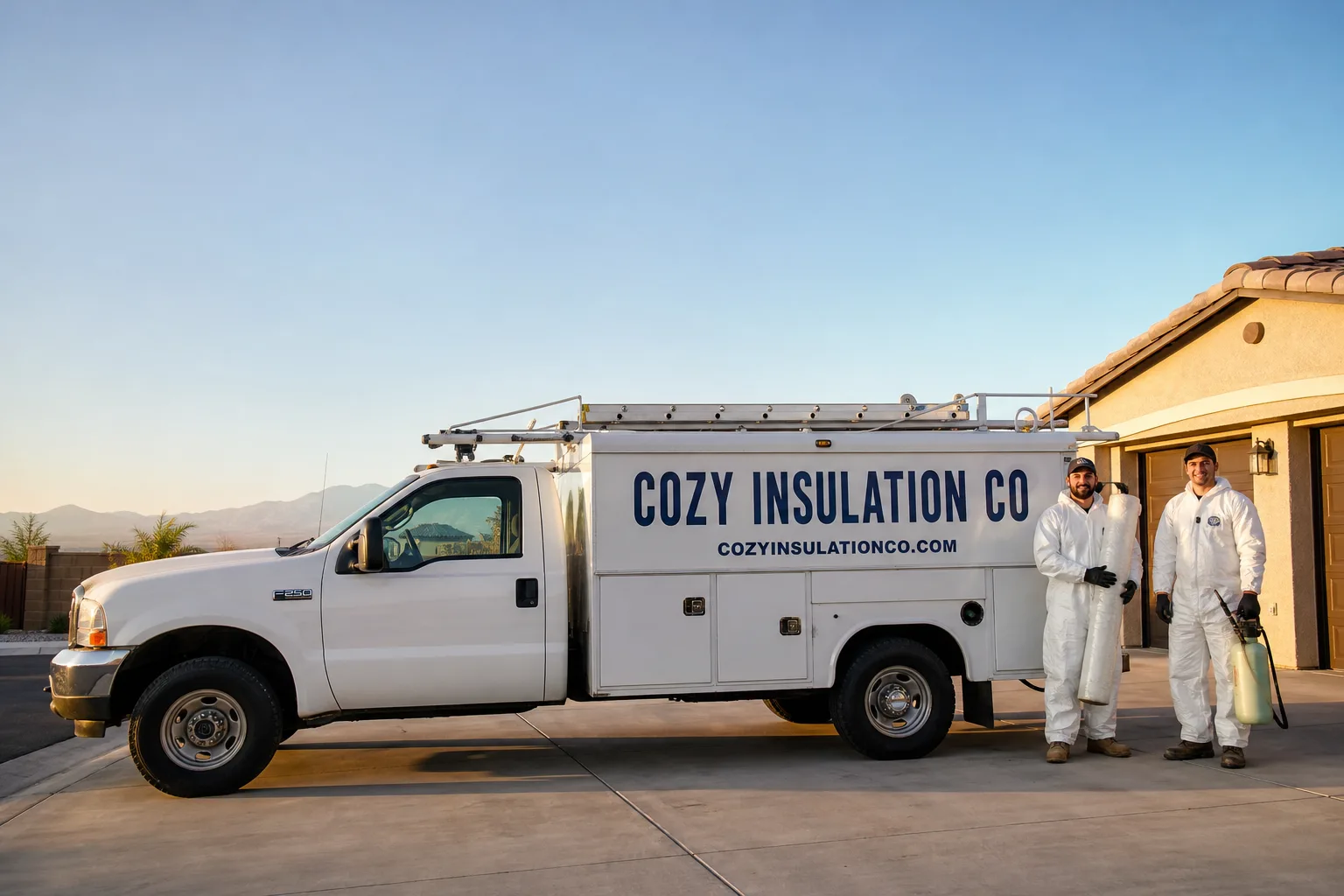
Fast, Reliable Attic Insulation Across Murrieta Hot Springs
Attic insulation in Murrieta Hot Springs works hardest in summer, not winter. A 2000s-era tract home off Murrieta Hot Springs Road can have an attic that climbs past 140°F on a 100°F afternoon, and if the builder’s fiberglass batts are thin, compressed, or kicked aside, that heat pours straight into your upstairs bedrooms. We fix that. Cozy Insulation Co serves the 92563 ZIP and surrounding Murrieta Hot Springs neighborhoods with attic insulation top-ups, full replacements, ventilation corrections, and radiant barrier installs matched to tile-roof construction. Call (855) 382-3925 for a free estimate, usually within a day or two.
Why Cozy Insulation Co Is Murrieta Hot Springs’s Preferred Attic Insulation Company
We know what a 2006 Spanish-revival stucco tract home off Clinton Keith Road is hiding in its attic, because we’ve been inside hundreds of them across Murrieta Hot Springs. The pattern is consistent: builder-grade fiberglass batts that met minimum code in 2005, two or three static vents, no radiant barrier, and ducts lying directly on top of compressed insulation. That’s not a criticism of your home, it’s just what got built. Mike Callahan, who leads Cozy Insulation Co, built our company around matching each house to the right insulation rather than selling one product line. That means when you call us, we’re not showing up with a truck full of one brand and a pitch to match.
Homeowners in Murrieta Hot Springs call us because the second-floor bedrooms run 8 to 10 degrees hotter than downstairs every summer afternoon. That’s a ventilation and radiant-barrier problem more than an R-value problem, and it’s the first thing we check. Our crews respond to Murrieta Hot Springs calls fast, typically same-week for estimates and often within days for installs, because we’re based nearby in Corona and keep material for eight brands stocked: Owens Corning, Johns Manville, Knauf, Rockwool, CertainTeed, Icynene, Demilec, and GreenFiber. If you’re in 92563, you’re not waiting on a warehouse order from Los Angeles.
The right insulation for your home, not just the easiest install. That’s how we’ve earned repeat calls from Murrieta Hot Springs homeowners who want their upstairs to finally match the downstairs.
Attic Ventilation in Murrieta Hot Springs
Attic Ventilation in Murrieta Hot Springs is the difference between an attic that stays under 120°F and one that bakes past 140°F all August. Tile-roof vented attics across the 92563 ZIP were routinely built with the minimum number of static vents, and in a climate where inland Riverside County heat sits in the 95 – 105°F range for weeks at a time, that means heat has nowhere to go. We see it on nearly every 2000s tract home we inspect: two or three roof vents doing the work that eight or ten should be.
A typical attic ventilation correction in Murrieta Hot Springs, which usually means adding intake and exhaust capacity so air actually moves under the tile roof, runs $400 – $1,200 depending on how many vents the attic needs and whether we’re adding a solar-powered attic fan. When we pull back the existing batts and find them cooked, dust-flattened, and brittle, that’s the tell. Ventilation isn’t an upsell. It’s what keeps new insulation from failing early.
Signs Your 92563 Attic Is Underventilated
If your upstairs runs 8 to 10 degrees hotter than downstairs on summer afternoons, your attic isn’t moving air. Another sign: the upstairs air conditioner runs constantly while the downstairs cycles normally. And in Murrieta Hot Springs specifically, check your west-facing rooms. The afternoon sun on stucco walls plus a heat-soaked attic overhead makes those rooms the first to overheat.
What a Ventilation Upgrade Fixes
More attic ventilation pulls cooler outside air in through soffit intakes and pushes hot air out through ridge or roof vents, which keeps heat from radiating down into your ceiling. It also extends the life of your ductwork and any insulation you install. In a Murrieta Hot Springs tile-roof attic, we typically pair ventilation work with a radiant barrier because they attack the same problem from two directions.
Radiant Barrier in Murrieta Hot Springs
Radiant Barrier in Murrieta Hot Springs attacks the heat source directly instead of just slowing it down. A tile roof in the 92563 ZIP absorbs hours of direct sun, and that energy radiates down into the attic. Insulation slows that transfer. A radiant barrier reflects it back up. We recommend it for almost every Murrieta Hot Springs attic we enter because our summer heat is far more punishing than our winter cold, and radiant barrier is the single most effective upgrade for reducing attic heat gain under tile.
A radiant barrier installation for a typical single-story or two-story Murrieta Hot Springs tract home runs $800 – $2,200, mostly depending on attic size, roof pitch, and whether we’re stapling it to the rafters or laying it over existing insulation on the attic floor. In a hot climate like ours, rafter-mounted is the better approach, because it keeps the heat from ever reaching the insulation below.
Why It Matters More Here Than at the Coast
Murrieta Hot Springs sits in the Temecula Valley’s inland heat basin, where summer temperatures run 10 to 15 degrees hotter than coastal San Diego County. Insulation here gets judged not by how it handles a 40°F night but by how it survives sustained 100°F+ attic heat and afternoon sun on west-facing walls. A radiant barrier is the upgrade that coastal code minimums never anticipated.
Pairing Radiant Barrier With Blown-In Insulation
We often install a rafter-mounted radiant barrier and then blow in GreenFiber cellulose to R-49 over the top of what’s already up there. That combination reflects radiant heat before it enters the attic and slows any conductive heat that gets through. For Murrieta Hot Springs homeowners, it’s usually the fastest path to second-floor rooms that track within two or three degrees of the first floor.
Trusted Brands We Service in Murrieta Hot Springs
We stock and install products from Owens Corning, Johns Manville, GreenFiber, and Demilec for Murrieta Hot Springs customers, which means we’re not waiting on distributor deliveries when your project is ready to go. Owens Corning and Johns Manville make fiberglass batt insulation that we use for top-ups and replacements where the existing framing suits it. GreenFiber cellulose is our go-to for blown-in over existing batts in 92563 attics, because it fills around ducts and framing far better than another layer of fiberglass. Demilec spray foam is the premium option for homeowners who want the best air-sealing performance available, and it’s one of the most performance-tested open- and closed-cell foam systems on the market. We’re not a one-brand contractor pushing whatever box is on the truck. Eight trusted brands, one company, and we’ll match the material to your house.
Common Attic Insulation Problems We See in Murrieta Hot Springs Homes
- Builder-grade fiberglass batts compressed or kicked loose. In 2000s-era 92563 tract attics, HVAC installers routinely moved batts aside to run ductwork and never put them back, leaving bare drywall patches that leak heat into the house. We find this on nearly every inspection.
- Tile-roof attics with no radiant barrier and only static vents. Attic temperatures in Murrieta Hot Springs routinely climb past 140°F, which cooks the top layer of insulation and bakes the air in the ducts below. The fix is ventilation and radiant barrier, not just more insulation.
- Duct runs buried under or separated from thin batts. Cooled air traveling through ducts in a 140°F attic gains heat before it reaches second-floor registers. Properly insulating around ducts and air-sealing the ceiling plane stops that loss.
- West-facing upstairs rooms running hot every summer afternoon. That’s a classic Murrieta Hot Springs symptom, and it almost always traces back to attic heat gain and insufficient insulation over those specific rooms. We’ve fixed it on homes off Murrieta Hot Springs Road, Calle Del Oso Oro, and throughout 92563.
Pricing for Attic Insulation in Murrieta Hot Springs, CA
Here’s honest pricing for Murrieta Hot Springs. A blown-in insulation top-up to bring an existing attic up to R-49 typically runs $1,500 – $3,500. A full attic insulation replacement, including removal of old batts, air-sealing, and new blown-in or batt insulation, runs $3,000 – $7,000. Adding a rafter-mounted radiant barrier runs $800 – $2,200. Ventilation corrections run $400 – $1,200. The size of your attic, access difficulty, and whether we’re removing old material all move the number. Estimates are free, and we’ll walk the attic with you so you see exactly what we’re seeing before you spend a dollar. Call (855) 382-3925 to schedule one.
We Also Serve Cities Near Murrieta Hot Springs
Beyond our Attic Insulation in Murrieta Hot Springs work, we run crews into Murrieta, Temecula, Wildomar, and Quail Valley every week. If you’re just over the 92563 boundary, call us and we’ll let you know when we can be out. Our Attic Insulation team covers the whole Temecula Valley corridor.
Serving Murrieta Hot Springs, CA — Our Local Coverage Area
We’re based in the Murrieta Hot Springs area and know this community well. Use the map below to see our service coverage — if you’re nearby, we can almost certainly help.
FAQs About Attic Insulation in Murrieta Hot Springs
Most likely yes, at least partially. Builder-grade fiberglass batts in 2000s Murrieta Hot Springs tract homes were installed to minimum code, and after two decades of 140°F+ attic summers, many are compressed, dust-flattened, or displaced by HVAC work. We routinely find effective R-values in the mid-teens or low 20s in attics that were supposed to be R-30. The fix is usually an air-seal plus a blown-in top-up to R-49. Call (855) 382-3925 and we’ll inspect yours for free.
That’s the signature symptom of attic heat gain plus insufficient ventilation in a Murrieta Hot Springs tile-roof home. Your attic is likely hitting 140°F+, and that heat radiates through the ceiling into your upstairs rooms while your ducts pick up heat on the way to the registers. We fix it with ventilation, radiant barrier, and insulation top-up. Most homes see the upstairs track within two or three degrees of downstairs after the work.
Yes. Tile roofs absorb a huge amount of solar energy, and a radiant barrier reflects that heat back up before it ever reaches your insulation or your living space. It’s the single most effective upgrade for a hot-climate attic, and in the 92563 ZIP it’s almost always our first recommendation alongside ventilation work.
In most cases, yes, but you should check your specific warranty terms first. Adding insulation, ventilation, or a radiant barrier is usually treated as an improvement rather than a defect repair, and it doesn’t void structural coverage. If you’re within a 10-year structural warranty on a Murrieta Hot Springs tract home, we’ll work with you to make sure the work doesn’t interfere with any active claims.
The rule of thumb is 1 square foot of net free ventilation area for every 150 square feet of attic floor space, ideally split between soffit intakes and roof or ridge exhausts. Most 2000s-era 92563 tract attics have a fraction of that. We calculate your specific requirement during the free estimate and correct it if needed. Call (855) 382-3925 for an exact quote.
Written by Mike Callahan, Owner at Cozy Insulation Co, serving Murrieta Hot Springs and the Temecula Valley.