
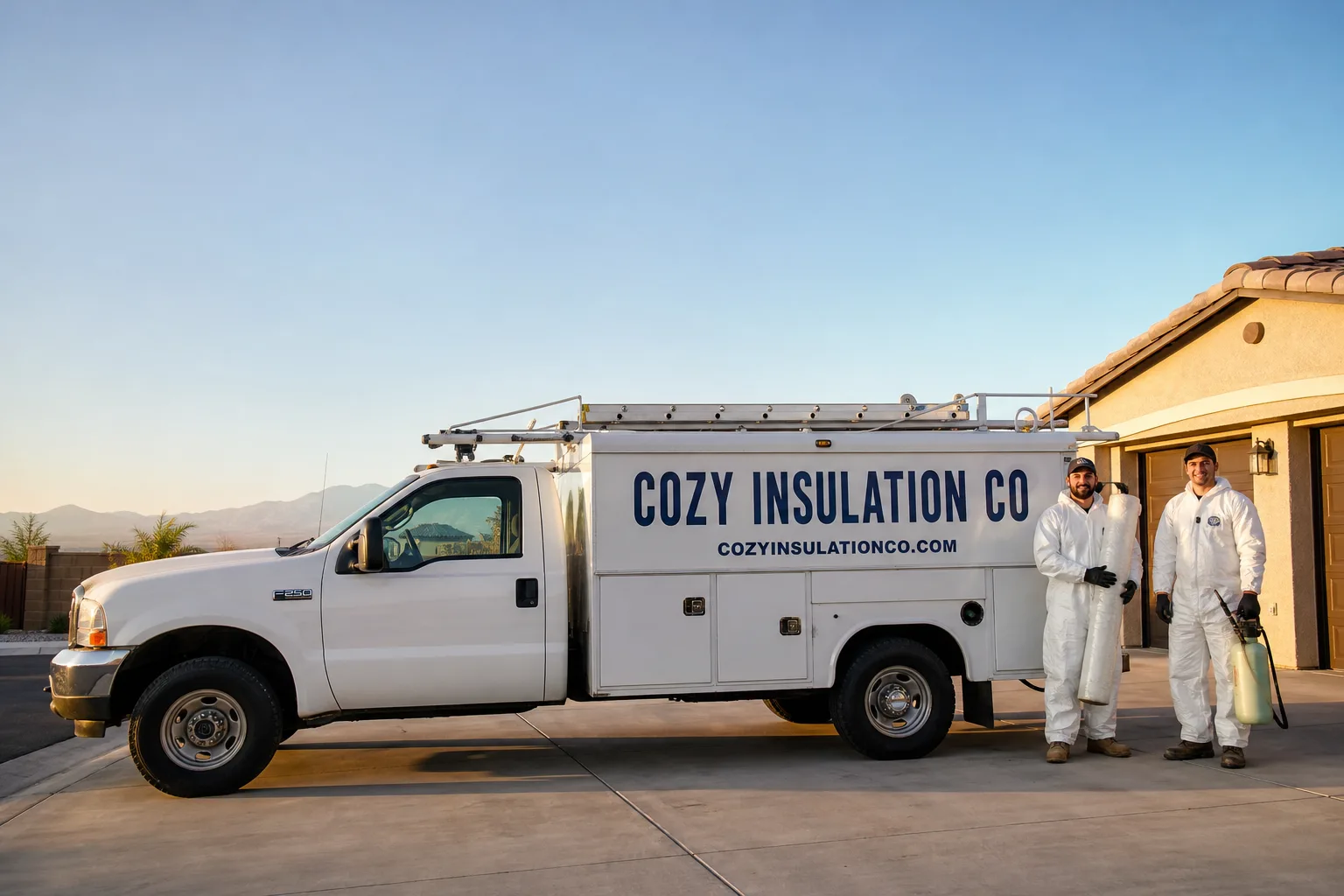
Fast, Reliable Attic Insulation Across March Air Force Base
Attic insulation in March Air Force Base is a different job than it is ten minutes down the road in Moreno Valley. The wind, the housing stock, the coordination with base facilities – it all changes how the work should be done. We know because we’ve been in these attics. If your rooms won’t hold temperature or your cooling bill spikes every summer, the fix usually starts above your ceiling. Call us at (855) 382-3925 and we’ll come take a look, usually within a day or two of your first call.
Why Cozy Insulation Co Is March Air Force Base’s Preferred Attic Insulation Company
Most insulation contractors treat March Air Force Base as an afterthought – just another stop on a Moreno Valley route. We don’t. The base’s housing was built in a specific era, under specific constraints, and it fails in specific ways. Our team has worked in the mid-century ranch stock, the barracks-era buildings, and the support structures that date back to the 1940s and 1950s expansions. That matters when you’re deciding whether to top up or start over.
Homeowners on base also tell us the same thing: they want one trip, one crew, one company that understands the property. We bring that. Mike Callahan built Cozy Insulation Co around the idea that a home is a system, not a product shelf. That’s why we don’t push a single brand – we match the material to the house and the conditions it actually faces. From blown-in cellulose to closed-cell spray foam, you get the right insulation for your home, not just the easiest install.
We also understand the practical side of working on a military installation. Access requirements, scheduling windows, and the need to coordinate with base facilities aren’t surprises to us. They’re part of the job. That local knowledge is why March Air Force Base homeowners keep calling us back.
Insulation Contractors in March Air Force Base
Insulation Contractors in March Air Force Base need to understand something most outside crews miss: the wind corridor off the San Gorgonio Pass doesn’t just cool the air. It moves through attics. Loose insulation gets pushed around. Batts lift at the edges. Vents that would be fine in Woodcrest let grit and air scour the space above your ceiling. A proper insulation job here starts with securing the material, not just installing it.
Wind-Secured Batts and Blown-In Work
In practice, that means wind baffles at soffit vents, proper fastening at edges, and enough density in blown-in material that it doesn’t shift. We see this failure constantly in exposed attics across the 92551 zip code. The insulation is there, but it’s been displaced so badly it’s doing half its job.
Coordination With Base Facilities
Unlike residential work in neighboring Perris, insulation projects in March Air Force Base housing often require coordination with base facilities or property management. We’re used to this. It adds a scheduling step, but it’s one we handle from the first call so you don’t sit waiting.
A typical attic insulation upgrade in March Air Force Base runs $1,800 to $4,200 depending on attic size, current material condition, and whether ventilation repairs are needed. Call (855) 382-3925 for a free estimate and we’ll give you a straight number.
Attic Ventilation in March Air Force Base
Attic Ventilation in March Air Force Base is the quiet fix behind a lot of insulation complaints. The large diurnal temperature swing here – hot days, cool nights – creates condensation risk when attics can’t breathe. Add the wind factor and you get an attic that’s either too sealed or too exposed. Both ruin insulation performance over time.
Wind Baffles and Soffit Protection
The high-wind realities near the pass mean standard venting often needs reinforcement. Wind baffles keep blown-in insulation from blocking airflow while stopping direct wind from scouring the material. In exposed attics, we also check gable vents for displacement patterns that signal ongoing intrusion.
Ventilation Before Insulation
Our rule on the base: fix the airflow first, then insulate. That order prevents moisture buildup from compromising new material. We recently re-insulated an attic in the base’s mid-century ranch housing using Owens Corning blown-in fiberglass, but first we had to re-secure loose batts that had been displaced by wind intrusion through soffit vents. After adding wind baffles and a radiant barrier, the homeowner reported a noticeable drop in cooling costs despite the large diurnal temperature swings.
Attic ventilation work in March Air Force Base typically runs $400 to $1,100 as a standalone job, or less when combined with new insulation. Free estimates by phone at (855) 382-3925.
Trusted Brands We Service in March Air Force Base
Cozy Insulation Co installs products from eight trusted brands – Owens Corning, Johns Manville, Knauf, Rockwool, CertainTeed, Icynene, Demilec, and GreenFiber. For March Air Force Base homes, we often recommend Owens Corning blown-in fiberglass for wind-prone attics, Icynene or Demilec closed-cell spray foam where sealing matters most, and GreenFiber cellulose for homeowners who want recycled-content material. We stock common local parts and materials, so turnaround on base housing is quick. If your attic needs specific product matching, we’ll bring samples and walk you through what fits – not what’s easiest for us.
Common Attic Insulation Problems We See in March Air Force Base Homes
- Wind-displaced batts and blown-in material. The San Gorgonio Pass wind corridor pushes air through soffit and gable vents, shoving insulation out of place. Your attic might have full material coverage on paper and half the effective R-value in reality.
- Settled and degraded original insulation. Much of the housing stock dates to the 1940s and 1950s, when the base expanded. Original fiberglass batts have compressed, collected dust, and left thermal gaps that show up as hot rooms and stubborn cooling bills.
- Unsealed penetrations and weak ventilation. Aging base housing wasn’t built for today’s air-sealing standards. Recessed lights, plumbing chases, and poorly vented spaces let conditioned air escape and moisture collect where it shouldn’t.
- Wind intrusion compounding insulation failure. We see attics where loose material has drifted into piles against one wall, leaving bare ceiling directly above bedrooms. That’s a wind pattern problem first, an insulation problem second.
Pricing for Attic Insulation in March Air Force Base, CA
Here’s what we tell March Air Force Base homeowners when they call. An attic insulation top-up over existing material runs $1,000 to $2,300 for a typical ranch home on base. A full attic insulation replacement, including removal of settled or wind-damaged material, runs $2,400 to $4,800. Blown-in attic insulation using fiberglass or cellulose is the most common upgrade we do in the 92551 zip code, and spray foam projects start around $3,500 for smaller attics. Wind securing and baffle work adds $300 to $800 depending on vent count. Call (855) 382-3925 for an exact quote. Estimates are free and we’ll give you a number before we leave.
We Also Serve Cities Near March Air Force Base
Our Attic Insulation team covers the whole western Riverside County area. We serve March Air Force Base along with Moreno Valley, Woodcrest, Perris, and Good Hope. If you’re in one of those areas, same crew, same care, same free estimate at (855) 382-3925.
Serving March Air Force Base, CA — Our Local Coverage Area
We’re based in the March Air Force Base area and know this community well. Use the map below to see our service coverage — if you’re nearby, we can almost certainly help.
FAQs About Attic Insulation in March Air Force Base
Wind through the San Gorgonio Pass pushes air into attics through soffit and gable vents, displacing loose insulation and lifting the edges of batts. That displacement reduces effective R-value even when the material is still present. The fix is wind baffles at vent openings and securing methods that keep material in place, which we include in every March Air Force Base attic assessment. Call (855) 382-3925 and we’ll check your attic for wind intrusion patterns.
Mid-century ranch homes on March Air Force Base were built with minimal insulation by today’s standards, and the original fiberglass batts have typically settled or degraded. A blown-in fiberglass or cellulose top-up works well for most of these single-story attics, while closed-cell spray foam from Icynene or Demilec is the stronger choice for homeowners who want air-sealing as well as insulation. We’ll match the material to your home, not the other way around.
Yes, in most March Air Force Base housing, insulation work requires coordination with base facilities or the property management office for access and scheduling. We’re familiar with the process and handle that coordination as part of the job. It’s one reason homeowners on base choose us over outside contractors who show up once and get turned away at the gate. Estimates are free: (855) 382-3925.
Watch for rooms that run noticeably hotter in summer than others, cooling bills that climb year over year, and visible piles or bare spots when you peek into the attic. In March Air Force Base specifically, wind-displaced material is common – you’ll see insulation drifted against one wall and missing elsewhere. We’ll do a full assessment and tell you honestly if a top-up is enough or a full replacement makes more sense.
Yes, attic ventilation work is a core part of what we do, and in March Air Force Base’s hot-dry climate with big day-to-night temperature swings, it’s often the missing piece. Proper soffit-to-ridge airflow keeps the attic cooler and prevents the moisture buildup that breaks down insulation. We install wind baffles, ridge vents, and intake protection sized for the base’s high-wind corridor. Call (855) 382-3925 for a free ventilation and insulation assessment.
Written by Mike Callahan, Owner at Cozy Insulation Co, serving March Air Force Base and western Riverside County from our Corona location.