
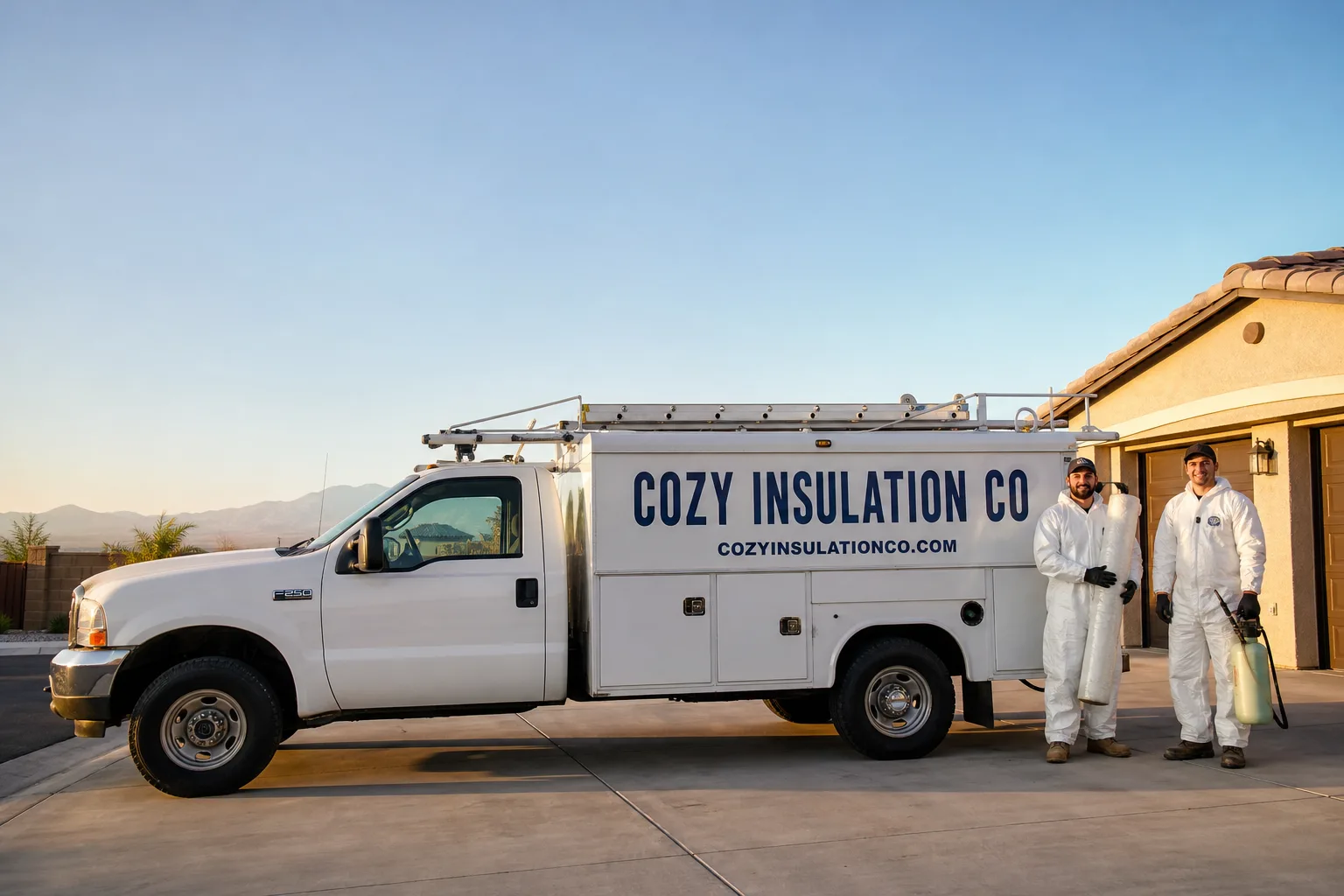
Fast, Reliable Attic Insulation Across Desert Hot Springs
Attic insulation in Desert Hot Springs usually costs between $1,800 and $4,500 for a full retrofit, depending on square footage, material choice, and whether ventilation repairs are needed first. Most jobs take one day once we’re in the attic. If your house feels like an oven by noon in July and you’re still cranking the heat on February mornings, that’s the diurnal swing problem we solve every week here.
We know Desert Hot Springs. We know the 92240 and 92241 zip codes, the tract homes off Palm Drive, the manufactured home parks south of Dillon, and the newer custom builds up toward Desert Edge. The wind coming through the San Gorgonio Pass doesn’t just cool you down on a hot afternoon – it blows sand and dust straight into your attic vents year-round. That changes how insulation has to be installed here, and it’s why generic approaches fail. When you call Cozy Insulation Co at (855) 382-3925, you get a crew that plans for Desert Hot Springs conditions from the first inspection.
Why Cozy Insulation Co Is Desert Hot Springs’s Preferred Attic Insulation Company
Mike Callahan built this company on a simple idea: match the material to the house, not to whatever’s cheapest on the truck. That matters in Desert Hot Springs because a 1990s stucco tract home needs something different than a mid-century snowbird bungalow or a manufactured home on a permanent foundation. We install products from eight manufacturers – Owens Corning, Johns Manville, Knauf, CertainTeed, Icynene, Demilec, Rockwool, and GreenFiber – so we’re not stuck recommending one product for every attic we crawl into, and we can handle specialized work like Reflectix repair in Desert Hot Springs when that material is the right fit.
Homeowners here tell us the same three things: rooms don’t stay the temperature they set, the AC runs nonstop from June through September, and their attic smells like hot dust. That last one is the San Gorgonio Pass. Persistent afternoon winds push fine sand through soffit and gable vents until airflow dies and the attic bakes. Most contractors blow in new insulation and leave. We fix the ventilation first, then insulate. That sequence is why Desert Hot Springs homeowners keep our number.
Response time to most parts of Desert Hot Springs is same-day or next-day for inspections. Estimates are free, and we show up when we say we will.
Attic Cleaning Services in Desert Hot Springs
Attic cleaning services in Desert Hot Springs typically run $400 to $1,100 depending on attic size and how much wind-driven sand has accumulated. Before any new insulation goes in, the attic has to be clear of debris, dust-caked baffles, and any old material that’s been compromised. In this city, that almost always means addressing what the wind has deposited over years.
Vent Clearing and Dust Removal
We start by clearing soffit and gable vents. In Desert Hot Springs, those vents are the lungs of the attic, and the San Gorgonio Pass clogs them with sand faster than most homeowners realize. Once airflow is restored, we remove compacted debris and prep the attic floor for new material. Skipping this step is why some attics get new insulation and still cook.
Sanitizing Before New Insulation
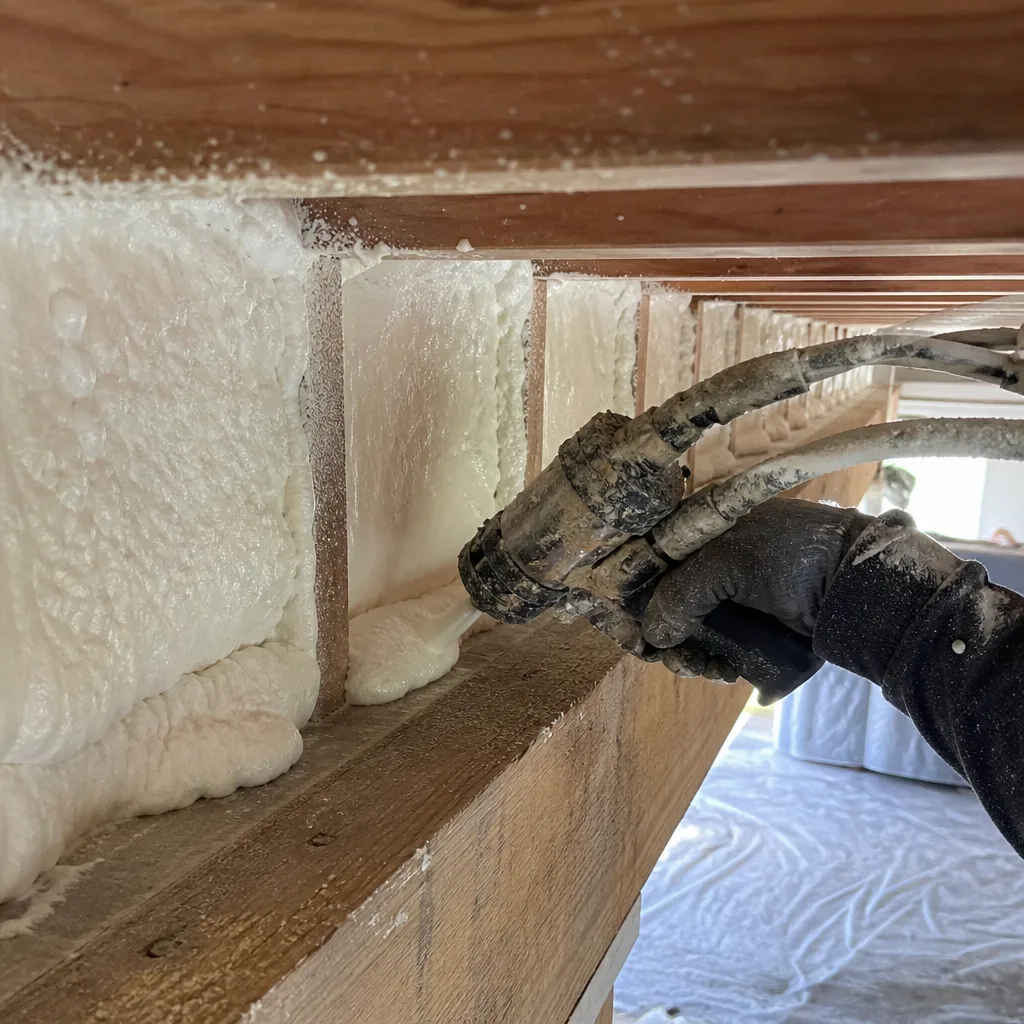
After debris removal, we sanitize the attic space with an antimicrobial treatment. This is especially important in Desert Hot Springs homes that have gone years with reduced airflow – trapped heat plus dust creates exactly the environment where odors and microorganisms settle in. A clean attic is the only surface worth insulating over.
What happens when you call
- 1
A real person answersNo phone trees — you reach a local pro.
- 2
You get an upfront price rangeHonest numbers before anyone is dispatched.
- 3
A background-checked tech heads outLicensed & insured, dispatched right away.
- 4
You approve before work beginsNothing starts until you say go.
Attic Mold Removal in Desert Hot Springs
Attic mold removal in Desert Hot Springs typically costs $800 to $2,500, and if you’re seeing spotting on roof sheathing or smelling mustiness upstairs, the cause here is usually trapped moisture from a ventilation failure, not a roof leak. Desert Hot Springs attics get hot enough to bake out moisture only if air moves. When vents are clogged with sand, humidity from the living space rises and stalls. That’s the mold trigger we see most.
Addressing the Root Cause
Treating mold without fixing ventilation guarantees it returns. In Desert Hot Springs, that means clearing wind-driven debris, checking that soffit vents are pulling properly, and confirming no bathroom or dryer exhaust is dumping into the attic. Once airflow is corrected, we treat affected surfaces and apply a mold-resistant coating. The result is an attic that stays dry and a home that doesn’t smell like a wet basement on hot afternoons.
We include mold removal as a foundational step before installing any new insulation – insulating over an unresolved mold problem doesn’t work, and we won’t do it.
Trusted Brands We Service in Desert Hot Springs
Homes in Desert Hot Springs have attics filled with all kinds of material, from settled Owens Corning blown-in from the 1990s to newer spray foam systems. We work with all of it and install fresh products from Attic Insulation manufacturers including Johns Manville, Owens Corning, GreenFiber, and Demilec. Because we’re not tied to a single product line, we can match the recommendation to your home’s construction and the San Gorgonio Pass conditions it faces. That means faster turnaround, less guesswork, and an attic system that actually performs through a 115°F summer day and a 35°F winter night.
Common Attic Insulation Problems We See in Desert Hot Springs Homes
- Sand-clogged soffit and gable vents. The San Gorgonio Pass pushes fine dust and sand into attic openings year-round. Once airflow stops, the attic superheats and insulation starts degrading – and the AC has to work harder to keep living spaces comfortable.
- Sagging and spaced batt insulation. Extreme temperature swings between summer highs above 110°F and winter nights near freezing cause fiberglass batts to pull away from framing. Every gap becomes a pathway for heat to pour in or escape.
- Compacted blown-in insulation. We regularly find blown-in attic insulation in 1980s and 1990s tract homes that has been walked on during HVAC retrofits or compacted by heat and dust until it loses most of its R-value. Compacted insulation doesn’t insulate – it just fills space.
- Disconnected or crushed baffles. Older attics often have baffles that were never installed correctly or have been crushed by shifting material. In Desert Hot Springs, that means airflow drops and temperatures in the attic climb even higher – which is exactly what insulation is supposed to prevent.
Pricing for Attic Insulation in Desert Hot Springs, CA
Here’s what we see across Desert Hot Springs homes. Attic batt insulation for a standard 1,200 to 1,800 square foot home runs $1,800 to $3,500. Blown-in fiberglass or cellulose for the same footprint lands between $2,200 and $4,200. Attic insulation top-up, where existing material is still viable but needs additional depth, runs $1,000 to $2,200. Full attic insulation replacement – removing old material, cleaning, and installing new – runs $2,800 to $5,500. Spray foam projects start around $3,500 and go up from there based on coverage area and open-cell versus closed-cell choice. Ventilation repair and baffle installs add $300 to $900 depending on how much wind-driven damage we find. Call (855) 382-3925 for a free estimate – we’ll give you exact numbers after a quick attic inspection.
We Also Serve Cities Near Desert Hot Springs
Beyond our work across Desert Hot Springs, we provide Attic Insulation services to homeowners in Desert Edge, Sky Valley, Garnet, and Thousand Palms. If you’re a few miles outside the city, give us a call – our schedule includes the whole north Coachella Valley area.
Serving Desert Hot Springs, CA — Our Local Coverage Area
We’re based in the Desert Hot Springs area and know this community well. Use the map below to see our service coverage — if you’re nearby, we can almost certainly help.
FAQs About Attic Insulation in Desert Hot Springs
The San Gorgonio Pass wind corridor pushes consistent afternoon gusts through the Coachella Valley, carrying fine sand and dust directly into attic vents. Over time, that dust clogs soffit and gable vents, reducing airflow until the attic can’t shed heat. Even high-quality insulation starts baking and compacting under a superheated, stagnant attic. The fix is ventilation repair before or alongside insulation work – which is why we inspect vent function on every Desert Hot Springs job. Call (855) 382-3925 if your attic vents haven’t been checked in years.
Desert Hot Springs summer design temperatures exceed 110°F while winter nights regularly dip near freezing – a 70-plus-degree diurnal swing. Insulation has to resist heat transfer in both directions, not just keep the attic warm. Old or poorly installed material that handles one season often fails the other. We spec insulation based on both extremes, which is why single-product solutions rarely work well here.
Manufactured and mobile homes in Desert Hot Springs usually need underbelly and skirting work rather than conventional attic-only insulation. The attic spaces are shallow and the floors sit exposed to wind moving beneath the unit, which strips heat out in winter. We assess the whole envelope – underbelly, skirting, walls, and attic – and recommend the right product, often GreenFiber cellulose for underbelly fill or Rockwool for fire-resistant wall applications. Call us for an assessment of your manufactured home’s insulation system.
Preventing attic mold in Desert Hot Springs starts with airflow. Once we clear vents, repair baffles, and confirm proper ventilation, moisture can’t stall long enough for mold to form. We treat any existing mold before installing new insulation, and we won’t insulate over an uncorrected moisture problem. Our process leaves attics dry, ventilated, and ready to hold their new insulation for years. Call (855) 382-3925 for a mold inspection and quote.
Desert Hot Springs sits over the Mission Creek branch of the San Andreas fault, which puts radon and soil-gas on the radar for homes here. Proper attic sealing and insulation can support a home’s overall air-sealing strategy, which is part of managing soil-gas intrusion, but insulation is not a radon mitigation system. We work alongside radon mitigation contractors to seal gaps and improve the envelope so whatever mitigation plan you have performs better. If you’re concerned, we can assess your attic sealing needs as part of the insulation estimate.
Written by Mike Callahan, Owner at Cozy Insulation Co, serving Desert Hot Springs and the surrounding north Coachella Valley.