
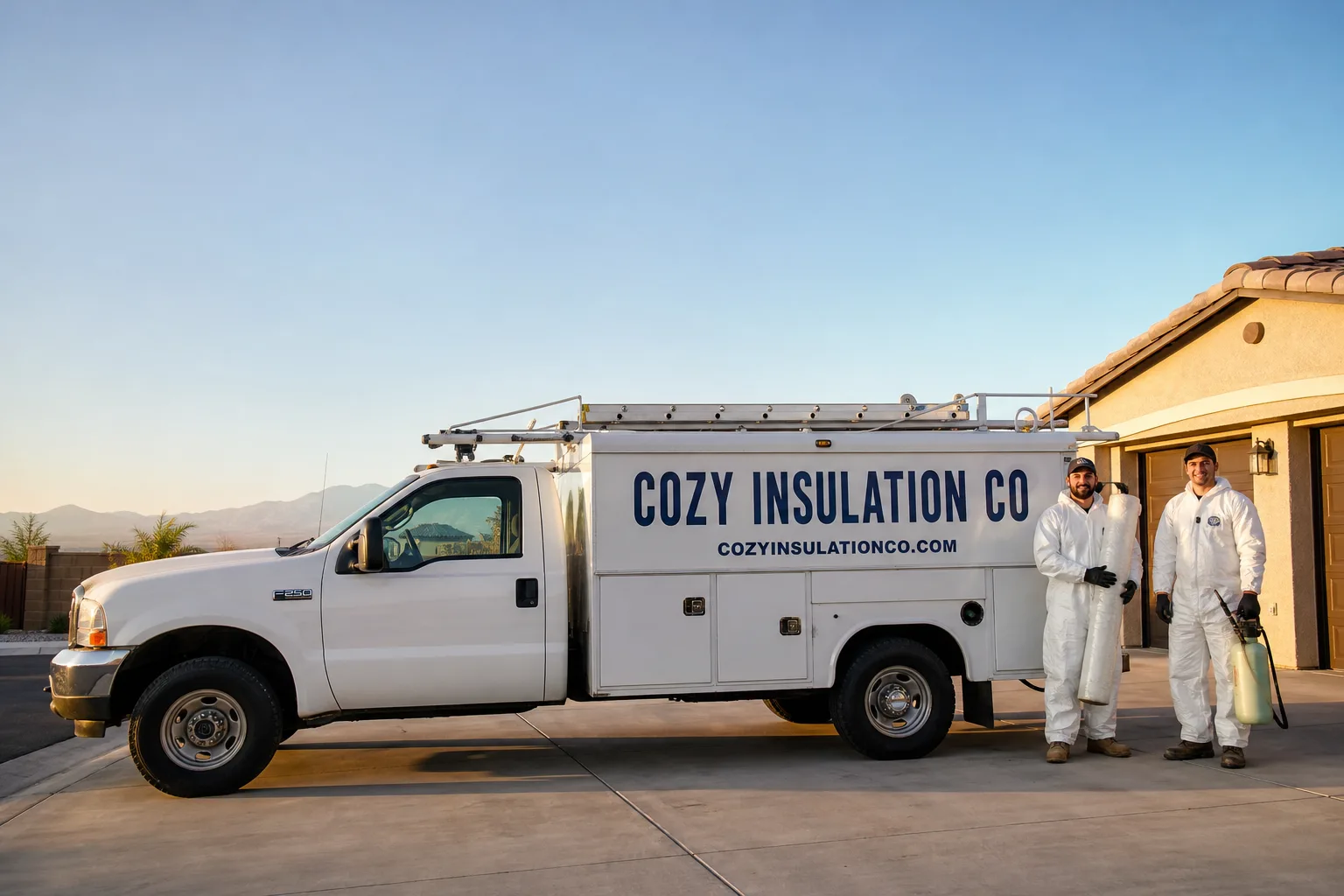
Fast, Reliable Attic Insulation Across Corona
Attic insulation in Corona is rarely a one-material decision. Most of the attics we open here fall into two camps: postwar tract homes near the historic downtown core with original batts that have crumbled and slid, or 1990s and 2000s subdivisions south and east of the 91 where rooftop solar conduit has compressed blown-in insulation into bare patches. Our Attic Insulation team handles both, plus everything between. We’re in Corona weekly, we know the neighborhoods, and we stock materials sized to the city’s older attic framing. Call (855) 382-3925 and we’ll put a real inspection on the calendar, usually within a couple of days.
Why Cozy Insulation Co Is Corona’s Preferred Attic Insulation Company
Corona homeowners call us because we show up willing to explain what’s actually going on in their attic, not just pitch a replacement. Mike Callahan built the company around material matching, which matters in a city where the right insulation for a 1958 rancher near Main Street is different from the right choice for a 2004 two-story off Foothill Parkway. We carry fiberglass, spray foam, mineral wool, and cellulose so the recommendation fits the house, not our inventory.
Our crews know Corona’s attic quirks: shallow truss spacing in older tracts, HVAC units wedged into tight attic closets in newer builds, and solar-panel conduit runs that displace insulation beneath the array. When we inspect, we look for what the previous install missed. That local familiarity shortens the job and keeps the estimate accurate. We’re not guessing at your attic from a call center.
We measure our reputation in return calls from the same neighborhoods. Eagle Glen, Chase Ranch, Sierra Del Oro. When a homeowner refers a neighbor on the next street over, that’s the review we care about most. You get a direct line to a scheduler who knows Corona’s service area and can route a crew to you fast.
Attic Insulation Removal in Corona
Attic Insulation Removal in Corona is usually the first step when insulation has been flattened, soaked, chewed through by rodents, or simply outlived its usefulness. We don’t remove insulation for the sake of it. We remove it so the next layer actually performs. In a Corona summer, adding new insulation on top of degraded material is a waste of your money. The old layer keeps the new layer from seating properly, and whatever was failing underneath keeps failing.
A typical removal job in Corona runs $1.50 to $3.00 per square foot depending on attic depth, access, and what’s up there. Tight attics with low clearance or buried electrical runs add time. We give a fixed quote after an attic inspection, not a phone guess.
When Removal Makes Sense
We recommend removal when original insulation has compressed below half its intended depth, when there’s visible rodent activity or nesting, or when moisture has matted the material. In Corona’s downtown-core tracts we regularly find 1960s-era rock wool that has disintegrated into dust. It’s doing nothing. Vacuuming it out and starting fresh is the only honest fix.
What We Find Under the Old Layer
Underneath old batt insulation we often find unsealed top plates, gaps around can lights, and bare drywall where batts have slid. This is where Corona’s heat finds its way in. Removal gives us access to air-seal those bypasses before any new insulation goes down. Sealing first, insulation second. That’s the order that works.
Insulation Contractors in Corona
Insulation Contractors in Corona are not all equal, and the difference shows up a year later when the temperature differential between your bedroom and hallway still bugs you. Our crews are trained to treat insulation as a system: air-sealing, ventilation, baffles, and then the insulation itself. That’s not a checklist item for us. It’s the job.
If you’re comparing contractors in Corona, ask who installs the material. We install our own work. Mike Callahan’s crews handle attic insulation, blown-in, and spray foam without subcontracting, so the person who quotes your job is accountable to the person who finishes it.
Old Homes, New Problems
Older attics in central Corona weren’t designed for modern insulation levels. Shallow bays and minimal eave venting mean the details matter. We’ve spent enough hours in these attics to know where the failure points are before we measure. That’s not something a general handyman picks up on a first visit.
Solar Arrays and Attic Insulation
Corona’s south and east subdivisions have a problem other cities’ contractors don’t see as often: rooftop solar. Conduit, wiring, and mounting hardware run through attic space and compress the insulation beneath it. We inspect around panel layouts, identify compacted zones, and plan re-insulation around the array rather than pretending it’s not there.
Trusted Brands We Service in Corona
We’re authorized to install products from Owens Corning, Johns Manville, Knauf, Rockwool, CertainTeed, Icynene, Demilec, and GreenFiber. That’s eight product lines, not one brand we happen to like. For Corona’s hot attics we often recommend Icynene or Demilec spray foam for the tightest air seal on vaulted or complex rooflines, GreenFiber blown-in cellulose for deep attic flats where recycled content matters to the homeowner, and Owens Corning batts for straightforward cavity fill. You decide based on your priorities. We’ll tell you what each material does in a Corona attic, not just what it costs per square foot.
Parts and materials for Corona jobs are staged locally, which means fewer delays when we’re mid-job and discover a vent baffle won’t fit a 1962 eave or a can light needs a different cover. We’re not waiting on a distribution center in another state.
Common Attic Insulation Problems We See in Corona Homes
- Settled and disintegrated postwar batts. Original insulation in Corona’s central tracts has often crumbled or slid off the ceiling plane. That leaves bare drywall and afternoon bedroom spikes the homeowner blames on the HVAC.
- Solar-compressed blown-in insulation. Rooftop arrays across the south and east run conduit and mounting hardware through attic space. Insulation under the panel path gets flattened, and that compressed area leaks heat into the house below.
- Santa Ana ember intrusion. Homes close to Corona’s wildland edges see wind-driven ember infiltration at soffits, gable vents, and eave gaps. If the attic isn’t air-sealed, blown-in insulation can’t compensate for a vent that’s acting like an open window.
- Shallow rafter bays in mid-century framing. Many Corona homes built between the 1950s and early 1970s have 2×6 rafter bays that won’t hold much insulation. Homeowners stack more on top, block the eave vents, and create a hotter attic than they started with.
Pricing for Attic Insulation in Corona, CA
A full attic insulation job in Corona generally runs $1,800 to $4,200, with removal adding $1.50 to $3.00 per square foot if your existing insulation needs to come out first. Blown-in cellulose or fiberglass for a standard 1,500-square-foot attic ranges $1,600 to $2,800 installed. Batt insulation with air-sealing typically lands between $2,000 and $3,800. Spray foam is the premium option, usually $2.50 to $5.00 per board foot depending on open-cell or closed-cell and depth. What moves your price in Corona is attic access, existing insulation condition, rafter depth, and whether we’re working around solar hardware. Call (855) 382-3925 for a free estimate that’s based on your attic, not a generic calculator.
We Also Serve Cities Near Corona
Our crews cover Corona and the surrounding communities: Home Gardens, El Cerrito Corona, Eastvale, and Norco. If you’re on the edge of any of these areas, call (855) 382-3925 and we’ll confirm coverage for your street. Same crews, same brands, same inspection-first approach.
Serving Corona, CA — Our Local Coverage Area
We’re based in the Corona area and know this community well. Use the map below to see our service coverage — if you’re nearby, we can almost certainly help.
FAQs About Attic Insulation in Corona
Not necessarily. Corona’s summer heat punishes attics, but R-value is only part of the picture. What matters equally here is air-sealing and even coverage. A lower-R-value attic with sealed top plates and consistent depth will outperform a higher-R-value attic with gaps, compressed zones, and unsealed bypasses. In this climate, how the insulation sits is as important as how much of it there is. Call (855) 382-3925 and we’ll inspect what you have before recommending what to add.
Because the solar installers ran conduit, wiring, and mounting hardware through your attic, and the insulation directly under those runs got compressed. Blown-in fiberglass and cellulose don’t recover from compression. The flattened zones leak heat into the rooms below them. We replan insulation around the panel layout, lift the compressed material, and re-blow to consistent depth around the hardware. It’s a common fix in Corona’s newer subdivisions.
If the existing insulation is matted, water-damaged, rodent-infested, or compressed below half its original depth, yes, remove it. In older Corona homes we often find postwar batts that have crumbled into dust. Adding new insulation on top locks in the failure. Removal costs more upfront but means the new material performs from day one. We’ll tell you honestly whether yours needs to come out after we inspect it.
For homes near the city’s wildland edges, yes. Santa Ana winds drive embers into soffits, gable vents, and eave gaps. If those openings aren’t sealed or screened properly, the attic becomes an ember trap even if the insulation itself is non-combustible. We inspect venting and sealing as part of every attic insulation job in Corona, not as an add-on.
We install products from Owens Corning, Johns Manville, Knauf, Rockwool, CertainTeed, Icynene, Demilec, and GreenFiber. Your attic’s ceiling type, rafter depth, ventilation, and whether there’s solar hardware up there determine which product makes sense. We’ll walk you through the options rather than pushing one line. Call (855) 382-3925 for a free estimate and we’ll talk specifics for your house.
Get Your Corona Attic Inspected
If your upstairs rooms spike in the afternoon or your energy bills creep up every summer, the attic is usually involved. We’ll inspect it, tell you what’s actually wrong, and quote a fix that fits your house. Call (855) 382-3925 for a free estimate. Mike Callahan and the team at Cozy Insulation Co serve homeowners across Corona, from the historic downtown core to the newer subdivisions south and east of the 91. You’ll know exactly what you need, what it costs, and why.
Written by Mike Callahan, Owner at Cozy Insulation Co, serving Corona homeowners with inspection-first attic insulation since day one.