
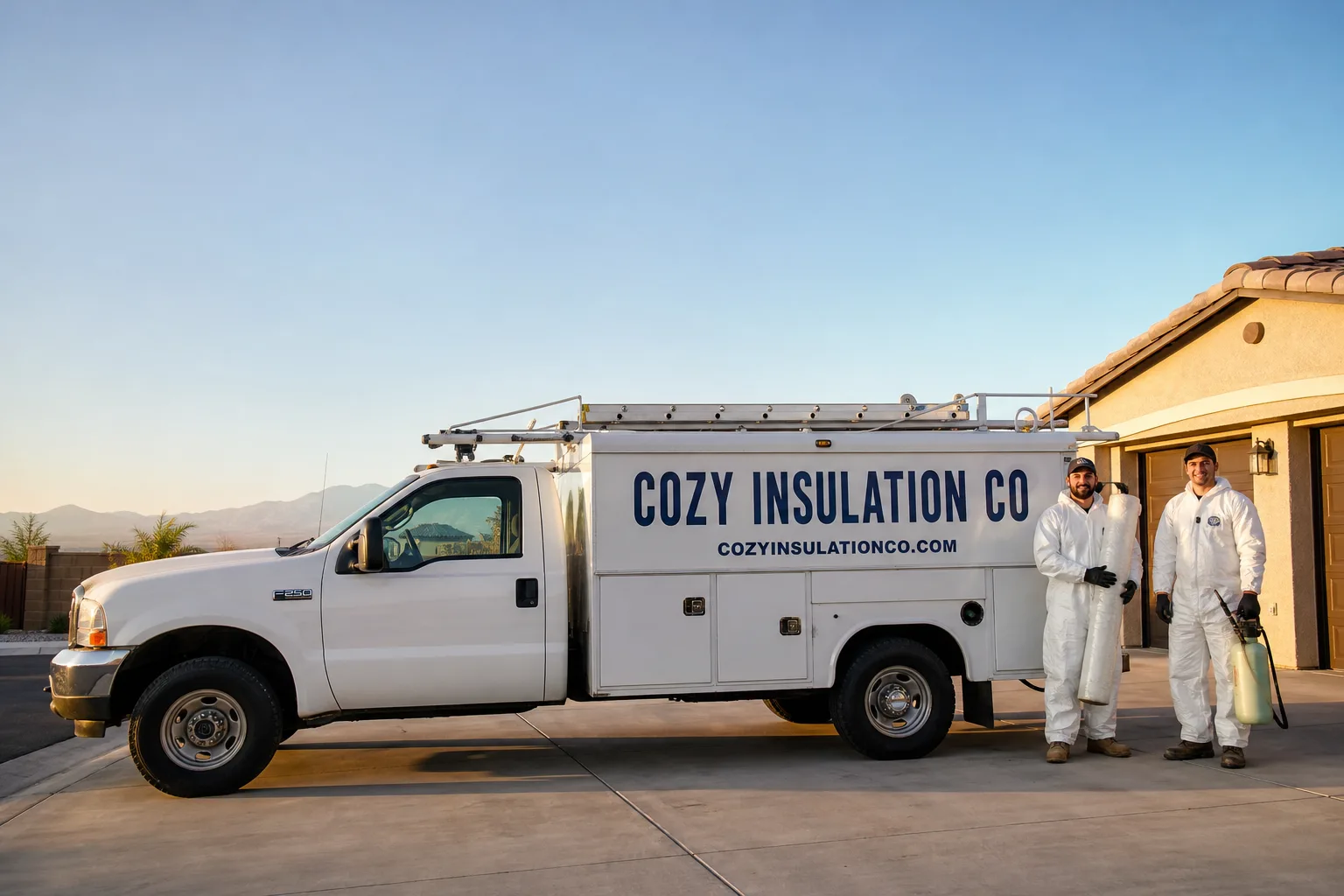
Fast, Reliable Attic Insulation Across Canyon Lake
Attic insulation work in Canyon Lake almost always means working with a home that doesn’t fit a standard template. We’re dealing with 1970s lakefront A-frames, 1980s split-levels along the golf course, and 2000s Mediterranean stucco builds near the east gate, often in the same week. When your attic space has shallow ceiling cavities, wind-driven dust, and summer heat that sits above 100°F, the fix isn’t a one-size batt job. We get out to Canyon Lake homes quickly, diagnose what’s actually happening in the attic, and match the fix to the house and the way you live in it. Call us at (855) 382-3925 and we’ll walk through what’s going on up there.
Why Cozy Insulation Co Is Canyon Lake’s Preferred Attic Insulation Company
We’ve spent enough time in Canyon Lake attics to know what the original builders left behind in the 1970s, and what happens to it decades later under Temecula Valley sun. Homeowners call us after noticing second-floor rooms that never cool down, or a master bedroom over the garage that bakes by 3 p.m. Our techs know the difference between what a standard tract home needs and what a lakefront A-frame with vaulted ceilings and exposed beams actually requires.
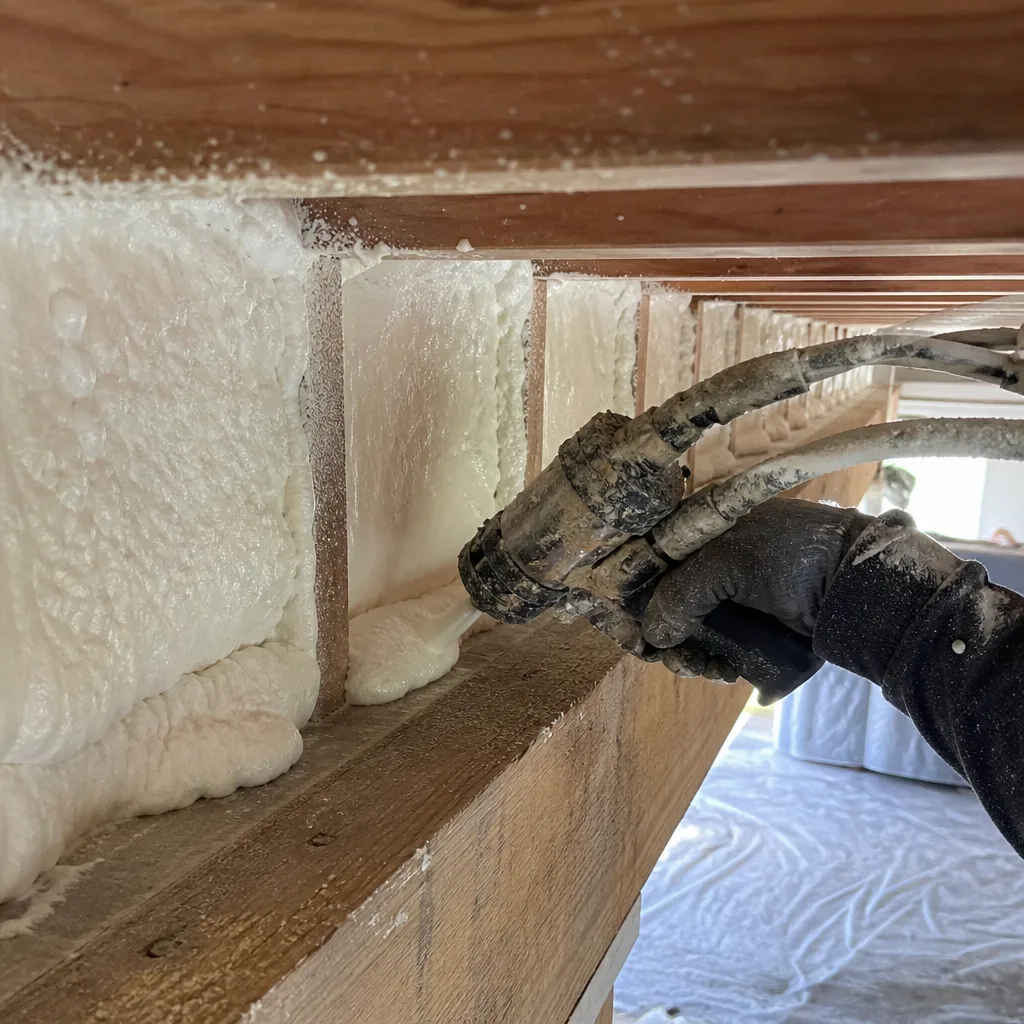
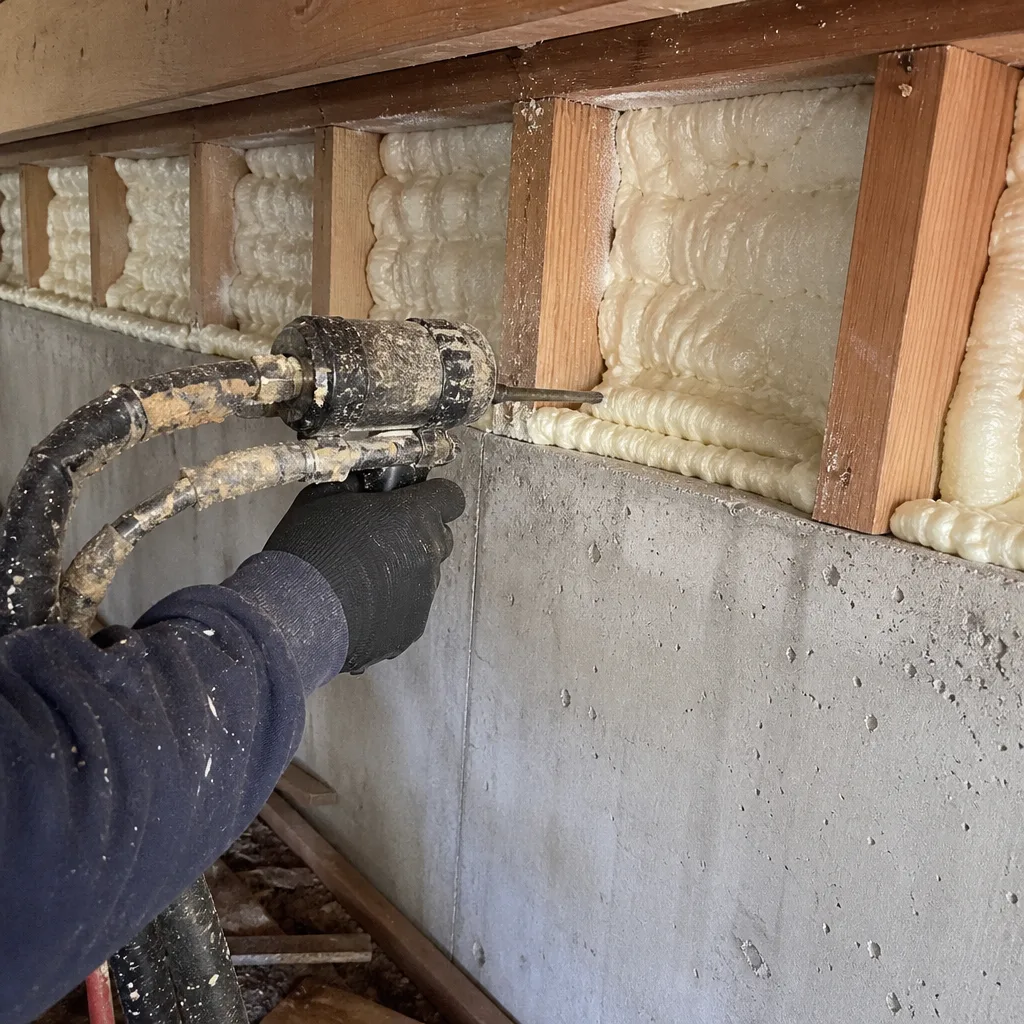
We don’t push one product. Cozy Insulation Co installs materials from eight vetted manufacturers, including Owens Corning, Icynene, Demilec, and GreenFiber. That matters in Canyon Lake because some homes need closed-cell spray foam cut to shallow cavity depth, while others do better with blown-in cellulose. When you call, you’re getting a recommendation from someone who’s seen how Canyon Lake attics fail, not a pitch for whatever’s easiest to install. Our Attic Insulation team does the full scope: top-ups, full replacements, baffles and ventilation prep, and cleaning.
Radiant Barrier in Canyon Lake
Radiant Barrier is one of the most effective upgrades for Canyon Lake homes with exposed attic decks or cathedral ceilings that bake under direct summer sun. The product is a reflective foil layer installed on the underside of your roof deck. It reflects radiant heat before it can radiate down into the attic and through your ceiling. When outdoor temperatures sit at 95°F and the roof deck climbs past 130°F, the interior gain is constant. A radiant barrier interrupts that heat path before it reaches the living space. For a Canyon Lake home, a radiant barrier installation typically runs $1,200 – $2,300 depending on attic size and accessibility. In homes with tight cathedral ceiling cavities where you can’t add much R-value, a radiant barrier plus proper ventilation becomes the single biggest lever for summer comfort.
Where Radiant Barrier Helps Most
Older lakefront A-frames and split-levels with exposed attic decks are the prime candidates. These designs have minimal attic buffer space, so once the roof deck heats up, the ceiling below follows quickly. Adding a reflective layer to the underside of that deck cuts the radiant load in a way that additional batts alone cannot. We install radiant barrier as part of a broader attic insulation plan, not as a standalone gimmick. It works with your existing insulation, and in Canyon Lake’s cooling-dominant climate, it matters at least as much as added R-value.
What to Expect During Installation
Techs typically access the attic, fasten the reflective material to the underside of the roof decking, and ensure it doesn’t trap moisture against the deck or obstruct ventilation. The work usually runs from $800 – $1,600 for a straightforward single-story attic, while larger two-story lakefront homes with complex framing run higher. Combined with regular maintenance, we also pull old degraded batts and seal vent paths, which is where we find dozens of gaps. A home on Vacation Drive near the north causeway had a west-facing attic wall that hit 140°F on a July afternoon. Radiant barrier dropped the ceiling temperature in the room below enough that the owner stopped running the AC from noon to evening.
Attic Cleaning Services in Canyon Lake
Attic Cleaning Services in Canyon Lake address a problem that’s worse here than in most of the surrounding Temecula Valley: wind-driven dust and debris off the lake that get pulled through older attic vents. Afternoon winds off Canyon Lake push fine grit through the gable and soffit vents common on 1970s and 1980s builds. Once inside, that dust settles into batt insulation, coats ductwork, and clogs soffit ventilation, reducing airflow precisely when the attic needs it most. Attic cleaning before or with new insulation typically runs $350 – $700 for a standard attic, more if there’s old loose-fill material or pest debris to remove. We clean attic spaces thoroughly, vacuum degraded insulation and dust, and prep the space so new insulation performs as intended.
Why Cleaning Precedes New Insulation Here
In Canyon Lake specifically, we find attics where decades of wind-driven dust has pressed old fiberglass down by an inch or more, killing its R-value and blocking eave vent airflow. Laying new material over this just seals the problem in. Cleaning is especially useful in the original A-frames, where ceiling cavities are tight and every inch of vent space matters. After cleaning, airflow restores, and new insulation sits in a dry, clean environment that holds its performance years longer.
Cleaning for Homes With Exposed Decks
Homes with exposed attic decks accumulate dust especially fast because forced air from the lake and stack effect pull air through the vents hard. That’s a dust load you can see and breathe. We recommend attic cleaning at least once during an insulation retrofit, or any time ventilation is upgraded. Paired with baffle installation and soffit vent clearing, a clean attic keeps your new insulation working. For the homeowner who’s been up in the attic and noticed a film of tan dust across everything, that’s the lake. We clean it out, seal what practical, and then make sure your new insulation isn’t going to be buried in it again.
What happens when you call
- 1
A real person answersNo phone trees — you reach a local pro.
- 2
You get an upfront price rangeHonest numbers before anyone is dispatched.
- 3
A background-checked tech heads outLicensed & insured, dispatched right away.
- 4
You approve before work beginsNothing starts until you say go.
Trusted Brands We Service in Canyon Lake
We’re not tied to a single manufacturer, which matters in Canyon Lake’s mixed housing stock. We install and service Owens Corning batt and blown-in products, Icynene and Demilec spray foam systems, and GreenFiber cellulose. That range means an older A-frame with shallow ceiling cavities gets a rigid foam or closed-cell solution, while a 2000s Mediterranean stucco build with a conventional truss attic might do best with blown-in fiberglass. We carry materials and compatibility knowledge for these systems locally, so Canyon Lake customers aren’t stuck waiting on parts. When you call, we’ll explain what each material does in your specific attic, why one might beat another given your ceiling design, and what the installed cost difference really means for your comfort and utility bills.
Common Attic Insulation Problems We See in Canyon Lake Homes
- Original 1970s batts slumped in cathedral ceilings. The fiberglass in these older lakefront A-frames compresses to half its original depth over decades. Once compressed, it loses R-value and can’t hold a full R-30 batt in the shallow cavity, leaving the ceiling hot to the touch in summer.
- Afternoon winds off Canyon Lake pushing dust into older vents. Gable and soffit vents from the 1970s and 1980s weren’t designed for the sustained and sometimes gusty lake winds. Dust gets pulled into the attic, settles into insulation and across ductwork, and clogs the vents that are supposed to move hot air out.
- Exposed attic decks baking under 100°F+ inland heat. Many older lakefront homes have roof decks with no radiant barrier and minimal attic buffer. Once that deck heats up, heat radiates directly down into the ceiling, and any missing or compressed insulation just makes the hot ceiling hotter.
- Shallow cathedral ceiling cavities that won’t accept standard R-30 batts. This is specific to Canyon Lake’s original A-frames. The cavity depth in the vaulted sections is often only a few inches, so a standard R-30 batt physically won’t fit. Correct solutions require closed-cell spray foam or rigid foam board cut to depth.
Pricing for Attic Insulation in Canyon Lake, CA
Pricing for attic insulation in Canyon Lake depends on the home’s roof design and what’s already up there. A basic attic insulation top-up with blown-in fiberglass over an existing layer in a standard truss attic runs $1,000 – $1,800. A full replacement, where we remove old degraded material and re-insulate, typically runs $2,000 – $3,500. Attic baffles and ventilation prep run $250 – $550 depending on how many bays need baffles. For shallow-cavity A-frames that require rigid foam or closed-cell spray foam, expect $3,500 – $6,000 or more, since that’s a more material-intensive and detail-heavy installation. We give free estimates on every job, so you’ll know the number before any work starts. Call (855) 382-3925 and we’ll come measure. No charge for the visit.
We’re proud to serve the full Canyon Lake area, including all of 92532.
We Also Serve Cities Near Canyon Lake
Our service area around Canyon Lake includes Meadowbrook, Sedco Hills, Lakeland Village, and Quail Valley. We schedule across these communities every week, so if you’re in one of these nearby areas, the same team that handles Canyon Lake’s A-frame attics can take care of your home. Same Attic Insulation expertise, same free estimate policy.
Serving Canyon Lake, CA — Our Local Coverage Area
We’re based in the Canyon Lake area and know this community well. Use the map below to see our service coverage — if you’re nearby, we can almost certainly help.
FAQs About Attic Insulation in Canyon Lake
Because the cavity simply isn’t deep enough. The original A-frames and many split-levels in Canyon Lake have cathedral ceiling cavities that measure only a few inches deep, while a standard R-30 batt needs a full 9.5-inch cavity. Trying to force it in compresses the batt and kills its R-value. We use closed-cell spray foam or rigid foam board cut to depth instead, which perform well in shallow spaces. Call (855) 382-3925 if your ceilings feel thin or hot across the vaulted section.
Yes. The regular afternoon winds push dust and heated outside air through older gable and soffit vents. That dust settles into the insulation and across ductwork, and over time it degrades the batt’s ability to insulate and clogs airflow paths. We see this on a majority of older Canyon Lake attics. Sealing vent paths and cleaning before re-insulating are part of how we address it.
Two things work together: a radiant barrier on the underside of that deck, and making sure the attic has enough ventilation to exhaust hot air. Radiant barrier reflects heat back before it radiates into the attic, and ventilation moves whatever heat does get through out of the attic. In homes with minimal ceiling cavity depth, this combo does more for summer comfort than adding more insulation alone. Call us and we’ll inspect the deck and vent setup.
It depends on what’s there and how badly it’s failed. If the original batts are still in decent shape and just a bit compressed, a targeted top-up in the open attic sections may be enough. But if the material is slumped, dust-filled, or the cavities are shallow, a retrofit with rigid foam or closed-cell spray foam typically outperforms trying to patch old material. We’ll show you exactly what we find up there so you can decide based on what’s really in your attic.
Yes. We clean attic spaces, remove old degraded insulation and dust, and prep the area before new insulation goes in. In Canyon Lake, where lake winds pull dust into attics, cleaning is often the difference between insulation that performs and insulation that’s compromised from day one. We’ll include it in your free estimate if your attic needs it.
Written by Mike Callahan, Owner at Cozy Insulation Co, serving Canyon Lake and the surrounding Temecula Valley.