
Attic Insulation Pricing Breakdown: What Corona Homeowners Pay in 2026
Most Corona homeowners will pay between $1,800 and $5,500 for attic insulation in 2026, with the average job landing around $2,800 for a typical 1,200 sq ft attic. The wide range comes down to material choice, access difficulty, and whether old insulation needs to be removed first. If you’d rather skip the number-crunching and get a straight answer for your specific attic, call (855) 382-3925 for a free estimate.
Here’s the thing nobody tells you before you start collecting quotes: the $1,800 bid and the $3,200 bid you got for the same attic probably aren’t for the same job. One might be blowing fiberglass over existing insulation. The other might be removing everything, air sealing, and installing closed-cell spray foam. Different scopes, different materials, different results. This breakdown exists so you can compare bids line by line instead of staring at bottom-line numbers that barely mean anything.
Key Takeaways for Corona Homeowners
- Fiberglass batts run $1.50 to $3.00 per sq ft installed; blown-in cellulose runs $2.00 to $3.50; spray foam runs $3.50 to $7.00
- Removing old insulation adds $1 – $2 per sq ft and is the most frequently omitted line item in low bids
- Air sealing adds $600 – $1,200 but is the single highest-ROI upgrade you can bundle with insulation
- California utility incentives can knock 10 – 30% off qualifying projects in 2026
- Most attic jobs take one day; spray foam and removal-heavy jobs take two
Why Corona Attic Insulation Prices Vary So Much
Corona sits in a climate that punishes under-insulated attics more than most homeowners realize. Summer attic temperatures routinely hit 140 – 150°F, and that heat doesn’t politely stay upstairs. It radiates into your living space, forces your AC to run longer, and shows up on your Riverside Public Utilities or Southern California Edison bill every month. Winter swings the other way: cold air settles in and drafts creep through. The result is that insulation isn’t optional in Corona. It’s the difference between a house that holds its temperature and one that fights you for it.
When we quote a Corona attic, we’re looking at three cost drivers that most homeowners never see in the breakdown: how hard the attic is to reach, what’s already up there, and how leaky the ceiling plane is. A 1960s ranch in central Corona with a pull-down ladder, old batt insulation matted to R-5, and a dozen recessed light fixtures leaking air is a completely different project than a 2010s tract home in South Corona with a full staircase and clean plywood decking. Same square footage, maybe, but not the same job. Anyone quoting both for the same price hasn’t been in the attics.
Labor rates in the Inland Empire have also moved in 2026. Material costs for fiberglass and cellulose have stayed relatively flat, but spray foam components tied to petrochemical pricing have been more volatile. That’s why you’ll see bigger swings in foam quotes than in batt or blown-in quotes. It’s not contractor games. It’s the supply chain doing what supply chains do. We carry options from Owens Corning, CertainTeed, Rockwool, Icynene, Demilec, and GreenFiber so we can quote honestly across material types without pretending one product fits every house.
2026 Price Ranges by Material Type in Corona
Here’s what we’re seeing in Corona specifically, not a national average. These are installed prices per square foot of attic floor, including labor, but before any removal, air sealing, or access charges.
- Fiberglass batts: $1.50 – $3.00 per sq ft. The workhorse option. Quick to install, familiar, dependable. CertainTeed and Owens Corning batts are the ones we use most when comfort is the goal and the attic is accessible.
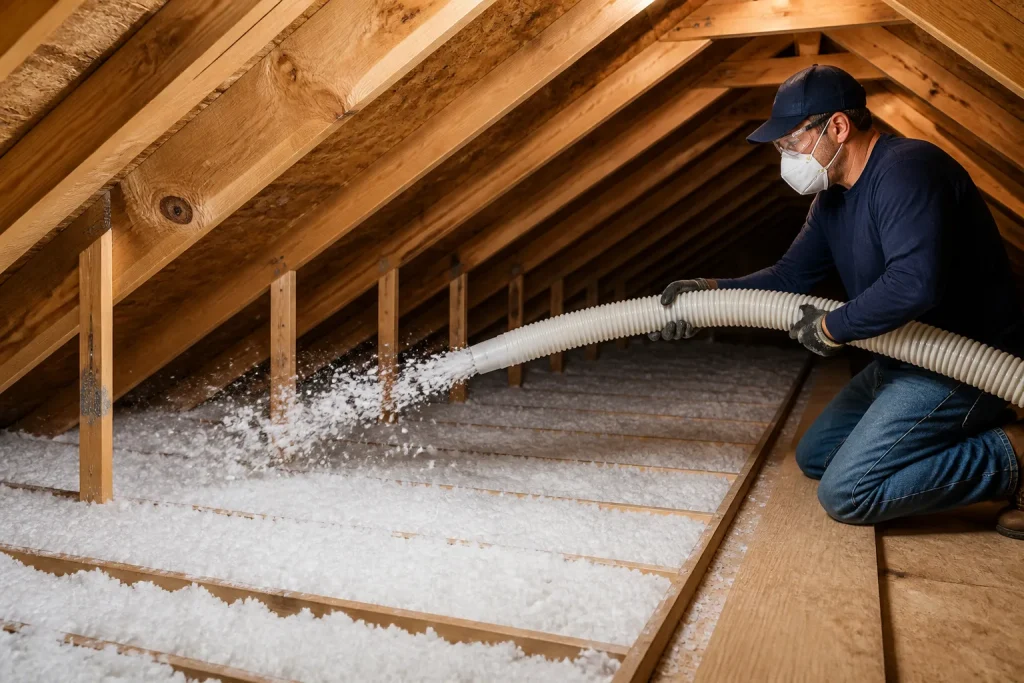
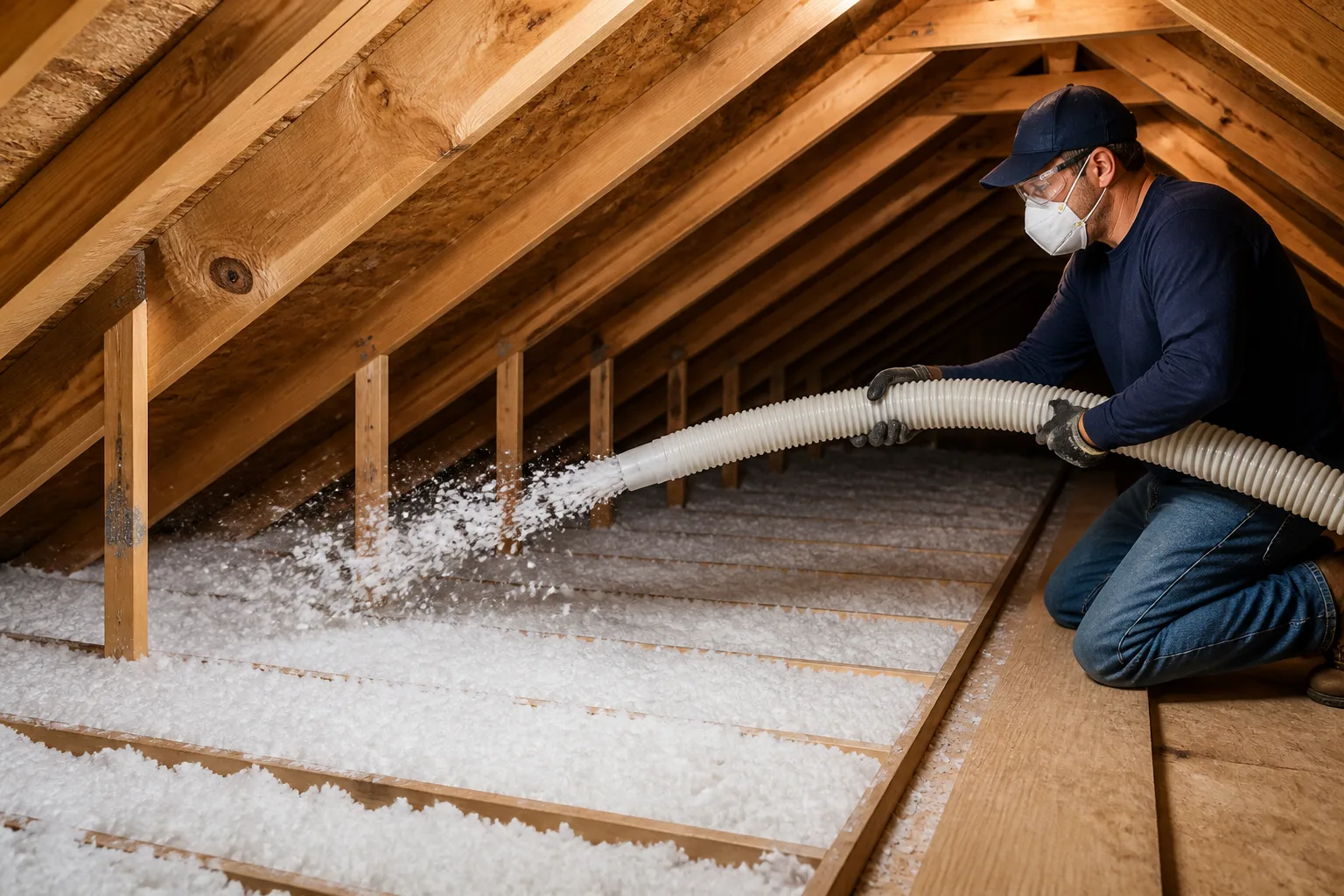
- Blown-in cellulose: $2.00 – $3.50 per sq ft. Great for attics with odd joist spacing, low clearance, or lots of obstacles. GreenFiber cellulose is recycled-content and settles into gaps that batts can’t always reach.
- Blown-in fiberglass: $1.75 – $3.00 per sq ft. Similar price to cellulose, slightly lower R-value per inch but completely inorganic. A sensible middle ground for Corona attics with standard venting.
- Mineral wool (Rockwool): $3.00 – $5.00 per sq ft. Fire-resistant, sound-dampening, and dense. We recommend it for homes near freeways or in high fire risk zones where every layer of protection matters.
- Open-cell spray foam: $3.50 – $5.50 per sq ft. Air-seals and insulates in one pass. Icynene open-cell is our go-to for attics that need both thermal and air barrier work.
- Closed-cell spray foam: $5.50 – $7.00 per sq ft. The performance ceiling. Demilec closed-cell adds structural rigidity and acts as a vapor barrier. This is what we install when someone in Corona says they never want to think about their attic again.
Those ranges assume a normal attic with reasonable access. If your attic is a crawlspace situation where a human can barely turn around, expect labor to push the price toward the top of the range regardless of material. If you want a genuinely useful comparison, have each contractor specify the material, the R-value, and whether removal and air sealing are included. We can’t tell you how many times we’ve been the “expensive” quote that turned out to be the only complete one.
Line Items That Should Be on Every Corona Attic Quote
A legitimate attic insulation quote in Corona should break down into identifiable pieces. If a bid is one number with no detail, that’s not a deal. That’s a question mark.
- Existing insulation removal: $1.00 – $2.00 per sq ft. Required when old insulation is water-damaged, rodent-infested, or so matted it’s doing nothing. This is the #1 thing cheap bids leave out, because they have no intention of removing anything.
- Air sealing: $600 – $1,200 for a typical Corona attic. Recessed lights, top plates, plumbing chases, and attic hatches all leak conditioned air. Sealing them is the highest-ROI line item you can add.
- Access improvement: $200 – $800. If your attic hatch is a 20-inch square in a hallway closet, we may need to enlarge it or build a proper access point. Older Corona homes often weren’t designed for attic visits.
- Baffles and venting: $3 – $8 per baffle. Keeps insulation from blocking soffit vents and keeps air moving. Skip these and you’ll get moisture problems in Corona’s cooler months.
- Rodent or pest remediation: $300 – $1,500. If something’s been living up there, insulation can’t go in until it’s gone and the entry points are sealed. We find this more in older pockets of Corona and neighborhoods near open hillsides.
- Material cost: should be itemized separately from labor. If it isn’t, ask why.
One anecdote, because it illustrates the point better than another bullet point could. We pulled insulation out of a garage attic over near Mountain Gate last month where the previous contractor had blown fiberglass directly on top of a live rodent nest. The homeowner had paid $1,900 two years earlier for “new insulation” that was already ruined. The cheap bid cost them twice. When a bid seems too good for Corona, it usually means someone is either skipping removal, skipping air sealing, or not planning to be around when problems show up.
How Attic Access and Condition Swing the Price in Corona
Corona’s housing stock spans a remarkable range, from 1950s ranch homes near the historic downtown to 2000s stucco boxes in the foothills, and each era built attics differently. Homes built before the 1980s often have low-pitch roofs, shallow truss bays, and tiny access hatches. We’ve worked in Corona attics where the insulation crew literally could not stand, which changes how every material gets installed. Blown-in becomes the clear winner in those spaces, because a hose reaches places a batt installer can’t comfortably work.
Newer homes have different problems. Builders in Corona’s 1990s and early 2000s boom often installed code-minimum insulation, usually R-30 fiberglass batts, and sealed nothing. Those attics are spacious and easy to access, which keeps labor costs down, but they almost always need air sealing, which pushes the project total up. The home itself is doing you a favor on labor and collecting the debt on leaks.
If you have a blown-in attic from the last decade that’s settled to half its original depth, the big question is whether to top it off or remove and start fresh. Topping off is cheaper, $1.50 to $2.00 per sq ft for additional cellulose. But if the old insulation is full of dust, rodent droppings, or moisture, you’re better off removing it. Corona’s dry summers and occasional heavy winter rains mean any roof leak sits in your insulation and degrades it quietly. We’d rather you spend a bit more now than discover the problem after the new insulation is already compromised.
The ROI Math for a Typical Corona Home
The average Corona home we insulate is around 1,800 sq ft with an attic that’s currently at R-19 or worse, when it should be at R-38 or R-60 for our climate zone. That gap is basically a hole in your ceiling. The fix, depending on material, costs between $2,500 and $5,500 for that house.
What does that save you? Utility data for Riverside County in 2026 suggests an under-insulated attic forces your HVAC system to run 15 – 25% more than it should during peak summer months. For a Corona household spending $250 – $400 per month on electricity in July and August, that’s $50 – $100 per month in recoverable cost during the worst of it. Across the entire cooling season, plus the winter heating months, most homes see net savings between $500 and $900 per year. The project pays for itself in three to seven years.
That math ignores what we think is the larger point: comfort. Rooms that hold temperature in August. A house that stops dropping five degrees at night in December. We’ve had Corona customers tell us they didn’t realize how much their house was leaking until the leaks were gone. You can’t put a payback period on waking up comfortable.
California Rebates and Utility Incentives in 2026
If you’re in Corona and you want to offset the upfront cost, 2026 has more incentive money available than most years in recent memory. The big one is the federal energy efficiency home improvement credit, which covers 30% of insulation and air sealing costs up to a $1,200 annual cap. That’s a straight tax credit for qualifying materials installed in your primary residence.
On the utility side, programs shift year to year, but the state’s investor-owned utilities, which serve much of Riverside County, have offered insulation rebates in the $0.15 to $0.30 per sq ft range for qualifying attic work in 2026. Some programs require a pre-installation energy assessment, usually $100 – $200, but the assessment fee is often refunded once the work is complete.
The catch: these programs generally require you to achieve a minimum R-value, which means a top-off job usually doesn’t qualify. You need to actually fix the problem, not just add a layer. We walk Corona homeowners through eligibility during the estimate process, because there’s no point quoting a project that leaves money on the table. Between the federal credit and a utility rebate, a $4,000 project can drop to $2,500 or less for qualified homeowners.
When to Call a Pro vs. Handling It Yourself
Here’s the honest answer: blown-in fiberglass rental machines from home improvement stores in Corona cost about $60 – $100 for a day, and if you’re topping off a clean, accessible attic with no air sealing needs, some homeowners do it themselves. We’re not going to pretend that’s a dangerous job. It’s itchy, dusty, and awkward, but not dangerous. Batts are similarly approachable if you’re patient and wear the right protective gear.
Spray foam is a different story. Two-part spray foam systems require professional equipment, chemical handling certifications, and ventilation protocols. This is not a weekend project. We install Icynene and Demilec systems with trained crews, because incorrect foam application can off-gas improperly, fail to cure, or create moisture traps that destroy your roof decking. That’s a genuinely dangerous outcome in a Corona attic where summer heat bakes everything. If foam is on your list, call a pro. The cost of doing it wrong is a roof replacement, and that’s not an exaggeration.
Air sealing also falls in the pro column. Finding leaks in a dark attic with a flashlight and a can of foam is doable, but we find more with a blower door test in 20 minutes than a homeowner finds in a weekend. The test pressurizes the house and shows exactly where air moves. You can hear it and feel it. Most Corona attics have 10 – 15 significant leak points, and missing even a few cuts the whole project’s effectiveness.
Related services in Corona: if your attic project turns into a wall or crawlspace conversation, we also handle spray foam insulation and blown-in insulation as part of whole-home work. For a deep dive on attic-specific methods, see our attic insulation page. You can also check out the Cozy Insulation Co home page for the full scope of what we do.
The Bottom Line
Attic insulation in Corona costs $1,800 to $5,500 for most homes in 2026, and the specific number for your house depends on material choice, attic condition, access difficulty, and whether the bid includes removal and air sealing. Red flags that a bid is too low: no line items, no mention of removal, no air sealing, no access plan. Those aren’t savings. They’re deferred costs, and they come back with interest.
If you’re in Corona and want a bid that actually decodes your attic instead of just throwing a number at it, Cozy Insulation Co offers free estimates with a full material and labor breakdown. Call (855) 382-3925 and we’ll take a look. No pressure, no single-product pitch, just an honest assessment of what your attic actually needs.
Frequently Asked Questions
How much does attic insulation cost in Corona CA in 2026?
Most Corona homeowners pay between $1,800 and $5,500, with the average project landing around $2,800 for a standard attic. Fiberglass batts run $1.50 – $3.00 per sq ft, blown-in cellulose $2.00 – $3.50, and spray foam $3.50 – $7.00. Call (855) 382-3925 for a precise quote based on your attic’s condition.
Is it cheaper to repair or replace attic insulation in Corona?
Topping off existing insulation is cheaper upfront, typically $1.50 – $2.00 per sq ft, but if your current insulation is water-damaged, rodent-infested, or matted below half its original depth, replacement is the better long-term investment. Removal adds $1 – $2 per sq ft but prevents the problem from repeating.
Can you install attic insulation the same day in Corona?
Most fiberglass batt and blown-in jobs are completed in a single day. Spray foam takes longer due to application and curing time, usually two days with access prep. If you need it done quickly, call (855) 382-3925 and we’ll give you a realistic timeline.
What rebates are available for attic insulation in Corona in 2026?
The federal energy efficiency home improvement credit covers 30% of insulation costs up to $1,200 annually. California utility programs have offered attic insulation rebates between $0.15 and $0.30 per sq ft in 2026, often requiring a pre-installation assessment. Combined, incentives can offset 10 – 30% of a qualifying project.
Written by the team at Cozy Insulation Co, serving Corona since 2011.
Need Insulation Help?
Call Cozy Insulation Co — licensed & insured, here with fast after-hours help in Corona.
(855) 382-3925